If it’s Saturday, Sunday and Monday, this must still be Singapore.
Saturday, March 11. Saturday morning, a short walk over the Cavanagh Bridge to the Asian Civilizations Museum. The most striking things are (1) the wealth and breadth of Asian culture and artistic expression, and (2) our abysmal ignorance of it. Each exhibit would give a time and place provenance (“Sumatra XVI Century,” e.g.), and we’d think, “Okay, cool, but I don’t have the slightest idea of what that means in terms of history of politics, art, or anything else.” In school, we learn the finer points of European history, Kings, Queens, wars, geography, art, etc., but nothing about what was going on in Asia or anywhere else.
In Gore Vidal”s novel, “Creation,” he notes that, at the very same time Pericles was a politician and general in Athens (the time of the Peloponnesian wars in Greece – Fifth Century BCE), he had very significant contemporaries: These included Siddhartha (the Buddha) in India, as well as Confucius in China. Never learned about this in our high school history class. So when we’re admiring a porcelain plum tree

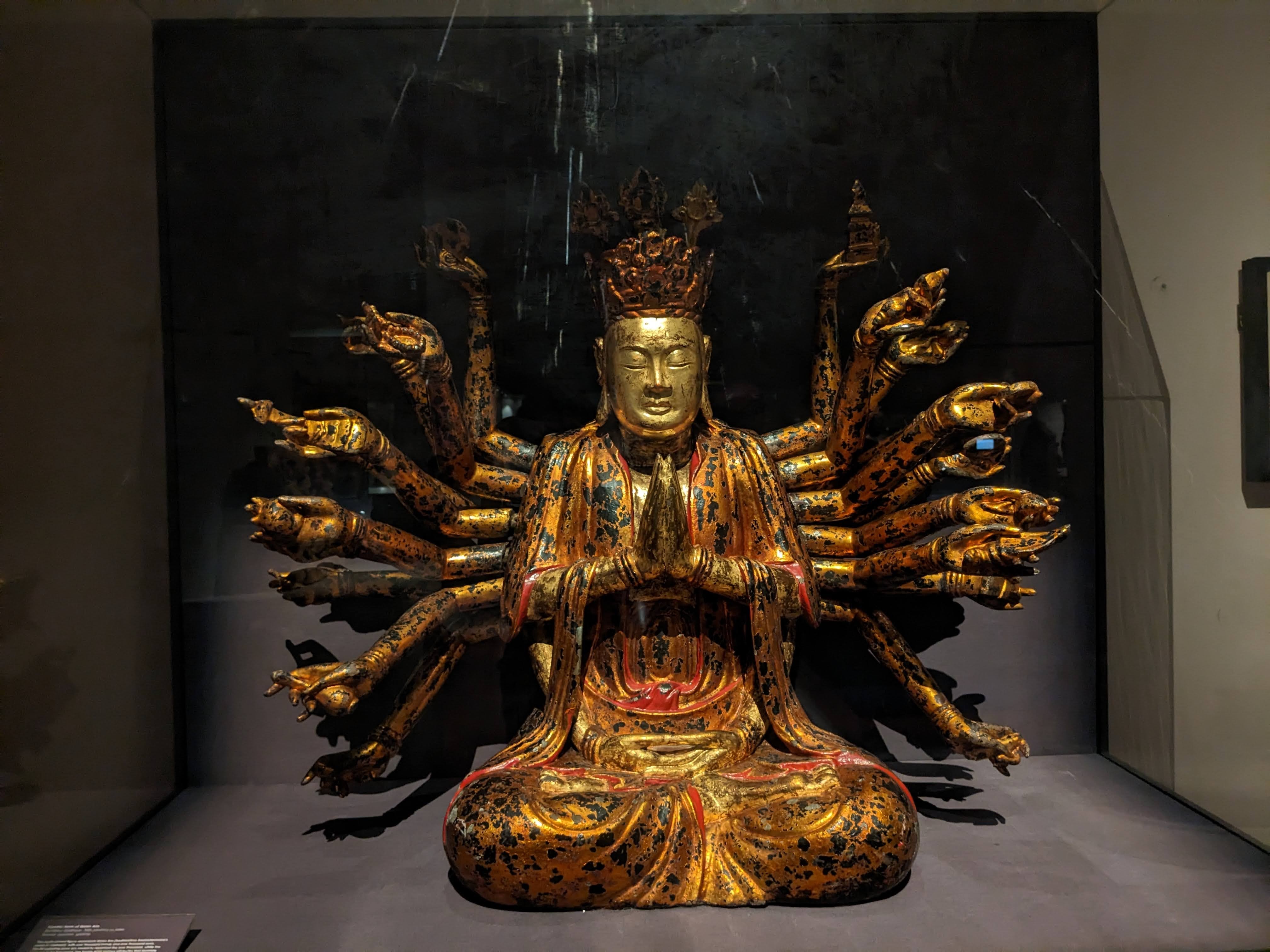
we don’t have much of an appreciation for the historical or cultural context. Same with a sandstone sculpture of Three Divine Mothers from 11th Century Uttar Pradesh (India) or a many-armed Buddha:

Okay, enough polemicizing. We also strolled to the nearby Merlion Park, where there is a large fountain in the shape of the “Merlion” (mermaid-lion), with water shooting out of its mouth.
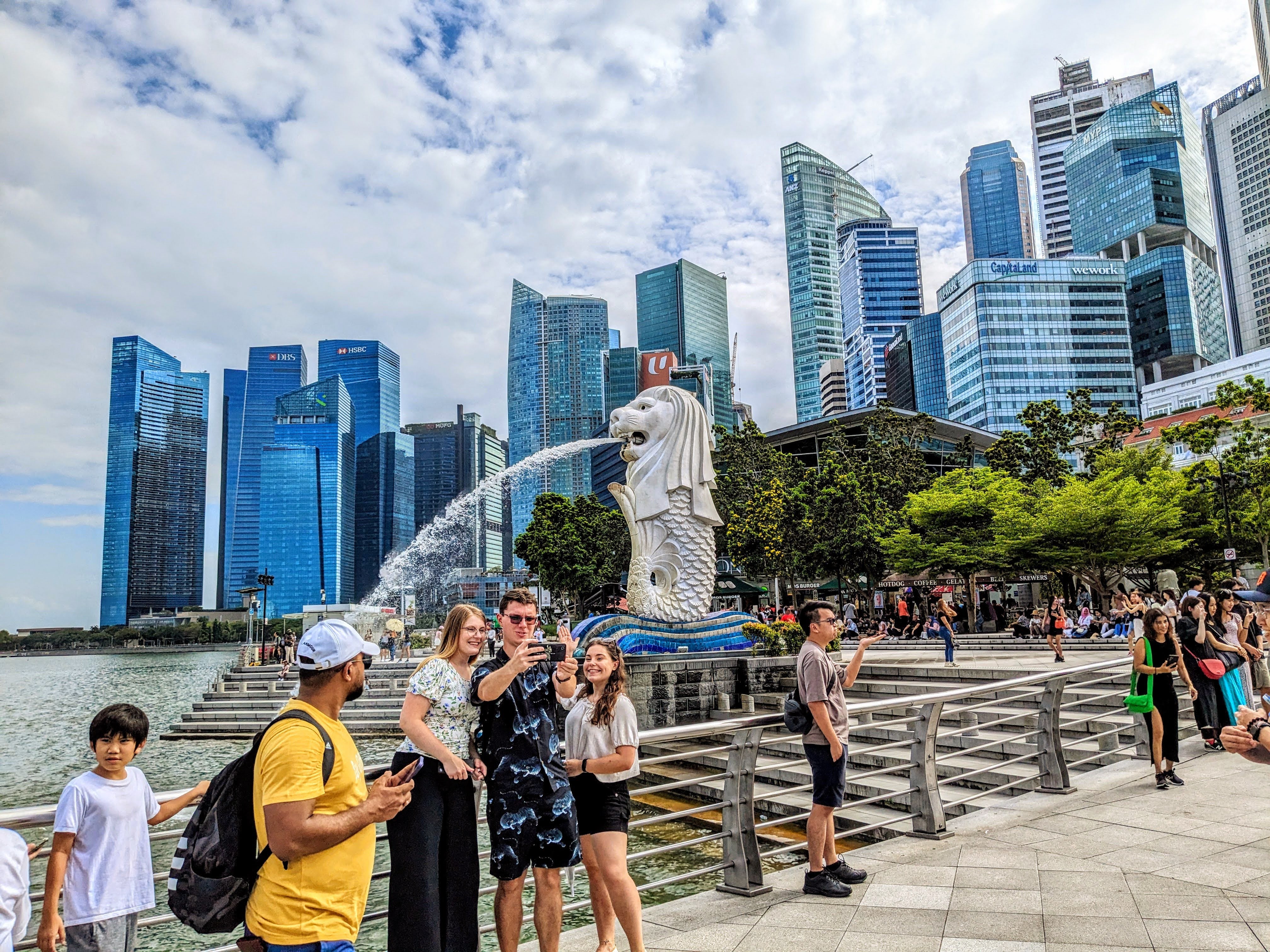
The lion is the cultural symbol of Singapore. The place used to be called “Temasek.” Then in the 14th century (we are told), a visiting sultan saw a fearsome creature which (he was informed) was a lion. So he re-named the place “Singa-Pura,” meaning “town of the lion.” (FYI, there have never been any lions in Singapore, so the sultan had probably seen a tiger. Oh, well.)
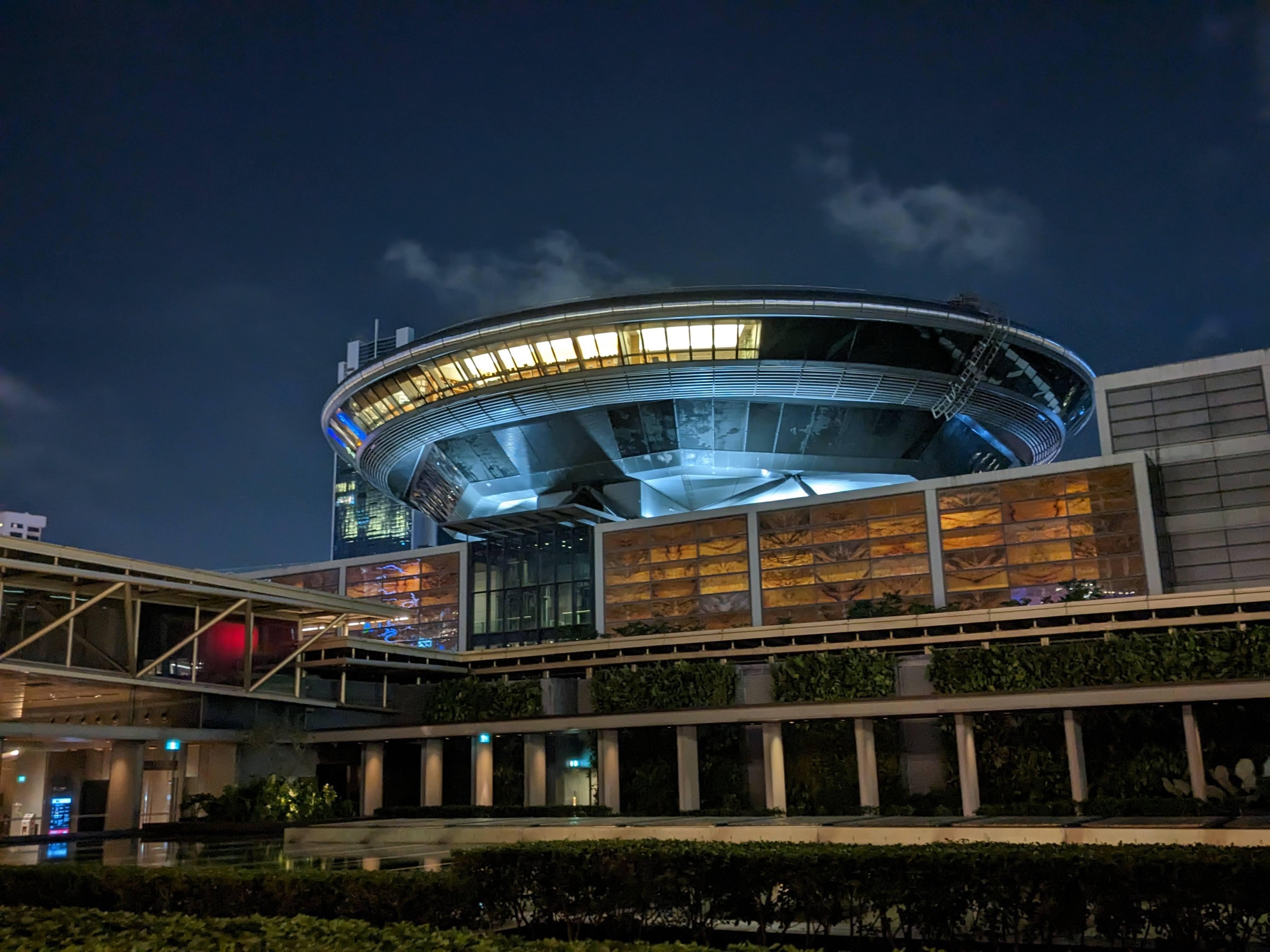
Later on Saturday evening, our tour group gathered for the first time and then walked to dinner at “Yan,” a Chinese restaurant in the National Gallery of Singapore. This was after we got a look at the Supreme Court building (including the holding cells for the prisoners).
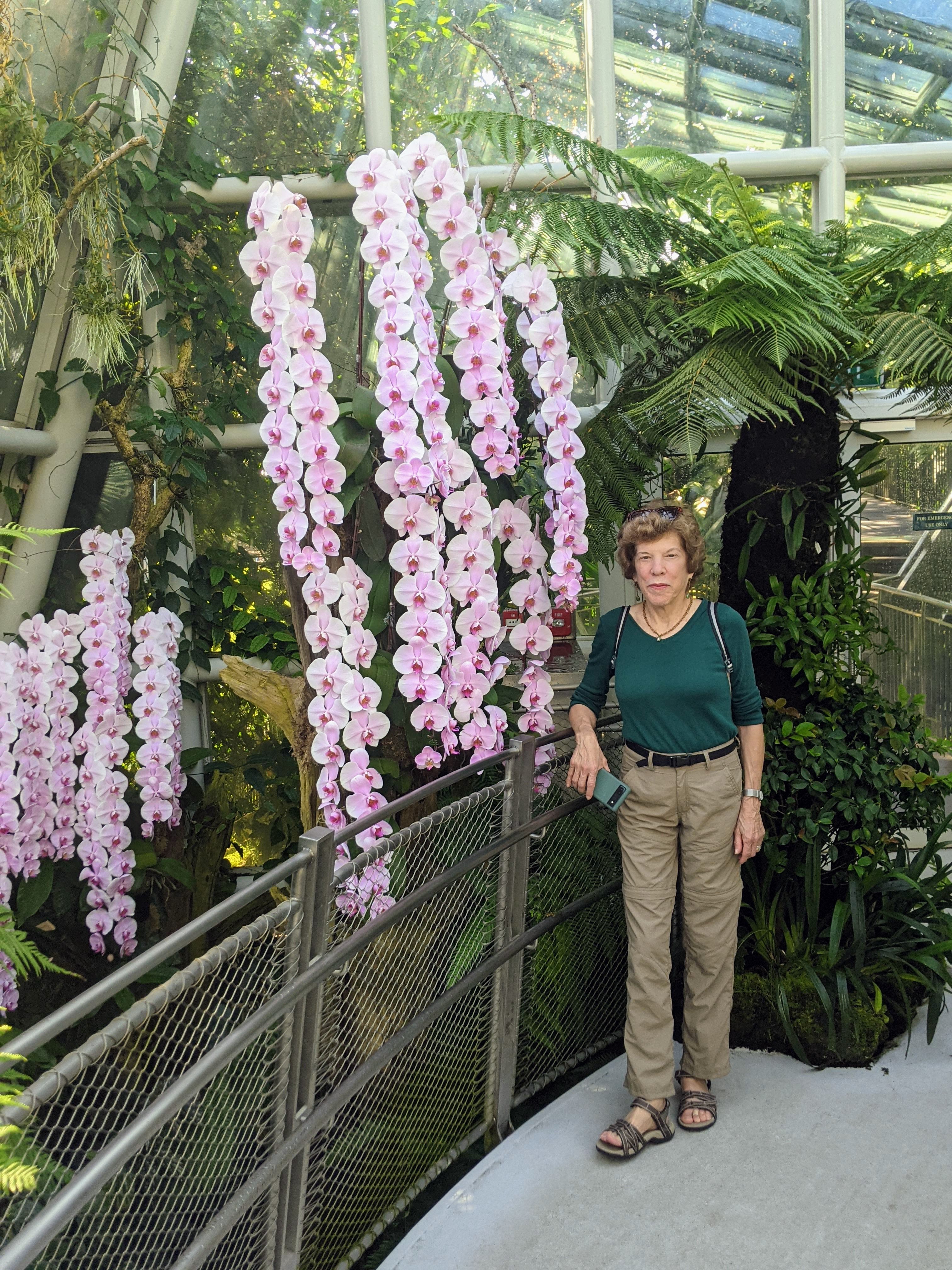
Sunday, March 12. On Sunday, the tour moved into high gear, with eight hours of go-go-go (more than 13,000 steps for those obsessed with pedometers). First the Botanical Garden, which includes the National Orchid Garden.
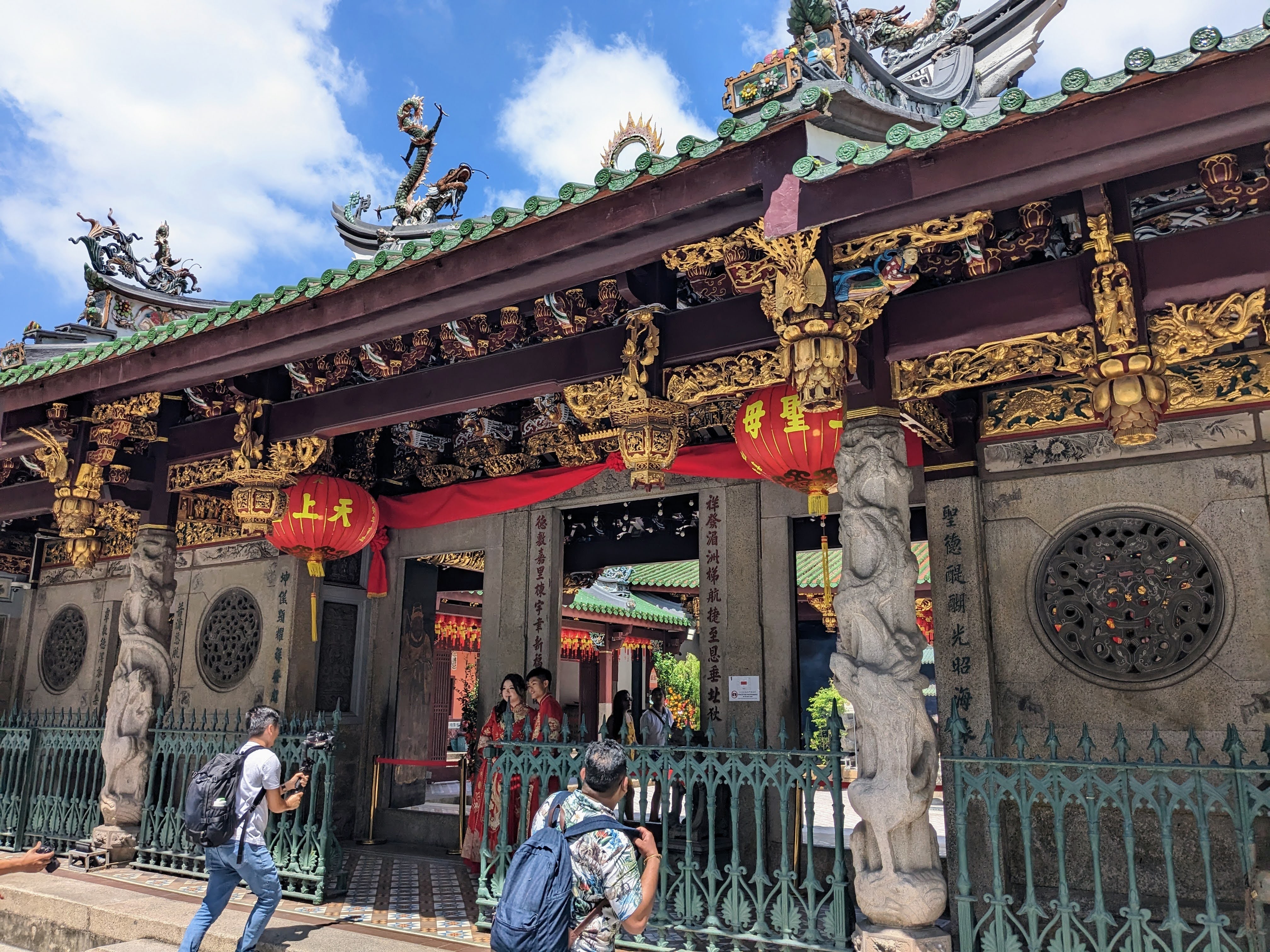
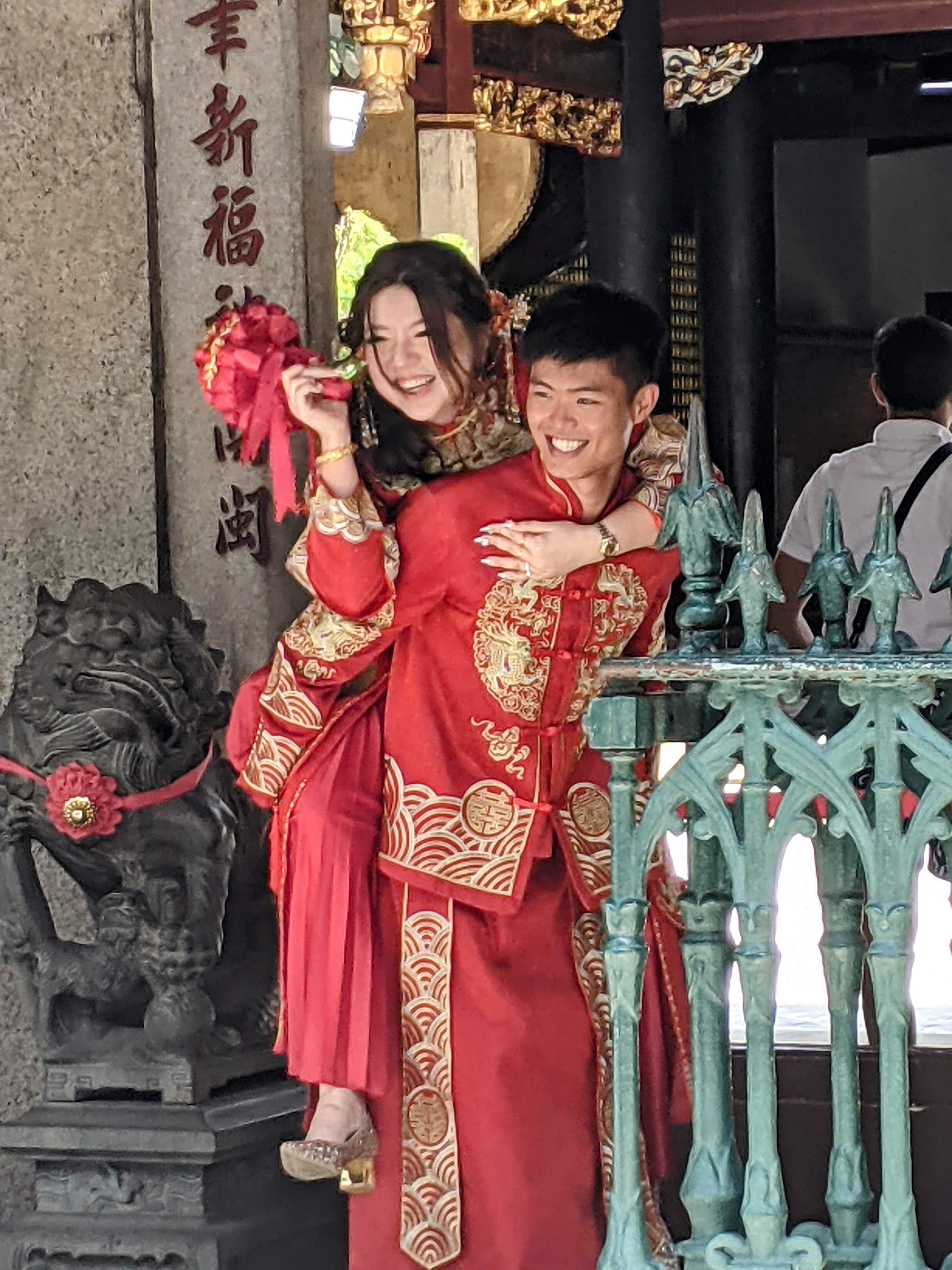
Thence to Chinatown, and the Thian Hock Keng Temple, one of Singapore’s oldest Buddhist/Taoist temples, with a couple out front playing the roles of bride and groom.
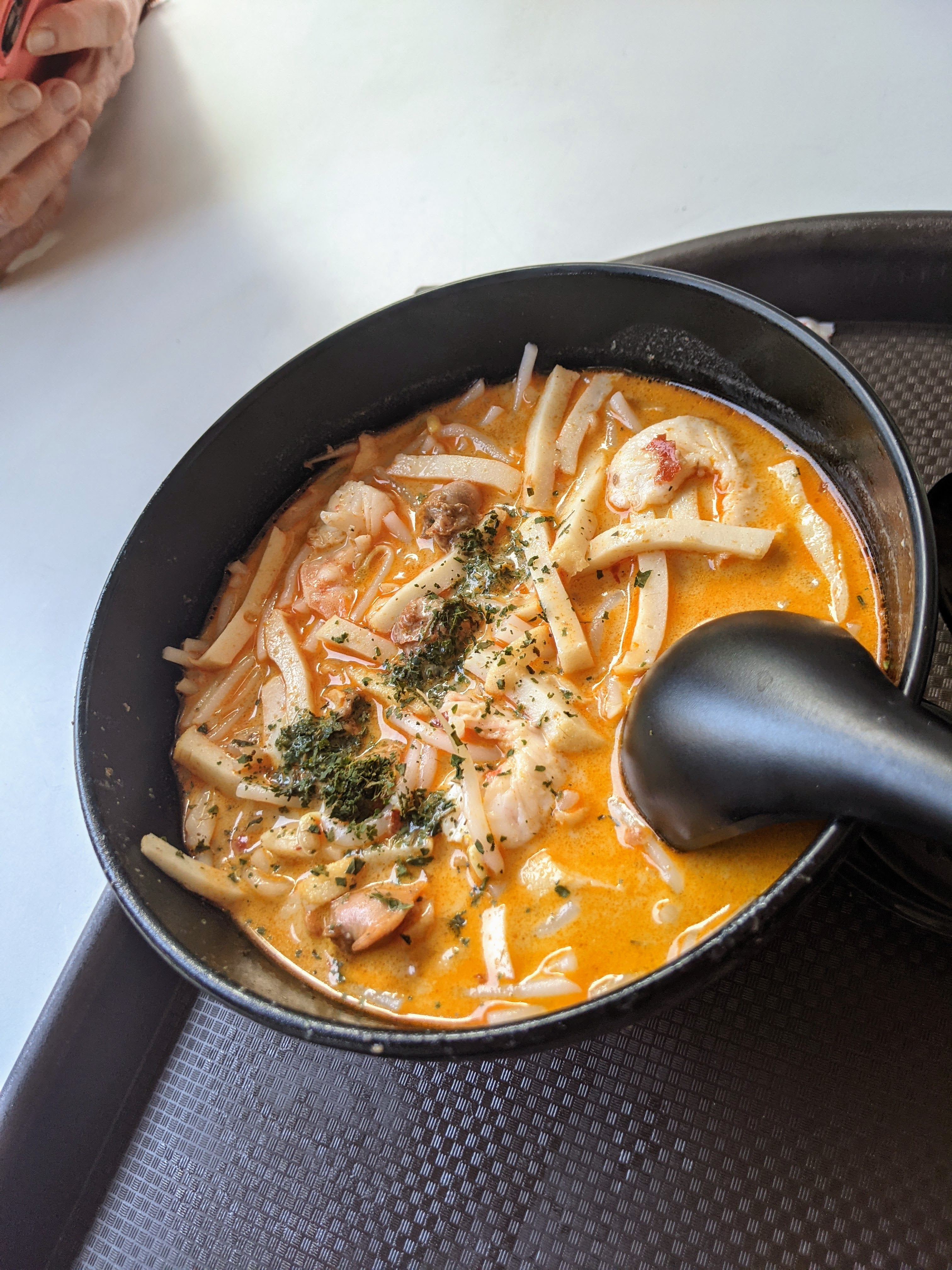
A stroll through Fort Canning Park, with thousands of Singaporeans enjoying picnics. A brief stop-off for an introduction to the cuisine of the Peranakan people (descendants of Chinese settlers who married into the local Malay population, and who constitute the majority of the population of Singapore.) This included Katong Laksa, a soup which turned out to be fairly incendiary:
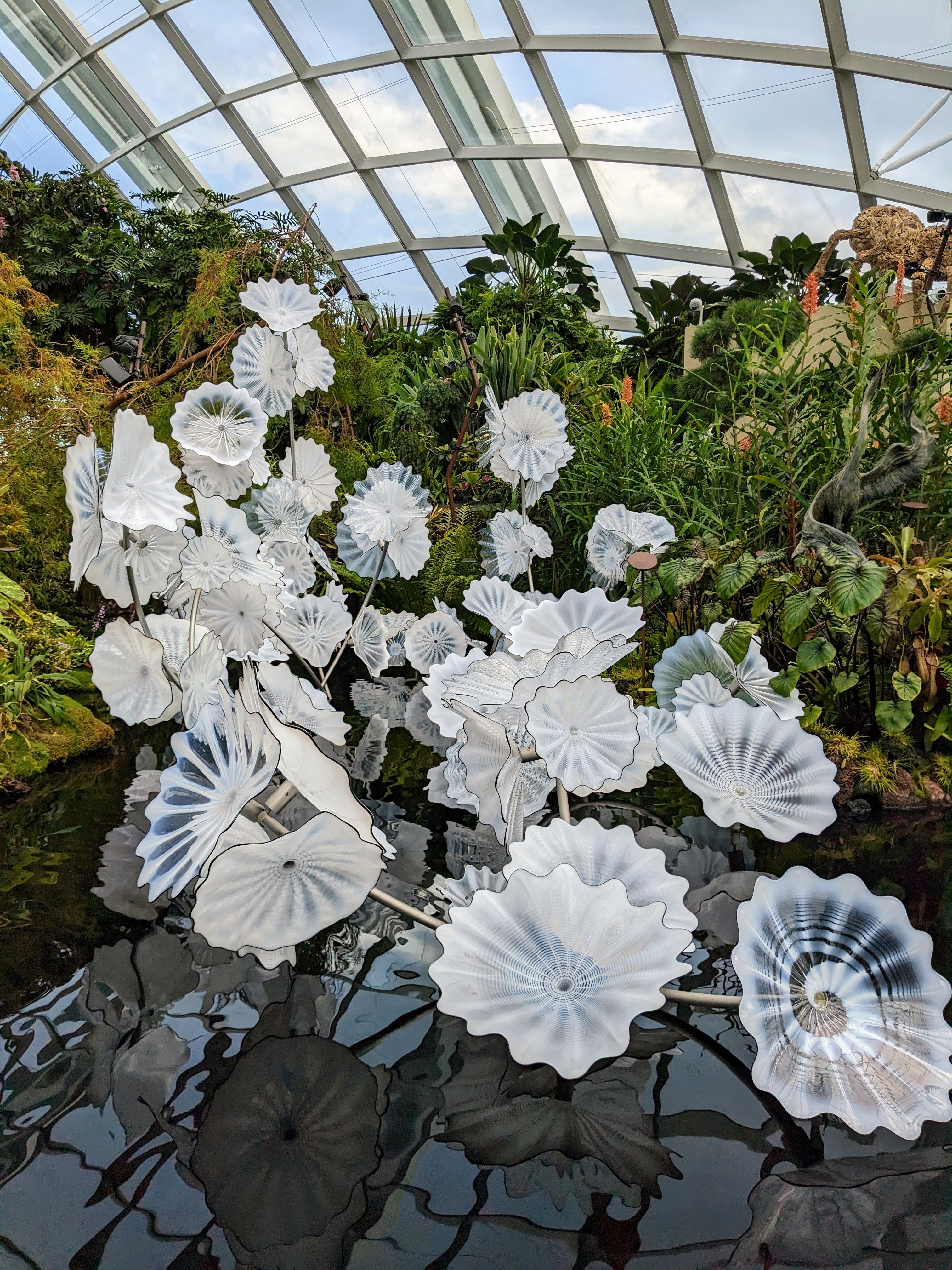
This was followed by the Gardens by the Bay, including the Flower Dome and the Cloud Forest Dome, huge glass structures which house air-conditioned gardens (including a Chihuly glass flower exhibit and an indoor waterfall).

We were accosted by two earnest local high school boys, who were determined to give us a 15-minute tour.
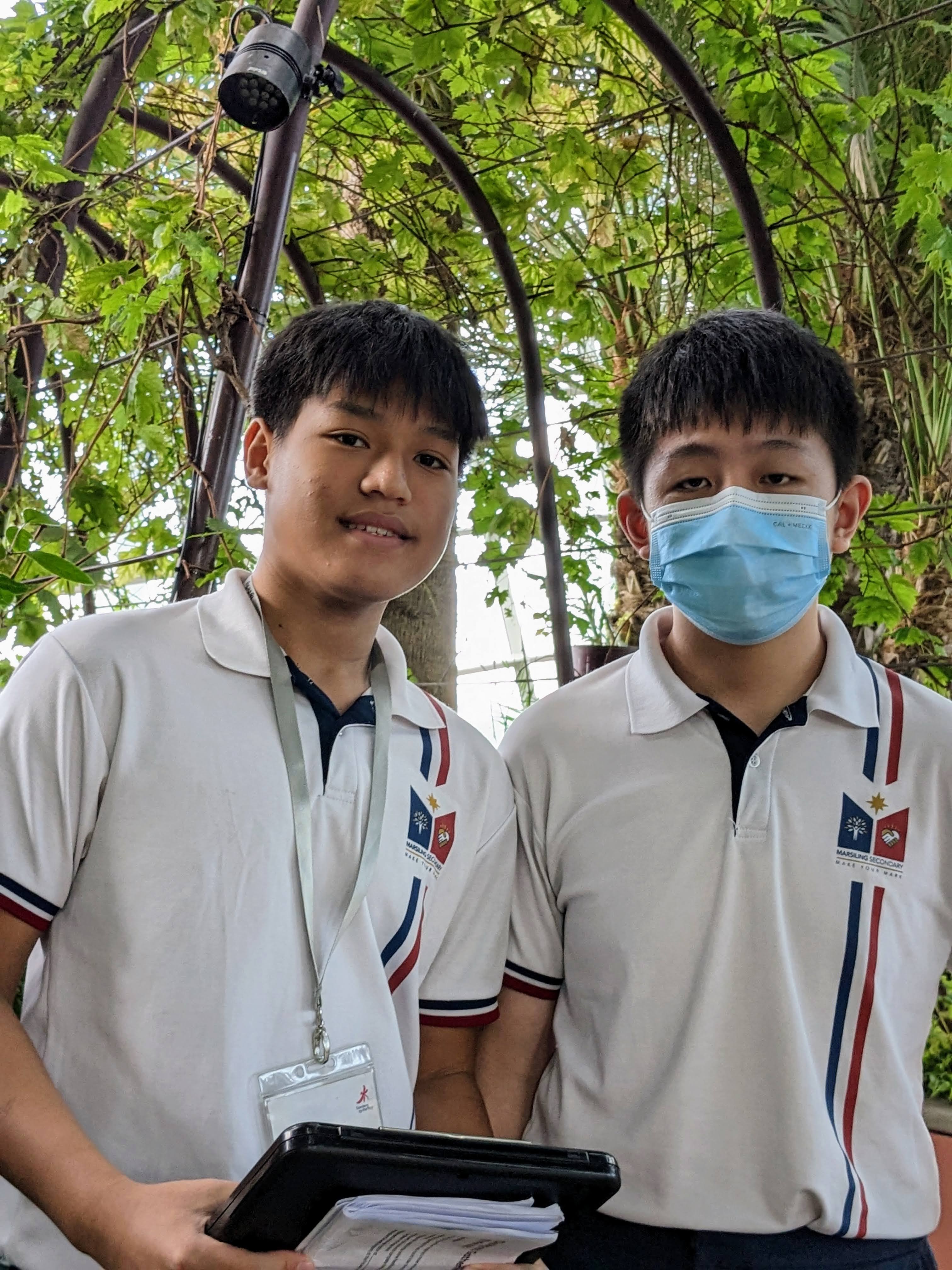
We could understand little of what they said, but we were happy to help them meet their Volunteer/Community Service requirement.
One last stop before dinner to one of the most significant mosques (Sultan Mosque) in Singapore off of Arab Street:

Dinner was more Peranakan cooking. Yummy, and this time not designed to burn your stomach lining.
Monday, March 13. Last day in Singapore. Trip to the Pinnacle @ Duxton, the world’s tallest housing project. The Singaporeans take great pride in providing housing for all (no homelessness problem); and in the horticultural lushness (Singapore considers itself “the City in a Garden“). The view from the 50th floor deck of the Duxton includes a nearby building which characterizes the local insistence that all structures need to include at least 20% greenery.
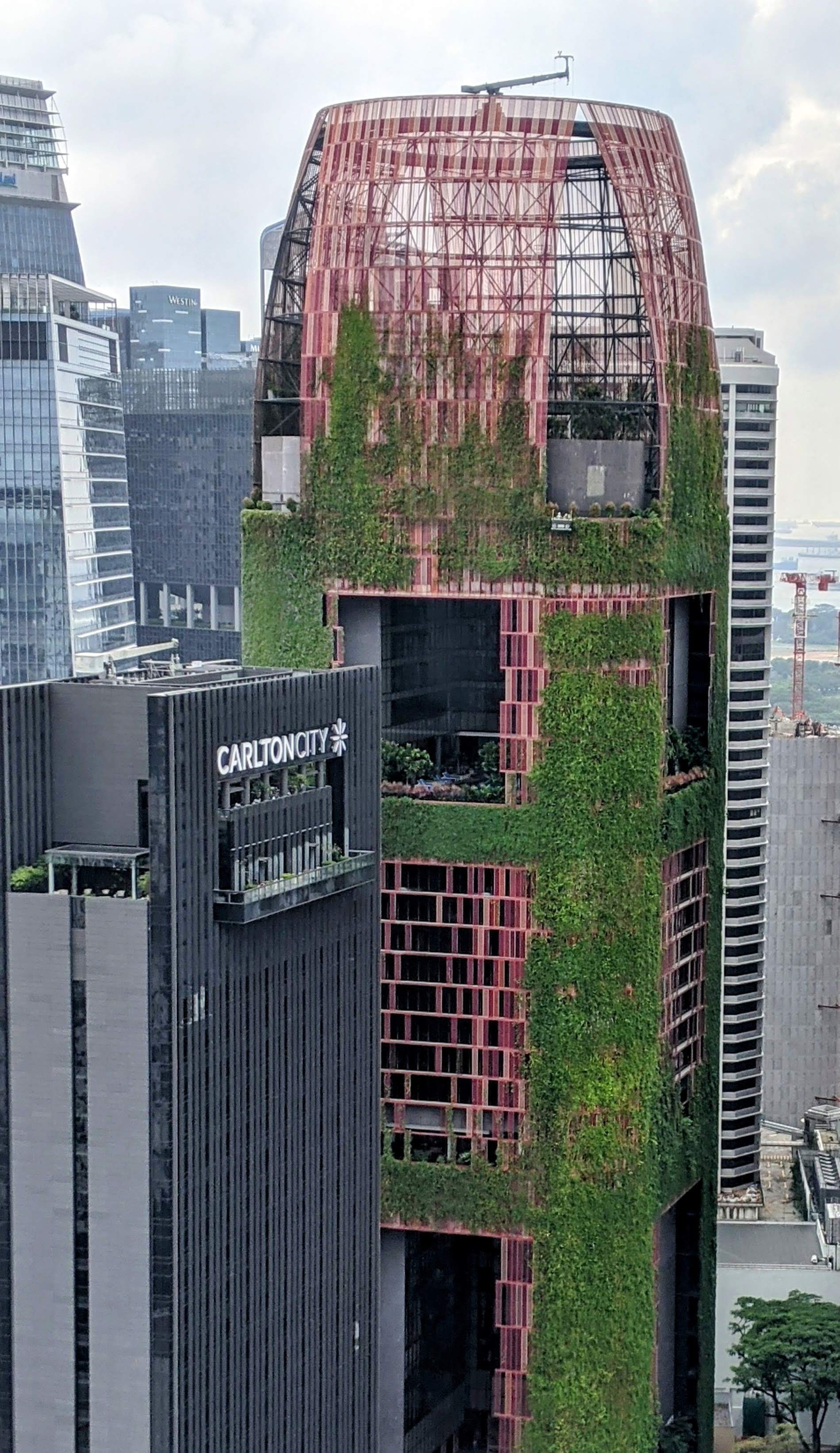
Then more real estate tourism, including Tiong Baru, a public housing project dating back to the 1920s. And the Qi Tian Gong Temple:
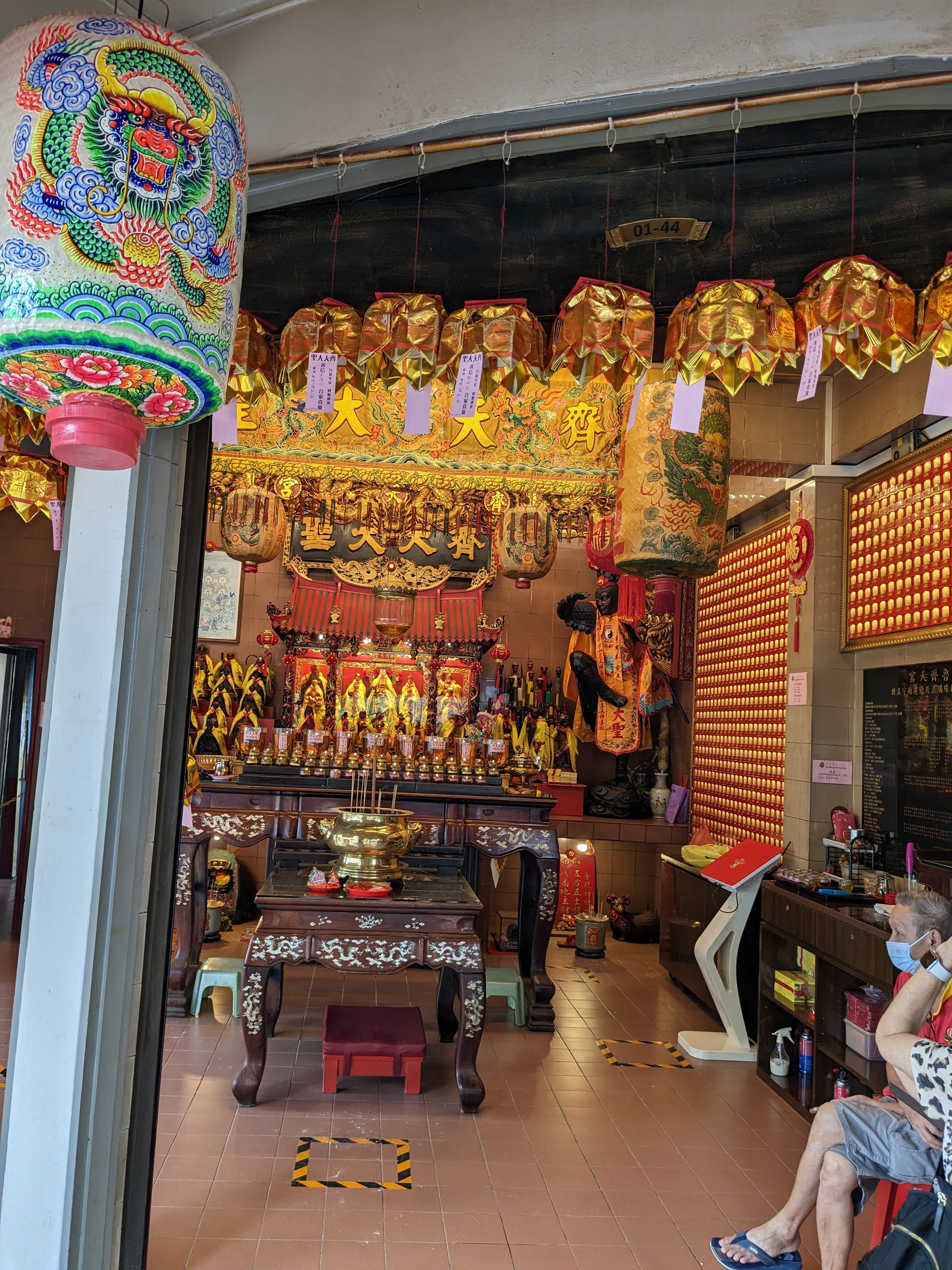
It’s Singapore’s oldest temple and honors the Monkey God, who is supposed to bestow blessings and protection.
Our take-aways from this first leg of the trip: (1) Singapore, like NYC, is a melting pot, but of Asian cultures (Chinese, Malay, Indian, Filipino, Eurasian, Peranakan) with a touch of Brit. (2) There’s something to be said for flogging – – not a speck of litter (no cigarette butts, no tissues, no cans, no bottles), no jay-walking. (3) Driving on the left side is disconcerting. (4) The food, while sometimes difficult to identify, is surprisingly bland.
So goodbye to Singapore, tomorrow we fly to Bali….


 Something to Declare
Leave a comment