
May 16, 2024: From Athens to the Peloponnese
First stop (Thursday) was the National Archaeological Museum, considered to be one of the greatest museums in the world. Exhibits go from the Cycladic Period (Bronze Age, 3100 to 1700 BCE), through the Mycenaean period (Late Bronze Age, 1700 to 1100 BCE), the Homeric Age (1100 to 800 BCE), the Archaic Period (800 to 500 BCE) up to the Classical period (5th and 4th Centuries BCE).
Among the earliest exhibits are these Proto-Cycladic stele statues of women in Parian marble, including this unique work, the largest (5 feet high) of Cycladic sculptures known to date, preserved intact:
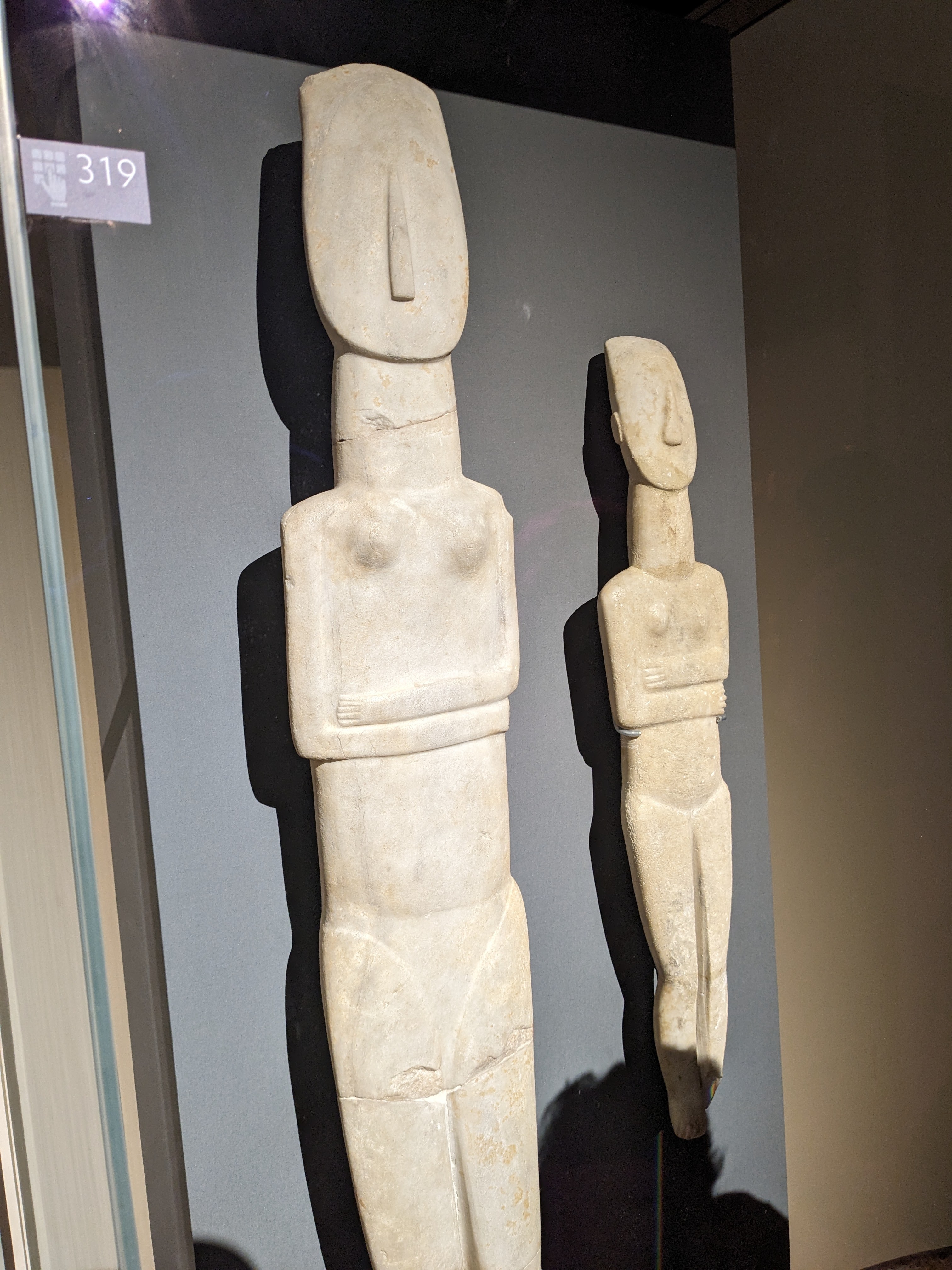
(Couldn’t resist wondering if this lady worshipped Ozempica, the goddess of dieting?)
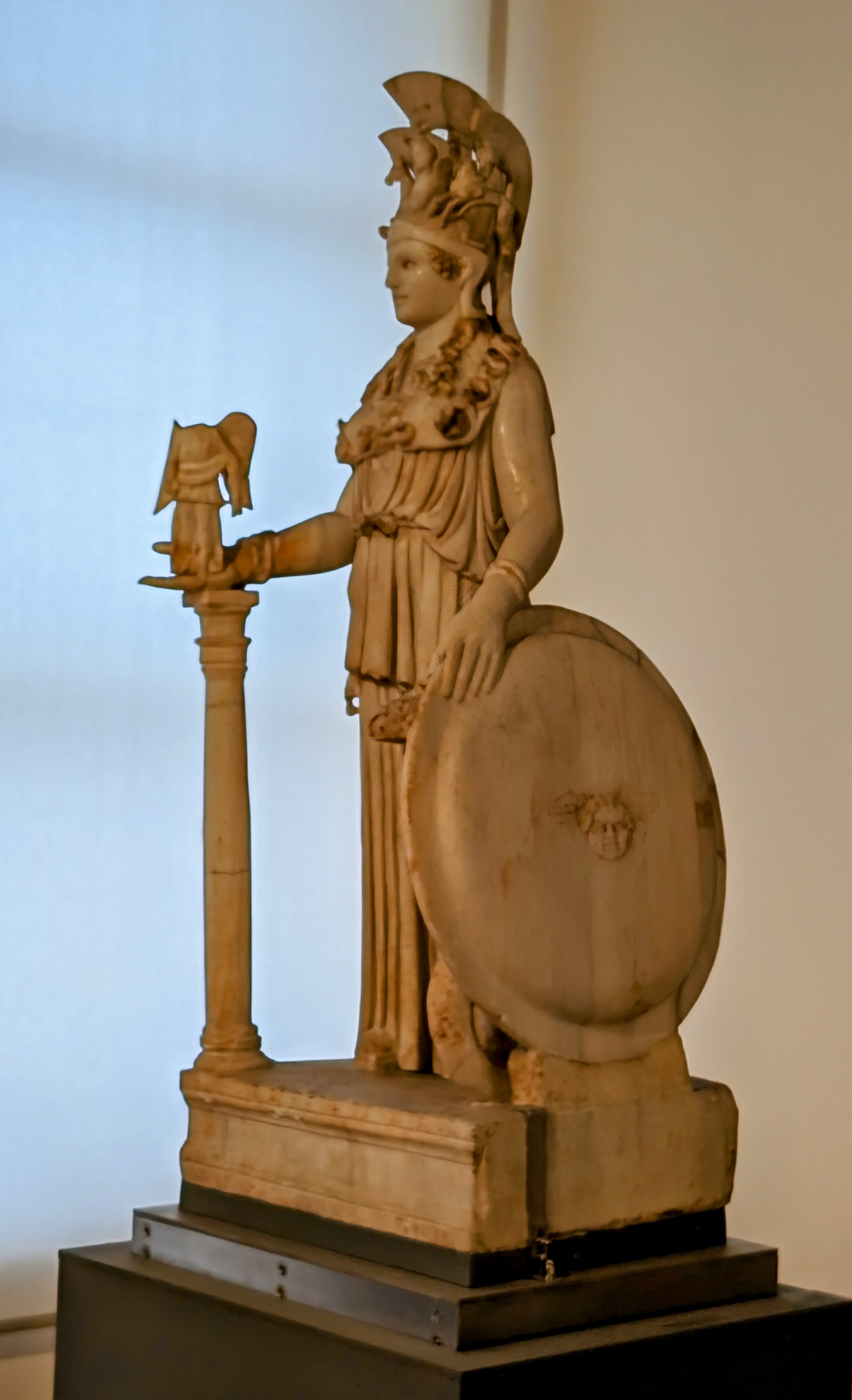
We also saw a replica (much smaller in size) of the statue of Athena that had graced the Parthenon. This work is actually Roman in origin, since the marble has a surface that looks polished:
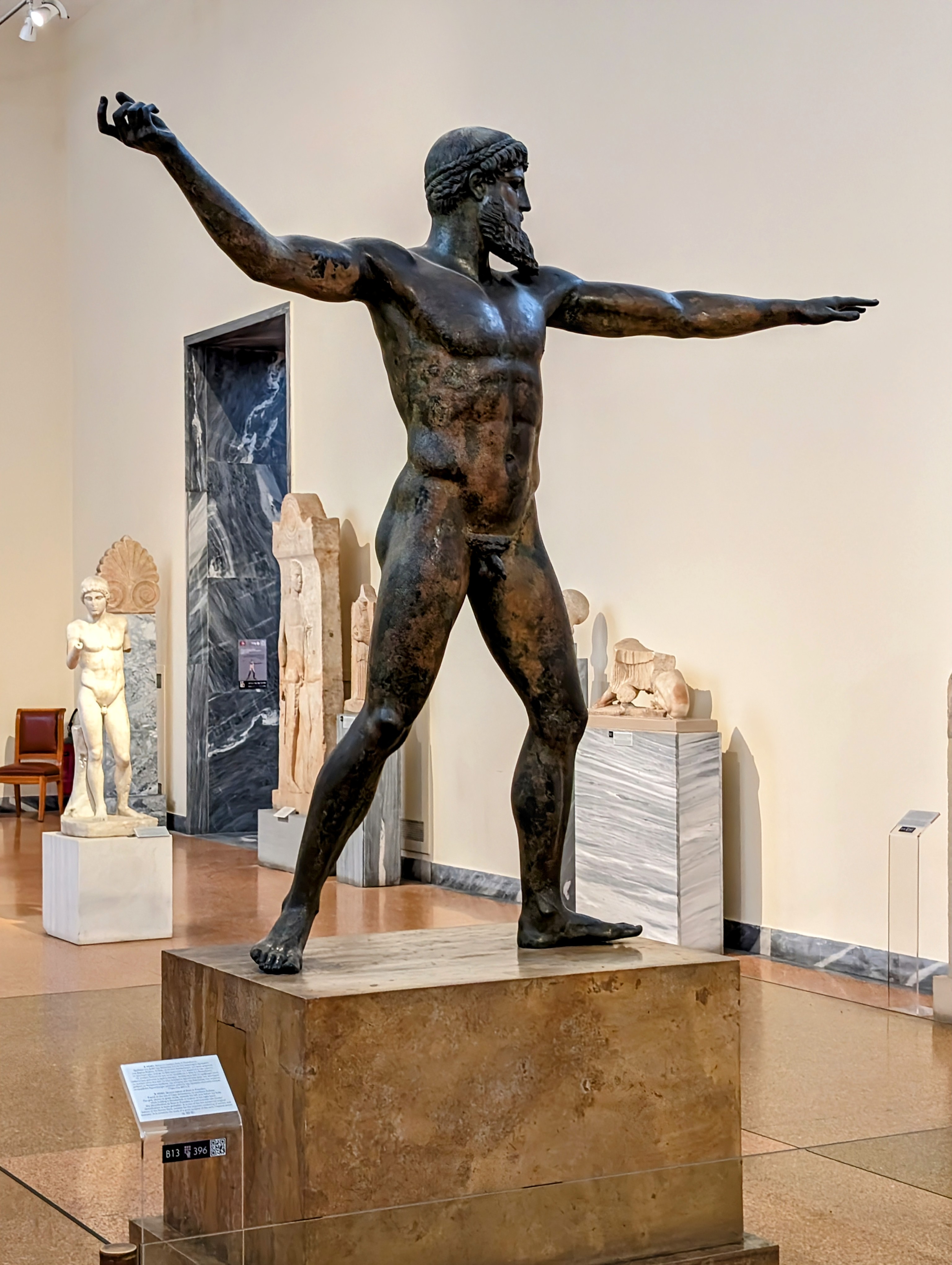
There was also a bronze statue of either Zeus or Poseidon. Controversy is unresolved among archaeologists over whether the object in his hand had been a trident or a thunderbolt, hence the controversy:
For some of the exhibits, the museum displayed artists’ conceptions of what the item had looked like originally. Like this Classical Period (circa 500 BCE) grave stele of Lyseas, in the guise of a worshipper of Dionysus (holding a wine cup in his hand, which is still visible in the original):
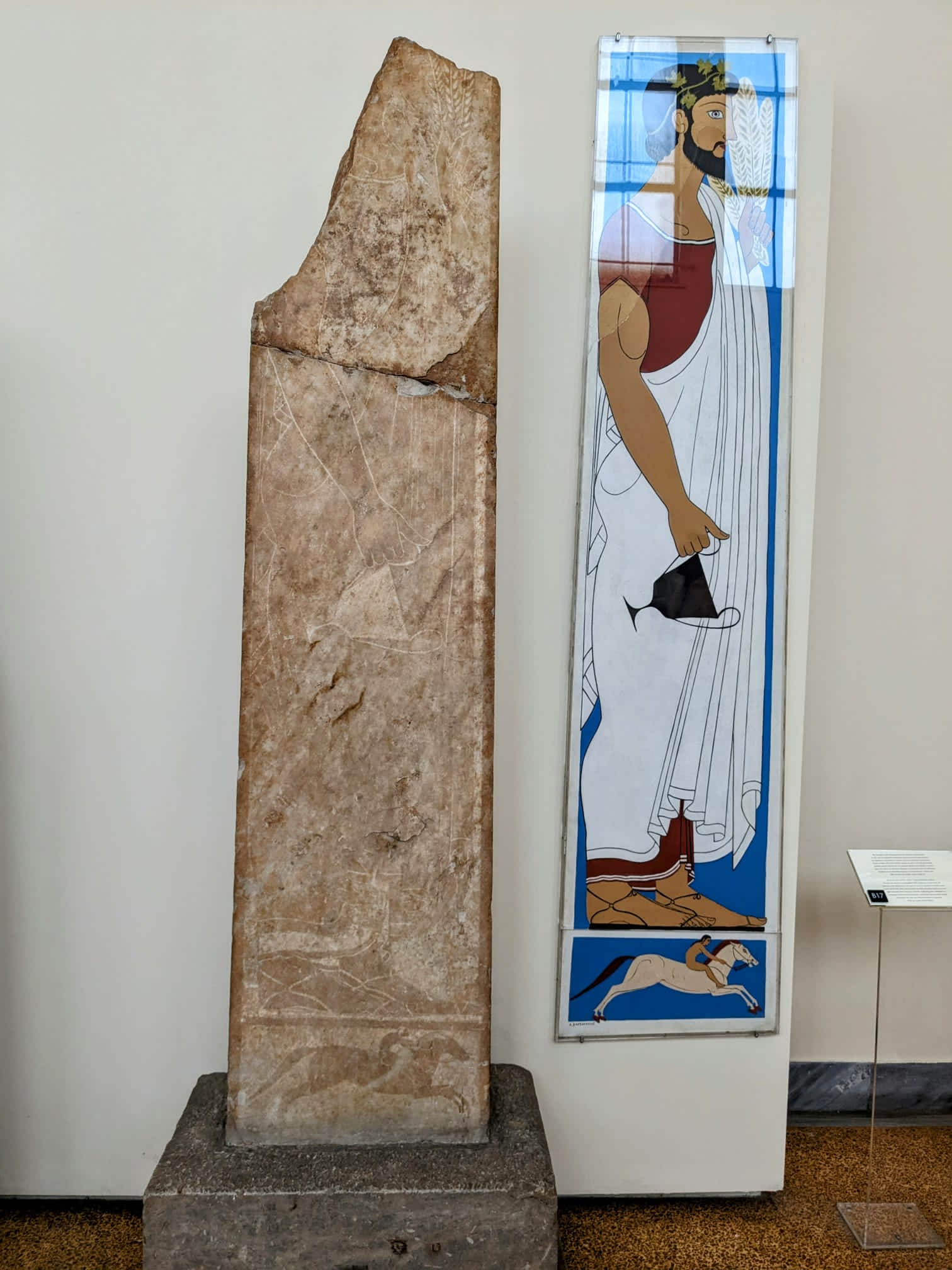
A galloping rider is depicted in a rectangular panel towards the bottom.
After the museum, we proceeded from Attica (where Athens is located) to the Peloponnese to the south and west. The two geographic regions are now separated by the Corinth Canal. There had been several attempts to build the canal, as a way of connecting the Ionian sea to the Aegean. The first was during the reign of Roman Emperor Nero (67 CE), using labor of 6,000 Jewish prisoners (couldn’t resist bringing in yet another Jewish factoid) from the first Jewish-Roman war. Other attempts had been made in the 2nd Century CE by Herodes Atticus, and by the Venetians in the 17th Century. But the technology hadn’t been up to the task until the end of the 19th Century:
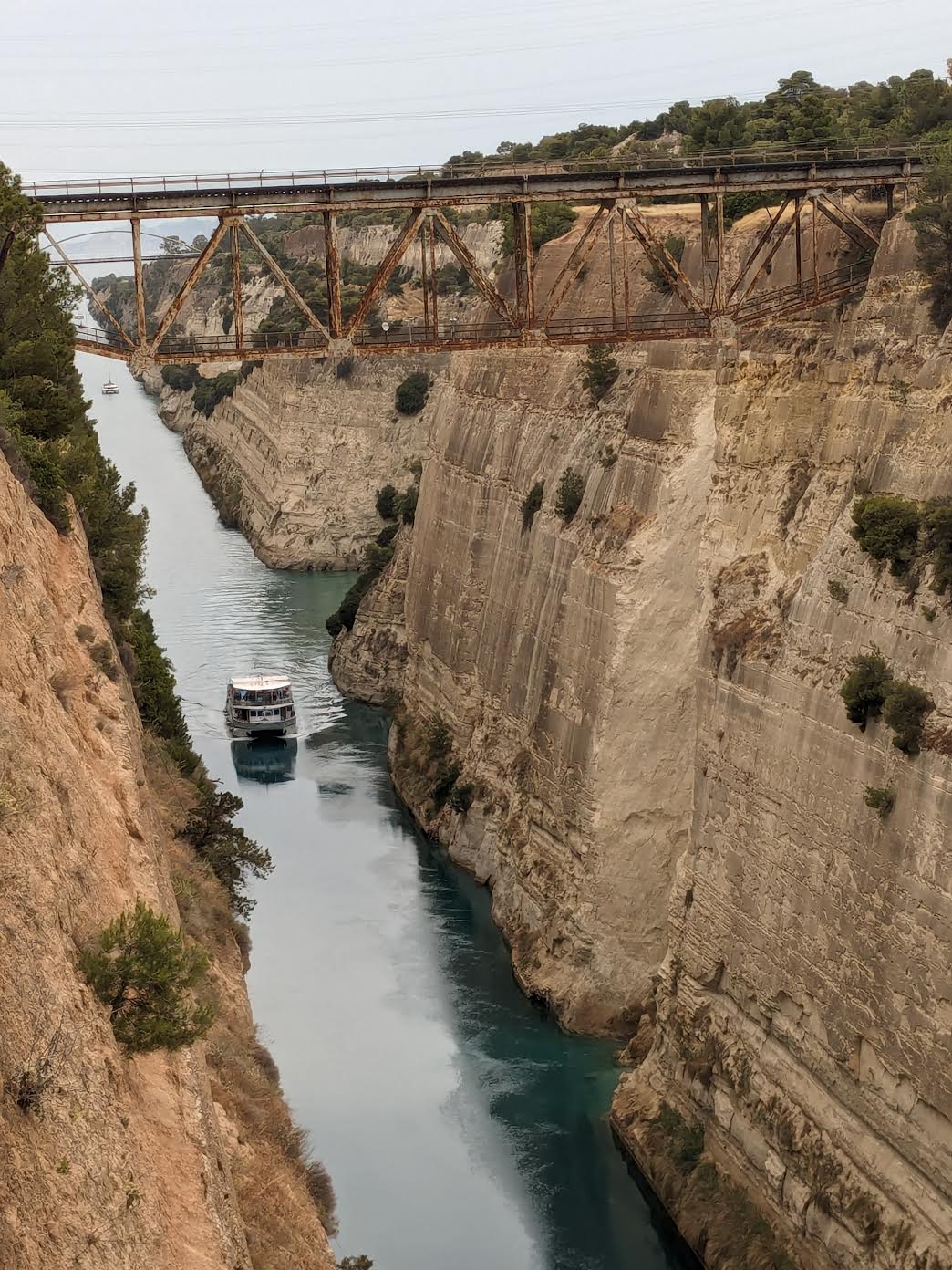
Four miles long and 81 feet wide, it was completed in 1893, and it is used by about 12,000 ships per year. It is also used currently by bungee jumpers.
After the canal, we proceeded to Corinth, one of the largest cities in ancient Greece (population of about 90,000 around 400 BCE). It was demolished by the Romans, then rebuilt by Julius Caesar (Hey, Romans, make up your minds!). Today, the only things left are some Corinthian columns, and some low stone walls and foundations:

Stef and I posed in front of the remains of the Temple of Apollo:
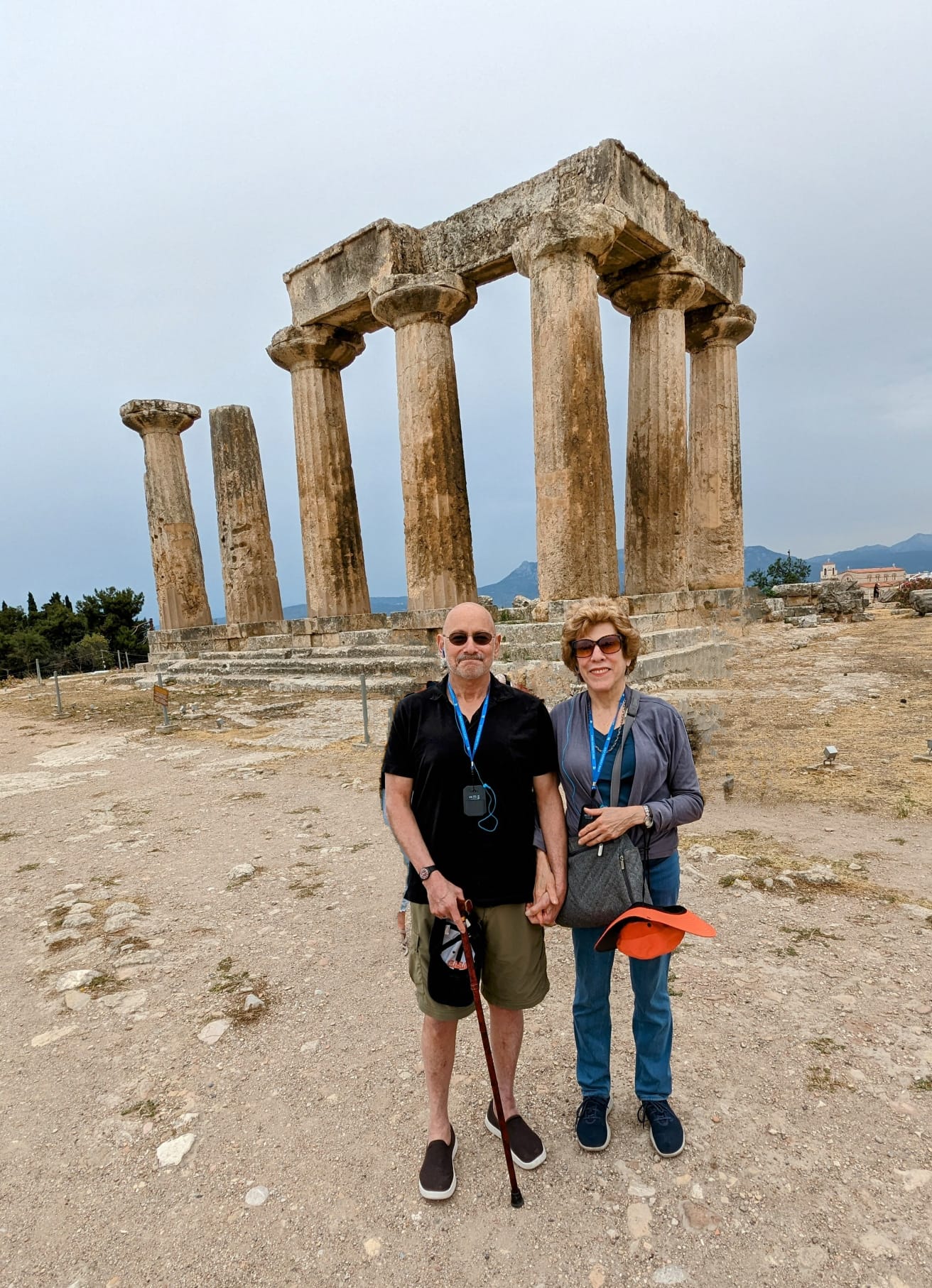
In the interests of candor, it’s noted that these columns were not formal “Corinthian” columns, since they are monolithic (made in one piece) and lacking flowery capitals at the tops.
Corinth had had a sizable Jewish community (see remains of a former synagogue):

Above the three menorahs, there are some remains of the word “synagogue” in Greek. Corinth also figured notably in early Christian history, having been visited several times by St. Paul. (Can’t resist mentioning Donald Trump’s gaffe in 2016, when he mangled the name of Paul’s Second Epistle to the Corinthians, as “Two Corinthians” rather than “Second Corinthians.”)
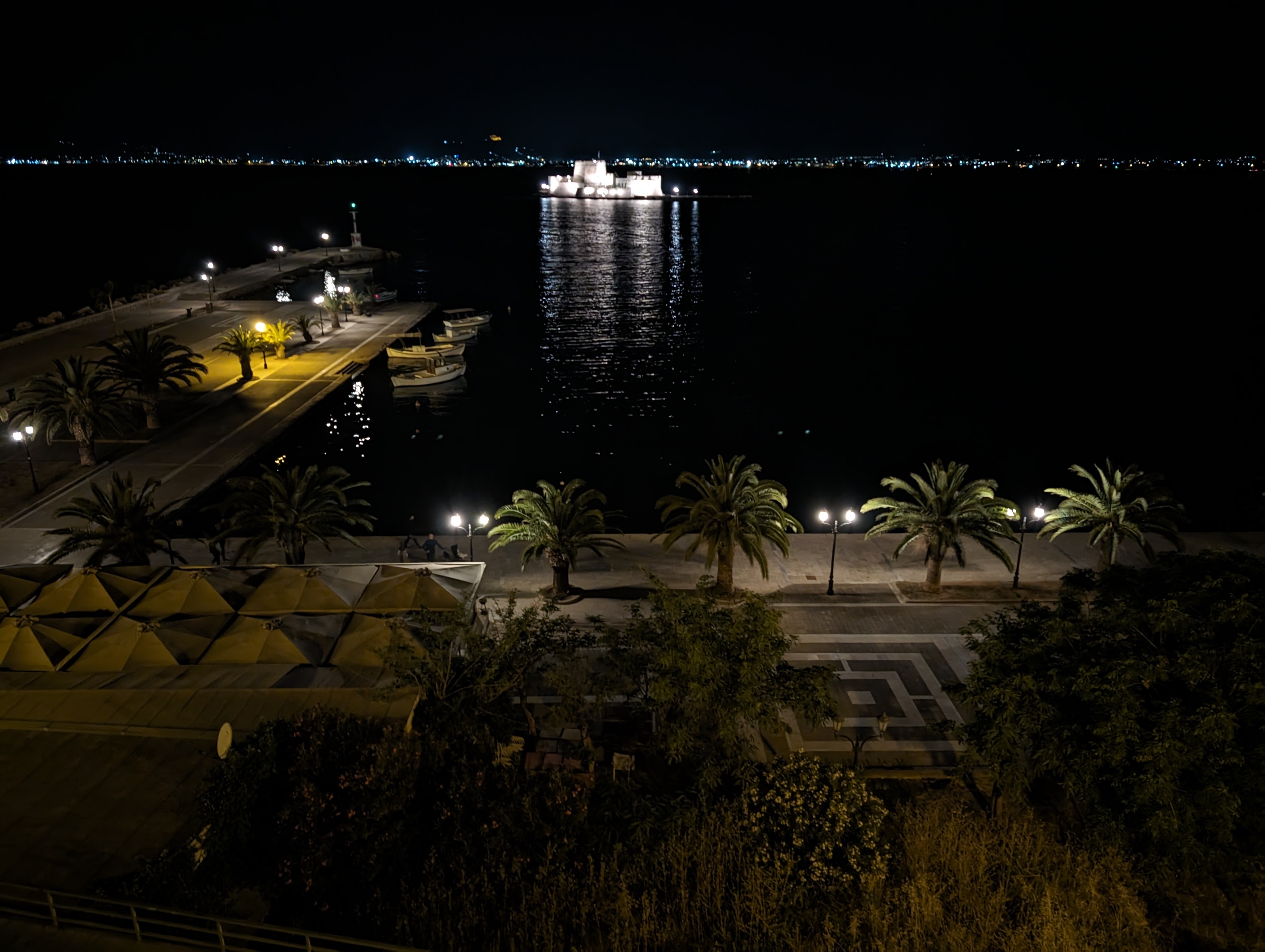
The day ended in Nafplion, which had been the capital of newly-independent Greece in the 1830s, liberated with the help of Admiral Bouboulina (our heroine, see previous post) . The hotel, the Amphitryon, has a lovely view of the harbor:
Due to infuriatingly slow/non-existent internet at the hotel, this post was somewhat delayed. Hope to catch up tomorrow and tell you about Mycenae and Epidaurus, and dinner at a local taverna in Nafplion.
 Something to Declare
Leave a comment