
May 21, 2024: Elounda, Spinalonga, Kritsa
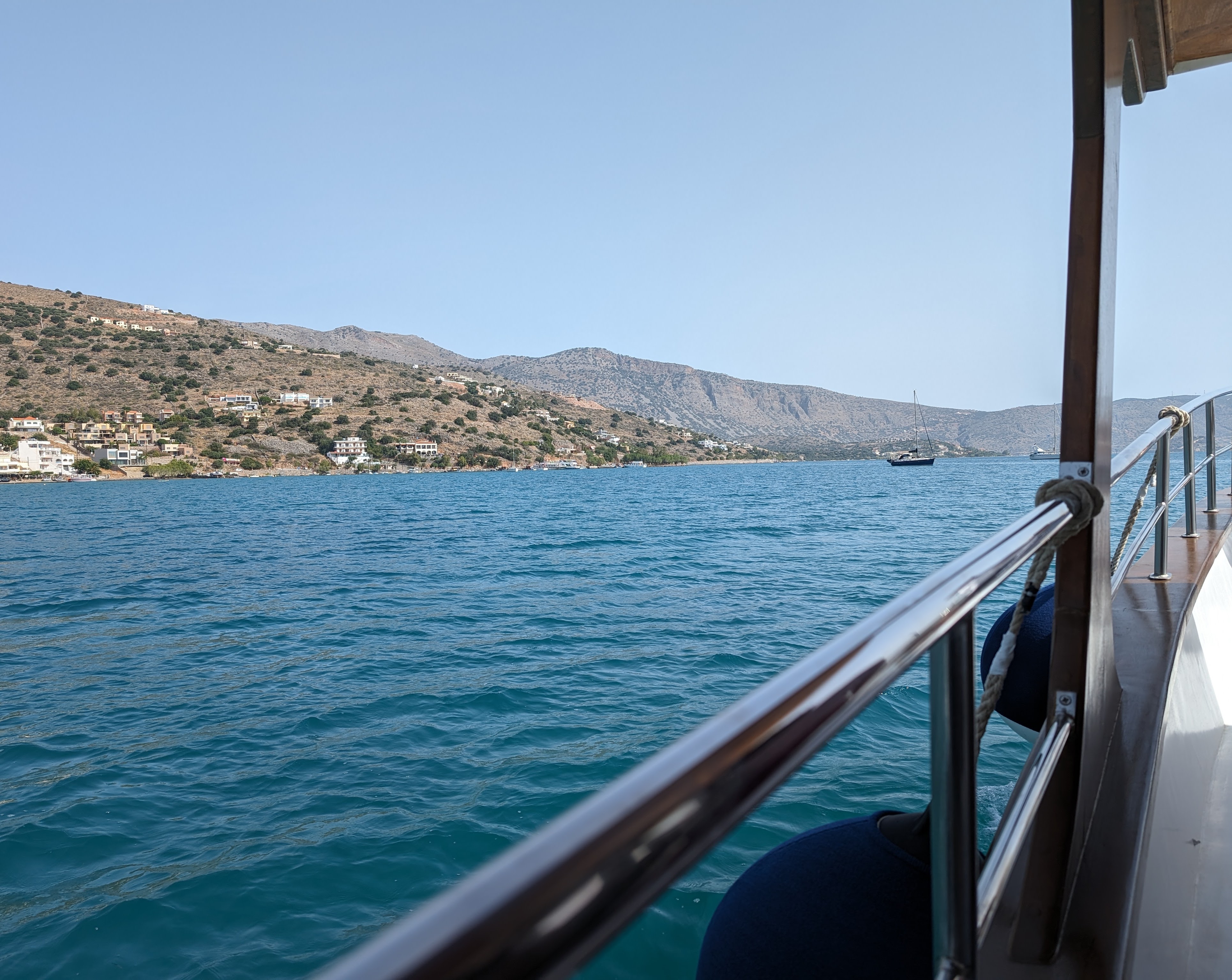
This morning ,we headed out by bus to the Bay of Elounda, 70 km east of Heraklion. In the town of Elounda, we boarded a small boat for the half-hour ride to the island of Spinalonga. On the trip over, we were treated to recorded Greek music (bouzouki and voice). There’s Homer’s “wine-dark sea” again:
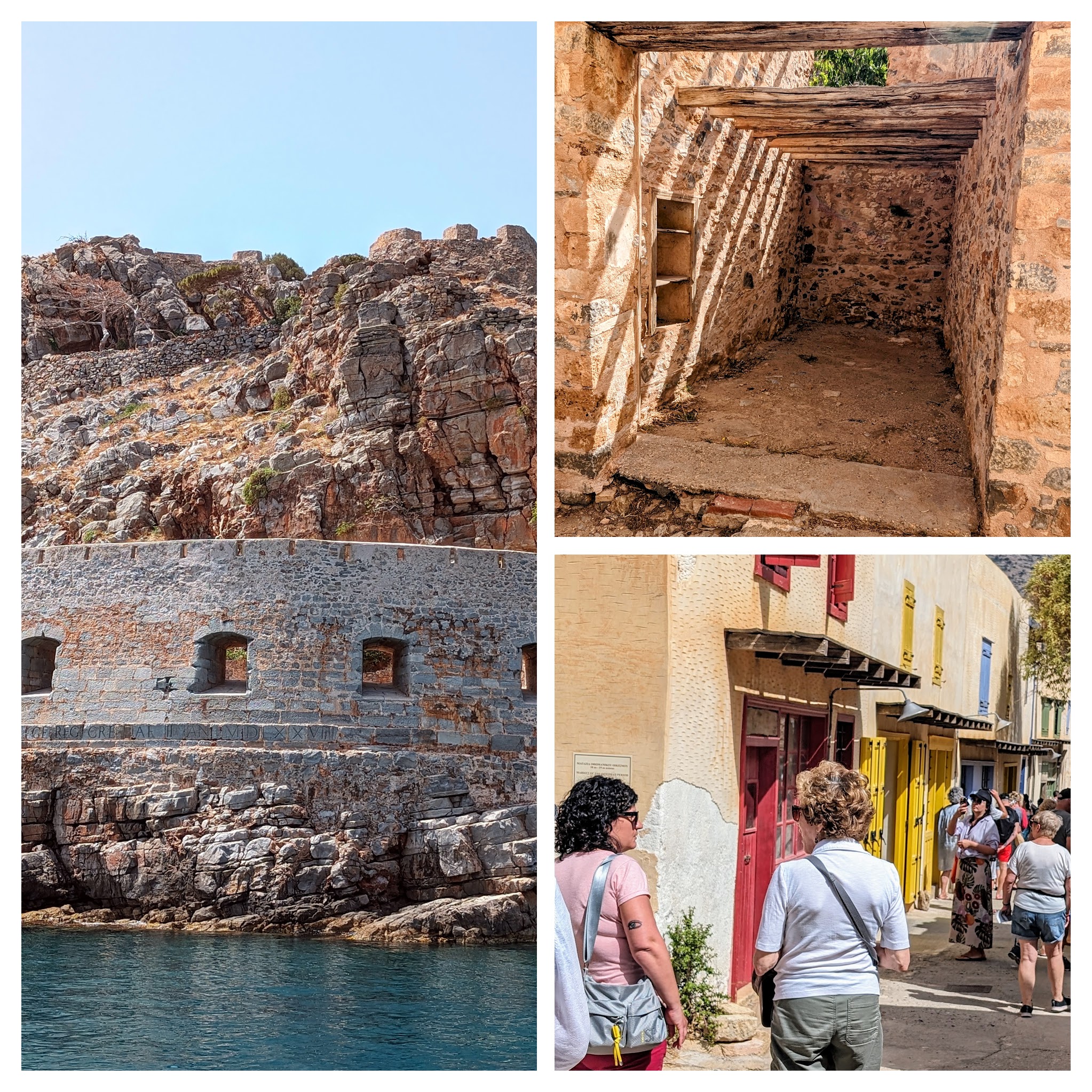
Spinalonga is a former Venetian fortress, in which some Venetians held out against the Ottoman Turks for about 60 years after the fall of the rest of Crete to the Turks in 1669.
Beginning in 1903, Spinalonga was established as a leper colony by the Greek government. Persons with Hansen’s Disease (leprosy) were rounded up and transported to Spinalonga, starting in 1913, in order to save the rest of population from the spread of what was believed to be a highly infectious disease. Until 1957, it was a one-way trip; those exiled to the island were required to stay there for rest of their lives, separated from their families. (Some children were born to the exiles. When these children were not perceived as being infected with the disease, they were taken from their parents, and sent to orphanages elsewhere in Greece. Yikes!)
The cruel irony of this policy is that Hansen’s disease turns out to be not easily transmitted (it requires a long period of intimate contact). Because of the distressing nature of the symptoms (some people’s noses, ears, and other appendages fell off, etc.), Hansen’s patient were unfairly stigmatized and shunned, similar to the way that AIDS patients were treated in its early years.
An antibiotic treatment for Hansen’s was found in the mid-1950s, and the government began another forced repatriation of people from Spinalonga back to the Greek mainland. Some people resisted, asserting that they had established lives and a society on Spinalonga. But no luck; no one lives there anymore.
The buildings on Spinalonga are a mix of Venetian, Ottoman and Greek designs. Some are defensive fortress-like structures, some are former residences, some are former government or business buildings.
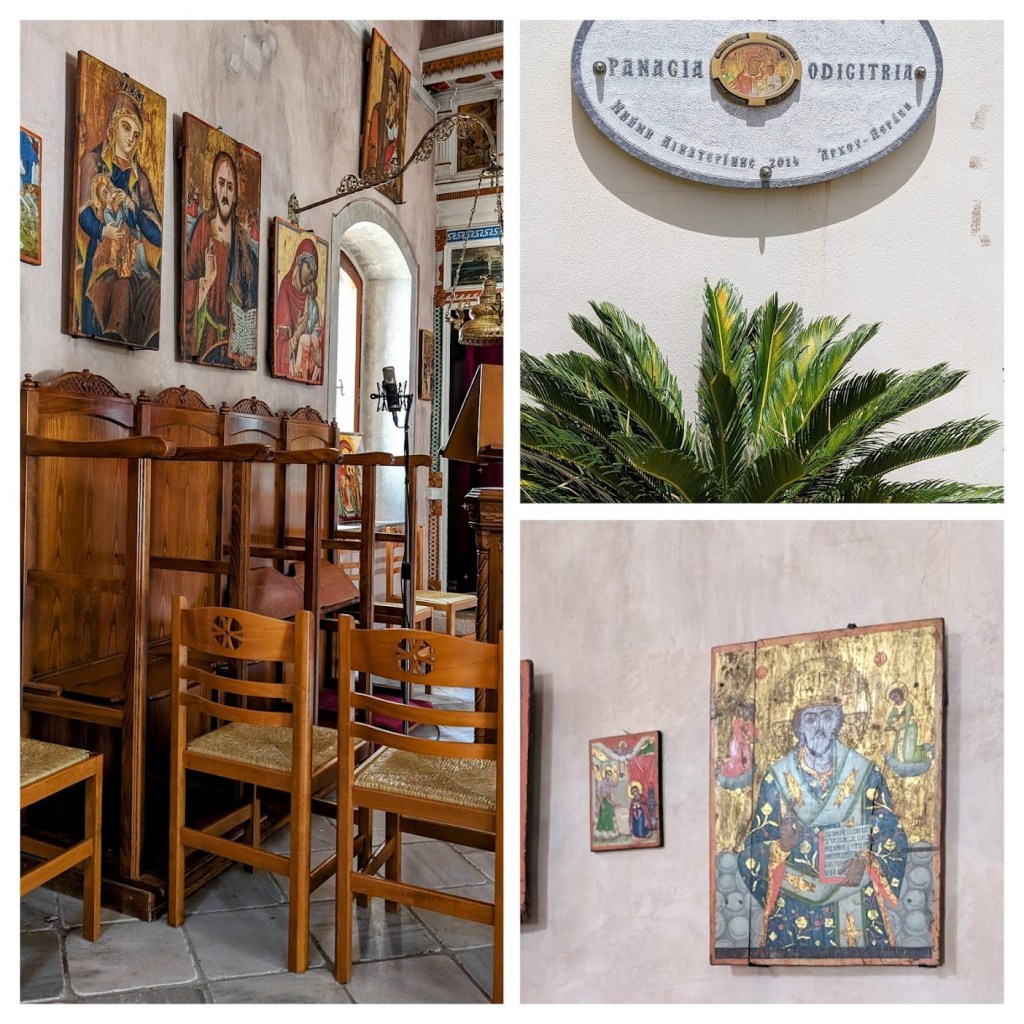
We returned to Elounda by boat, and proceeded to the town of Kritsa. We were supposed to see the Greek Orthodox church Panagia Kera, with incredible Byzantine frescoes, but it turned out to be closed Tuesdays. So we went instead to the church of Panagia Odigitria, which featured a slew of icons on the walls:
After the church, we went to a buffet lunch at the local women’s cooperative, created to maintain the traditions of the village. The women served delicious dishes made from local produce, including spinach and cheese pies, a quiche made from zucchini and cheese, a sort of bruschetta with days-old bread and tomatoes, local giant beans, dolmades (stuffed grape leaves and zucchini flowers), and home-made pasta with the local version of feta cheese:
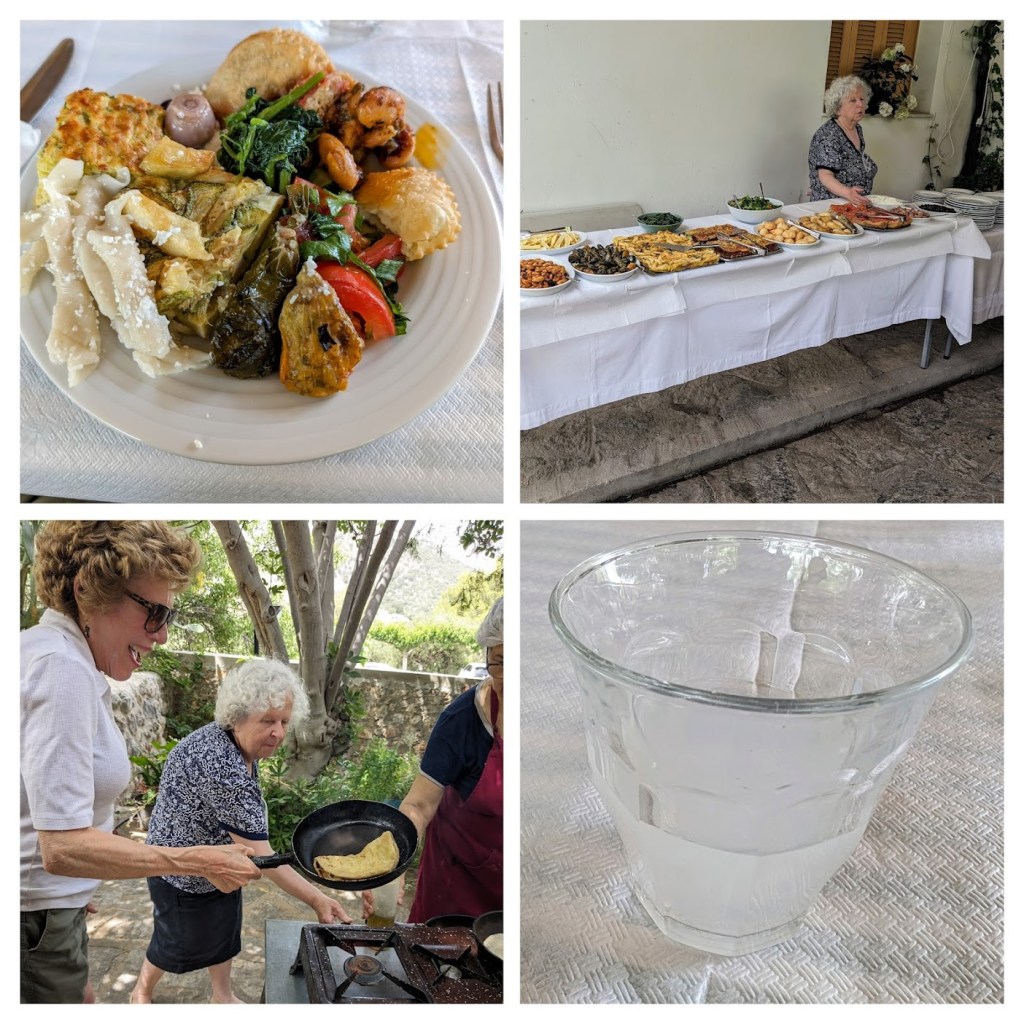
They also served an almond beverage called soumada (lower right), and conducted a dessert cooking lesson (lower left) in which Stef got some help from Maria, the coop’s president, in flipping a crêpe filled with cheese (one of our group called it a ‘cheese blintz’).
Tomorrow we have to be up by the crack of “rosy-fingered” dawn (another Homeric expression), for our hydrofoil ferry trip to Santorini.

 Something to Declare
Leave a comment