
July 15, 2024: The Belvedere
As part of my Vienna fixation, I’ve been re-reading the mystery series by Frank Tallis (a British psychologist), which has been serialized for television as “Vienna Blood.” It involves a Viennese police detective who teams up with a Jewish psychiatrist (who is also an acquaintance of Sigmund Freud). Together, they use psychoanalytic theory to solve crimes in 1903 Vienna. In the first book of the series, the psychiatrist (Max Liebermann) strolls with his fiancée (Clara) on the grounds of Belvedere Palace in Vienna.
Belvedere is the former palace of Prince Eugene of Savoy. He was deemed to be “too short and too ugly” to serve the French King, Louis XIV. So he offered his services to the Habsburgs in Austria. He famously defeated the Ottoman Turks in 1697 and became an Austrian idol, and quite wealthy in the process. He is reported to have built Belvedere in a sort of competition with the Habsburgs, intended to rival their Schönbrunn Palace, and to look down (figuratively and literally) on the Habsburg’s residence (the Hofburg) in Vienna.
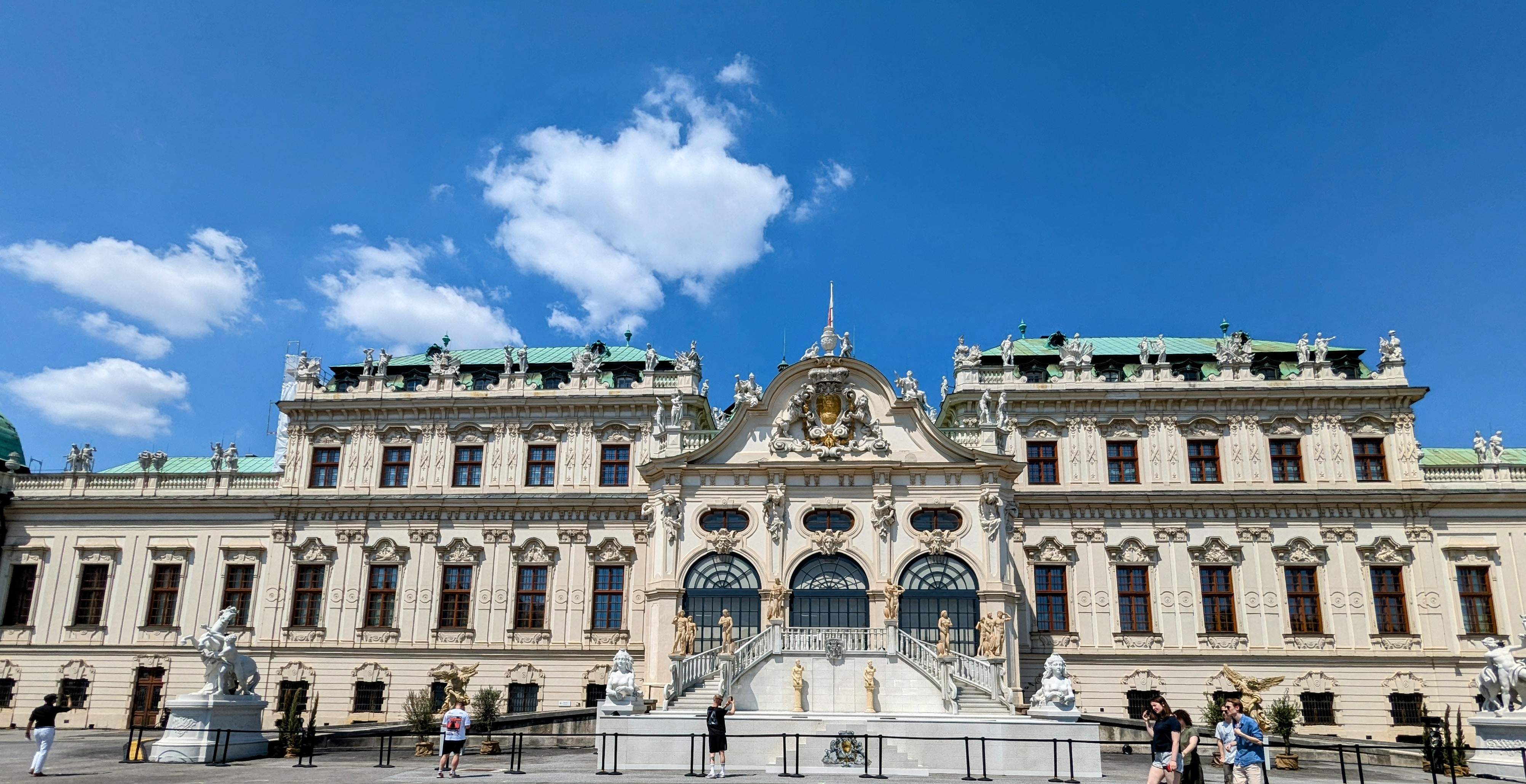
But the Habsburgs got the last laugh: Since Eugene died without issue, Belvedere was taken over by the Emperor Josef II. Josef turned Belvedere’s Upper Palace into Vienna’s first great art gallery. It now houses paintings by Gustav Klimt and other Secessionist luminaries, French impressionists, and many other Austrian artists. It has a view of the gardens, the Lower Palace (where Eugene actually lived), and the Vienna skyline:
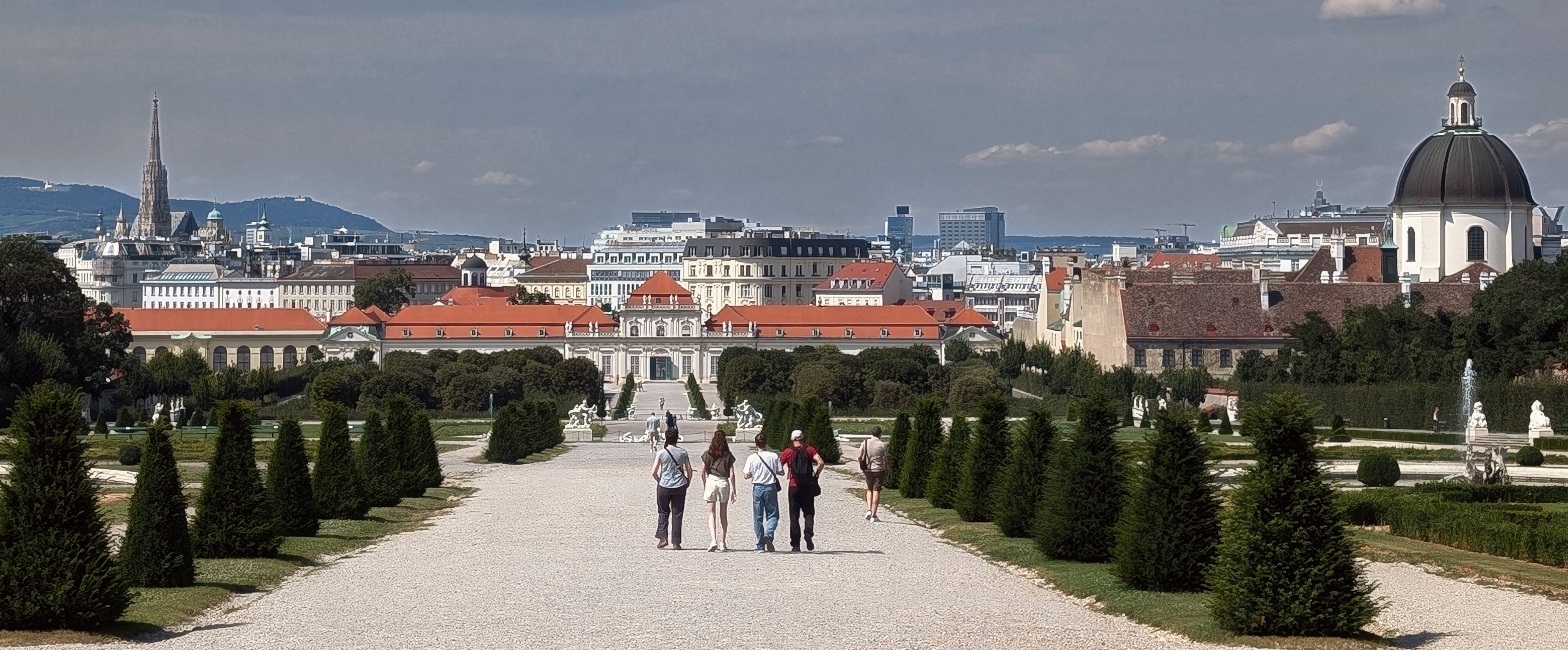
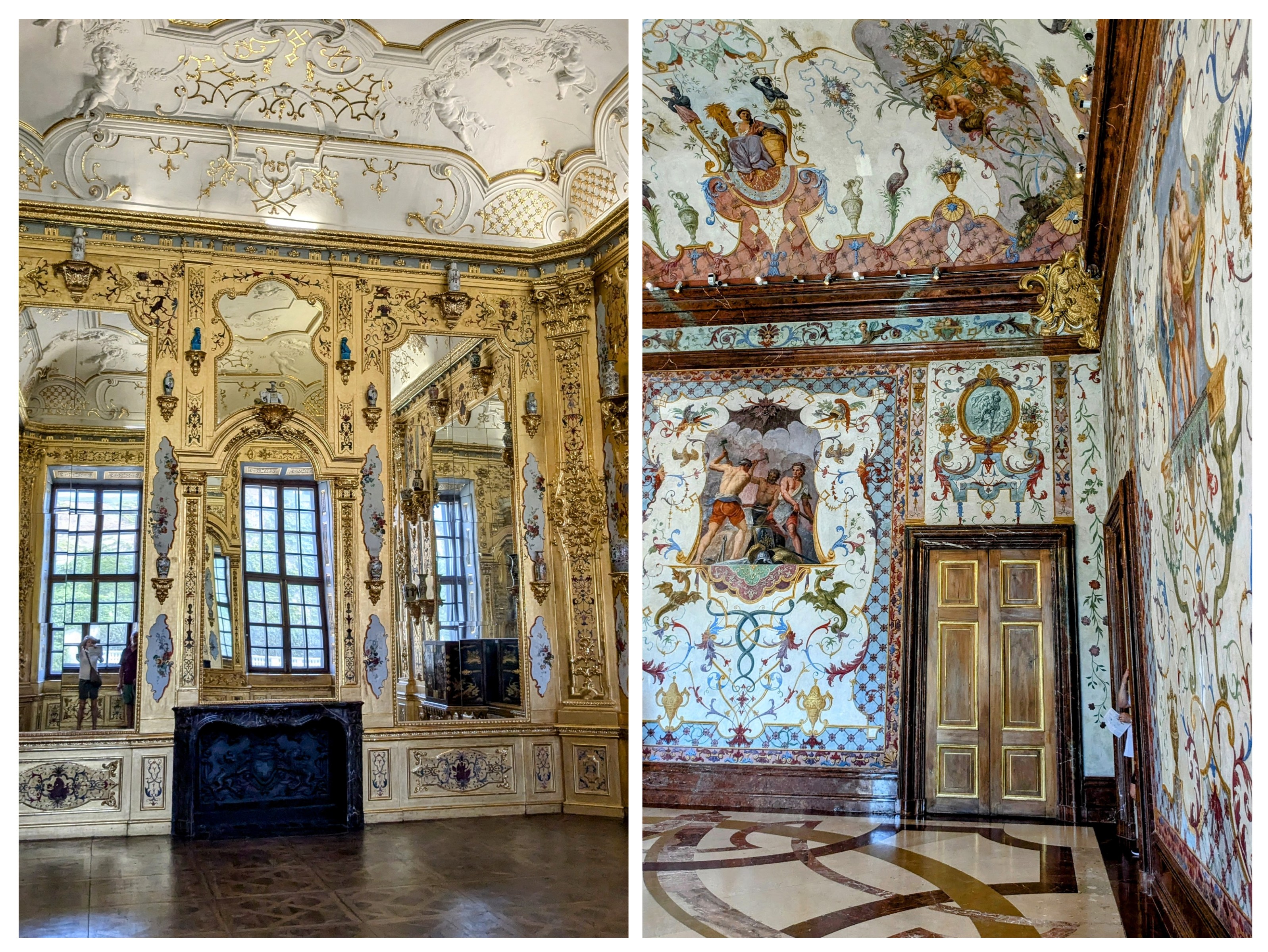
Getting off the tram, we first went to the Lower Belvedere, where we strolled through Eugene’s lavish rooms:
There was also an exhibit of works by a Dada-ist artist, Hanna Höch. She was one of the first to create photomontages and collages, engaging with the deluge of images from illustrated magazines and films. Hanna viewed photomontage as closely related to film–as “static film,” creating new views of the world through cutting and composing.
Like Secessionism, the Dada (early 20th Century) movement involved a rejection of artistic traditions. Dada-ists denounced imperialism, militarism and bourgeois values. Works included mild obscenity, humor and nonsensical displays, like this composite photo of Weimar Germany’s President and Defense Minister in bathing suits:
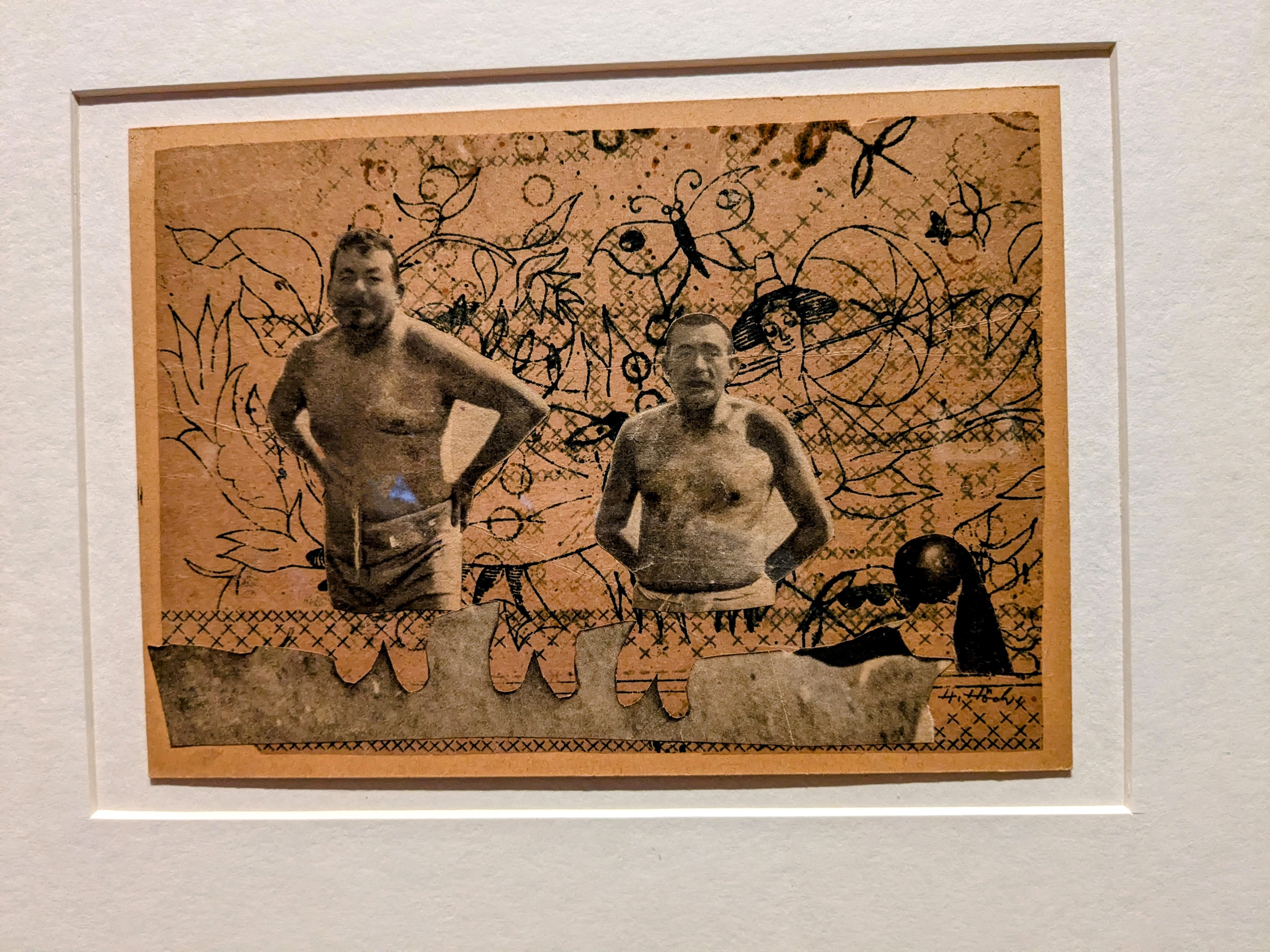
The publication of this work, Staatshäupter (“Heads of State”), created a scandal with lasting damage to the new democracy. The lawsuit to stop publication only accelerated its circulation. Like today’s social media?
There were also two cinema works by Dada-ist colleagues of Höch’s, Inflation,

and Man with a Movie Camera:
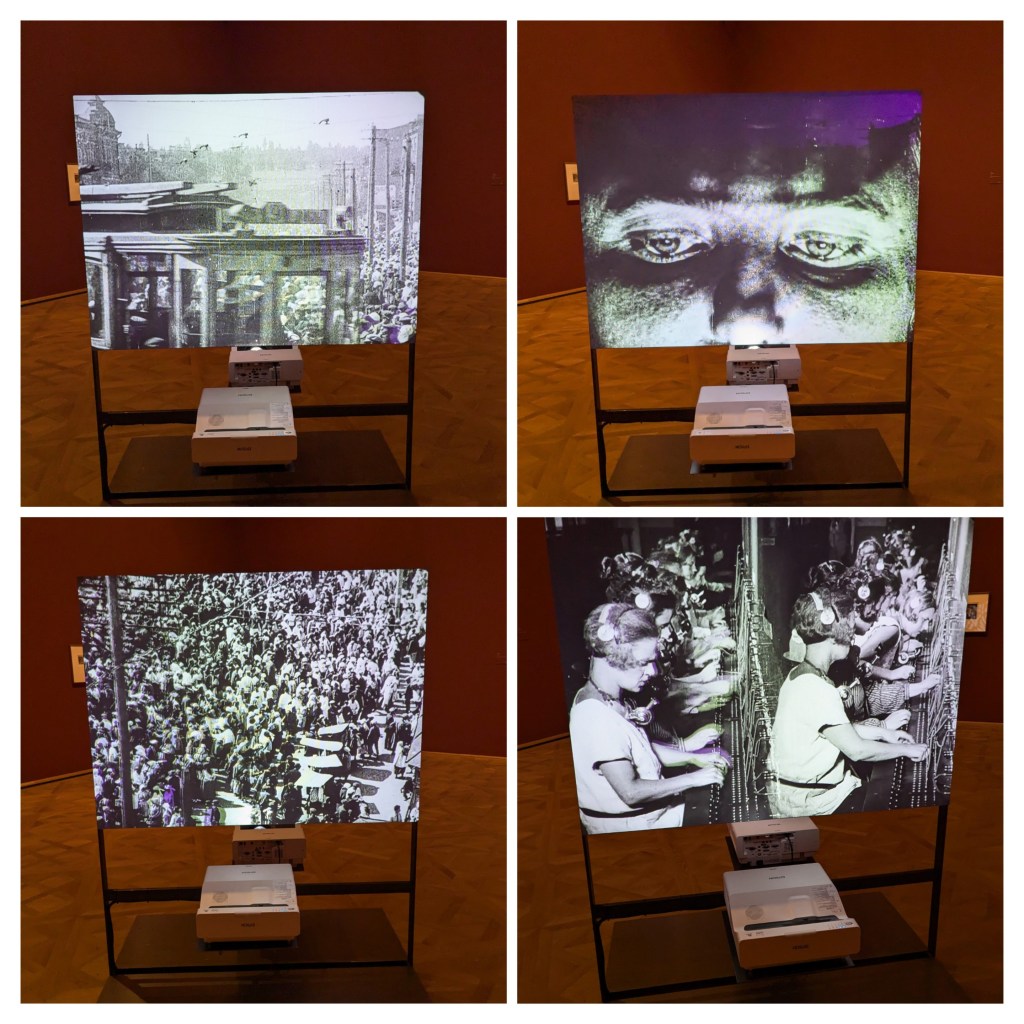
Incredible stuff, given the state of the art at that time.
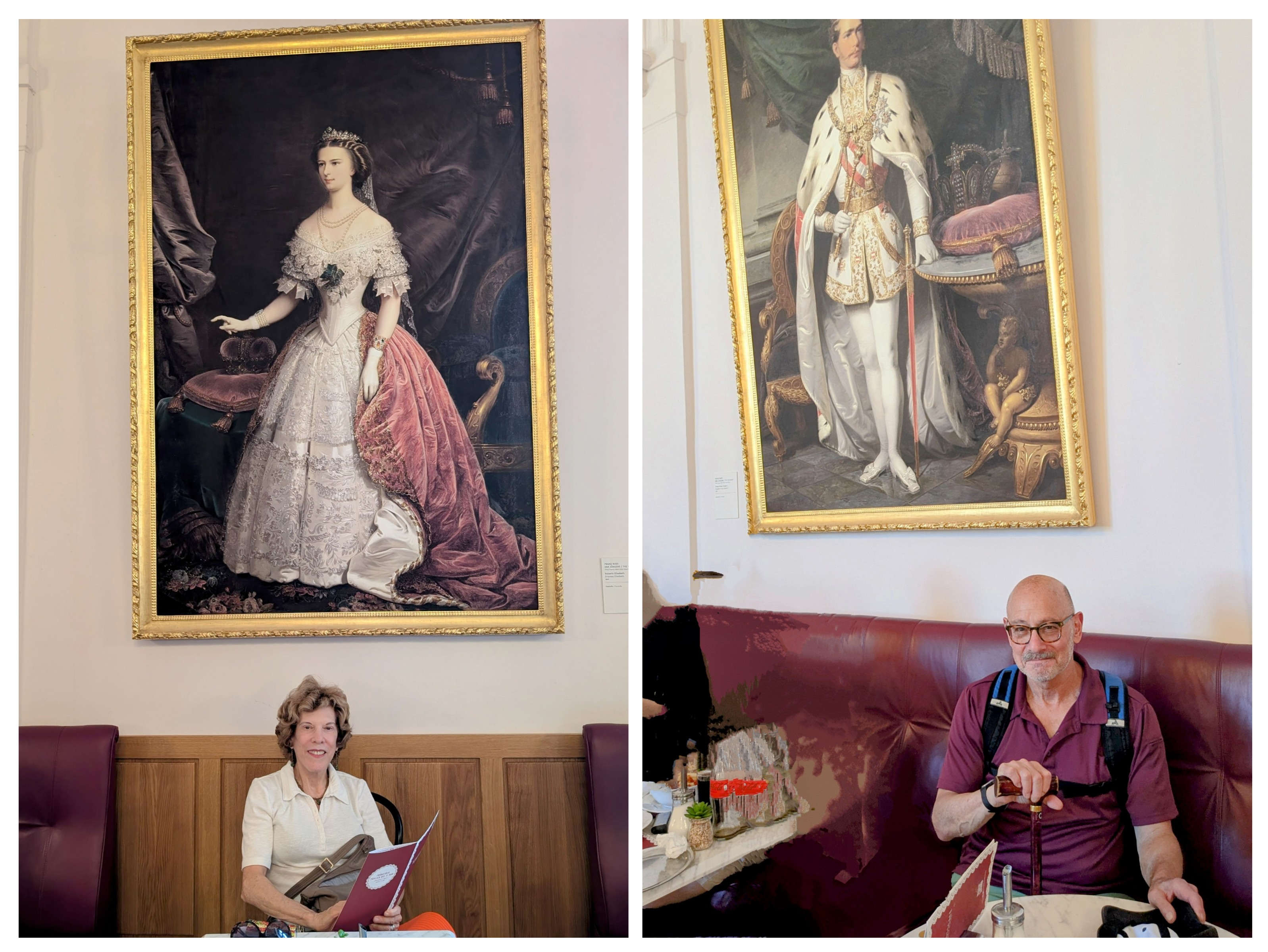
Then, to the Upper Belvedere for lunch at the café. Stef and I had, respectively, the “Sisi” (vegan with falafel) and “Franz Josef” (non-vegan, with prosciutto and cheese) sandwiches, consumed beneath their respective portraits:
Exterior of Upper Belvedere:
This is the place with many French Impressionists, as well as the Klimts, including “The Kiss” and “Judith:”
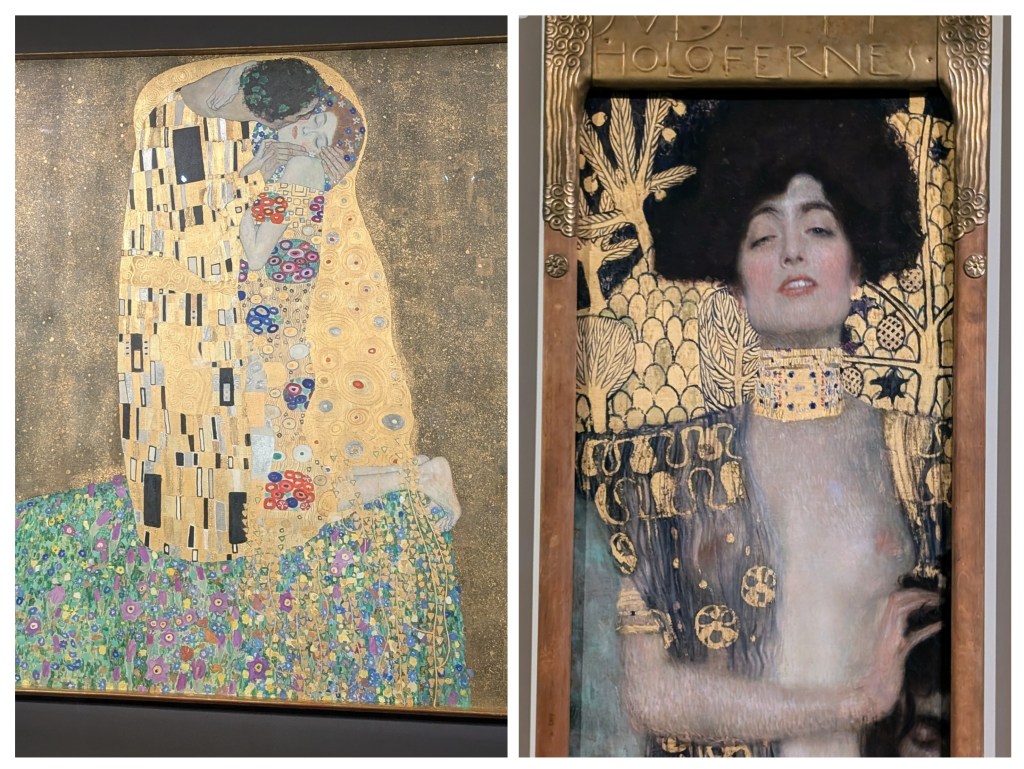
Not fully visible in this photo (bottom right) of the Judith painting is Judith holding the head of Holofernes (which she has just severed); very romantic.
I also got to see some works by my all-time fave, Egon Schiele:

Above, “The Embrace” and “The Bride.” Regarding the latter, you need to look closely to see the closed eye and eyebrow of the bride, snuggled up against the groom’s shoulder. To the left of the couple are a number of figures (most not seen in this part of the collage), signifying eroticism, passion, and, uh…you know…
Tomorrow, Tuesday, is “Our Jewish Heritage Day.” We go to the Stadttempel, Judenplatz Museum, the Holocaust Denkmal (“Memorial”), and the Jüdisches Museum. Stay tuned.

 Something to Declare
Leave a comment