
July 20, 2024: Plachutta & MAK
Final post for this series. Saturday, our last day in Vienna. Just two things on the agenda: Lunch at Plachutta and the MAK.
The restaurant Plachutta is a place for classic Viennese dishes, such as Tafelspitz and Wienerschnitzel. Tafelspitz (boiled beef) was a favorite of Emperor Franz Joseph, and comes in a soup that is served first. Then you serve the beef and marrow bone. Wienerschnitzel is veal pounded flat, breaded and fried.
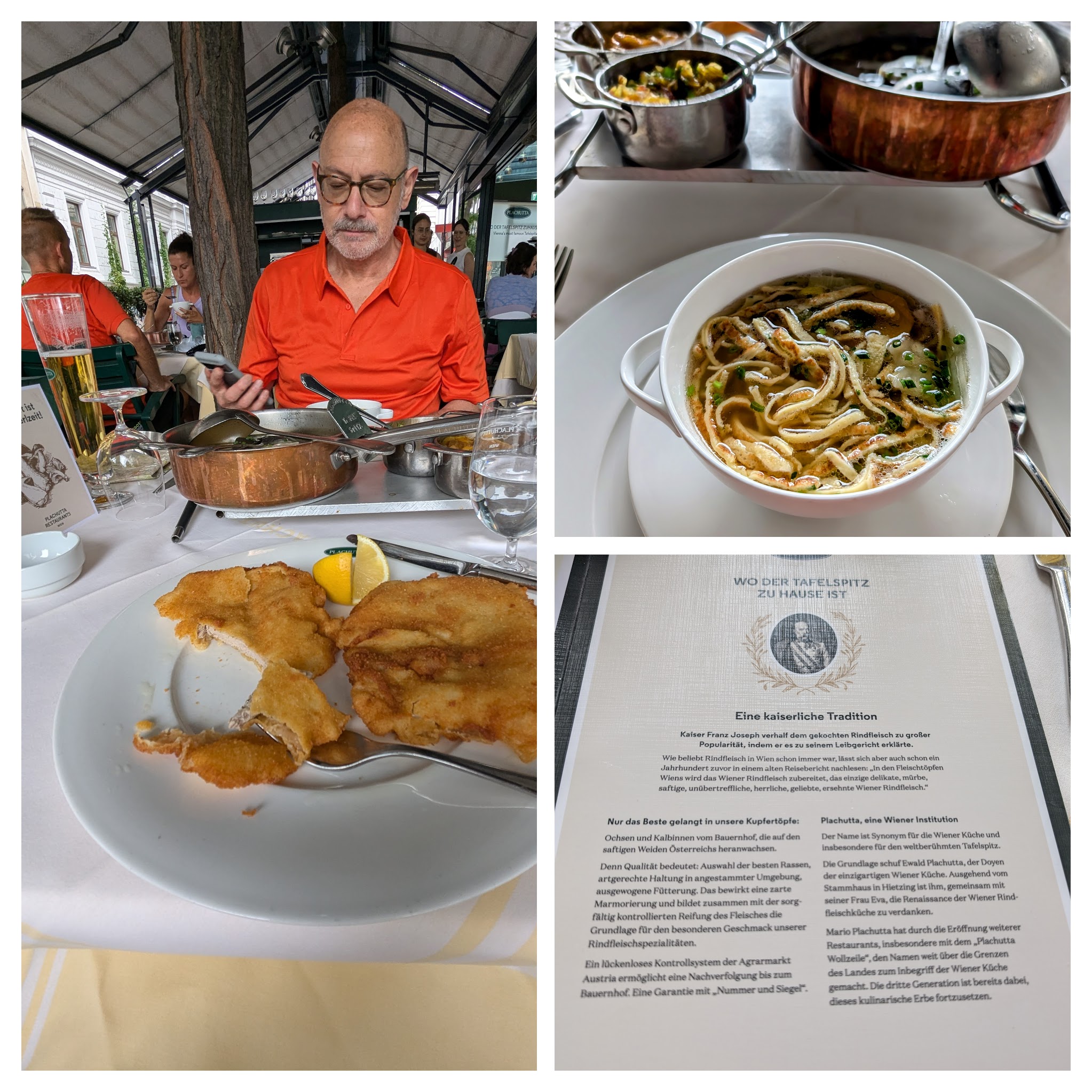
Stef decided to go off the vegan wagon. Just this once. Never again. Promise.
I was eager to see the Museum für Angewandte Kunst (Museum for Applied Art) or, as they call it in Vienna, the MAK. The building itself is impressive:
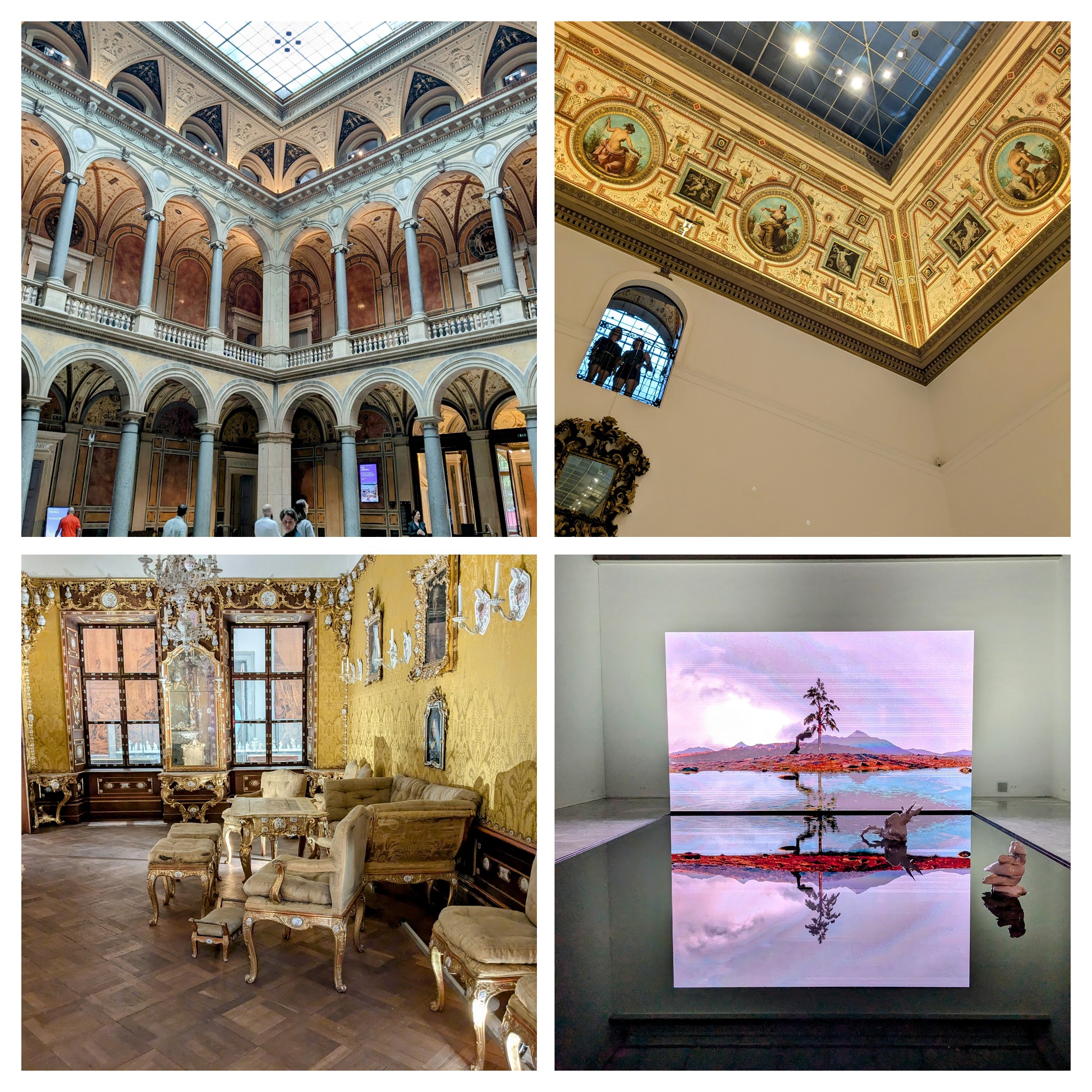
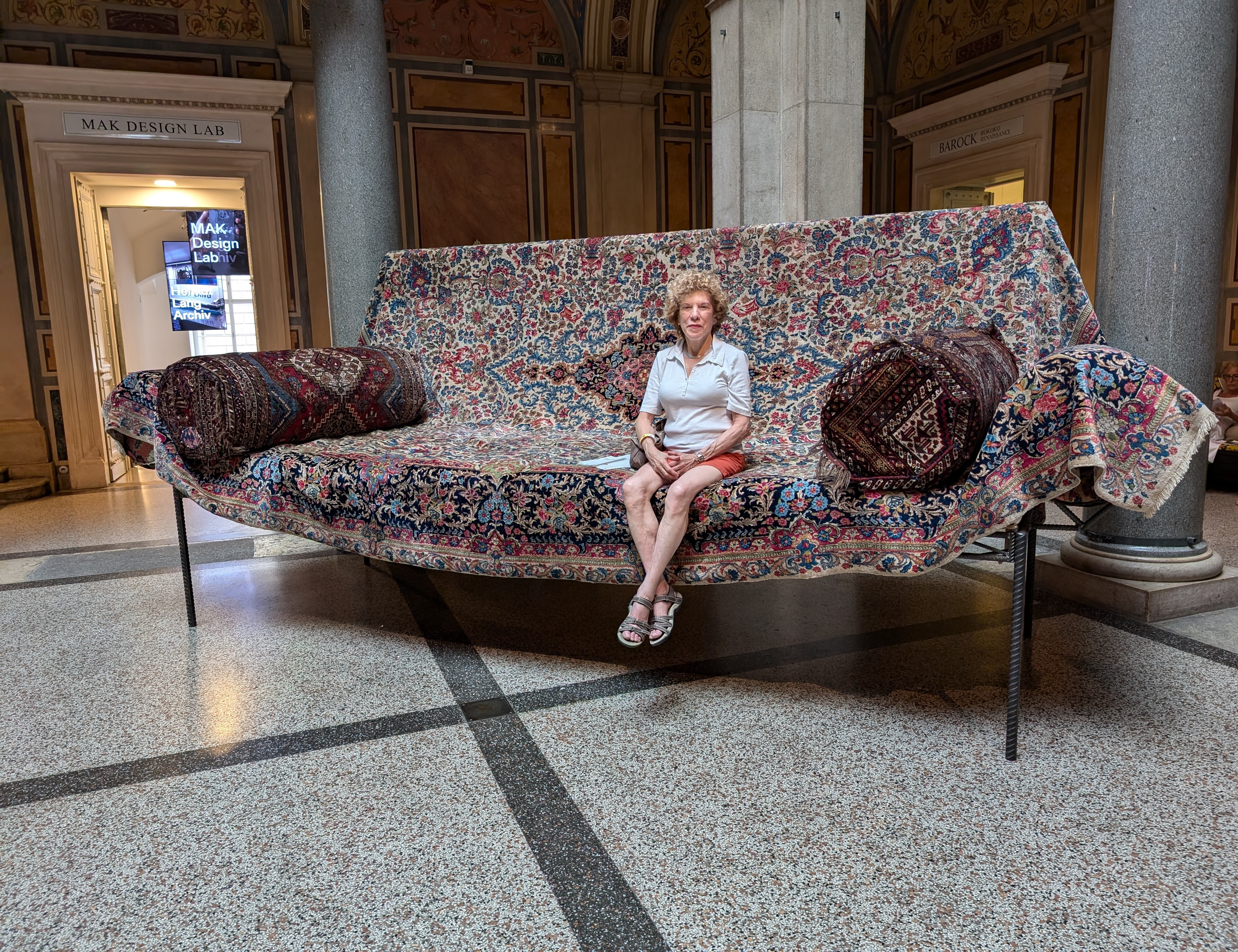
Generally, I just love this stuff, furniture and practical objects designed in yesteryear. The MAK has items from the Baroque through the Golden Age (“Vienna 1900”), Jugendstil and Art Deco, and up to today. In the lobby is an outsized sofa, reminiscent of the “Edith Ann” sketches on Saturday Night Live:
One problem with this museum is, in my opinion, the poor curation. The narratives accompanying the exhibits are close to the floor and inadequately lighted, so that you have to stoop over and squint to read them.
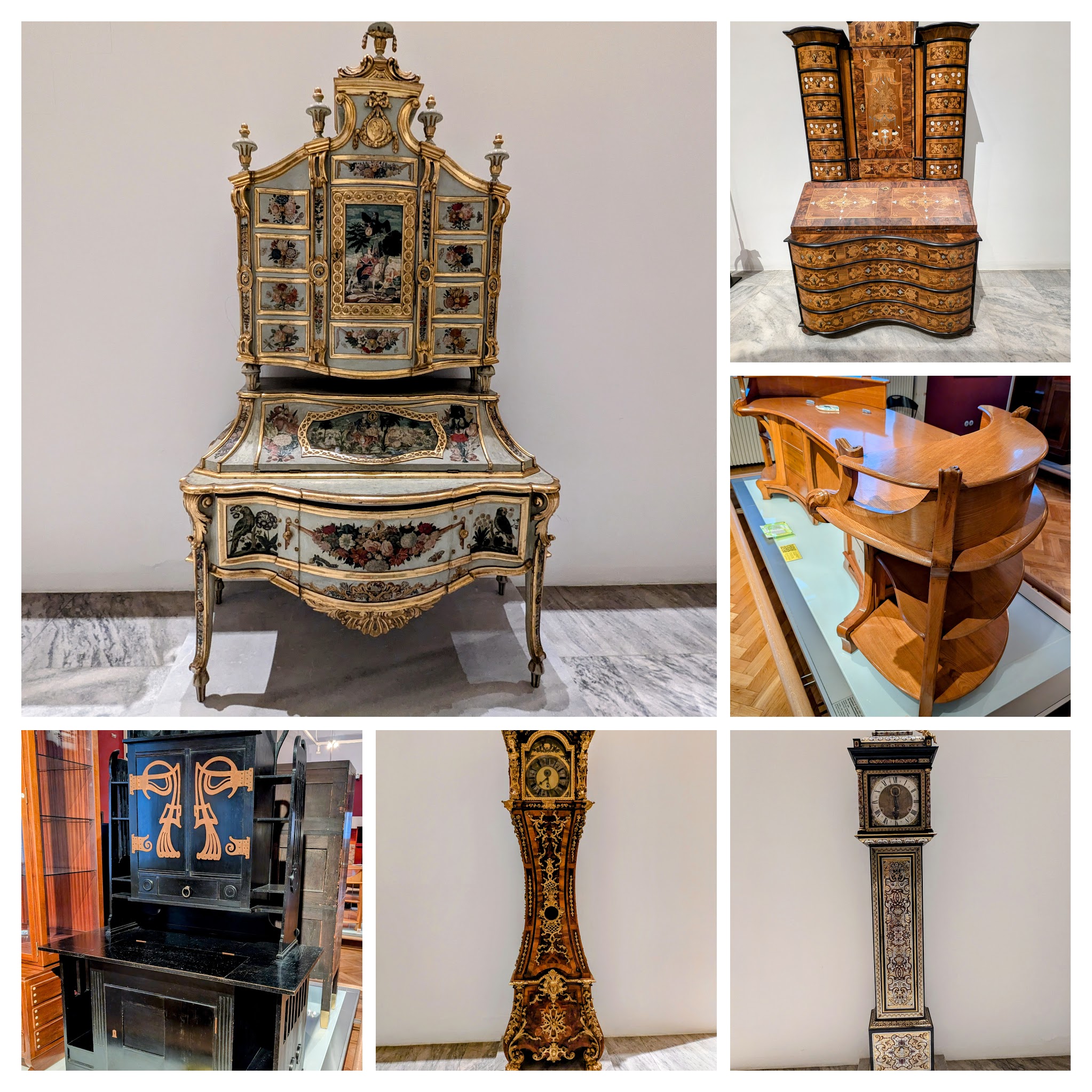
While many of the items were very beautiful, the narrative contain little in the way of context. So we had to content ourselves with learning the materials from which the item was crafted, and the place and year in which it was made, and not a lot more. Additional exhibits included one on climate change and another on protests/architecture, subtitled “Barricades, Camps and Super Glue.”
One last stop before returning to Windmühlstraße 22: The Österreichische Postparkasse (Austrian Post Office Bank building).
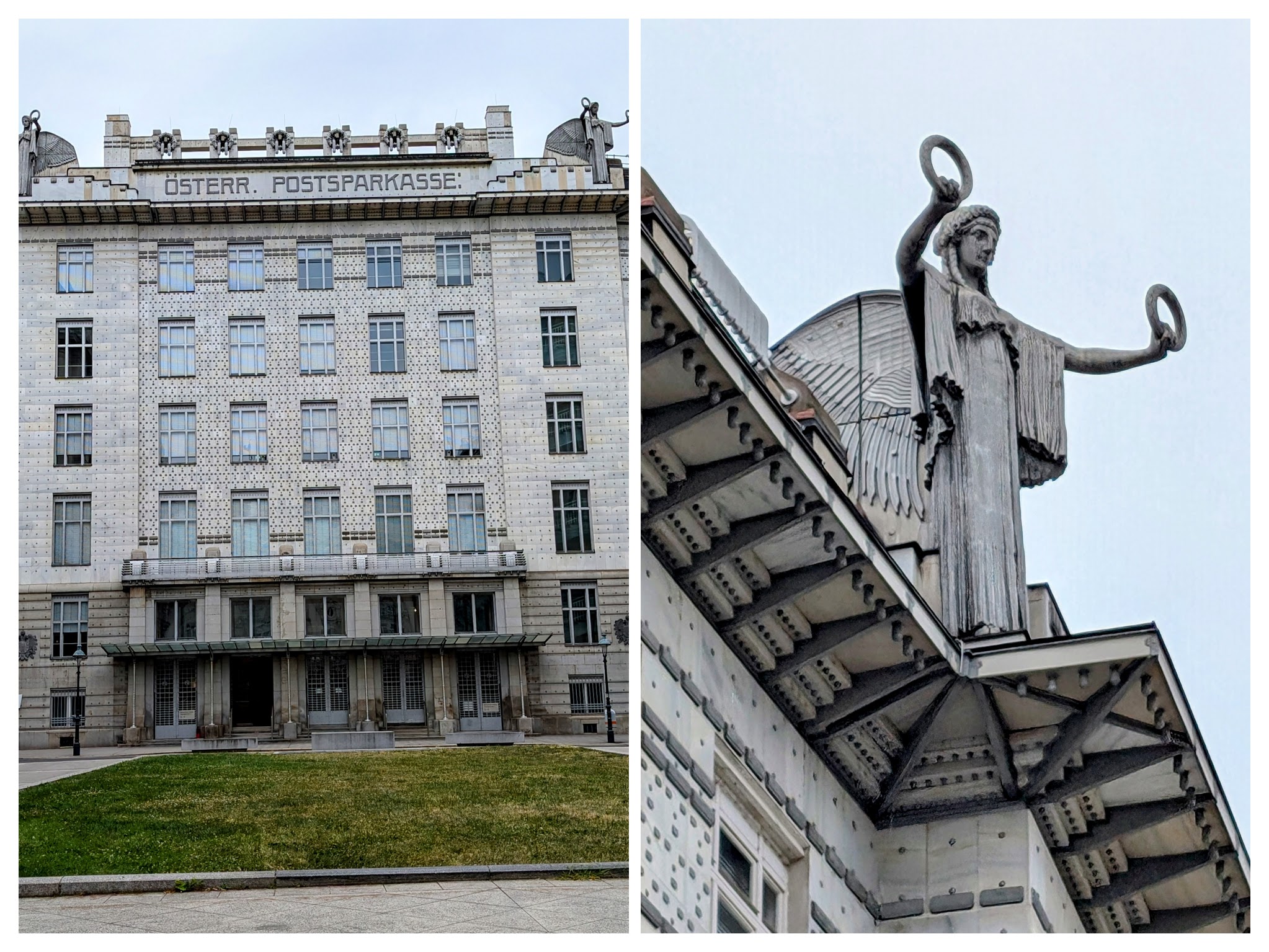
According to Rick Steves, the postal savings system was a bank intended for working-class people who didn’t have access to the fancy-shmancy banks available to the aristocracy and the haute-bourgeoisie.
This early 20th-Century building is an iconic example of Otto Wagner’s architectural work and is described as a pilgrimage site for architects from all over the world. Its lines are so clean and simple that, as Rick Steves suggests, it can feel “sacred.” And some of the construction uses a new material that was beginning to excite the architectural world: Aluminum.
With this, the tour ends. The CAT (City Airport Train) doesn’t start operating until 5 AM, so a taxi is coming to pick us up for the airport at 4:30 am (!).
Fingers are crossed that the recent CrowdStrike outage won’t affect our flights.
See you in about 6 weeks, when we’re off to the Balkans.
 Something to Declare
Leave a comment