September 12-14, 2024. Berat, Shkodër
Thursday, September 20, 7:30 pm. Earlier today was the excursion to Berat, called the “City of 1001 Windows” (see below, upper left).
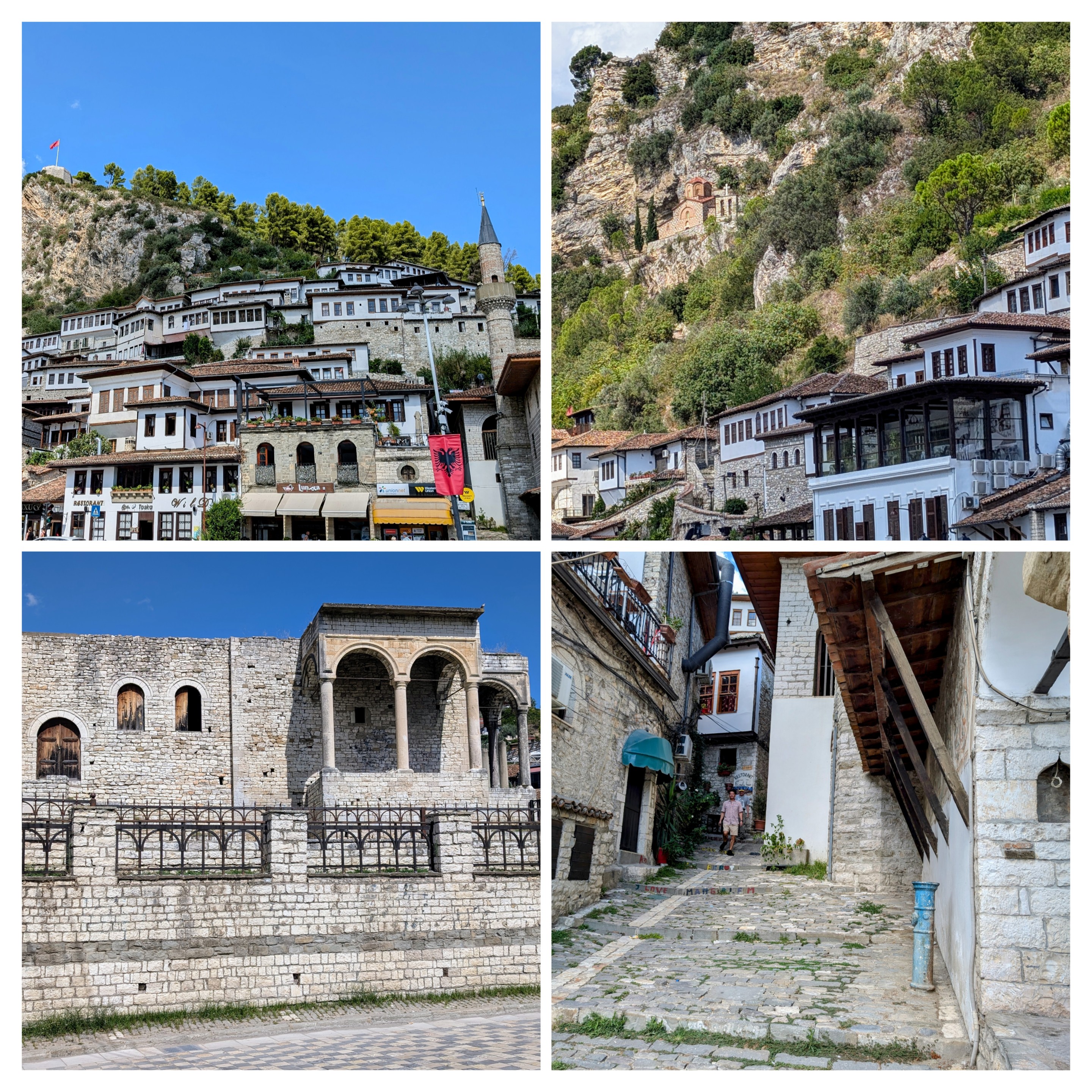
As our guide, Ilir, noted, this title is something of a misnomer. Berat’s real sobriquet is “the city with windows on top of each other.” Apparently the expressions, “one-over-one windows” and “1001 windows” sound almost identical in Albanian. There you go.
Berat also feels like the city with the most difficult streets in the world. The streets are made of slippery, uneven cobbles, with sharp angles and elevations (see above, lower right), and which can be somewhat twisty. Because of balance problems (as some of you know) I use a cane, and I had to make frequent reliance on Ilir, and on travel companion Beth Forbes, to help me avoid falling on my ass.
You all know that I make frequent reference to sights and stuff that pertain to Jewish culture and history. It is of note that Albania, the only European country with a Muslim majority, succeeded where other European nations failed. Almost all Jews living within Albanian borders during the German occupation were saved, except members of a single family. Impressively, there were more Jews in Albania at the end of the war than beforehand. Also noteworthy: Berat has the only Jewish museum in Albania, the Solomoni Museum, where these historical events are detailed.
Ilir pointed out that, perpendicular to Berat’s Antipatrea Street, there is a sign, “Rruga Hebrentje,” marking the location of the former “Jews Street.”
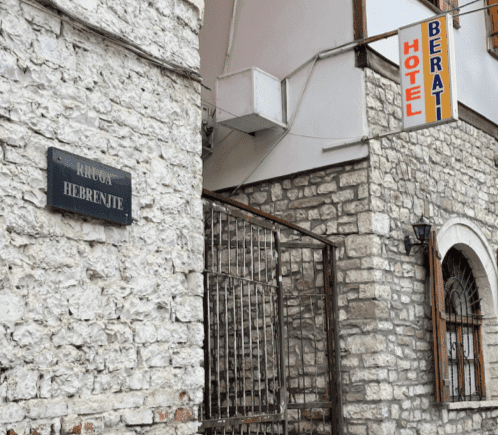
Except for the sign, nothing much remains following Enver Hoxha’s efforts to erase religion from Albanian culture.
Back to the tour. Berat is a UNESCO World Heritage site, and contains a large number of Ottoman-style homes. It also has Albania’s largest castle, originally established by Byzantine Emperor Michael Comnenus in the 13th century. The Ottomans added to the castle in the 16th century.
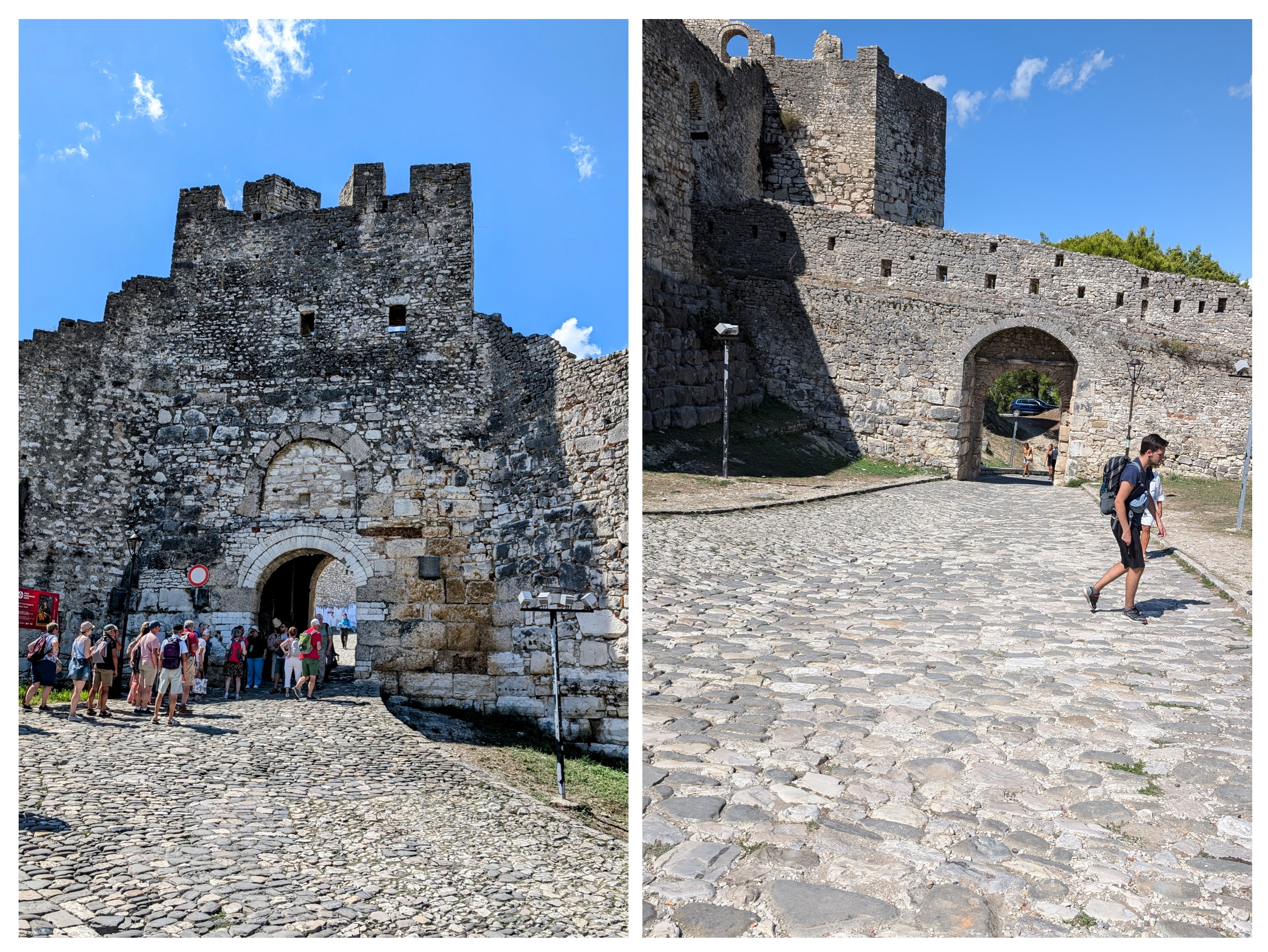
The castle itself contains the Cathedral of the Assumption of St. Mary, which goes back to 10th century, destroyed in an earthquake, and rebuilt in the 18th century.
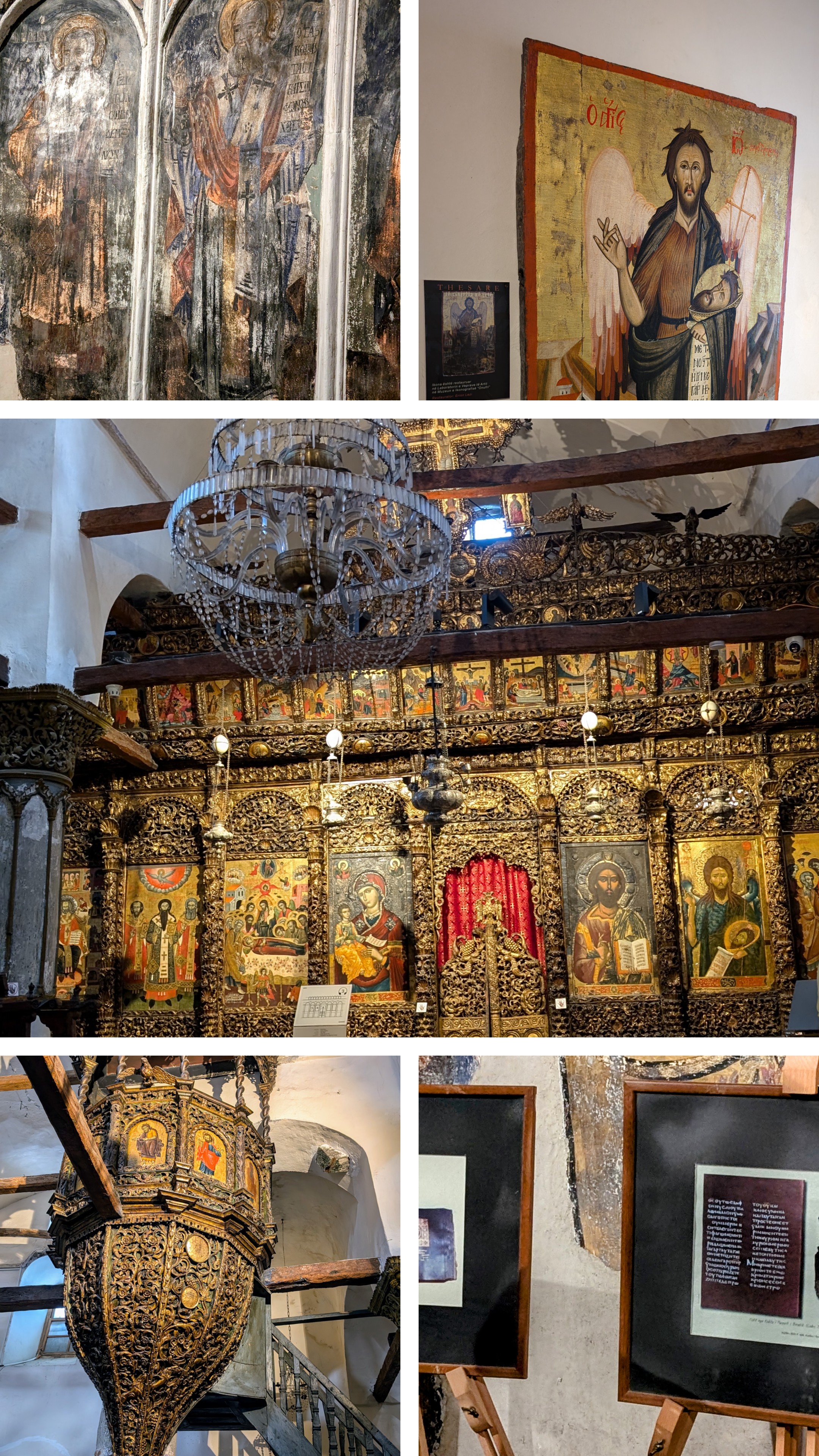
The Cathedral is only used once a year on August 15, the Day of the Assumption of St. Mary.
It is home to a museum of icons and other religious paintings. Behind the panel of icons at the front of the cathedral (above, center) are other icons, faded due to humidity (above, upper left) and panels that show the remains of codices from the 6th and 9th centuries, respectively (above, lower right). Ilir explained how these codices had to be hidden (at great risk to their protectors) from the Austrians in World War I, the Nazis in World War II, and the Communists between World War II the 1990s. In their travels, the codices were kept in China, and for a while in Paris. They are now housed in the State Archives in Tirana.
Lunch was in a nearby family-run restaurant, the owners of which had emigrated to Greece, but had returned to Albania:
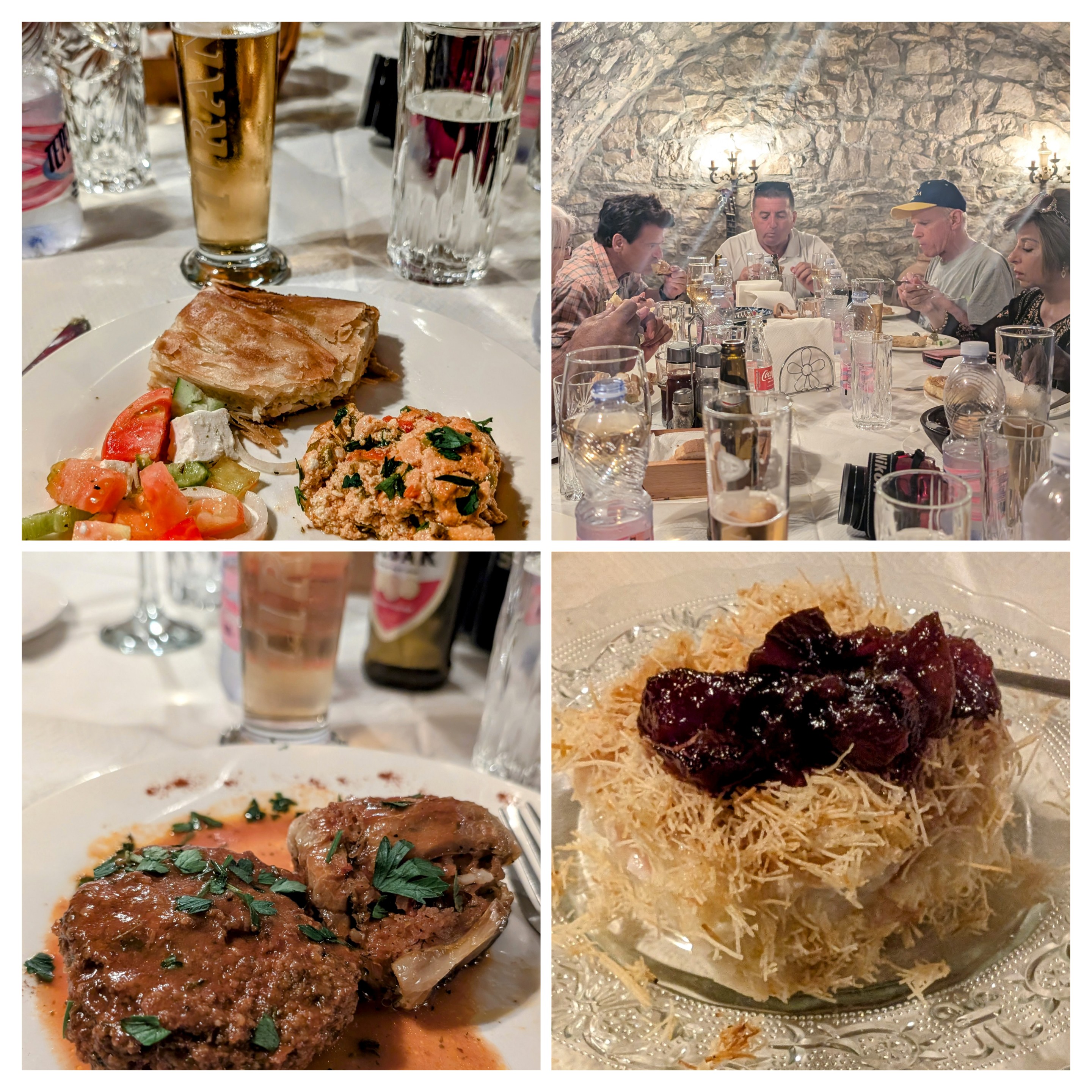
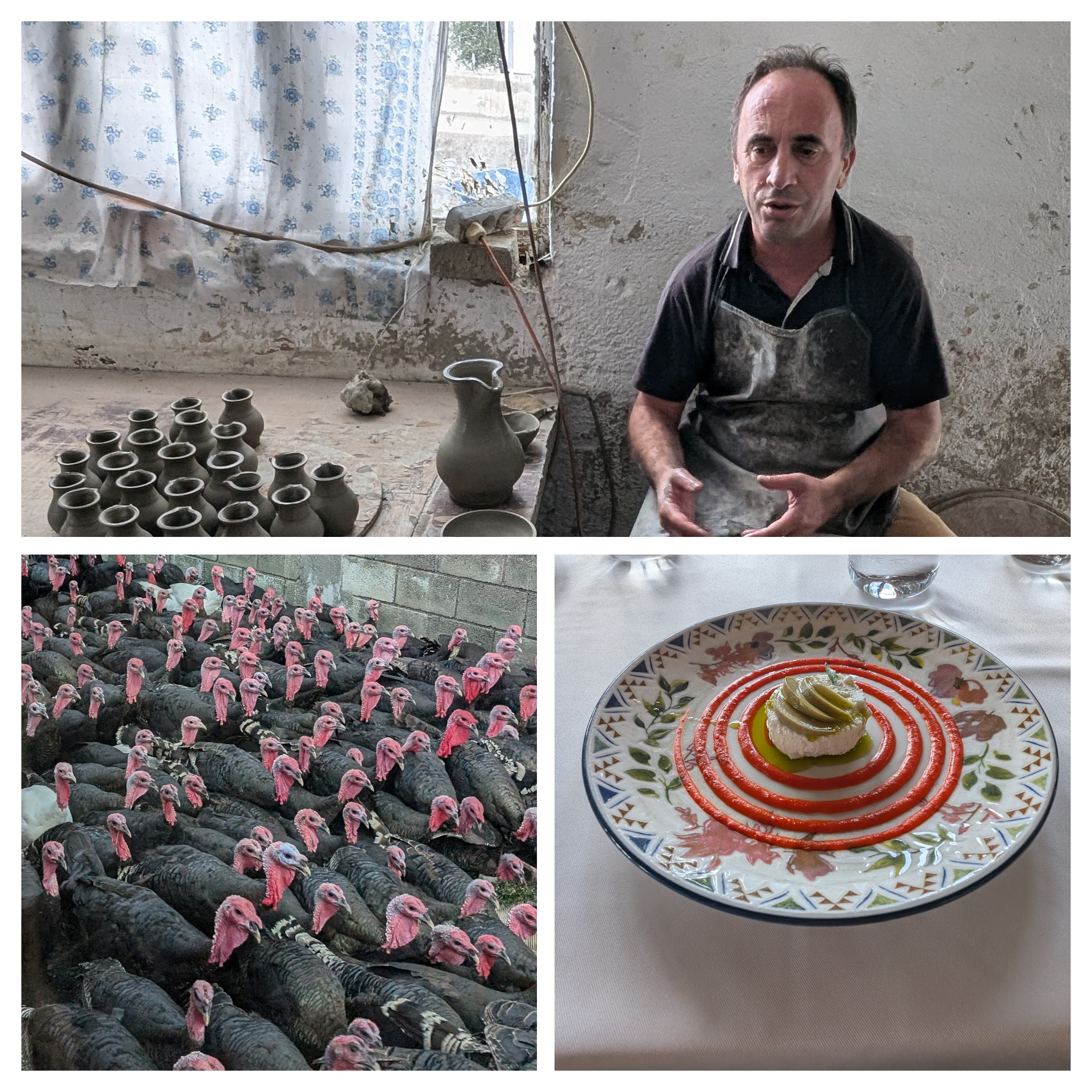
Friday, September 13, 8:30 pm. This morning we said “mirupafshim” to Tirana, and headed north to Shkodër, the fifth largest city in Albania. On the way, we passed a parade of turkeys (no idea why–they don’t even celebrate Thanksgiving in Albania). Then Ilir had us stop at a family-owned pottery establishment, followed by lunch at a farm, Mrizi i Zanave.
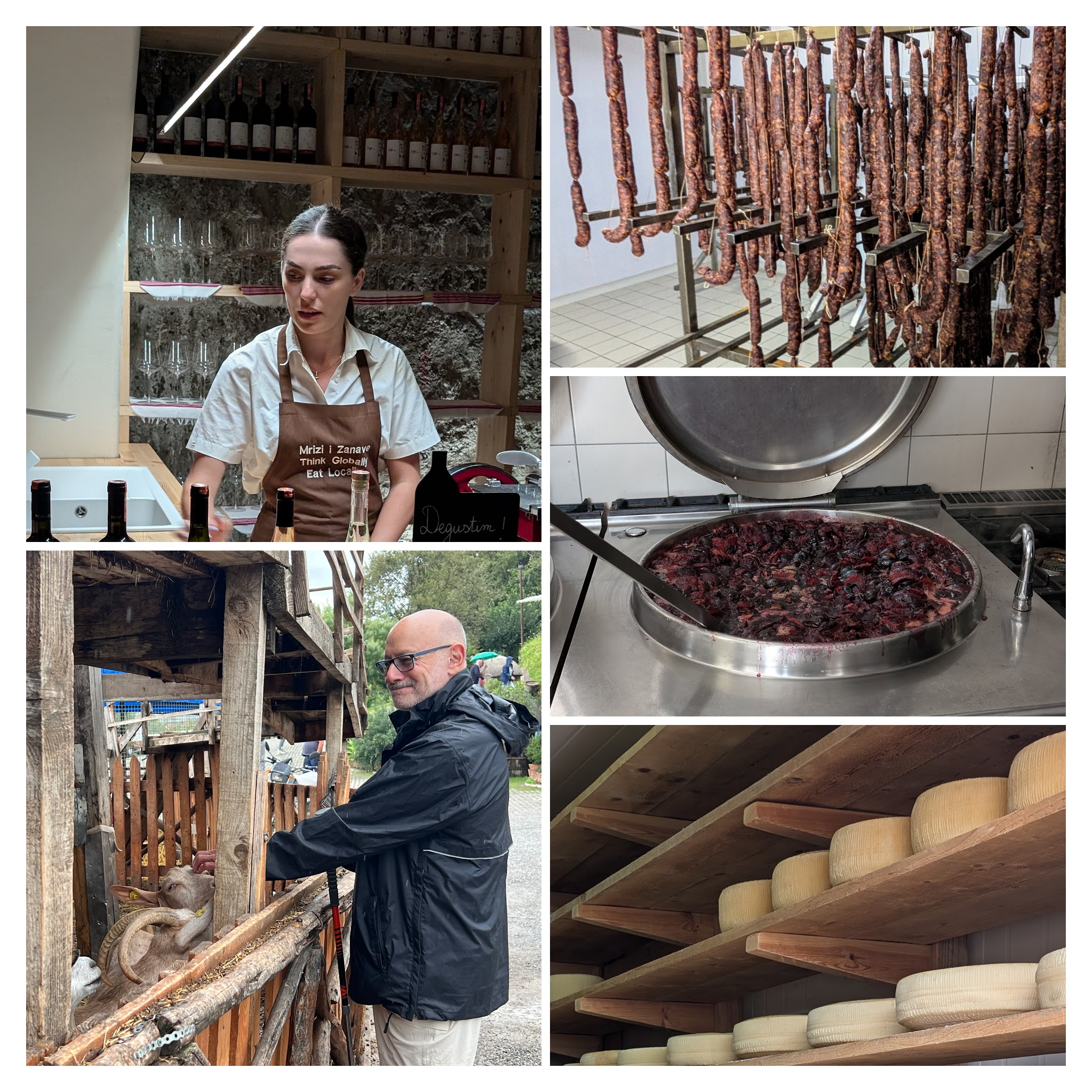
At the farm (which had once been a prison!) they buy produce from all the local farmers, and make wine, sausages, and vegetable and fruit preserves. They also maintain a goat herd and make their own artisanal cheese.
We arrived in Shkodër, and Ilir took us on a brief orientation walk. Then I joined my travel colleague for Happy Hour on a terrace looking out at the mosque.
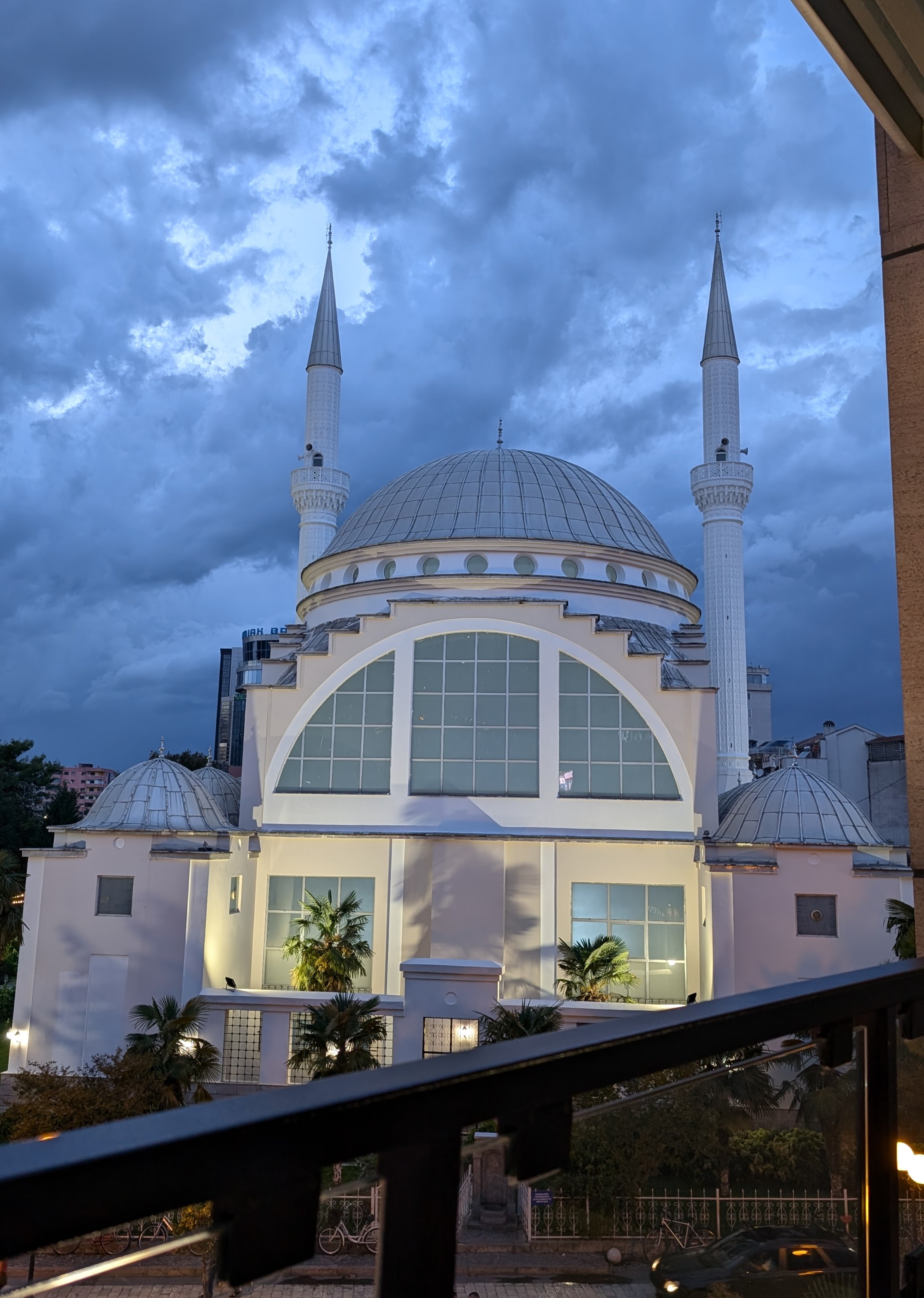
Heard two Adhans (calls to prayer) and saw a lovely thunderstorm.
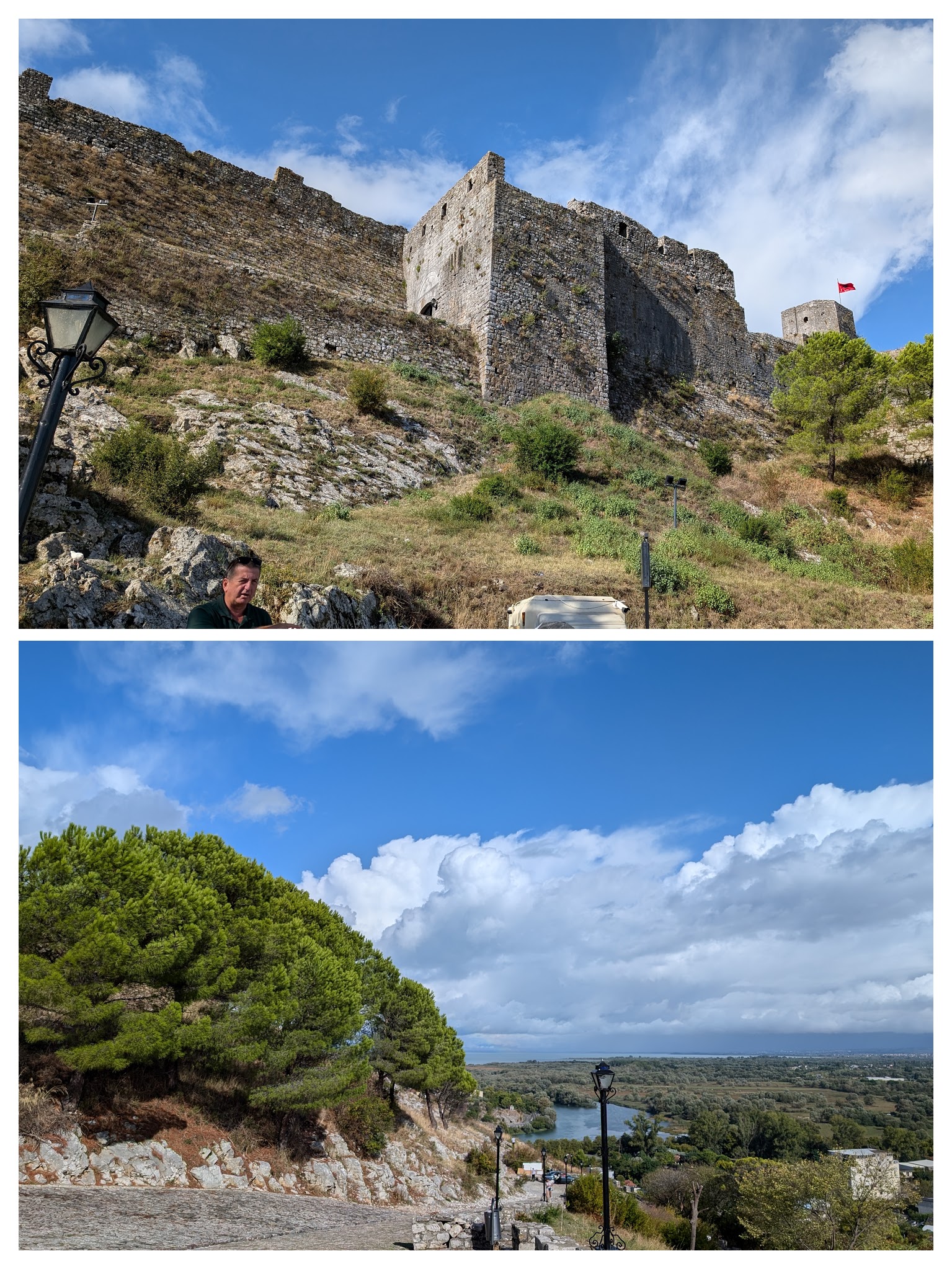
Saturday, September 14, 9:00 pm. Awoke today at 5 am to the Adhan (oy, why so early?) We took the van to Rozafa Castle, the earliest detected walls of which date back to the Illyrian period (4th or early 3rd centuries BCE), although most of the remaining fortifications are Venetian. It sits atop a promontory overlooking the Buna and Drina rivers.
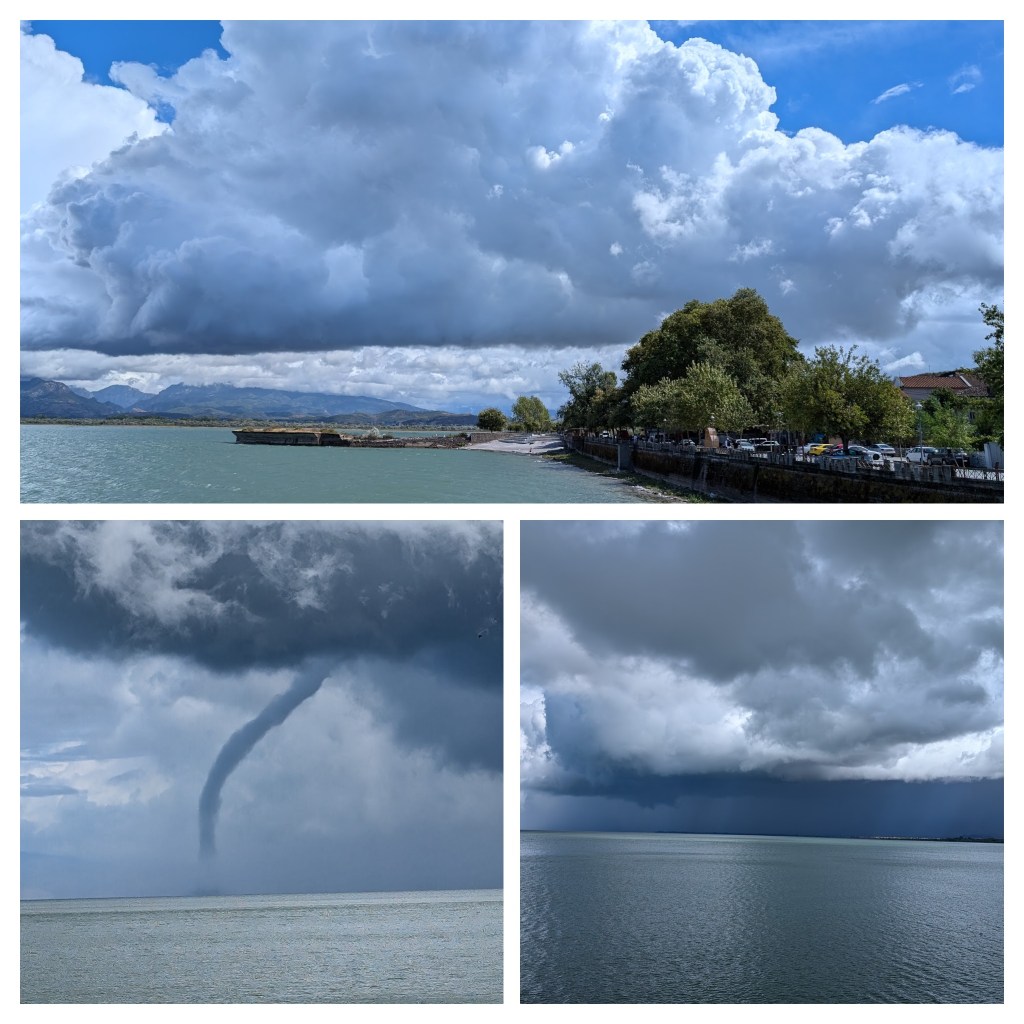
Lunchtime, we went to the town of Shirokë, which is on the shore of Ligeni i Shkodrës (Lake Shkodër), where we saw an incredible waterspout:
Lunch was lakeside. Ilir recommended that we try the local fresh-water carp.
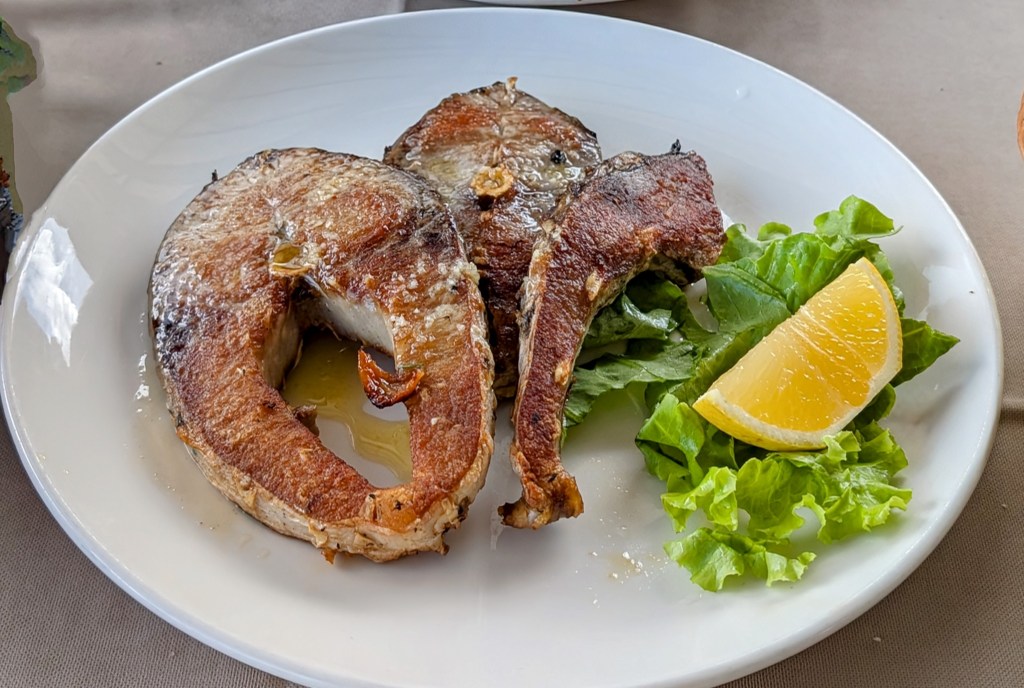
Grilled, it lived up to expectations (kudos to Ilir!), Tomorrow we leave Shkodër for Dubrovnik, Croatia. Mirupafshim, Albania!


 Something to Declare
Leave a comment