
Mumbai and Elefanta, December 3, 2024.
Breakfast (Food Porn Department)
Up early to get ready for Elefanta Island. Stef had asked whether the hotel provides western-style breakfasts, and the answer is “yes.” The usual eggs, rolls, breads, French toast, etc., are available. At the same time, however, there is a broad selection of Indian offerings, and I made best efforts to try as many as possible. The first round:
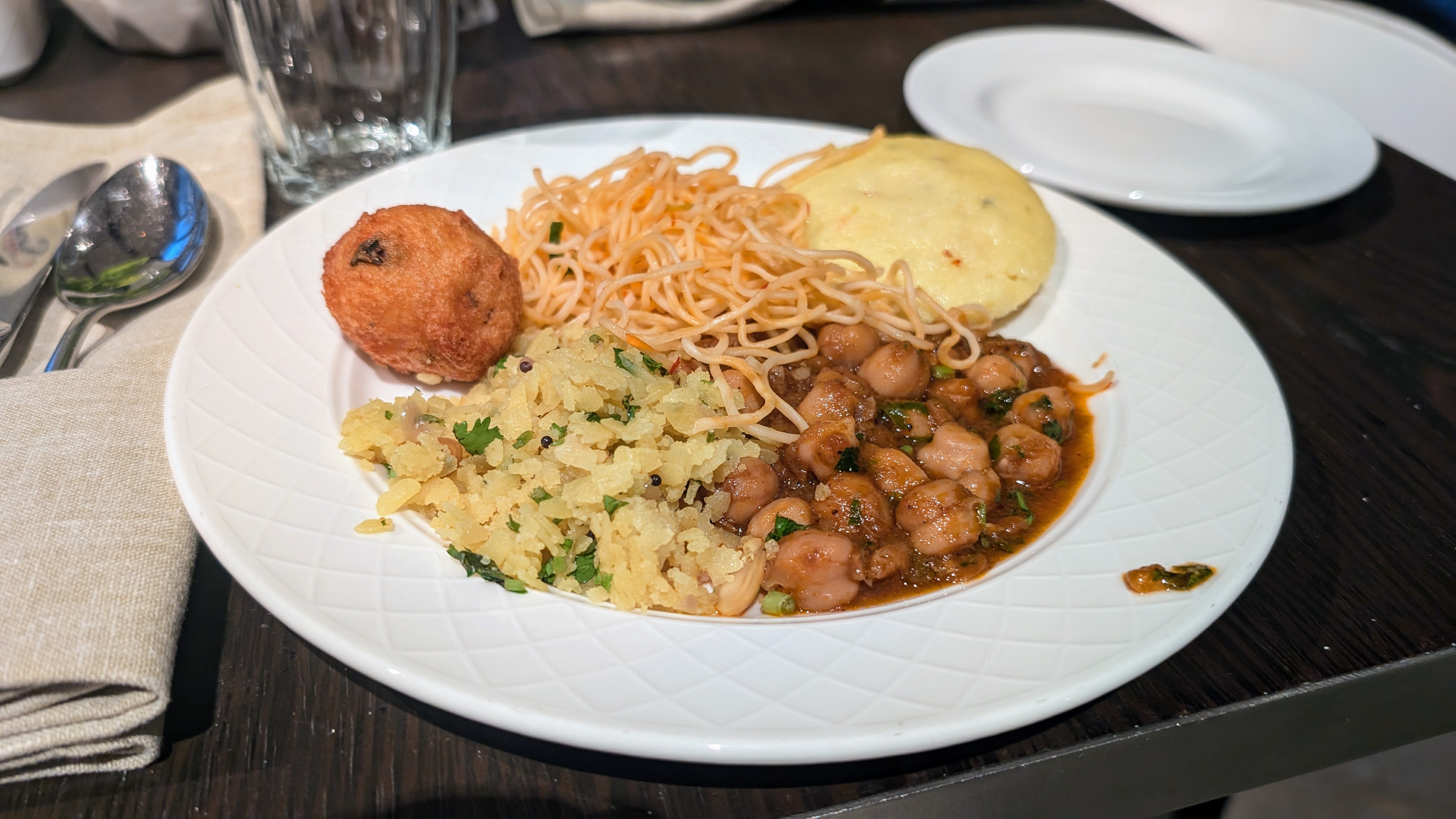
Beginning at the upper left and going clockwise: Bonda (deep-fried potato balls), Hakka Noodles (an Indian version of Chow Mein), Kanjivram Idli (steamed pancake-like things made from ground rice and urad dal [gram beans] seasoned with fenugreek, fennel and asafœtida), Chole Kulche (chickpeas in a sauce of tomato, onion, chili and seasonings), and Indori Poha (flattened rice flavored with onion, green chili, mustard seeds and coriander leaves). All of these were very good, but my faves were the potato balls.
For the second round, more Bonda (surprise!), between which was a “Vegetable Puff.” Then moving clockwise, Bajra Kichadi (a traditional Indian dish of pearl millet and moong dal [split green gram beans] in a sauce made of [inter alia] tomato, onion, garlic, turmeric and red chili powder, and some unidentified green thing), and Lamb Moussaka (not really Indian).
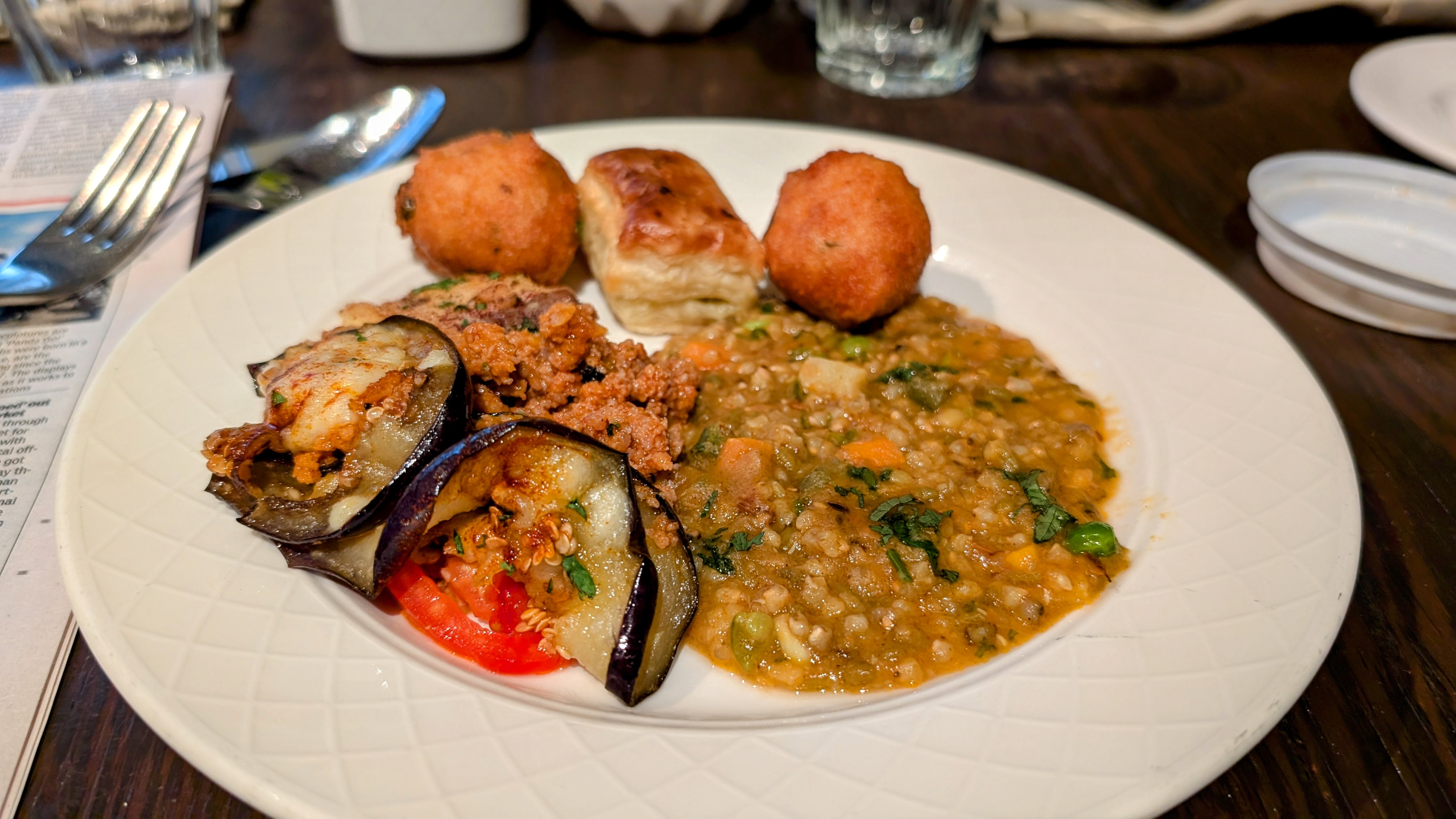
A real stick-to-your-ribs breakfast. Or should I say, “stick-it-to-your ribs?”
Elefanta
Right on time, I was met at the concierge desk by Somash, my personal guide. We walked to the waterfront near the Gateway of India.
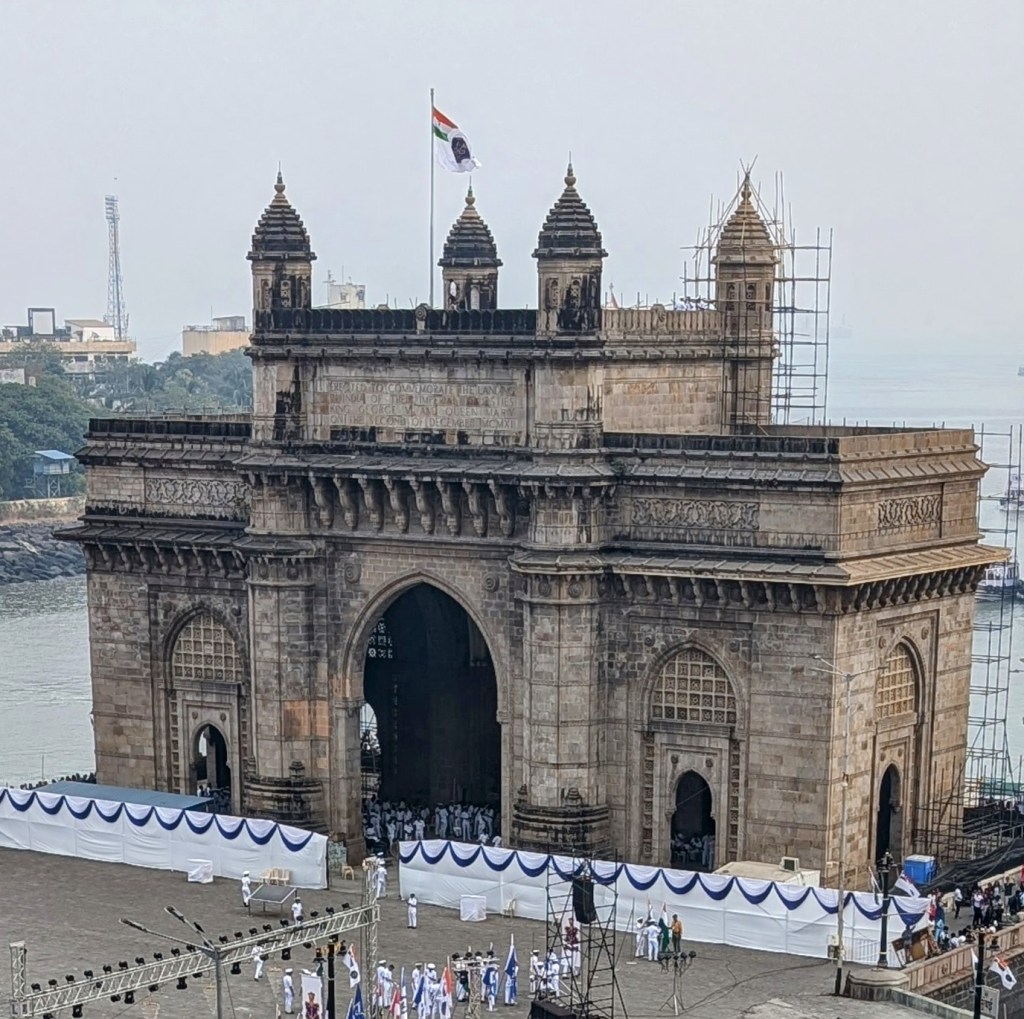
This is the monument built in 1924 to commemorate the landing of King George V for his coronation as Emperor of India in 1911. George V was the first British monarch to actually visit India.
We boarded the ferry to Elefanta:
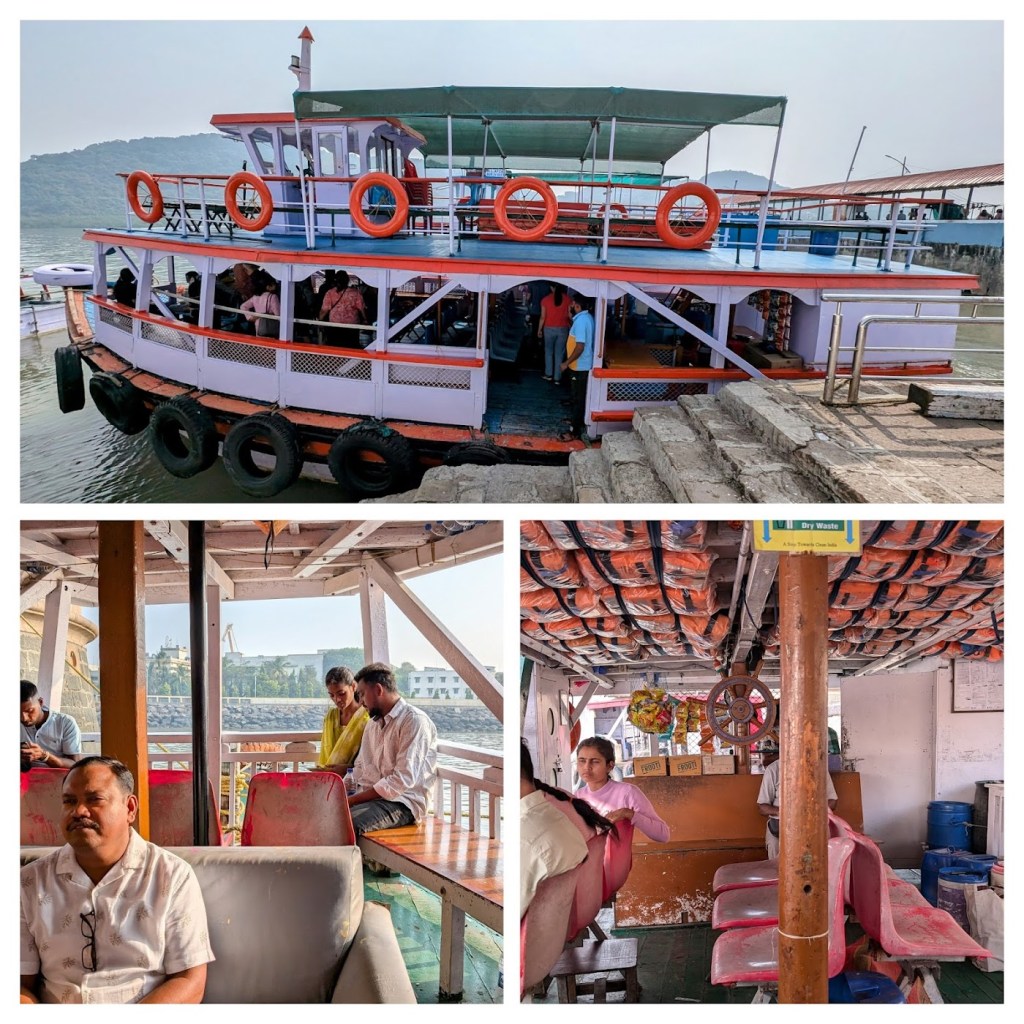
On the ferry were a variety of passengers headed for Elefanta, including hawkers and people who fed the seagulls (who were able to catch their treats on the fly). We saw a lot of commercial ships and some naval vessels, this being the Mumbai equivalent of Fleet Week.
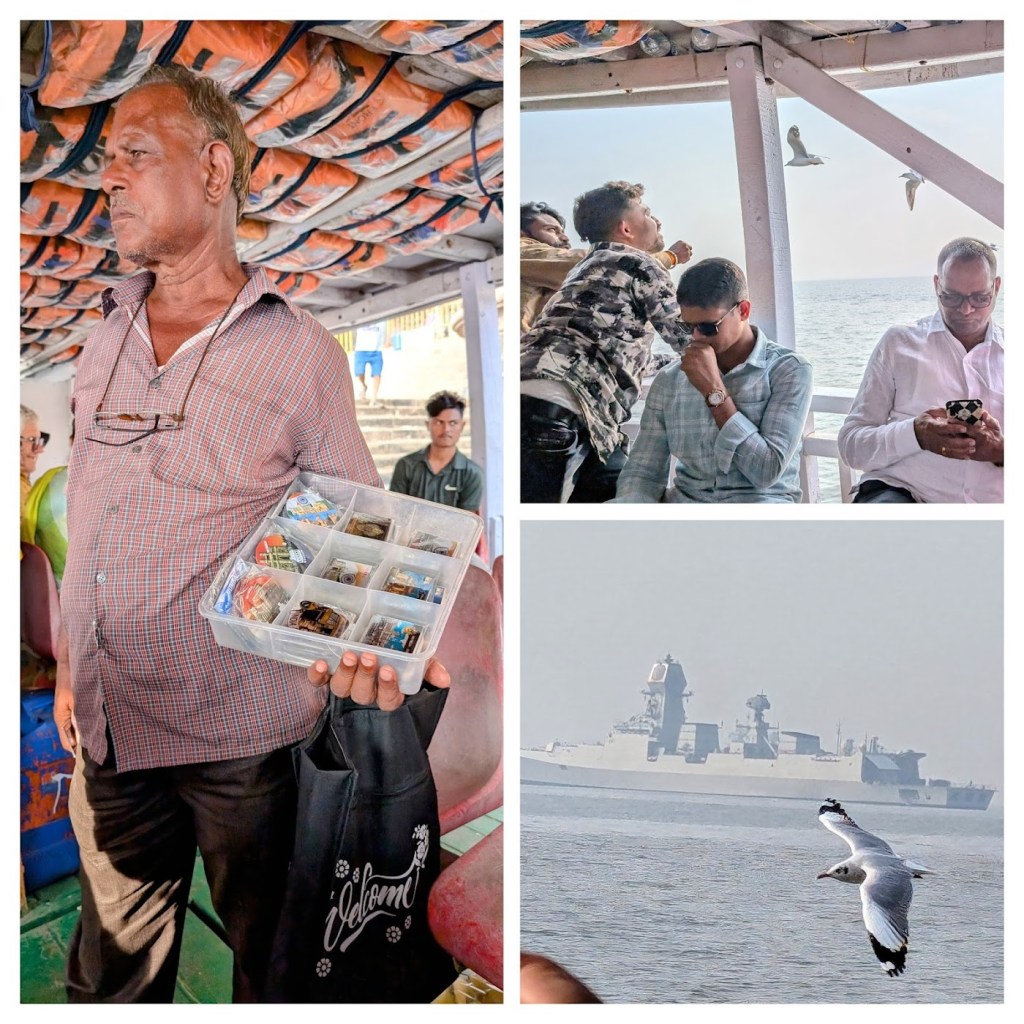
The orange things covering the ceiling were life vests. At the Elefanta dock, we boarded the so-called Toy Train:
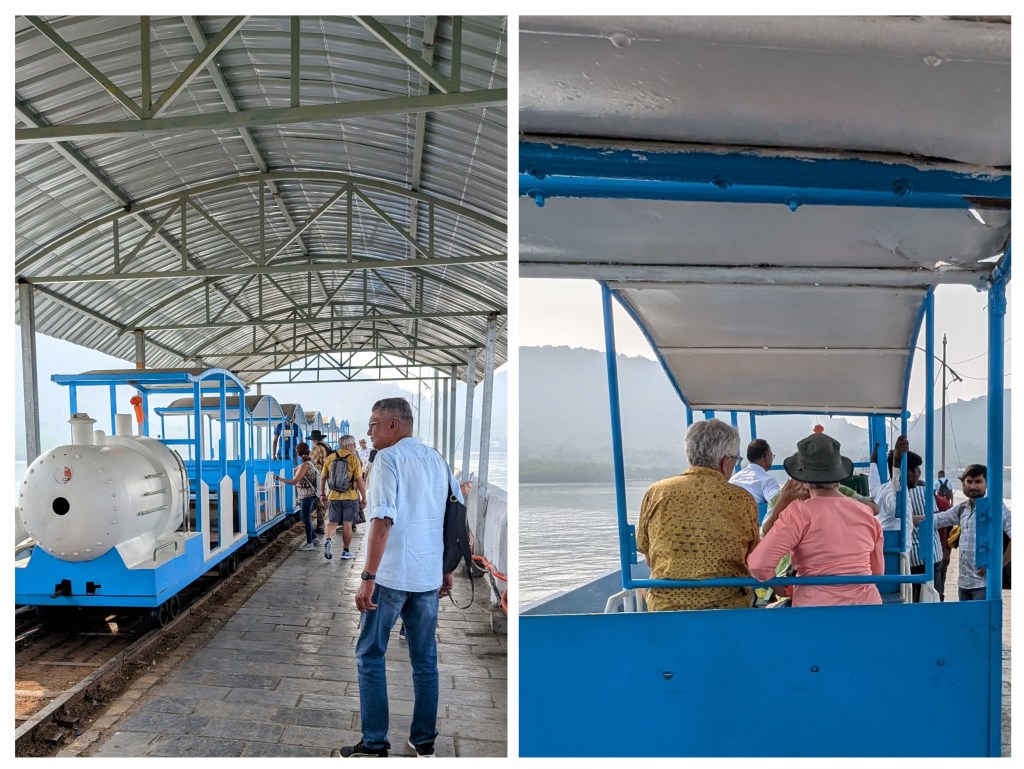
That’s Somesh featured in the left-hand photo, above. The train took us to the long, steep flight of 129 steps leading to the caves.
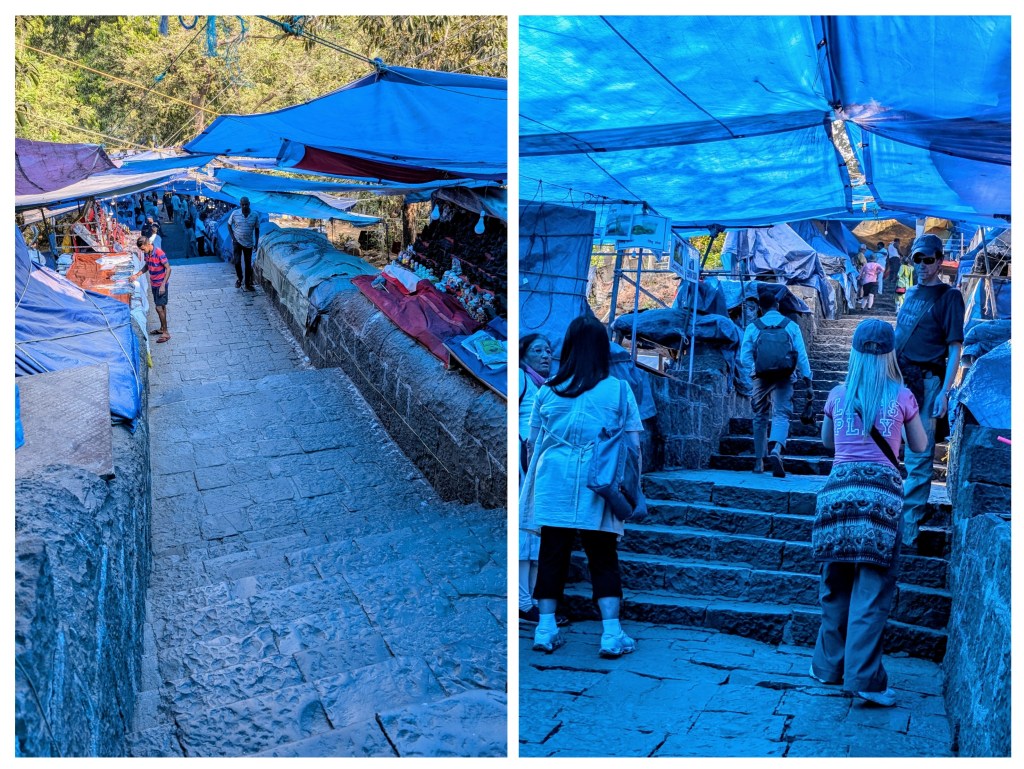
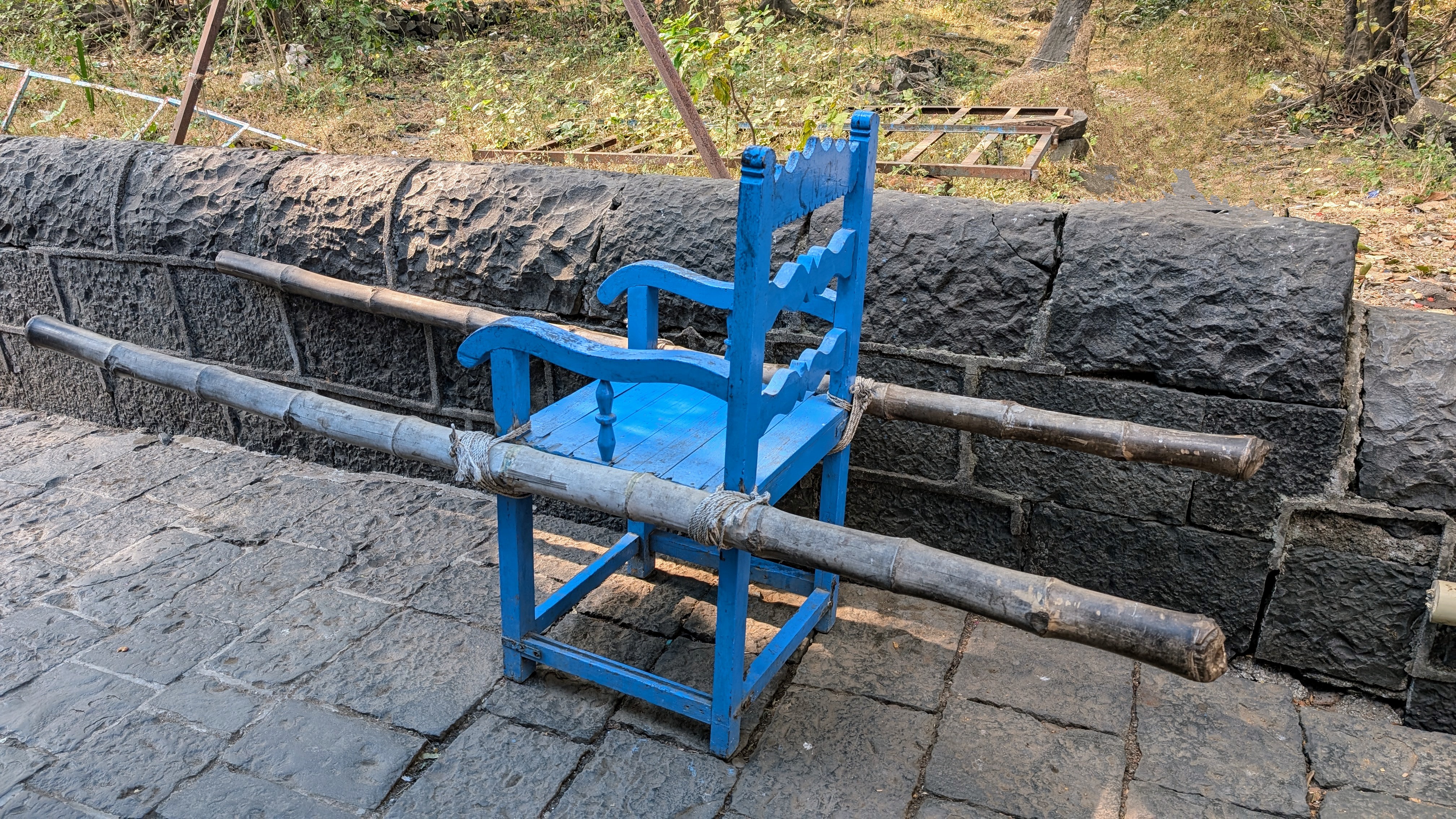
Despite my gait issues, I turned down several offers to take me up in doli (a sort of sedan chair).
It was arduous, and I occasionally had to ask Somesh to serve as a makeshift bannister. But we persevered to the top.
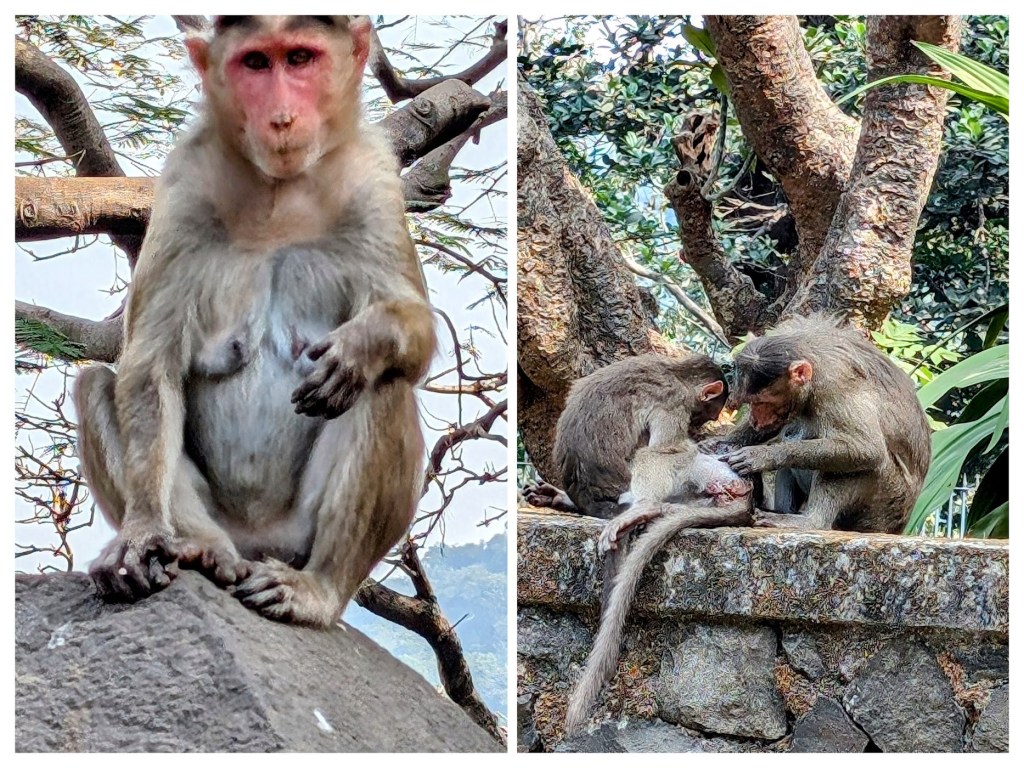
Somesh suggested that we take a seat on a bench, where he introduced me to the Hindu religious background of the place. Around us were several monkeys:
I tried to engage one of them in conversation:
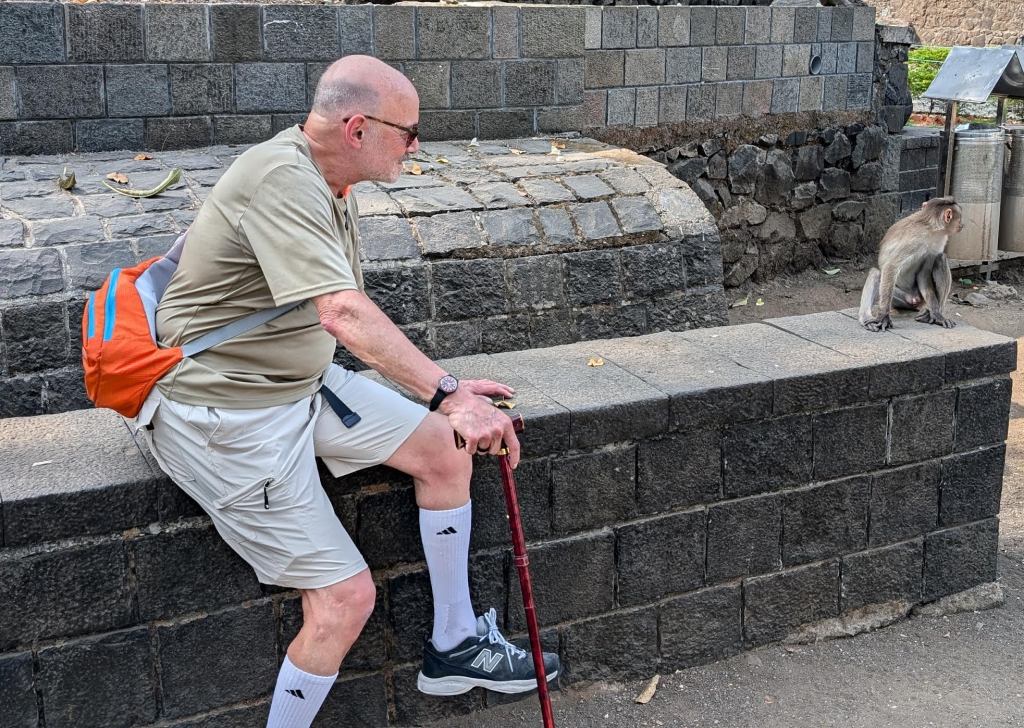
Despite some initial aloofness, I thought we were starting to make a connection (she eventually sidled up to me). I was wondering if she might have wanted some kind of psychotherapeutic intervention; but it was only so she could steal the water bottle from my backpack (sigh).
The Elefanta caves are decorated with columns, and with religious illustrations carved into the solid rock of the mountain, in the 5th and 6th centuries CE. The Portuguese colonists did some share of defacing them.
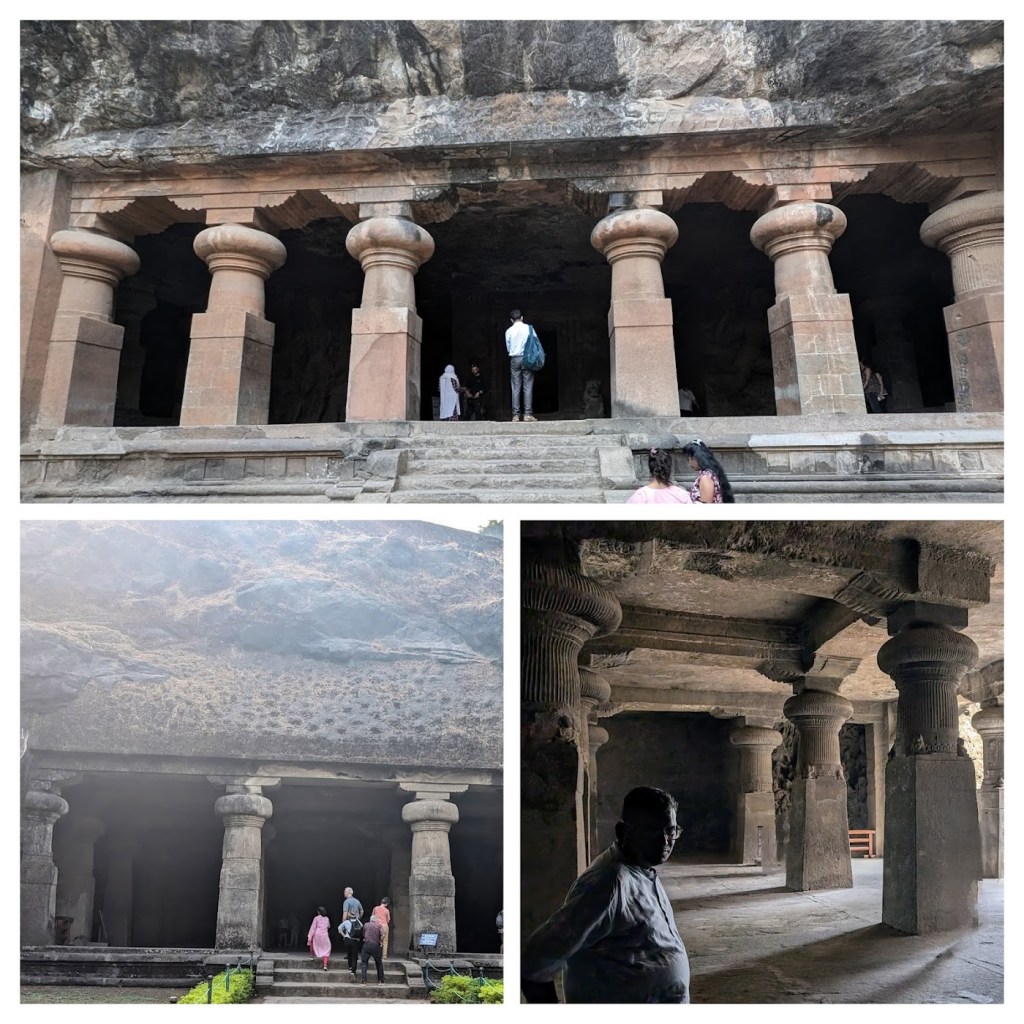
The carvings are dedicated to the god Shiva, one of the Big Three in the Hindu pantheon (Brahma, the Creator; Vishnu, the Maintainer; and Shiva, the Destroyer).
Somesh assured me that, despite the sobriquet (“destroyer”), Shiva was not seen as a Bad Guy. Since Hindu beliefs involve a circular view of existence (birth, life, death, reincarnation, over and over again), you need destruction in order to have creation. Also, he was a destroyer of evil.
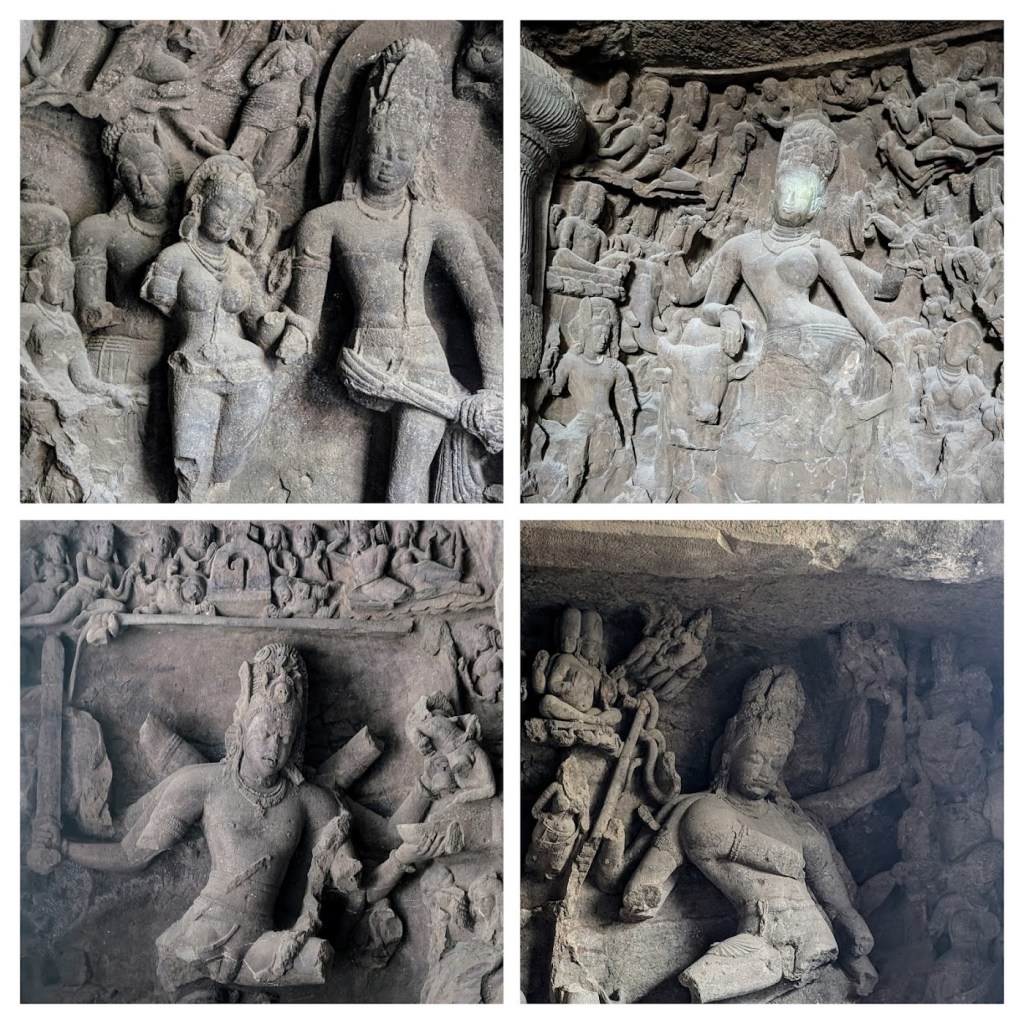
As shown below, Shiva is portrayed in many roles, e.g., dancer (lower right); warrior (lower left); as both male and female (upper right); and as being married to his celestial spouse, Parvati (upper left).
The trip down the stairs was less physically taxing but more slippery and harder to negotiate (downhill is always that way). But we made it to the boat and back to Mumbai, where I had an opportunity to collapse before meeting the rest of Ellen’s group for drinks and dinner. Tomorrow we begin the in-depth tour of Mumbai.


 Something to Declare
Leave a comment