
Mumbai in Depth, Part 1, December 4, 2024.
Up and out to the bus for an extended tour of Mumbai, including stops at the Mumbai Municipal Corporation building, and the iconic railway station (formerly Victoria Terminus Station). One of our two fantastic guides, Yael, informed us that it is now re-named for Chhatrapati Shivaji Majaraj the ruler who defeated the Mughals in the 18th century. The station is in the omnipresent “Victorian Gothic” style favored by the Brits.
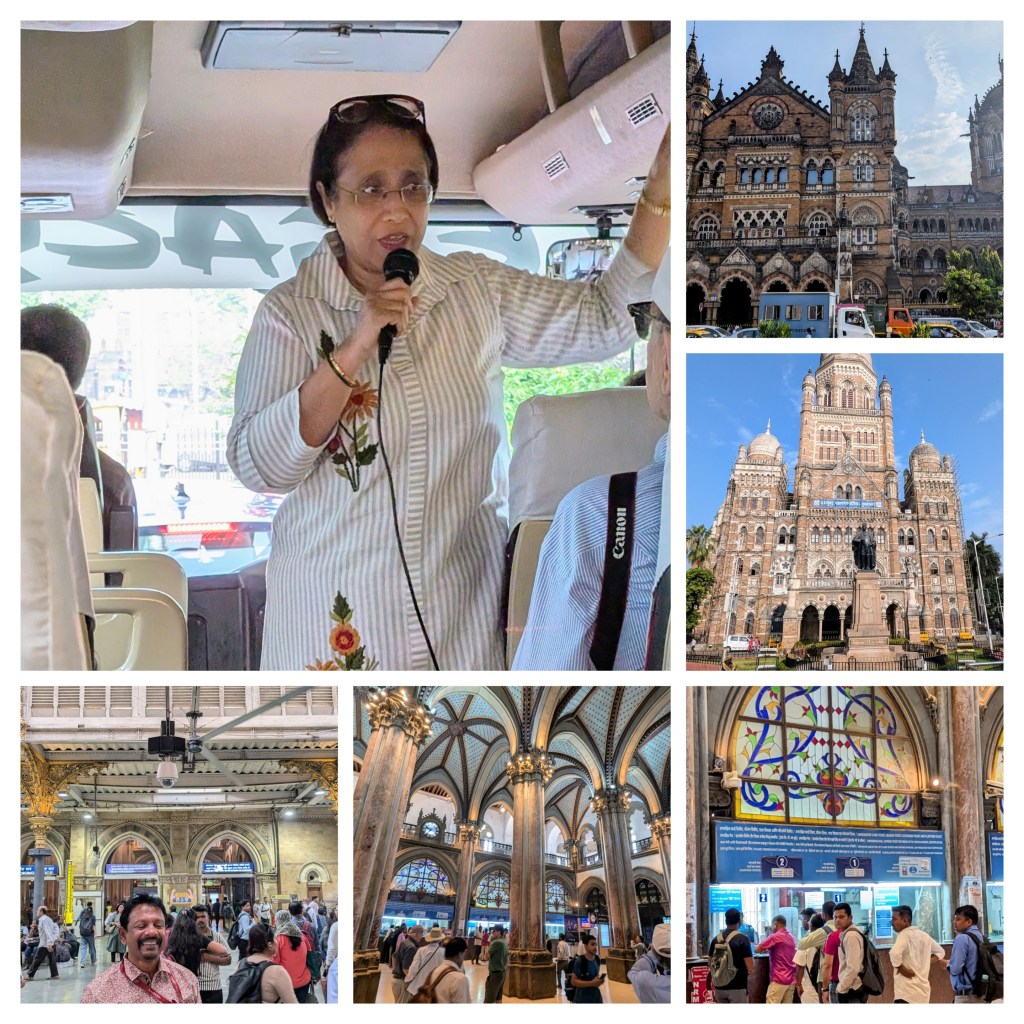
That’s our other guide, Jairaj (pronounced “Jay-Rodg”), in the lower left.
Some history: In the early 16th century, the Portuguese were the first to colonize what was to become Mumbai . They named it “Bom Bahia” (“beautiful bay“). It was transferred to the British in in the 1660s, as the dowry for Catherine of Braganza, the Portuguese princess who married King Charles II.
Bombay grew exponentially as a commercial center in the 19th century. Much of this had to do with the development of Indian cotton production. This had been facilitated by the American Civil War, which resulted in major cut-off of supplies of cotton to Britain, as well as by the opening of the Suez Canal.
Our next stop was the so-called Hanging Gardens. They don’t really hang; rather it’s a park planted atop the city’s water reservoir.
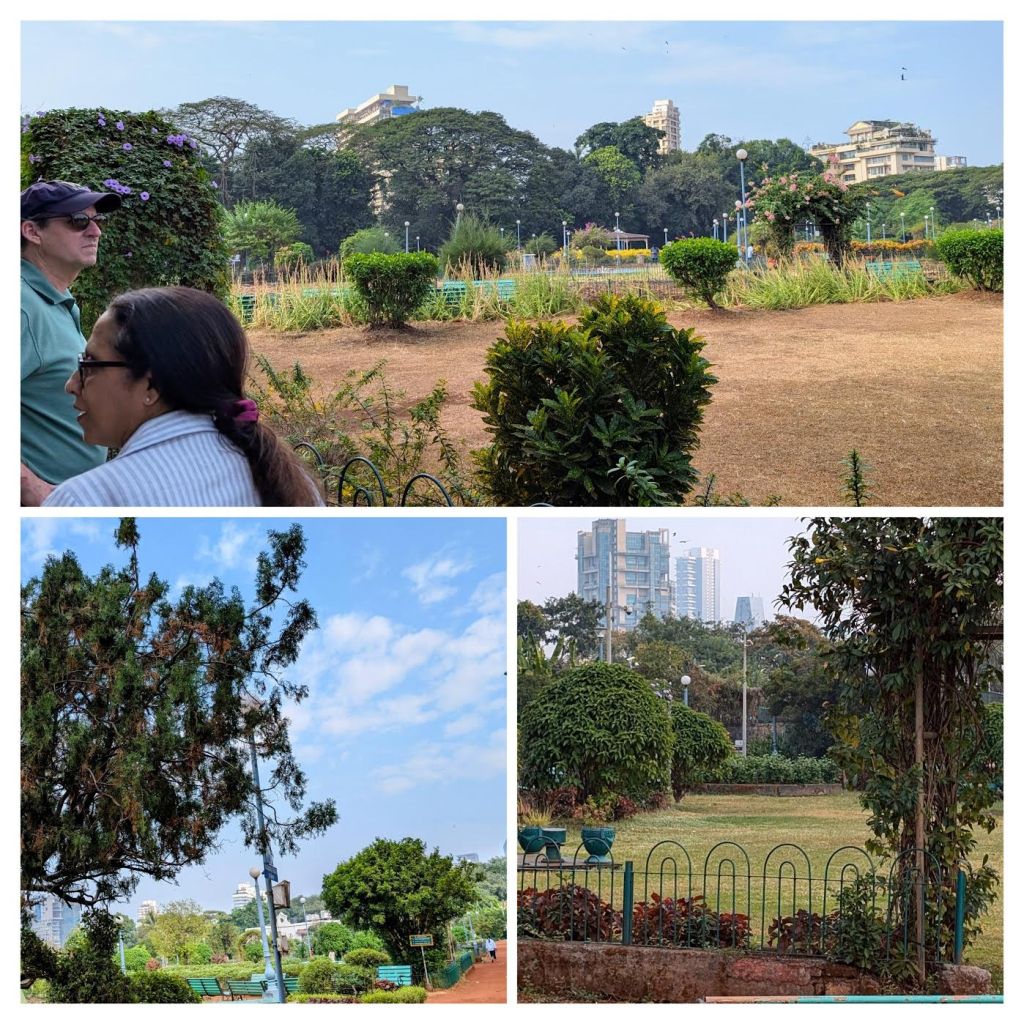
We were told that the Parsees (an Indian sect originally from Persia) did not believe in burying or cremating their dead. Instead, they left the deceased in open spaces like these, to be consumed by birds.
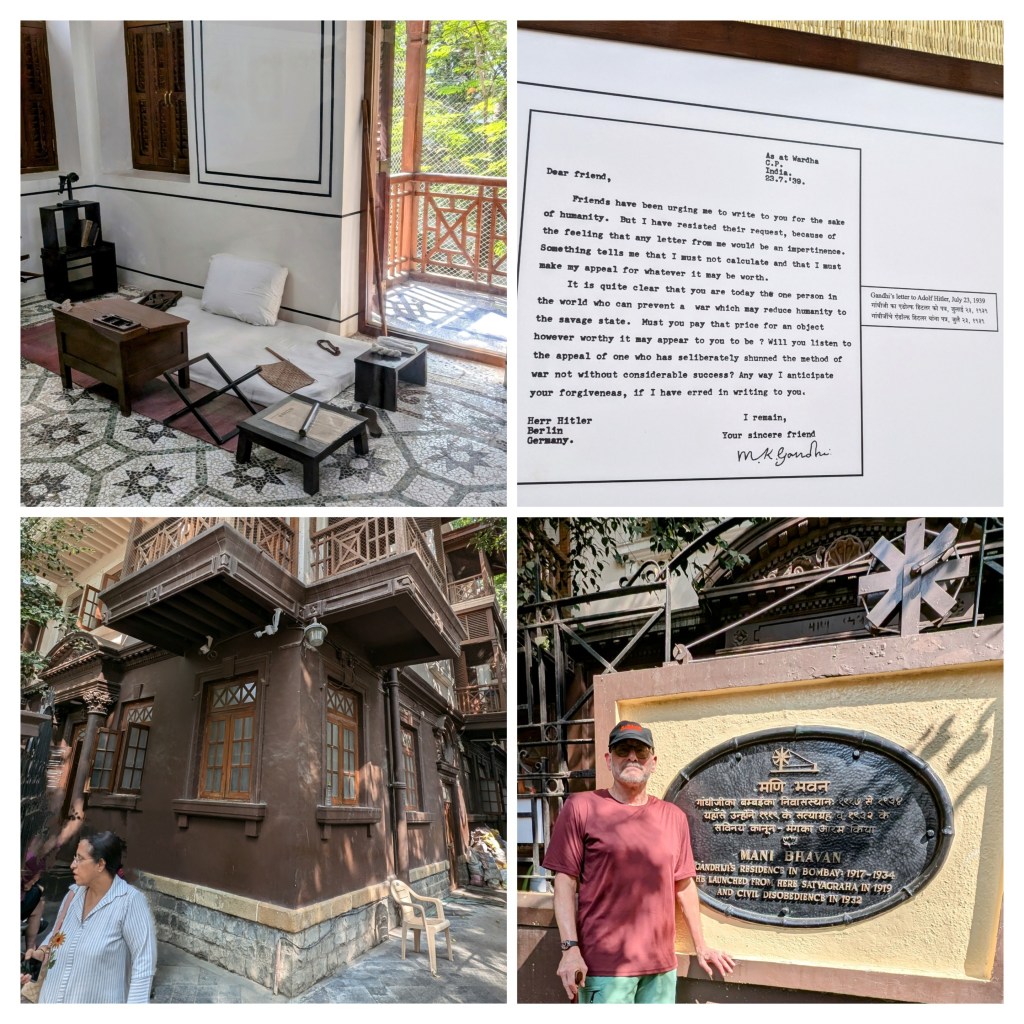
We then proceeded to the Mani Bhawan, the house occupied by liberator of India, Mohandas (“Mahatma”) Gandhi, when he stayed in Mumbai. It contained very touching dioramas of the events in Gandhi’s life, photos, and copy of the letter Gandhi wrote to Hitler, asking him to eschew war (good try, but not very successful). The house contained the actual room and study Gandhi had used.
The day was a cultural extravaganza, moving on Churchgate, the place where the dabbawalas (Tiffin Men) gather. Bombay has a system in which mid-day meals (Tiffin) are transported from people’s homes to workers in the city. Without computers, or written accountings (except for the names of the recipients), these cylindrical metal containers are placed in boxes or bags, and travel by train, eventually to Churchgate, where they are loaded onto bicycles for delivery.
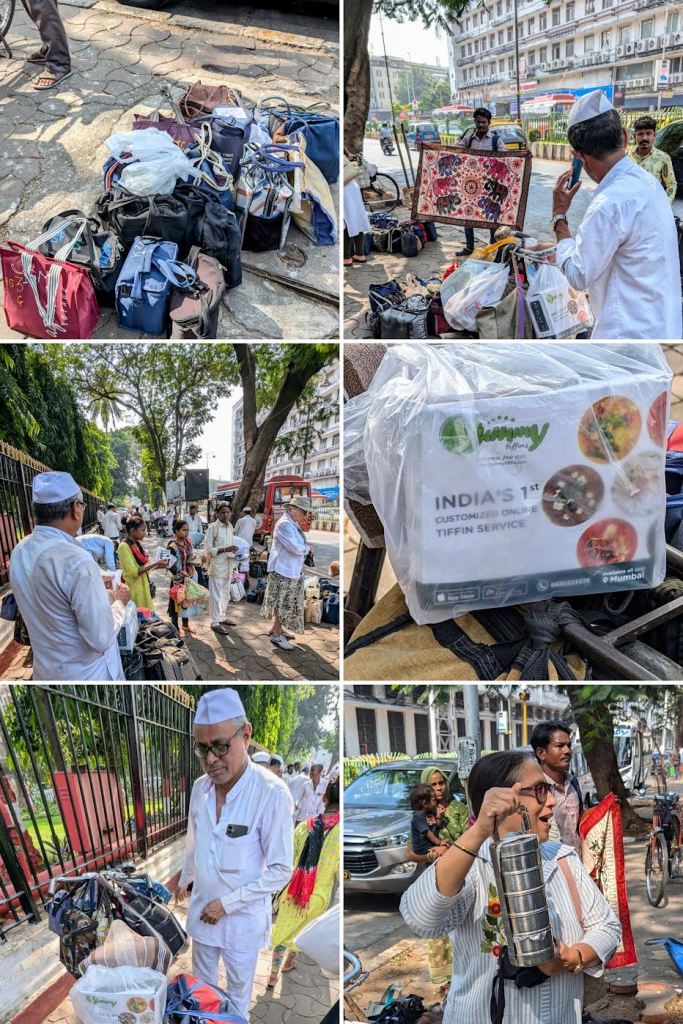
The dabbawalas are reported to deliver upwards of 200,000 meals per day without a single error or omission. Yael informed us that this system has been studied and written about by scholars of business management all over the world. Lunch, anyone?
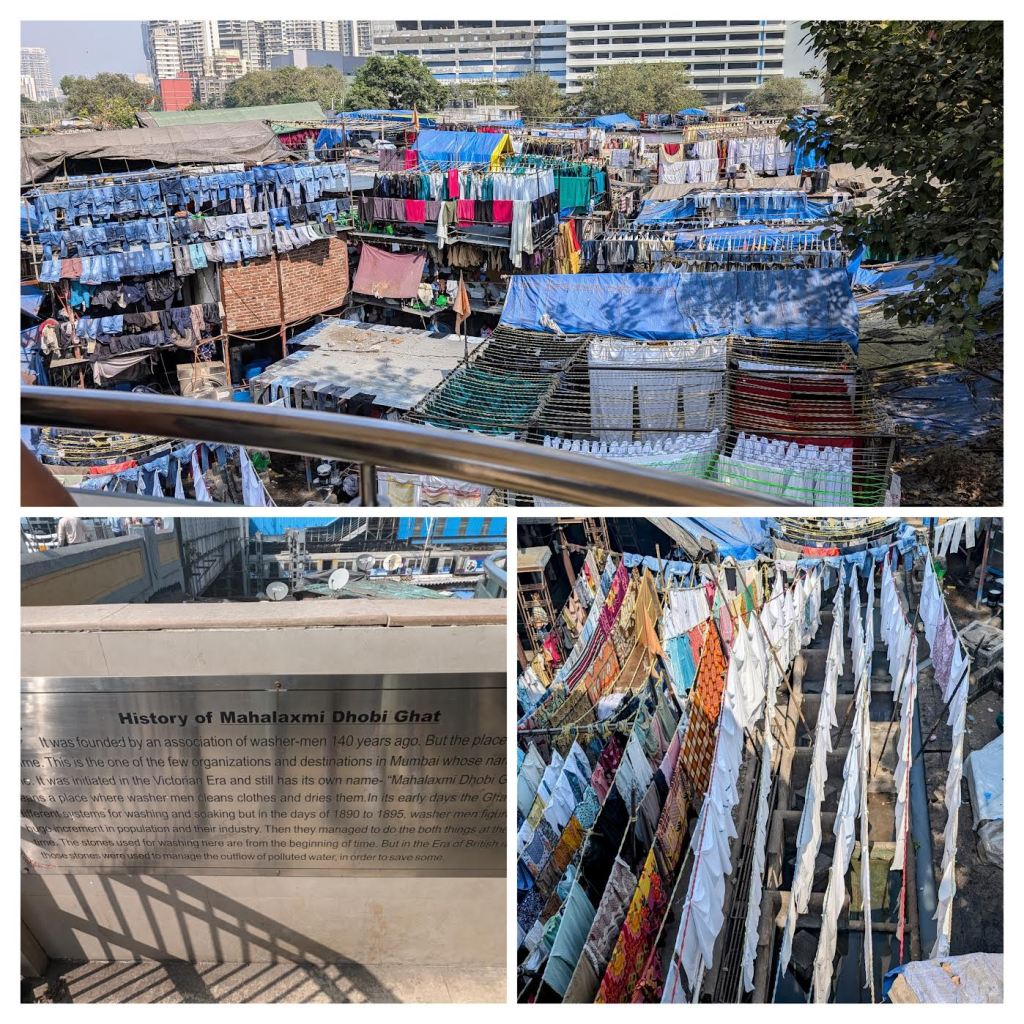
The last visit before our lunch was the Mahalaxmi Dhobi Ghat, originally founded in the Victorian era, a huge open-air laundry that washes huge quantities of clothes and other textiles.
Lunch was at a spot called the Bombay Canteen. It took some doing to understand the menu, aided by Jairaj, but I felt I had to choose from the “Tiffin Box” selection. My choice was the Bhopali Rezala, which was a cake of potato and cheese, in a tasty sauce, accompanied by mung beans (very spicy), bread and papadum crackers.
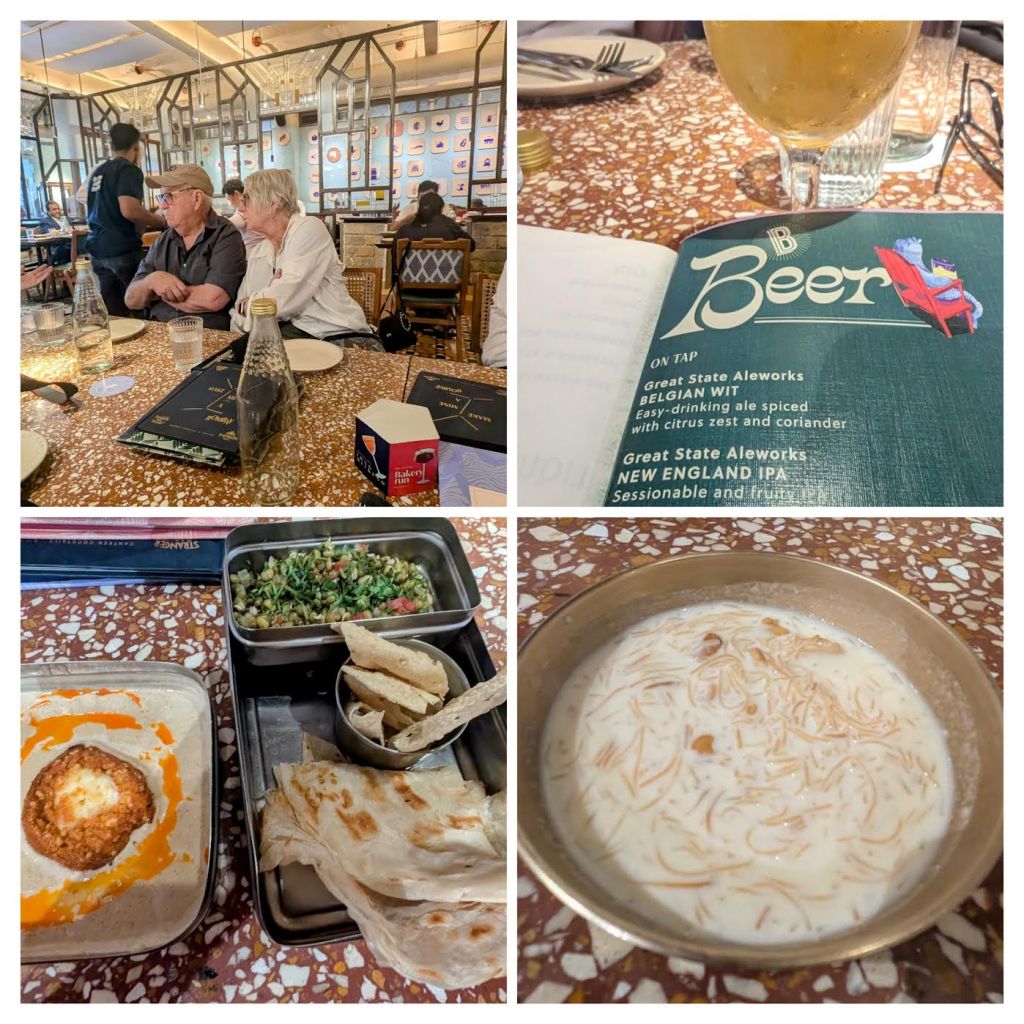
Lunch was washed down with a local craft beer. There was also a dessert, which was described as a “sweet” (?), vermicelli in a sweetened sauce, that was also quite good.
We had planned to go to Trishna, a highly-regarded seafood restaurant that had been recommended by Stef’s son-in-law, Neil. But again, circumstances interfered. As noted, there is an ongoing celebration of the Indian Navy, in and around the Gateway of India monument and our hotel. Mumbai has a population of about 24 million, and it seemed that at least 23 million of them were crowded around our hotel to celebrate, which effectively precluded any taxi service to or from the hotel. Think New Year’s Eve in Times Square, 24/7.

So we retired to the hotel bar and drank dinner. We’re going to make another try for Trishna tomorrow.


 Something to Declare
Leave a comment