
Post No. 3. Warsaw.
May 8, 2023.
Glad I was able to solve the problem of the photos (whew).
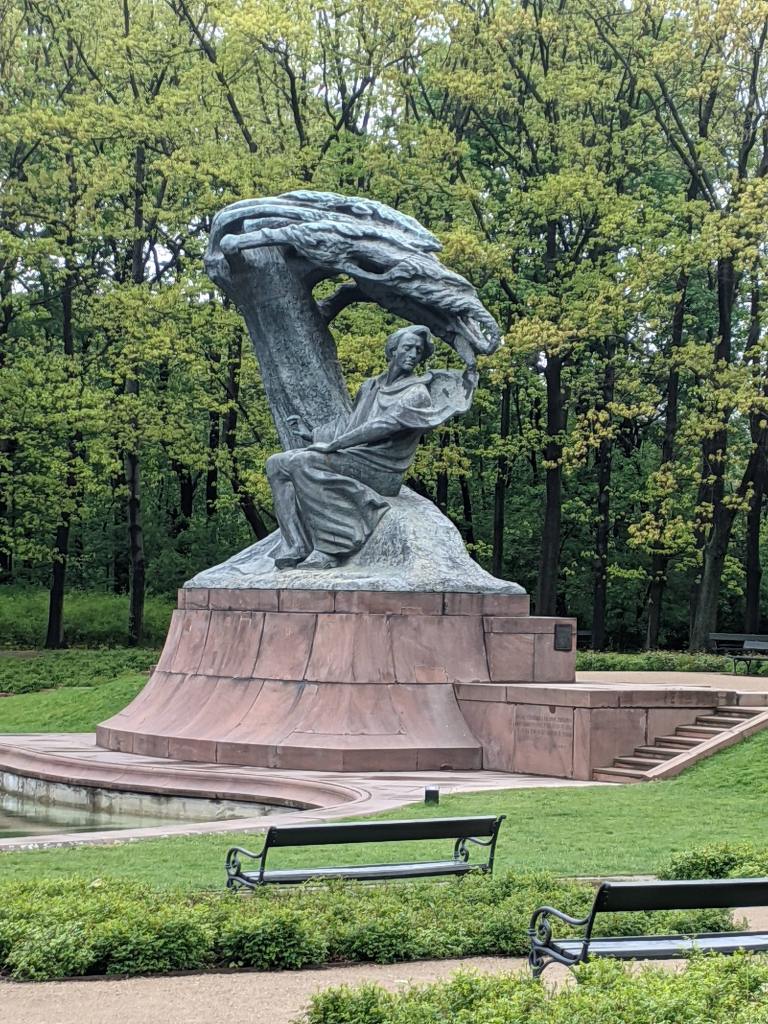
Today, we got the full Warsaw treatment. Up and out by bus to Royal Łazienski Park. By the way, the Polish “Ł” is pronounced as a “W,” so it sounds like “Wazienski Park.” There they have the famous statue of Frédéric Chopin beneath a stylized weeping willow tree.
Then back to the War and the Holocaust. Including the famous monument to the Warsaw Ghetto uprising in 1943.
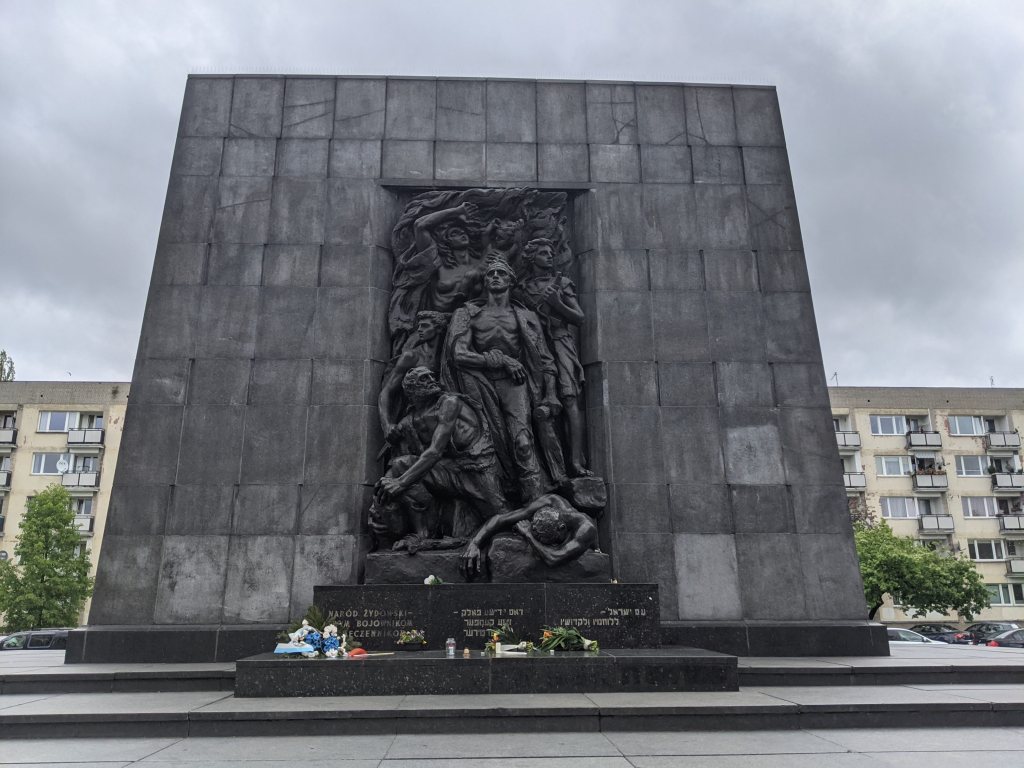
It’s right near the POLIN, Muzeum Historii Żydów Polskich (Museum of the History of the Jews in Poland). Our guide noted that, right before the Second World War, upwards of 28% of the population of Warsaw (about 3 million people) were Jews. When the Germans occupied Warsaw, many were executed, or died of starvation or disease, or sent to the Umschlagplatz on Stawki Street, near the rail station, and shipped off to the concentration camp in Treblinka (the one closest to Warsaw). Of those remaining, 500,000 were crowded into a very small area, surrounded by a wall (the Ghetto). In 1943, under Mordecai Anielewicz, the Jews made an armed stand against the Germans, which resulted ultimately in the total destruction of the Ghetto and everyone in it.
I had to correct the tour guide on one thing. The way she was describing it, Jews were invited to settle in Poland in the late Middle Ages to escape persecution in Western Europe (true), and that everything was fine for the Jews until the Nazis arrived. I felt it necessary to point out that, between the late Middle Ages and the Nazis, there had also been a bit of antisemitic behavior on the parts of the Eastern Europeans (discrimination and pogroms by Poles, Ukrainians, etc.) well before 1939. She admitted that that was right, but that she had omitted this in the interest of brevity. Uh……..okay, I guess.
The tour proceeded to sites commemorating the 1944 uprising of the entire city of Warsaw by the Poles against the Germans,
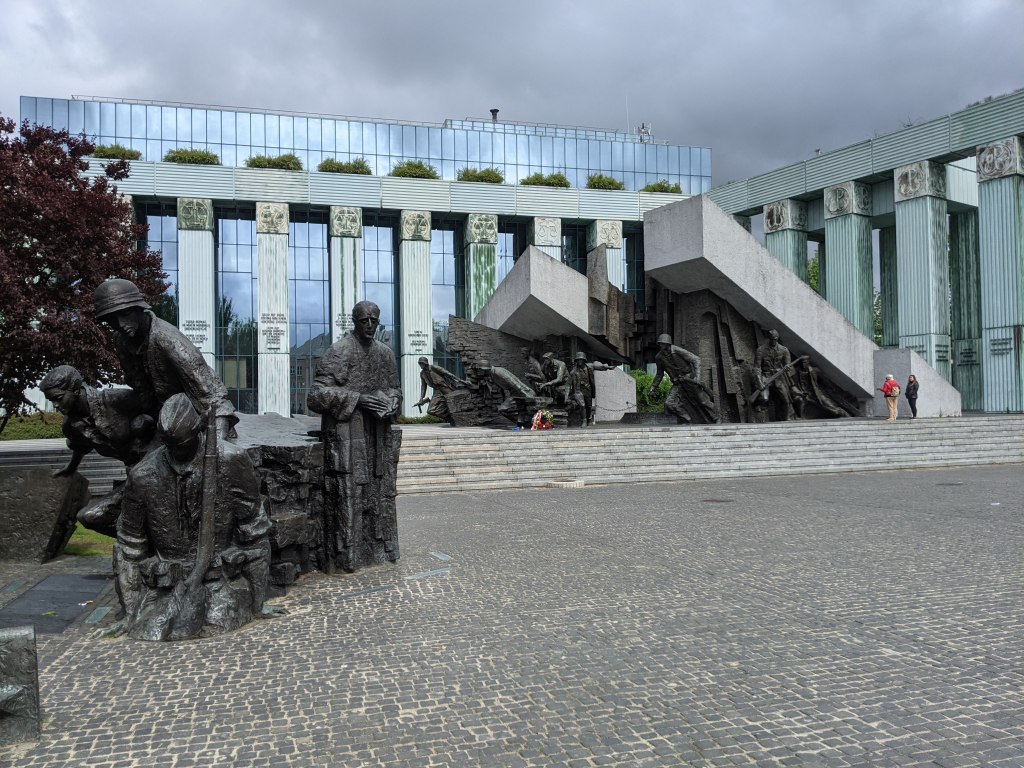
with the inevitable destruction of the rest of the city (shown at the end of the film “The Pianist”). It bears noting that almost all of Warsaw, including the parts that look “old,” are the results of reconstruction.
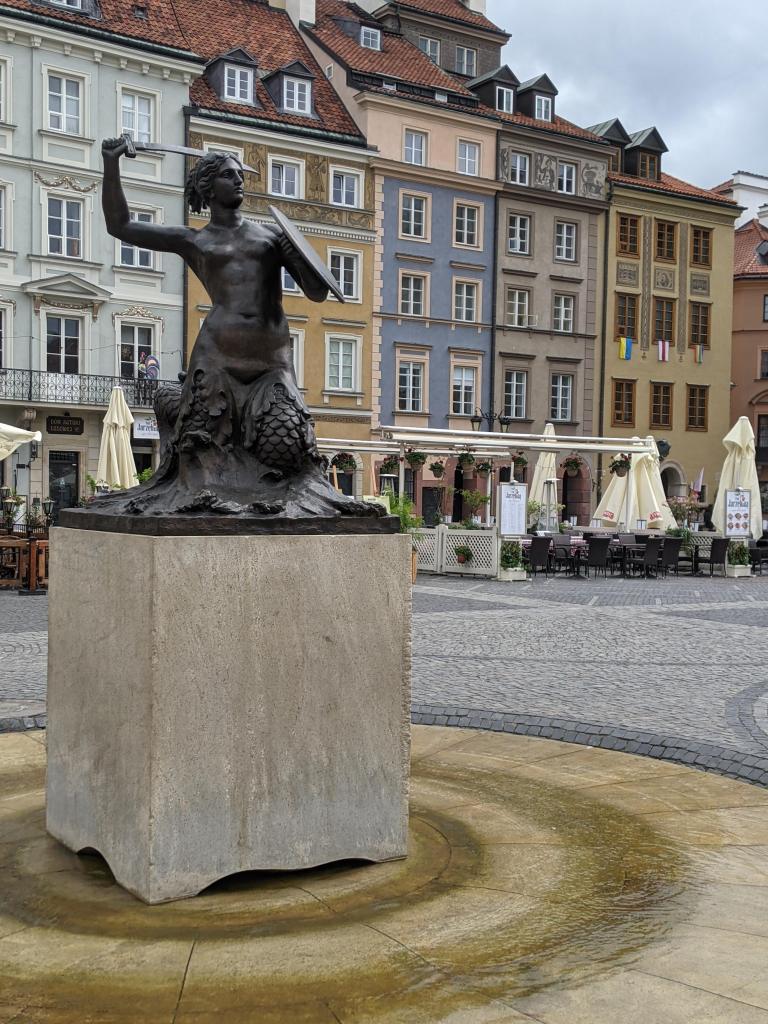
There were visits to the statue of the Mermaid (the symbol of the City of Warsaw), based on the story of the two Baltic fishermen who rescued the mermaid (Syrenka) from the clutches of an evil merchant (not clear how she got into his clutches in the first instance), and who later swam up the Vistula river to Warsaw and, out of gratitude, pledged to guard the city.
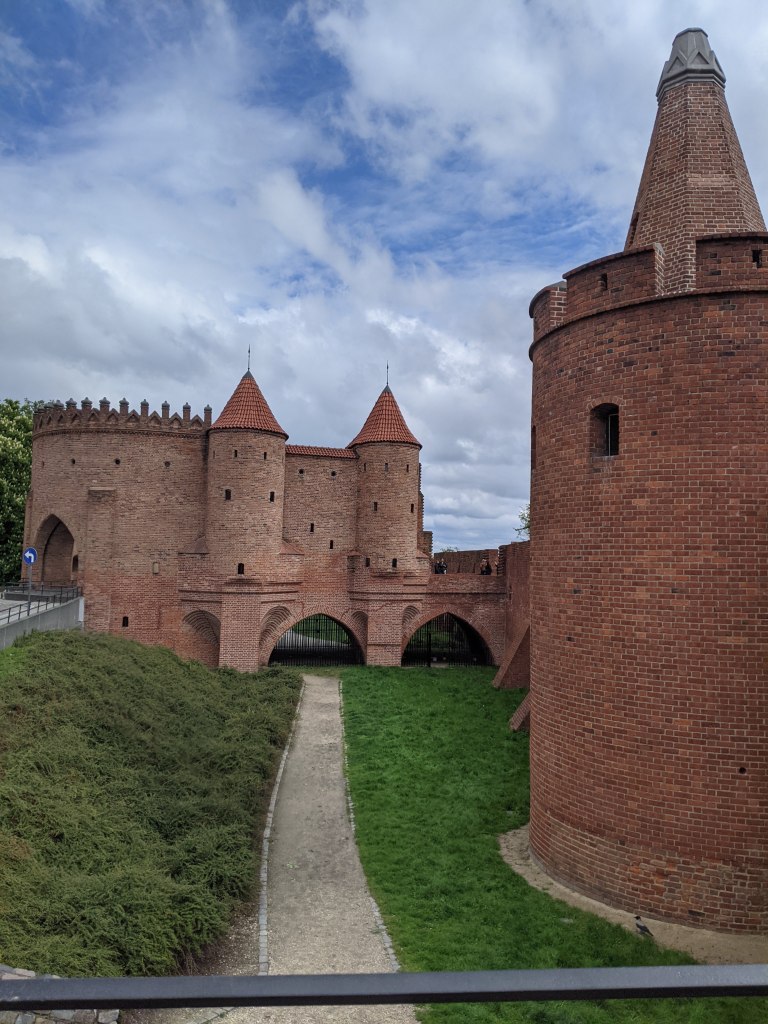
And the 14th-15th century fortress, the Barbacan.
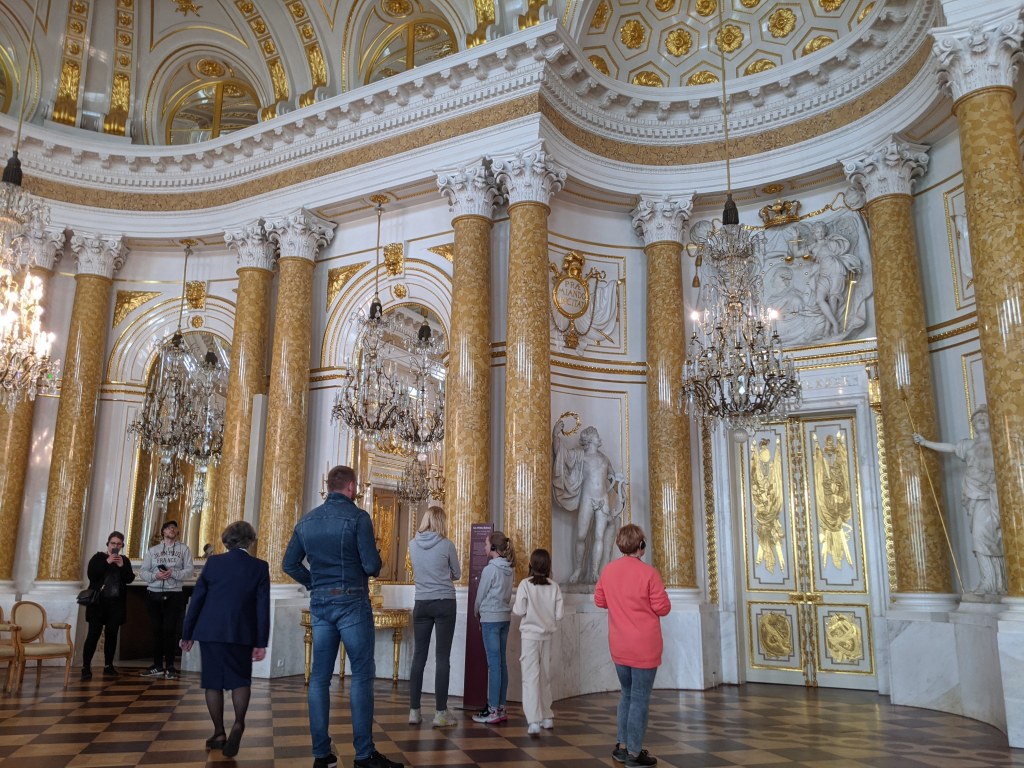
Then to the Royal Palace, which had been restored in the style set by the last reigning King of Poland, Stanislaus Augustus Poniatowski. Stan (as I used to call him) was a great art aficionado, and the place reflected the glory of the 18th century.
That’s a portrait of Stan in the photo below:
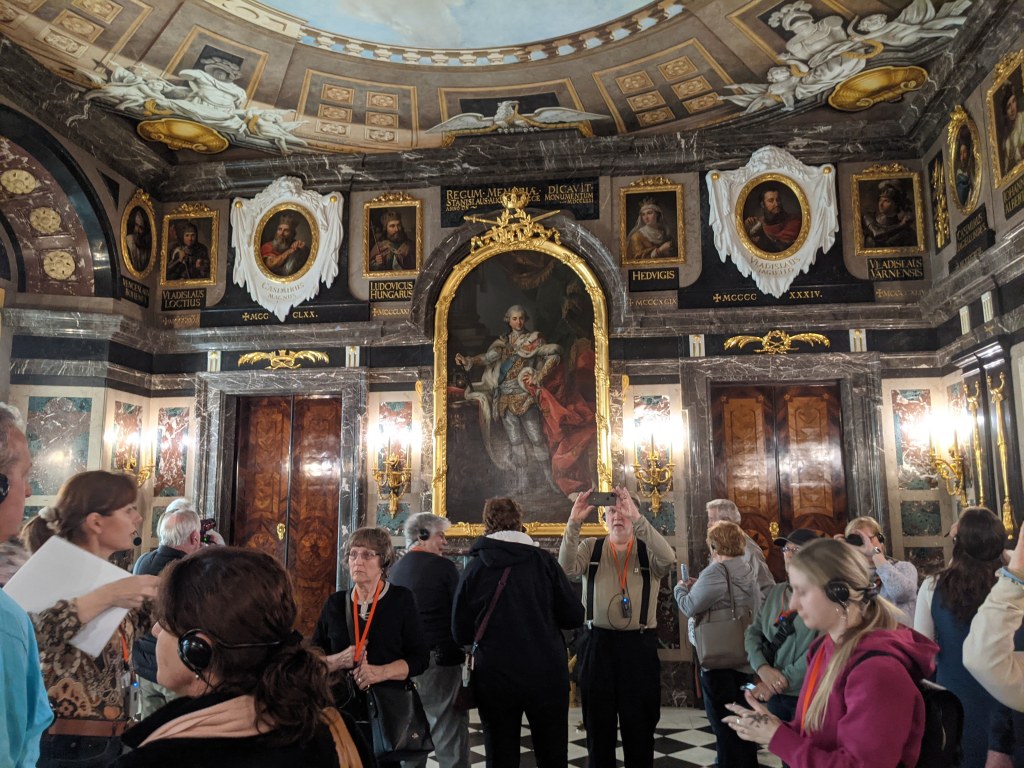
As Stan used to say, “Dobrze być królem.” (“It’s good to be King”). But they were all like that in the 18th Century (you should have asked Louis XVI of France).
Oh, I think our tour guide, Agnieszka, was a royalist at heart. She stressed several times about how “handsome” King Stanislaus was (she actually likened him to George Clooney, and used the word “yummy”), how he liked the ladies and how the ladies liked him.) Ahem. “Dobrze być królem.”
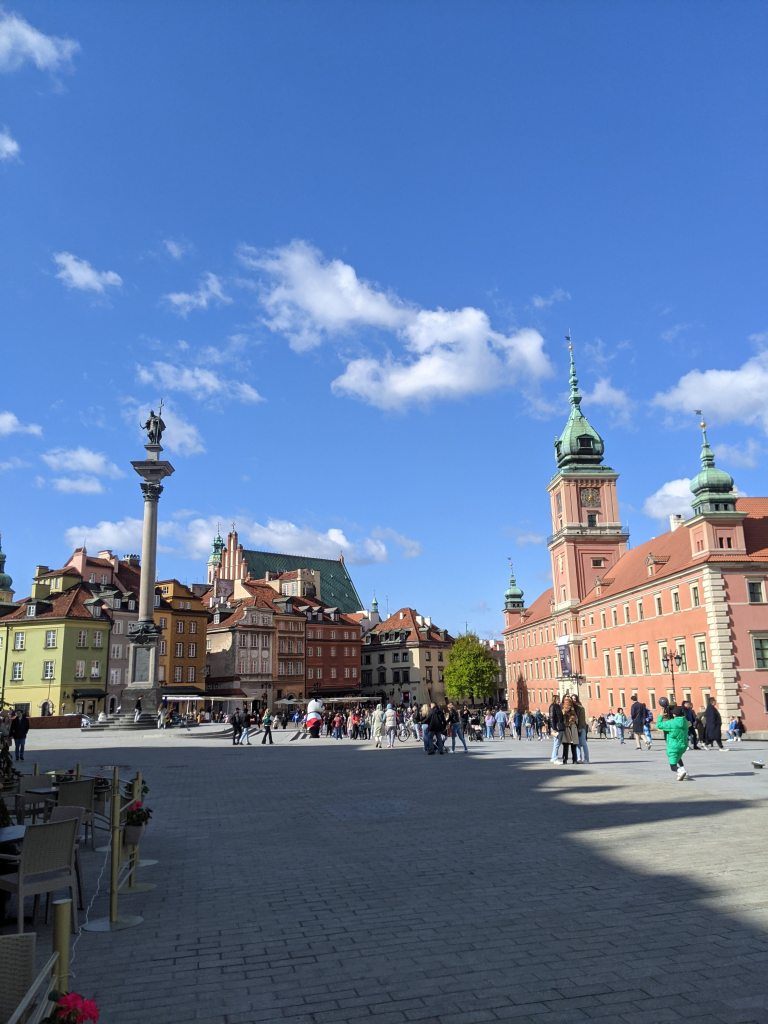
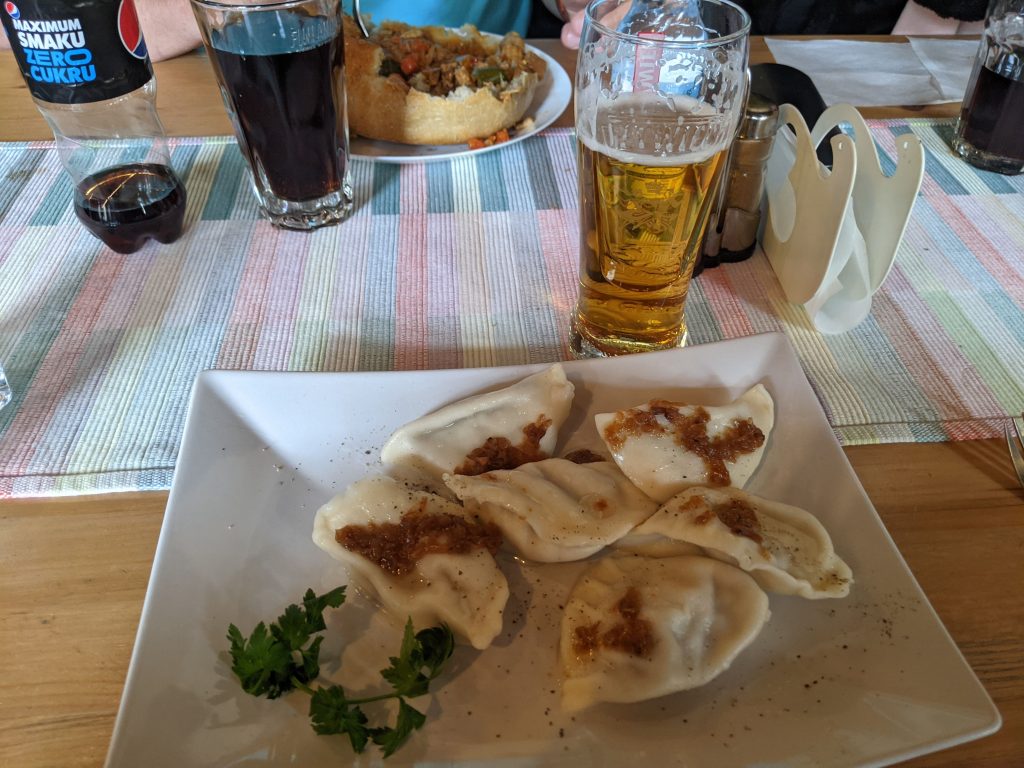
By this time it was lunch, so I joined some tour-mates on a quest for my first Pierogis of the trip. Found a place not far from the Place Zamkowy (Royal Square):
where they served pierogis that were quite good:
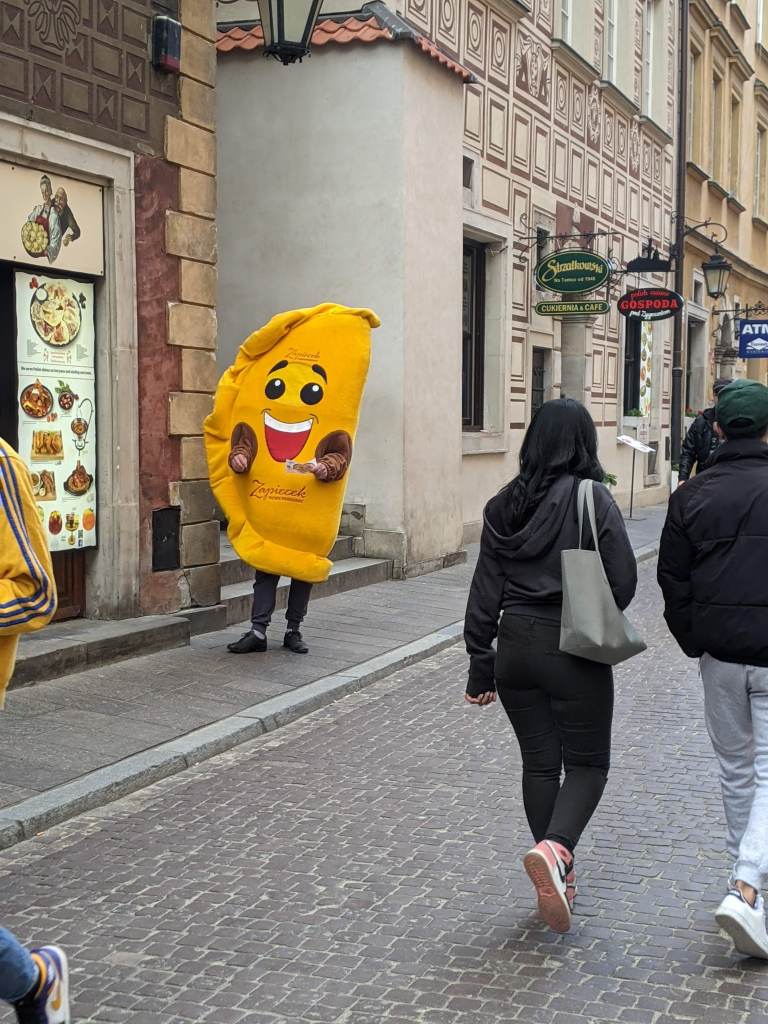
Later, we observed a street advertisement performer (I guess he’d style himself “Mr. Pierogi”):
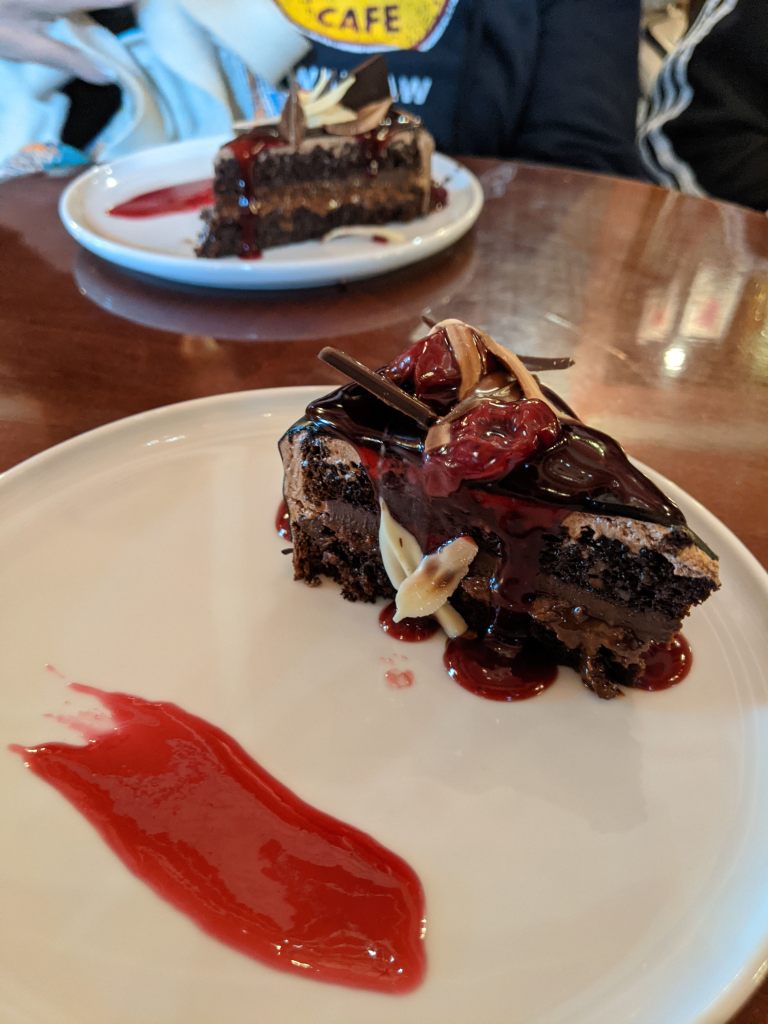
Our last stop for the day was at Wedel Chocolates. There we partook of a killer chocolate cake with cherries
washed down with an equally-killer hot chocolate:
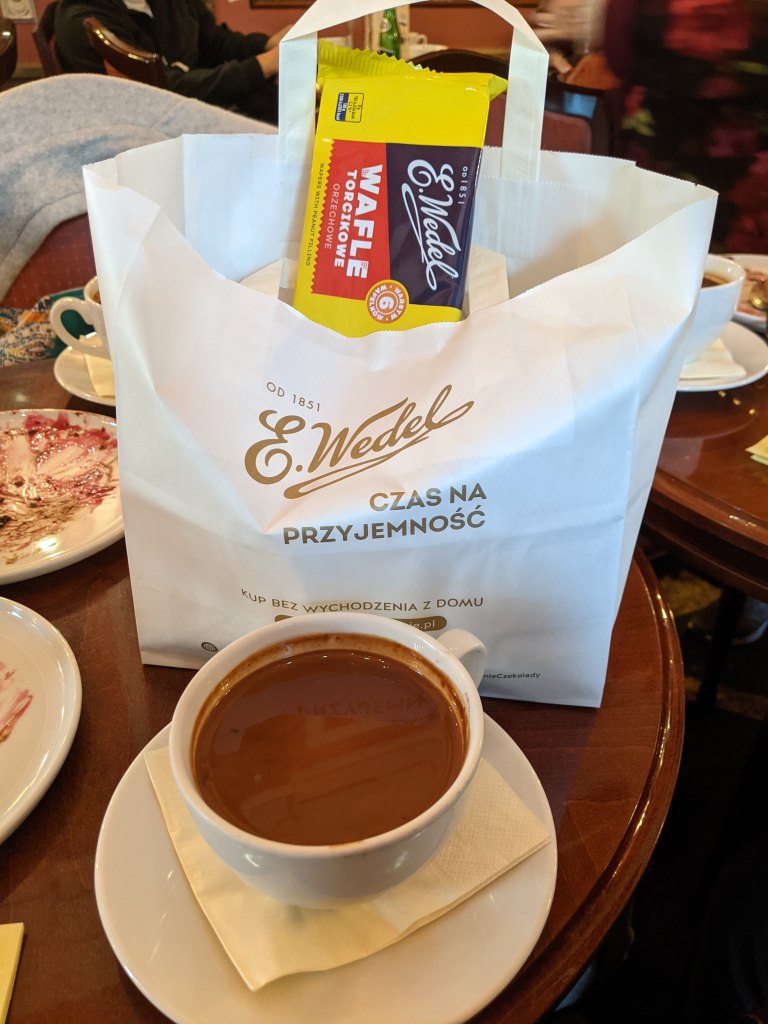
I made the wise choice to first slurp up the curdled top layer of the hot chocolate (the plevka) rather than stir the whole thing together. FYI, the bag behind the hot chocolate contained items purchased at the request of my daughter-in-law (who had, at my recommendation, cruised the Wedel website and found some items that might suit the taste of herself and my grandchildren).
It was clear that, at this point, it would be inappropriate (“too much,” as Stef’s mother used to say) for me to have dinner on top of this “Death by Chocolate” experience. So back to the hotel, on a chocolate “high,” to prepare for departure, the next day, to the mountainous south of Poland. To be continued.


Leave a Reply