
“John Singer Sargent’s Lonely Hearts Club Band” (continued)
December 23, 2023
The Boston Fine Arts Museum was only a 10-minute walk from The Verb. We had quite some time before our “window” to enter the John Singer Sargent exhibit. So we went in search of the museum’s collection of Impressionists.
On our way, we found loads of exhibits of design stuff, furniture, furnishings, “housewares,” etc. This really really appealed to Stef’s attraction to All Things Real Estate.
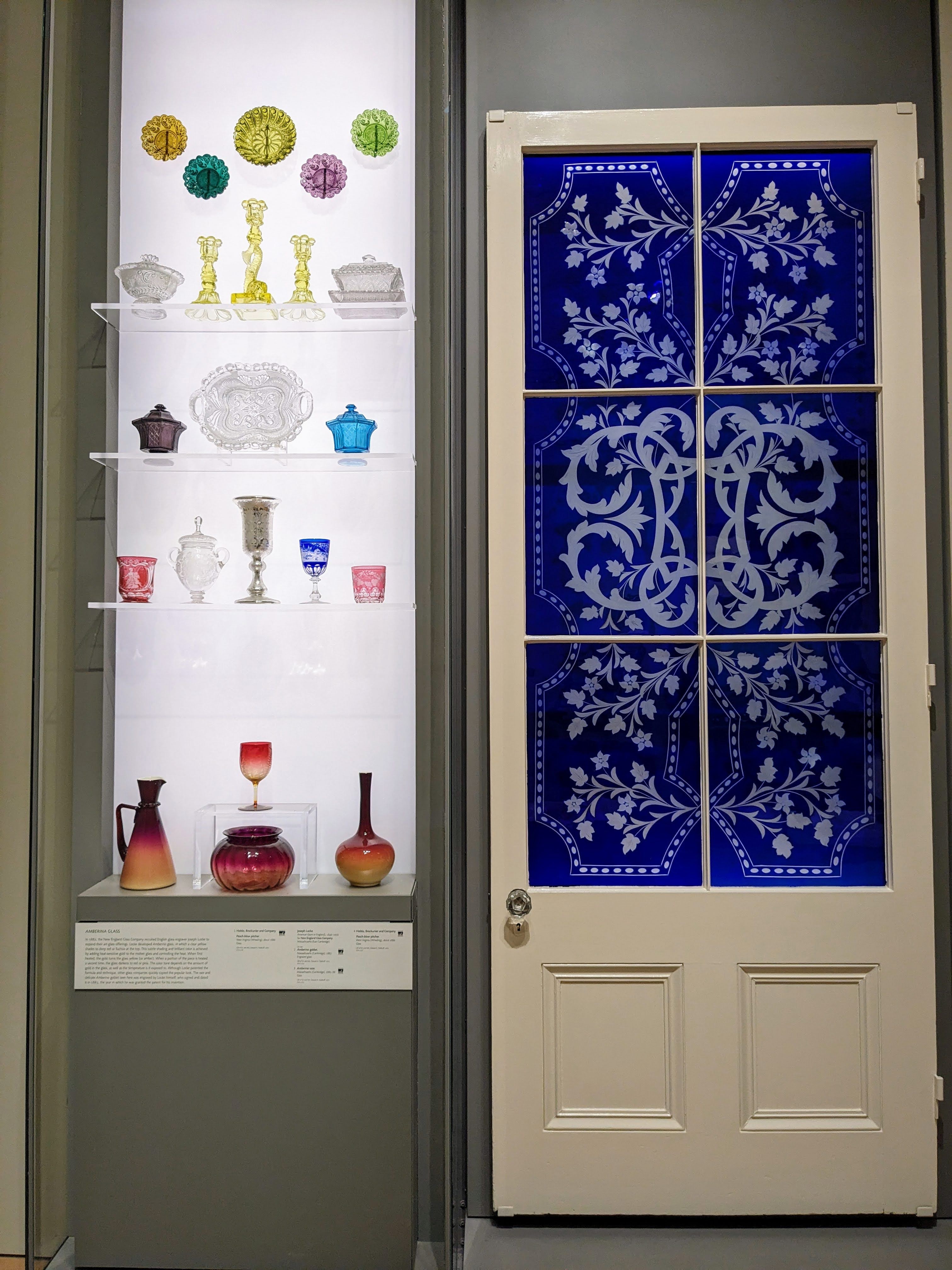
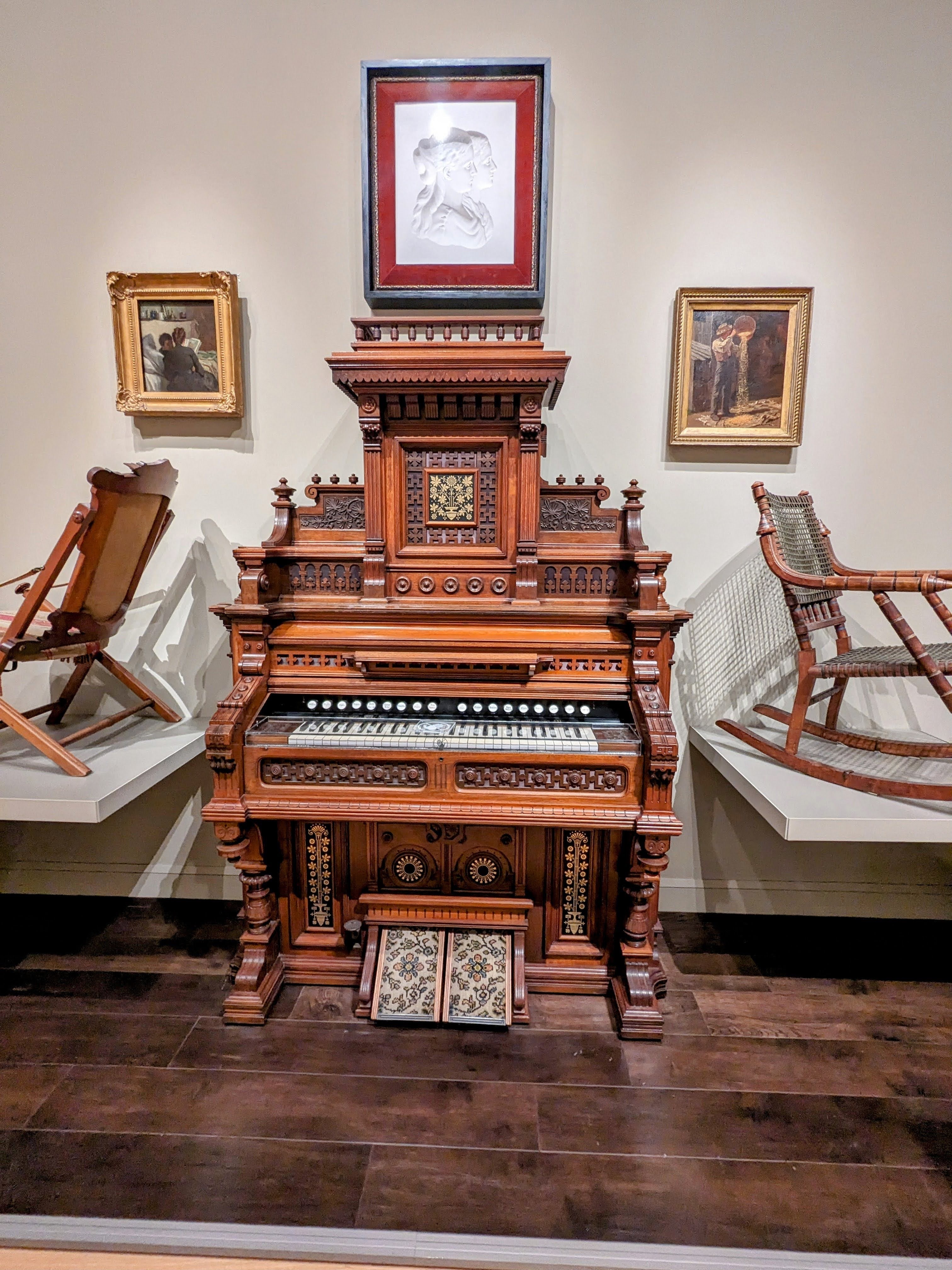
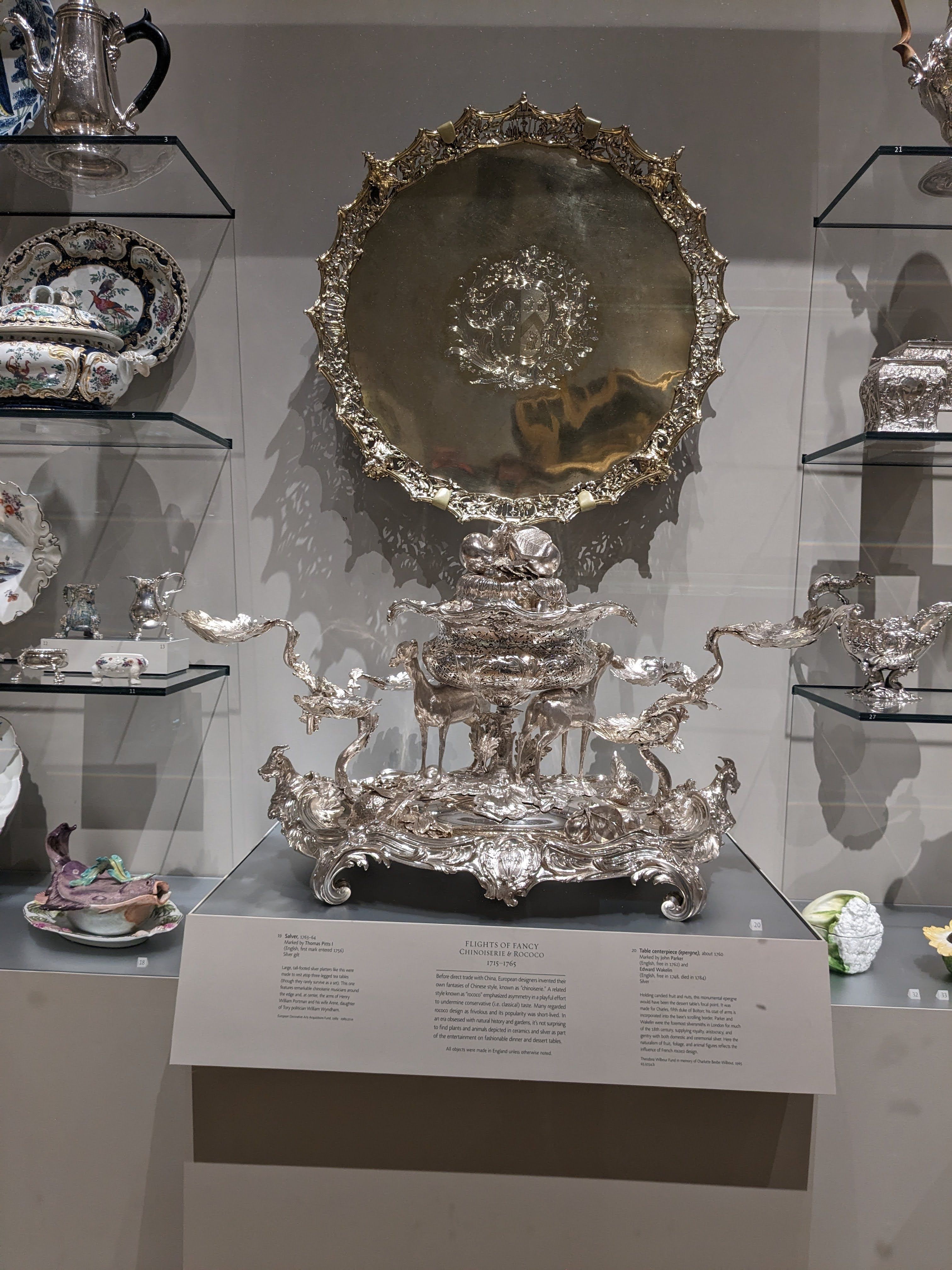
We finally got to our faves, the Impressionists (including Monet, Renoir, Sisley, Pissarro). Then, on to the Sargent exhibit:

Some of the portraits were accompanied by displays of the actual gowns and accessories worn by his subjects. Sargent was known to either overrrule some of their original sartorial choices, or to simply change the portrait to reflect what he wanted the outfit to be.
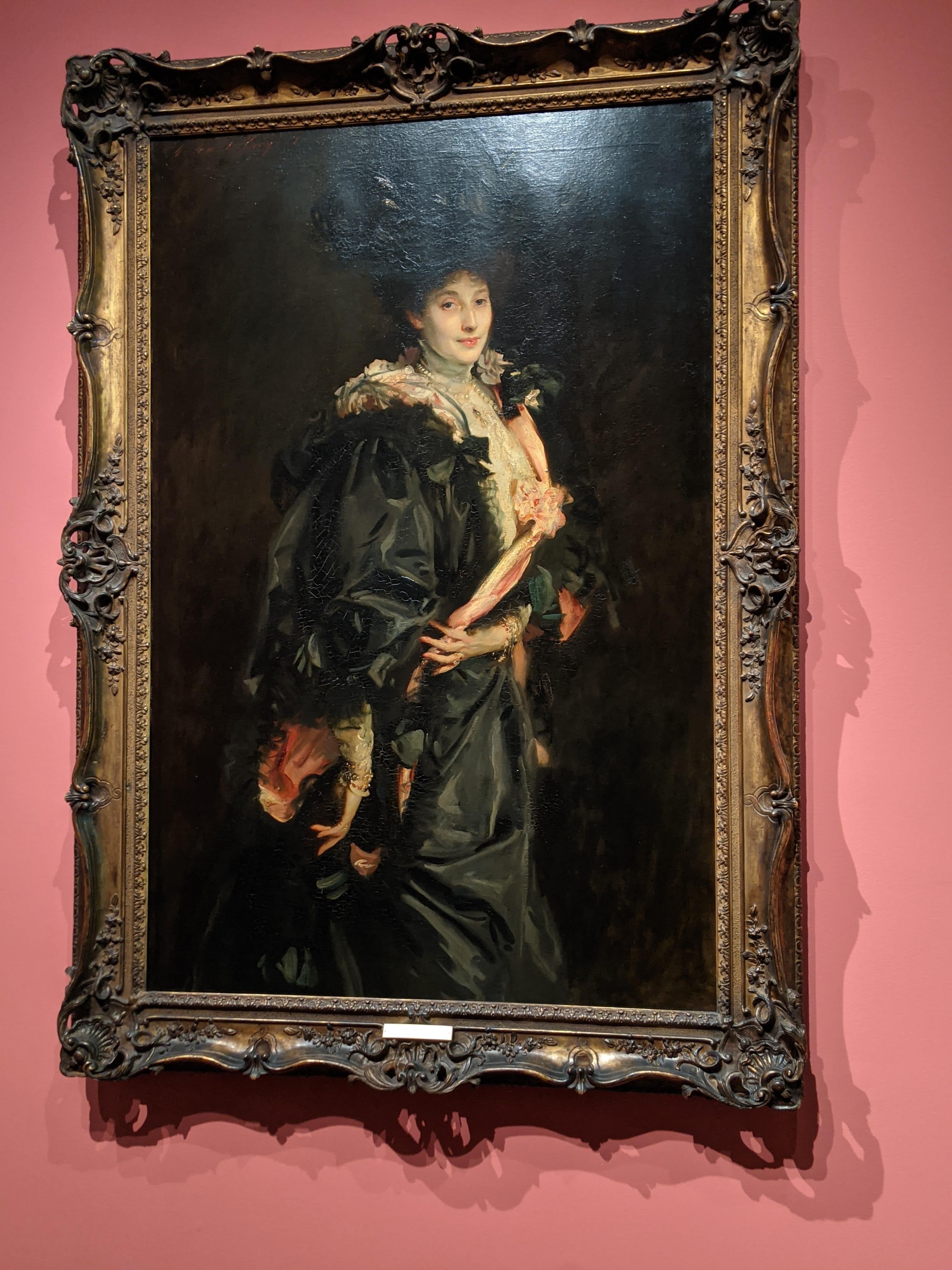
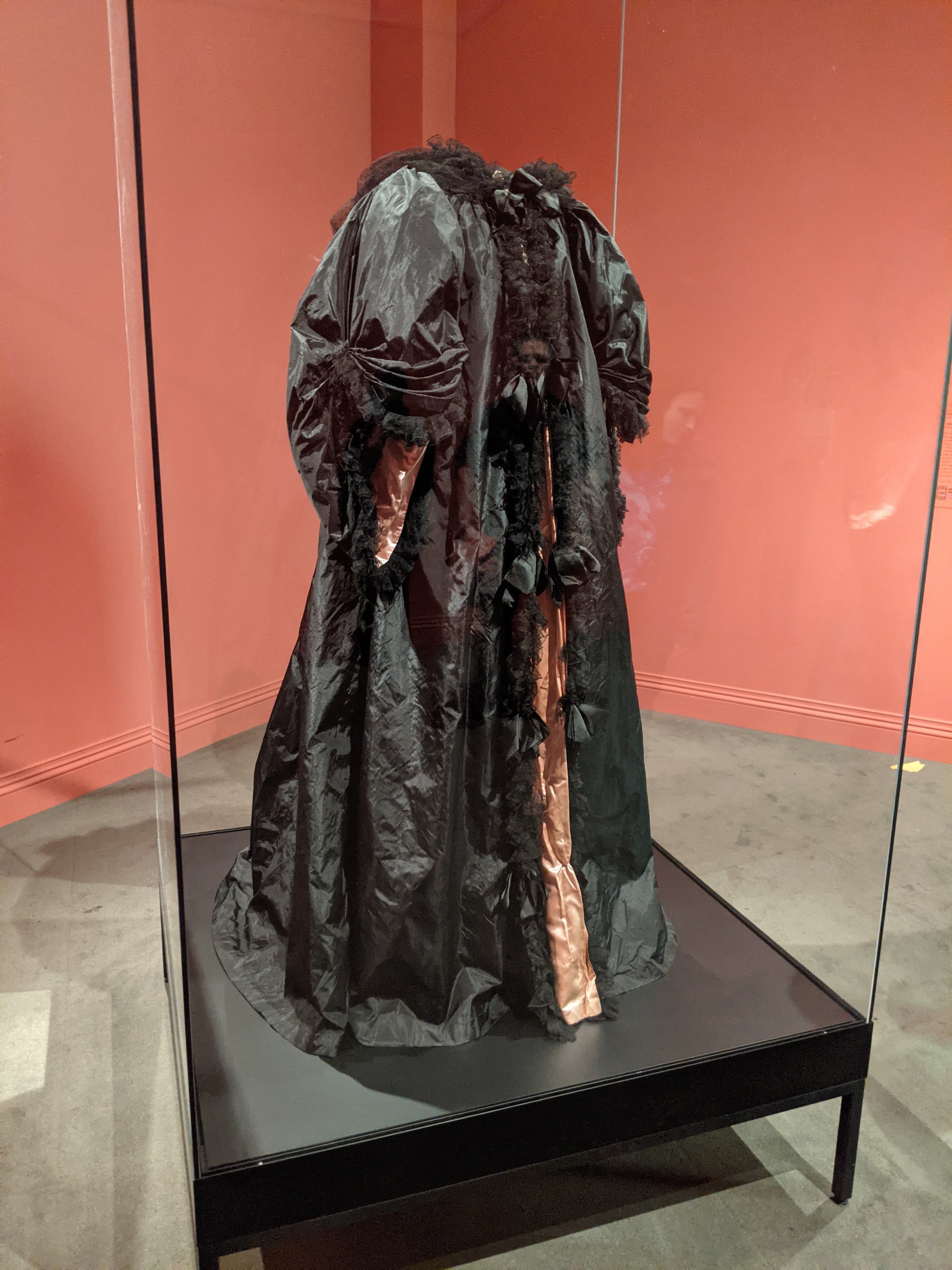

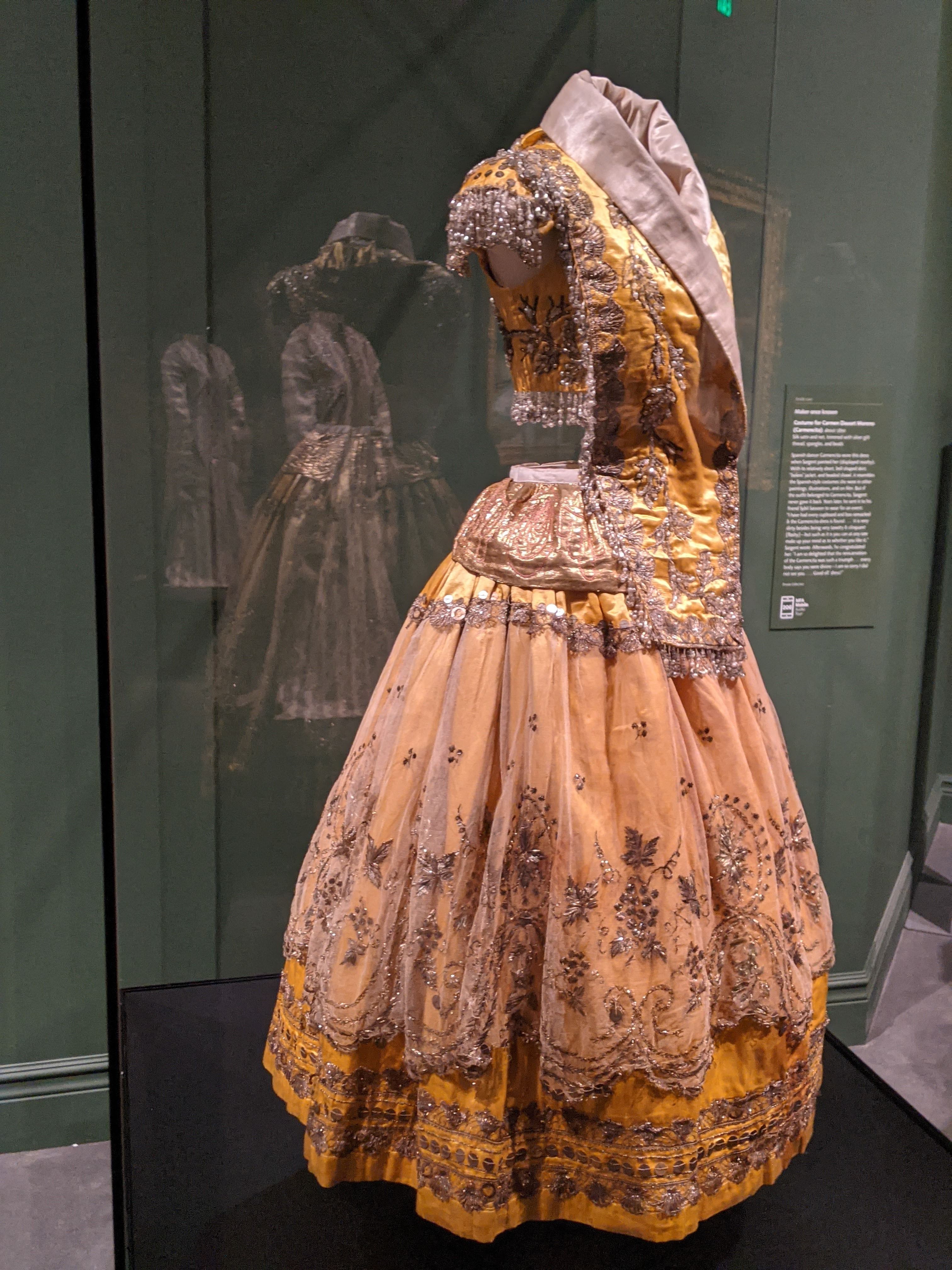
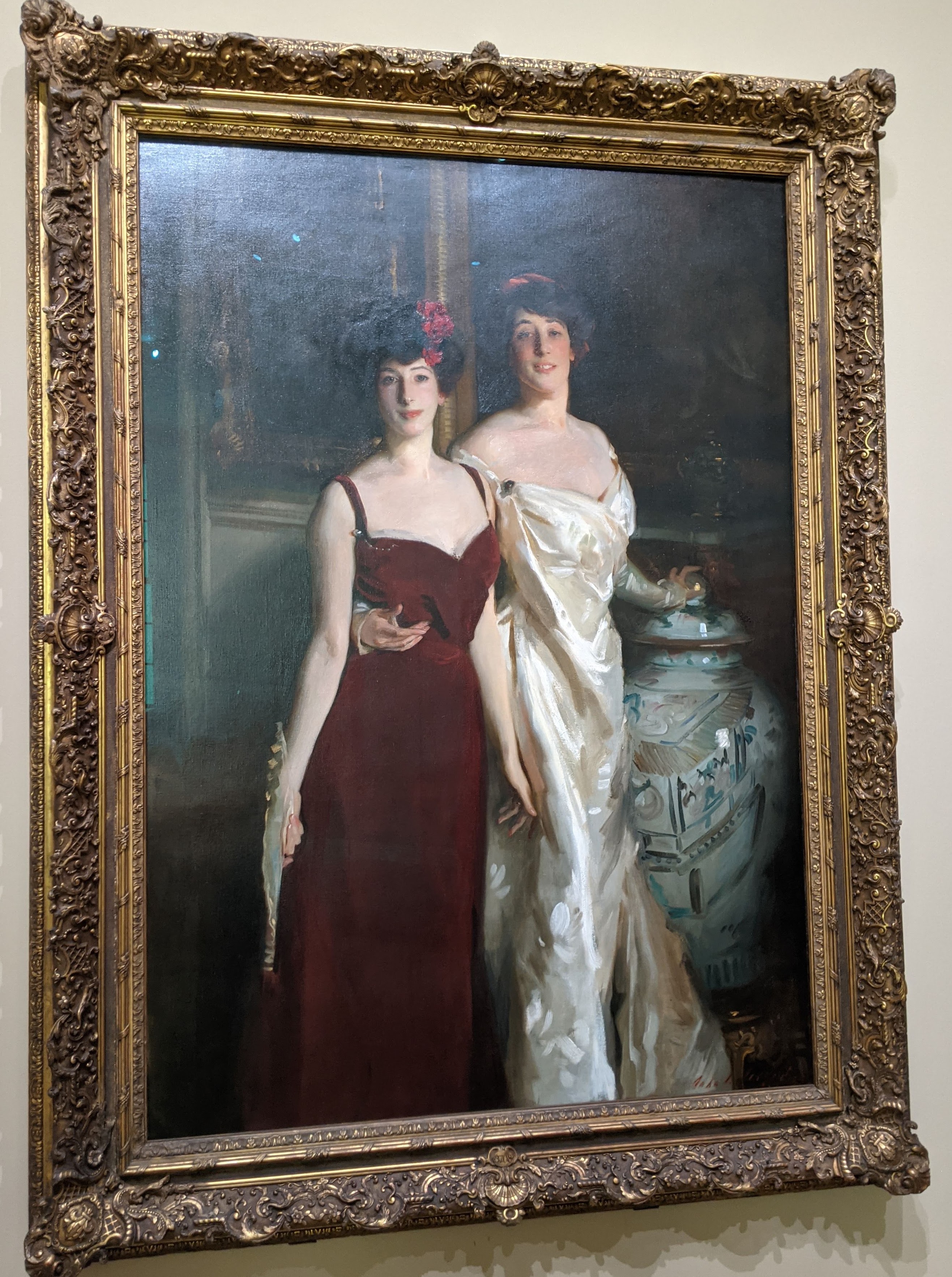
Sargent was noted for his friendliness and affection for people outside the 19th Century mainstream, like the upwardly-mobile Jews of London. Like the art dealers Asher and Flora Wertheimer. Here’s his 1901 portrait of Asher’s daughters Ena and Betty.
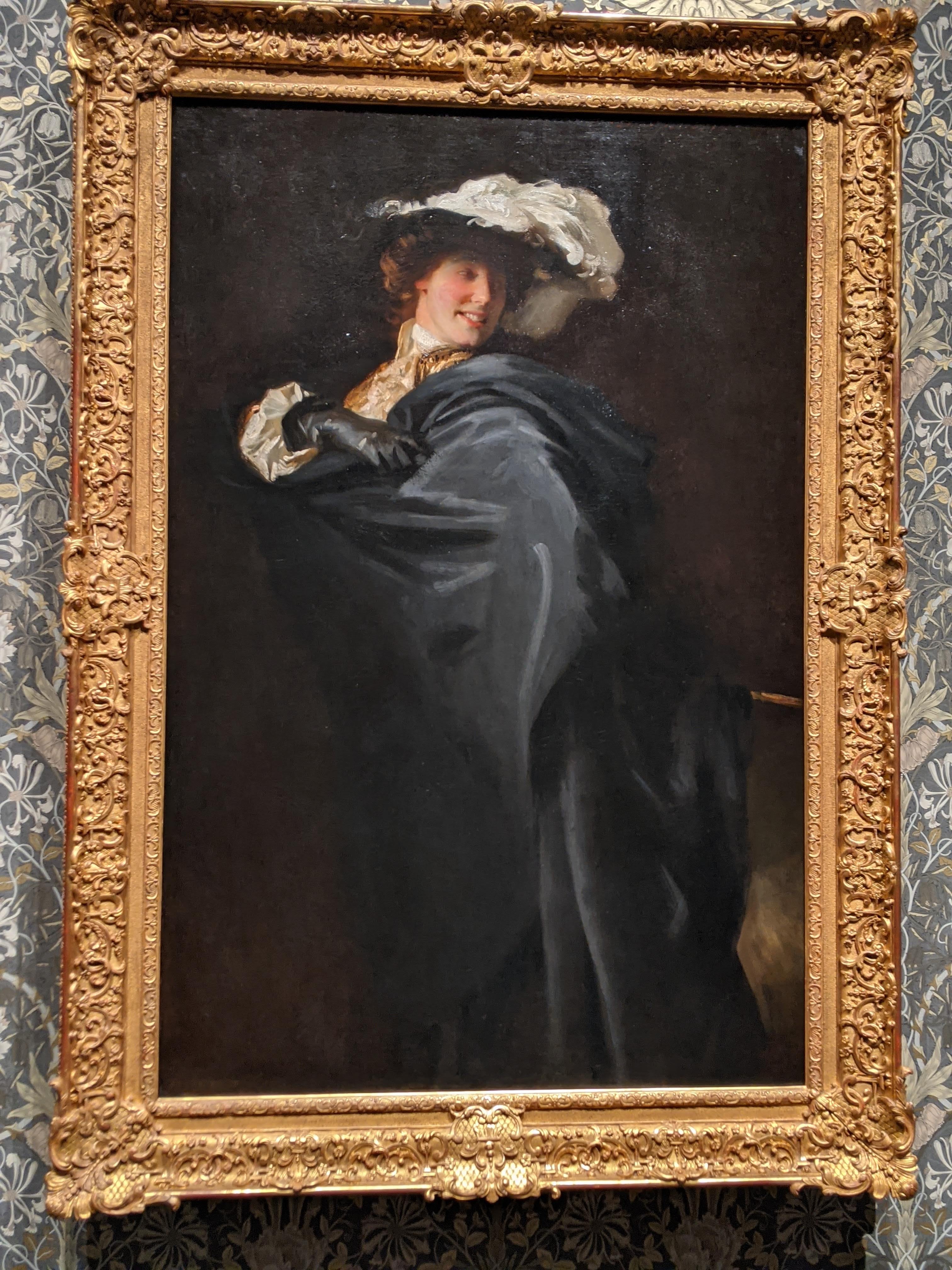
His subsequent 1904 portrait of Ena was considered a little outré, subtitled “A Vele Gonfle” (“in full sail”), sort of in the role of a male cavalier:
The commentary to the right of the portrait: “The outsider status of Jewish families in London granted them a certain independence from the conventions of behavior for the British upper classes, but could result in negative, often antisemitic, comments when their portraits were displayed.” Like the portrait of Adèle Levis, the daughter of a European rubber manufacturer, who married London Banker Carl Meyer in 1883. She’s shown here with her daughters:
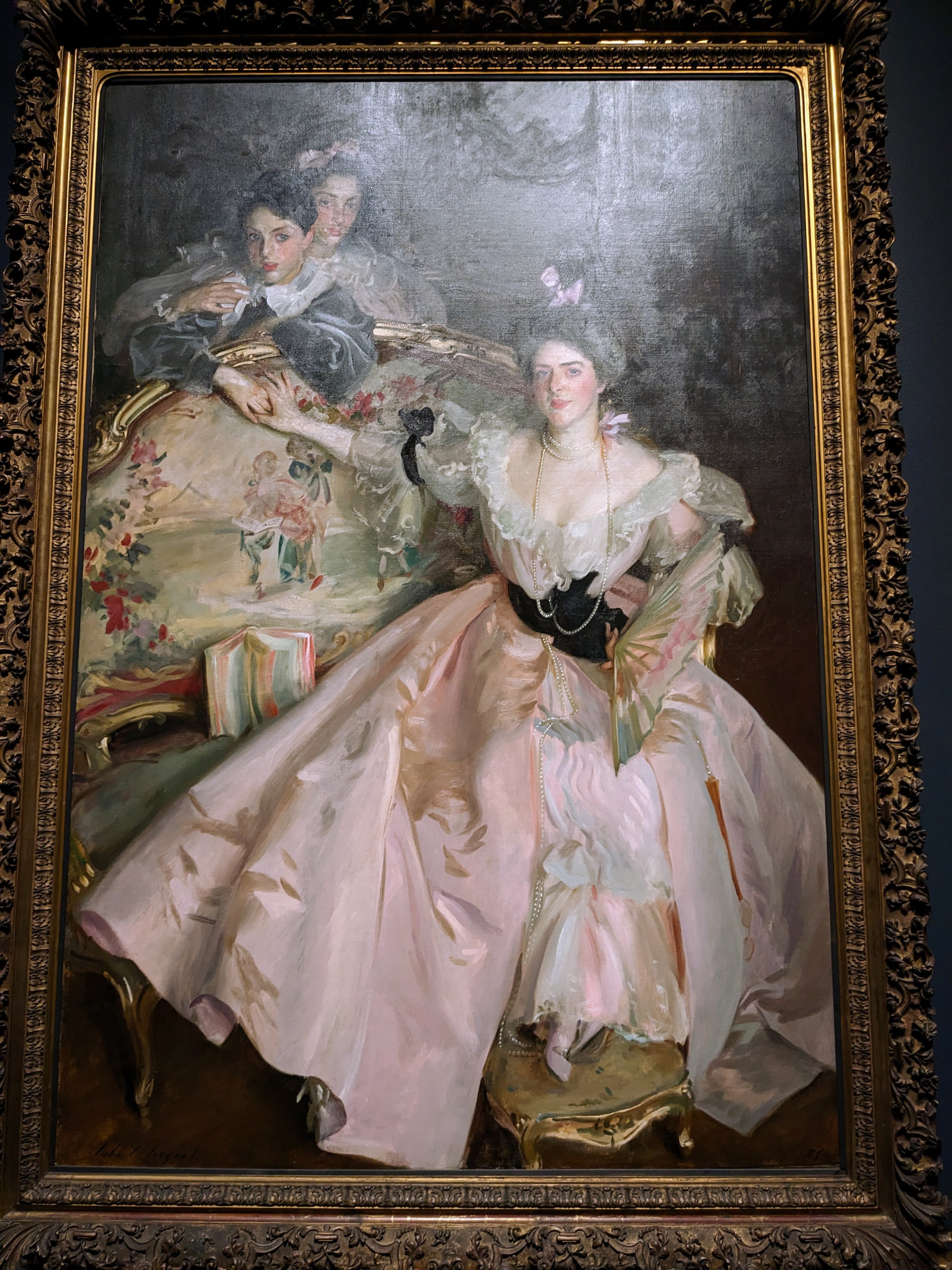
This 1908 “projection of wealth and refinement” (noted by Henry James) prompted a Boston newspaper to comment, “$10,000 was not much for a multi-millionaire Israelite to pay to secure social recognition for his family.” (It bears noting that Adèle later co-authored a study of London garment workers that called for an equitable minimum wage.)
In addition to members of the Tribe, Sargent did works depicting others outside the 19th-Century cultural mainstream, like the 1881 portrait of Violet Paget:
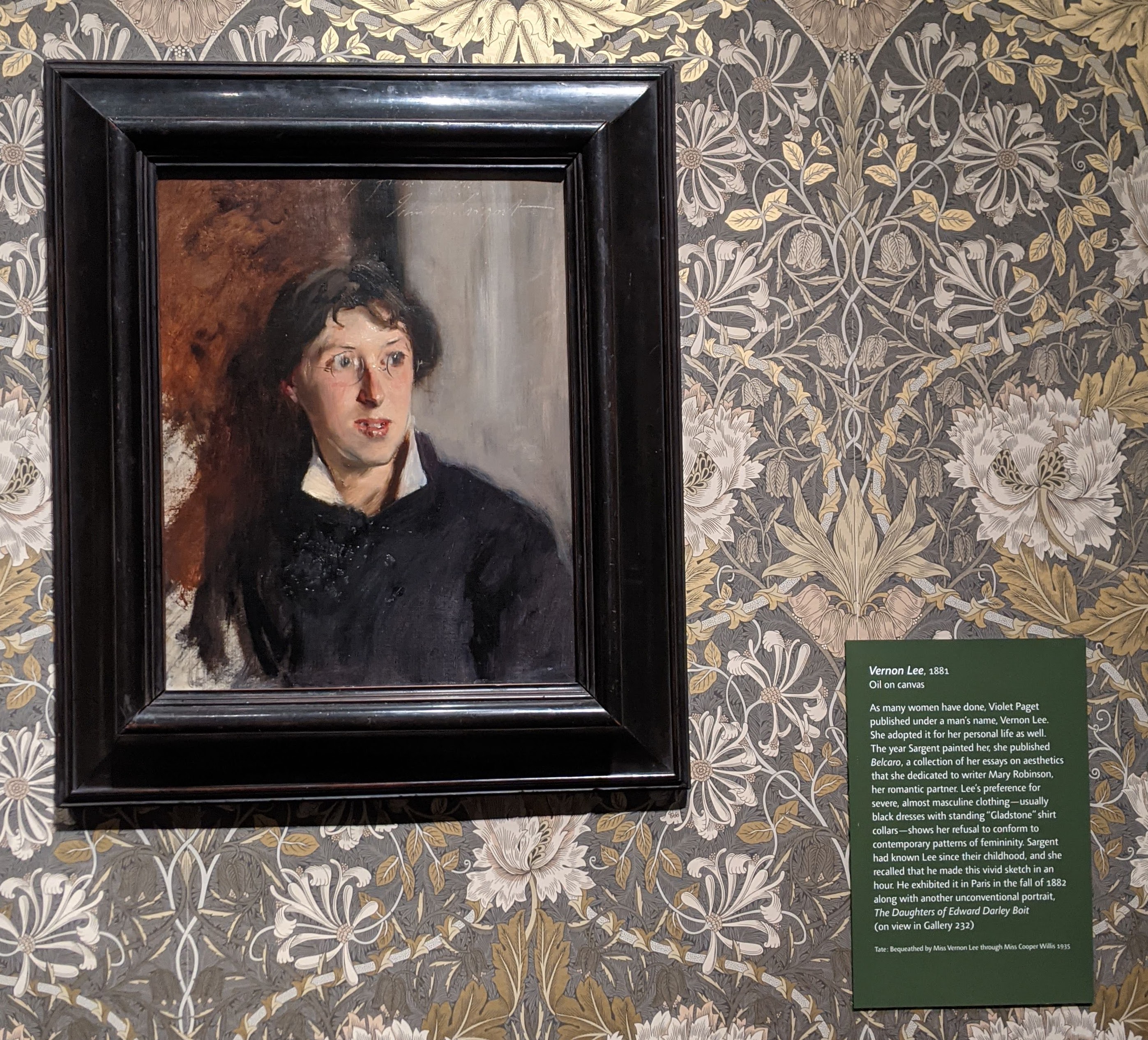
Paget was a writer who published under a man’s name (“Vernon Lee”); she dedicated a collection of essays to her romantic partner, Mary Robinson. There was also Helen Smith (portrayed in an 1886 painting):
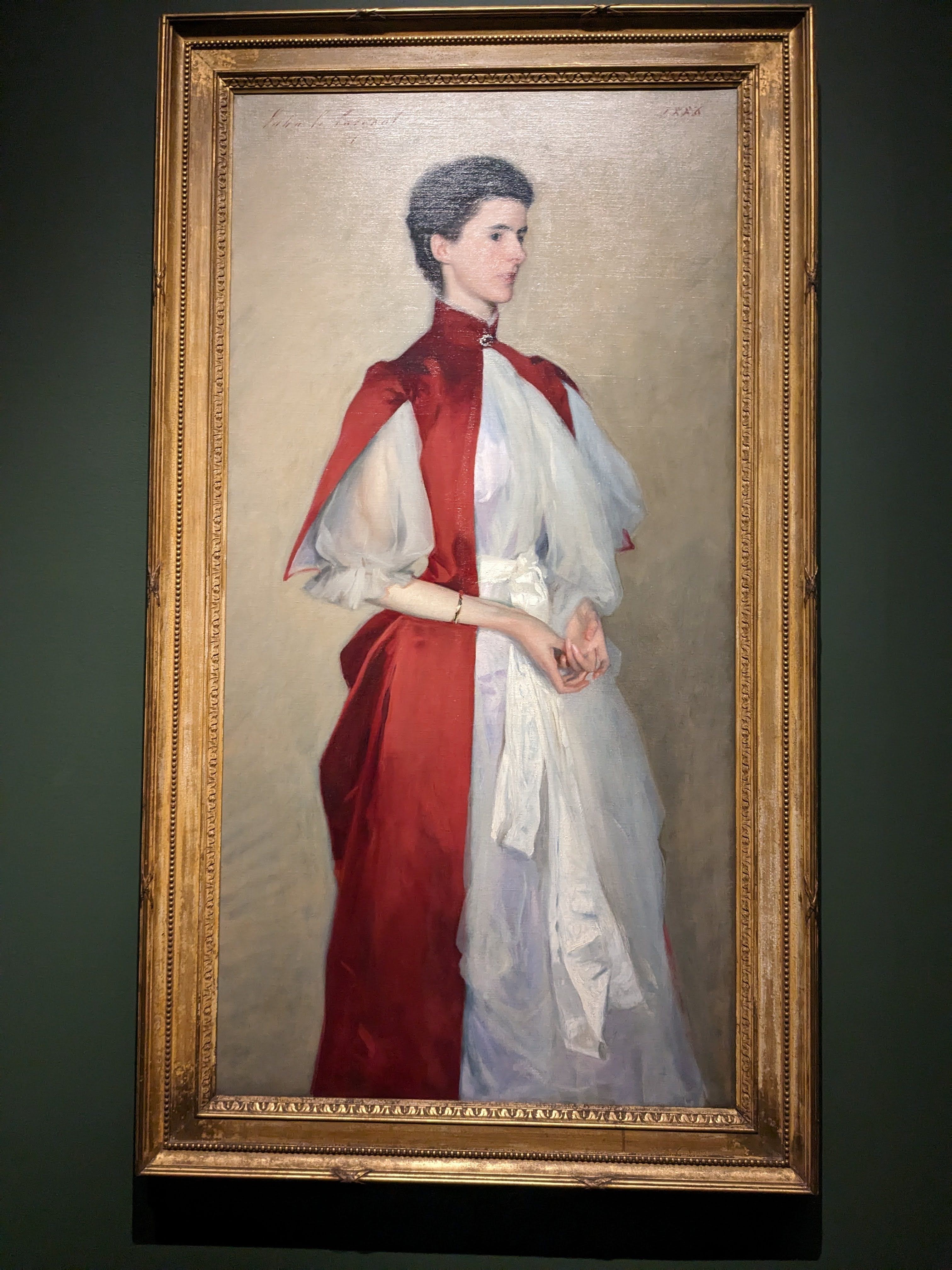
Smith’s reputation had become compromised by her sister’s “sensational” divorce case. She is shown wearing a white organza gown, along with a “dramatic” scarlet cape that some commented as displaying a penchant for “loose morals.” Tough being outside the box in those days.
By this time, our batteries were running down, and we took our leave of the museum, noting the display of a large Chihuly glass sculpture, “Lime Green Icicle Tower”:

Subtle and understated, huh? Walking back to The Verb, there was a view of the lovely Boston skyline, the Prudential Building reflected in the water:
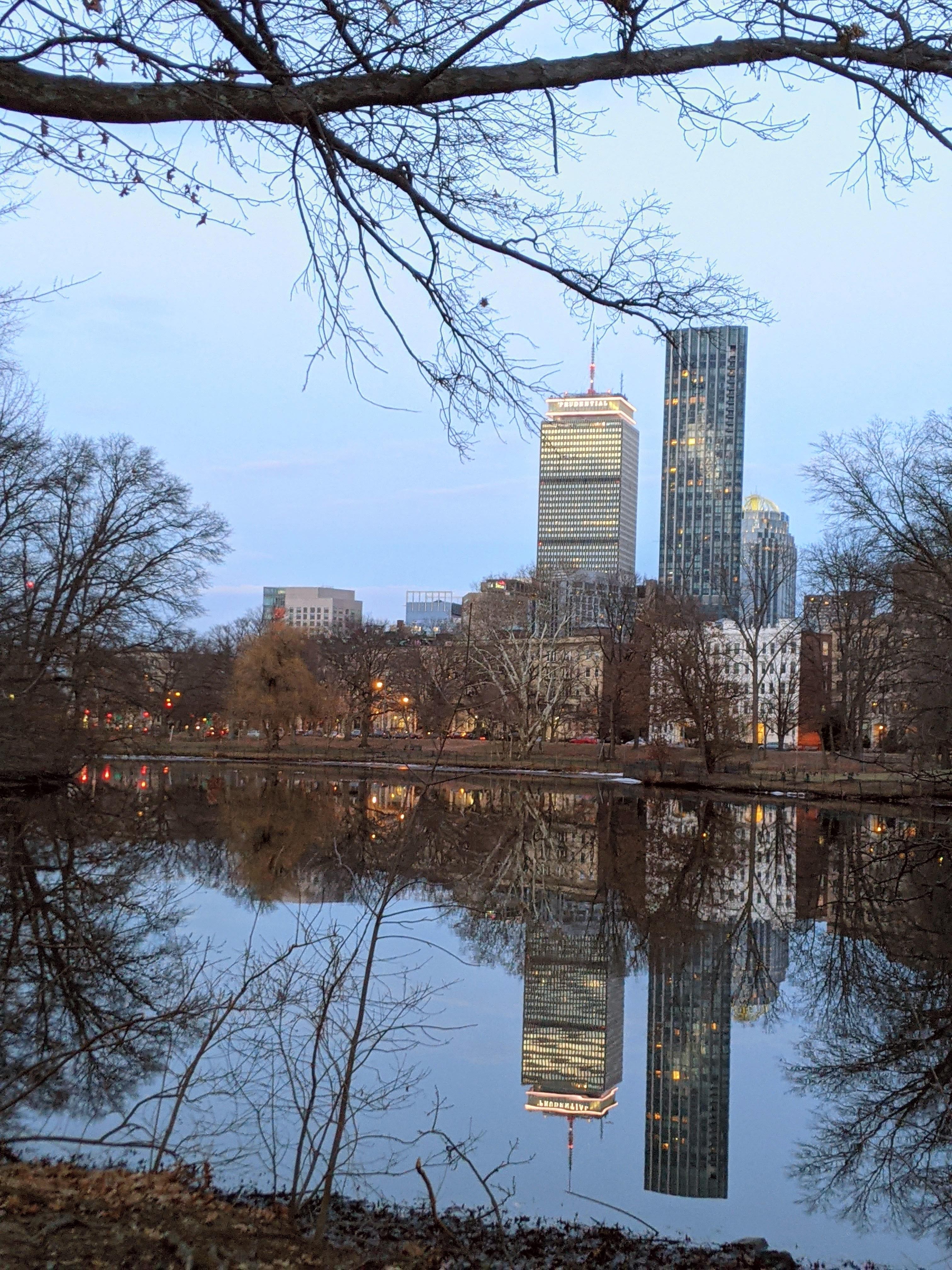
Adieu, Boston! Adieu, Sargent! Adieu, The Verb! Nice weekend. We’ll be back.


 Something to Declare
Leave a reply to natalie Cancel reply