
May 14, 2024: The Parthenon, the Parliament, (my) People.
(Okay, okay, trying to sum up today alliteratively doesn’t always work, but I’m trying.)
Our first destination today was the Acropolis. Our guide, Nancy, explained the importance of getting there early, to avoid the crowds. When we got there, we wondered, “Avoid the crowds? Really?”

Later we found out that she wasn’t kidding (you couldn’t believe the size of the mob scene later at mid-day, and this isn’t even high season).
Nancy informed us that several ancient Greek city-states had their high areas (“Akropolis,” loosely translated, means “high city”), chosen because elevation provided a kind of defense against attackers. There are three temples atop the Acropolis, as well as other structures, e.g., the Monument of Agrippa, and a kind of performance space, the Odeon of Herodes Atticus:

The most famous of the temples is the Parthenon, dedicated to the goddess Athena.
Nancy told us the story of how Athena (the goddess of wisdom) got the job of patron goddess, which also got the city named after her: It was a competition between Athena and her uncle, Poseidon, the god of the sea. Athena and Poseidon started by duking it out, sword against trident, until the local (mortal, non-god) officials suggested a better way to settle the question. They proposed that the respective deities offer gifts, and that the people would choose which of the gifts was better (democracy in action!). For his part, Poseidon jammed his trident into the ground, and brought forth water. I mean, people always need water, right? When it was her turn, Athena offered the olive tree. Poseidon’s gift was determined to be not that useful (it turned out to be sea water: too salty); and the olive tree provides such lovely benefits (food, wood for fuel and implements, shade). Athena won.
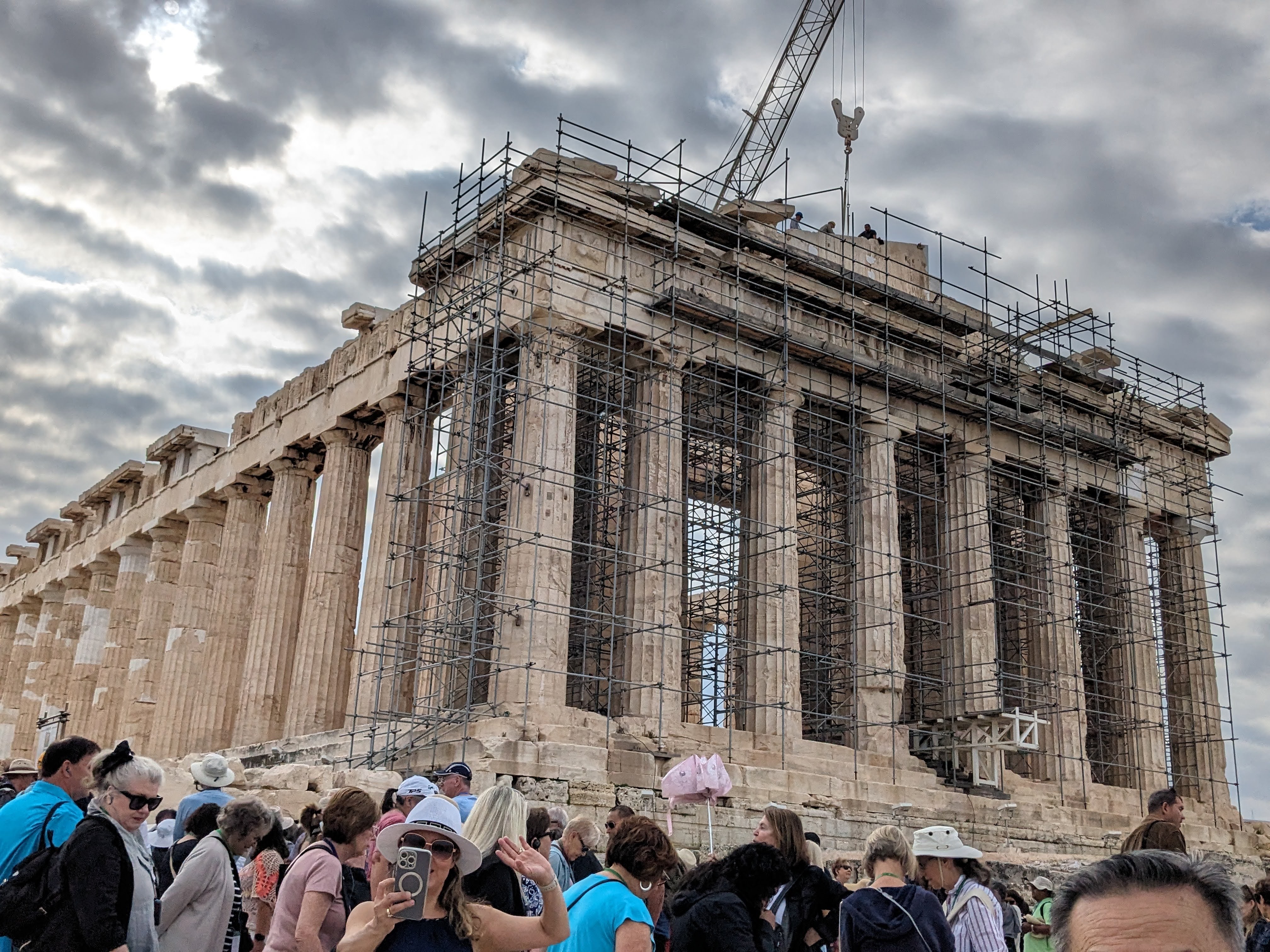
The temple is clearly a ruin, but the ruination was helped along by acts of violent people. In the 17th Century, Greece was part of the empire of the Ottoman Turks. The Venetians (who had their own little empire at the time, all along the Adriatic Sea) challenged the Turks to a war. The Turks used the Parthenon as a place to store gunpowder and, in an attack by the Venetians, it was damaged in an explosion in 1673.
Atop the Acropolis, there is also the temple of Athena Nike (Athena the Bringer of Victory), and the Erechtheion, which contains a Porch of the Caryatids. These are images of women (Caryatids) holding up the roof:

All the really heavy work gets done by the women!
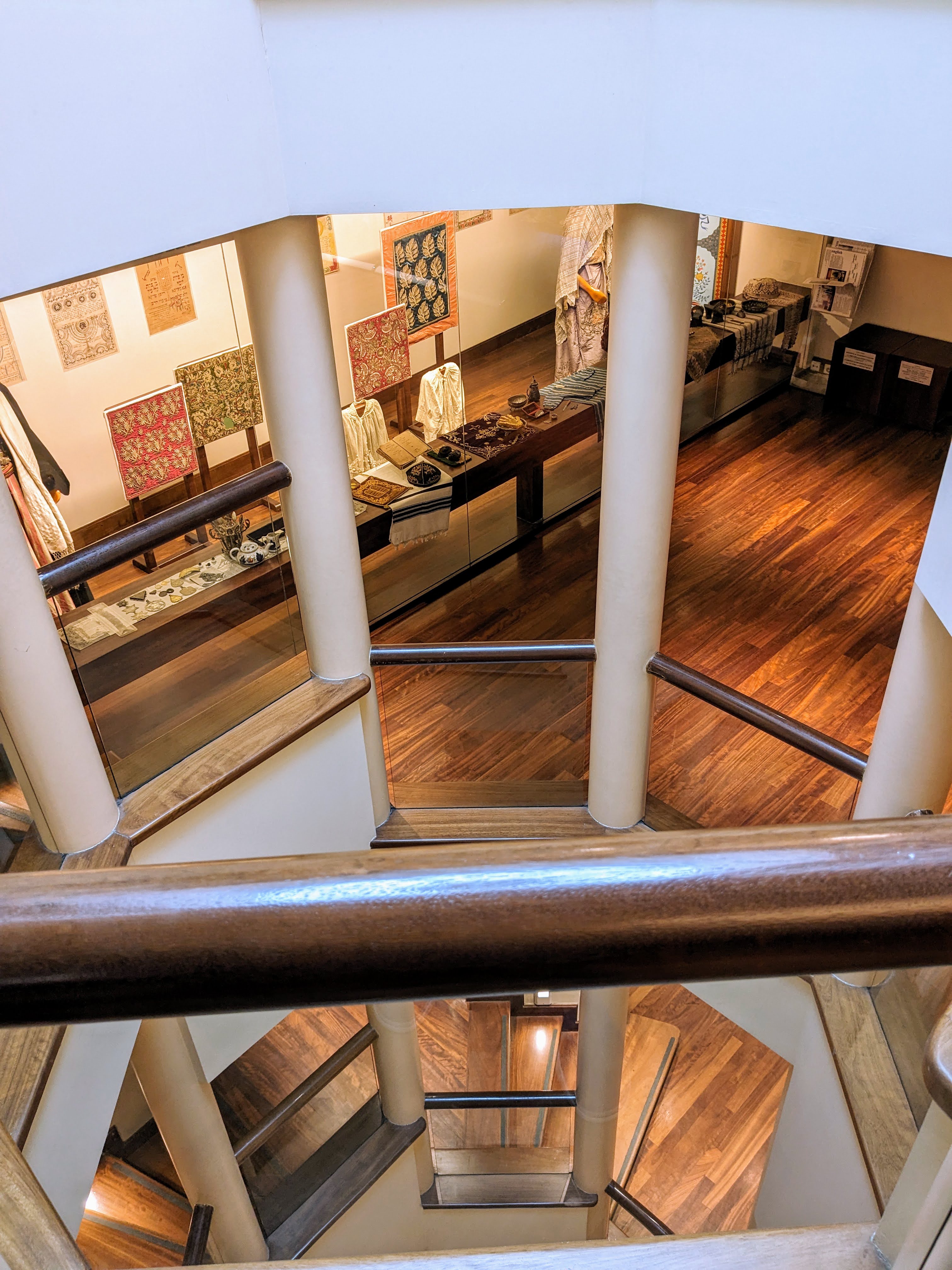
We skipped a tour of the Acropolis Museum, and went off on our own, returning to the Jewish Museum of Greece. The Museum was founded in 1977, and moved to its present location in 1997. It has a collection of about 8000 artifacts, displayed over four floors.
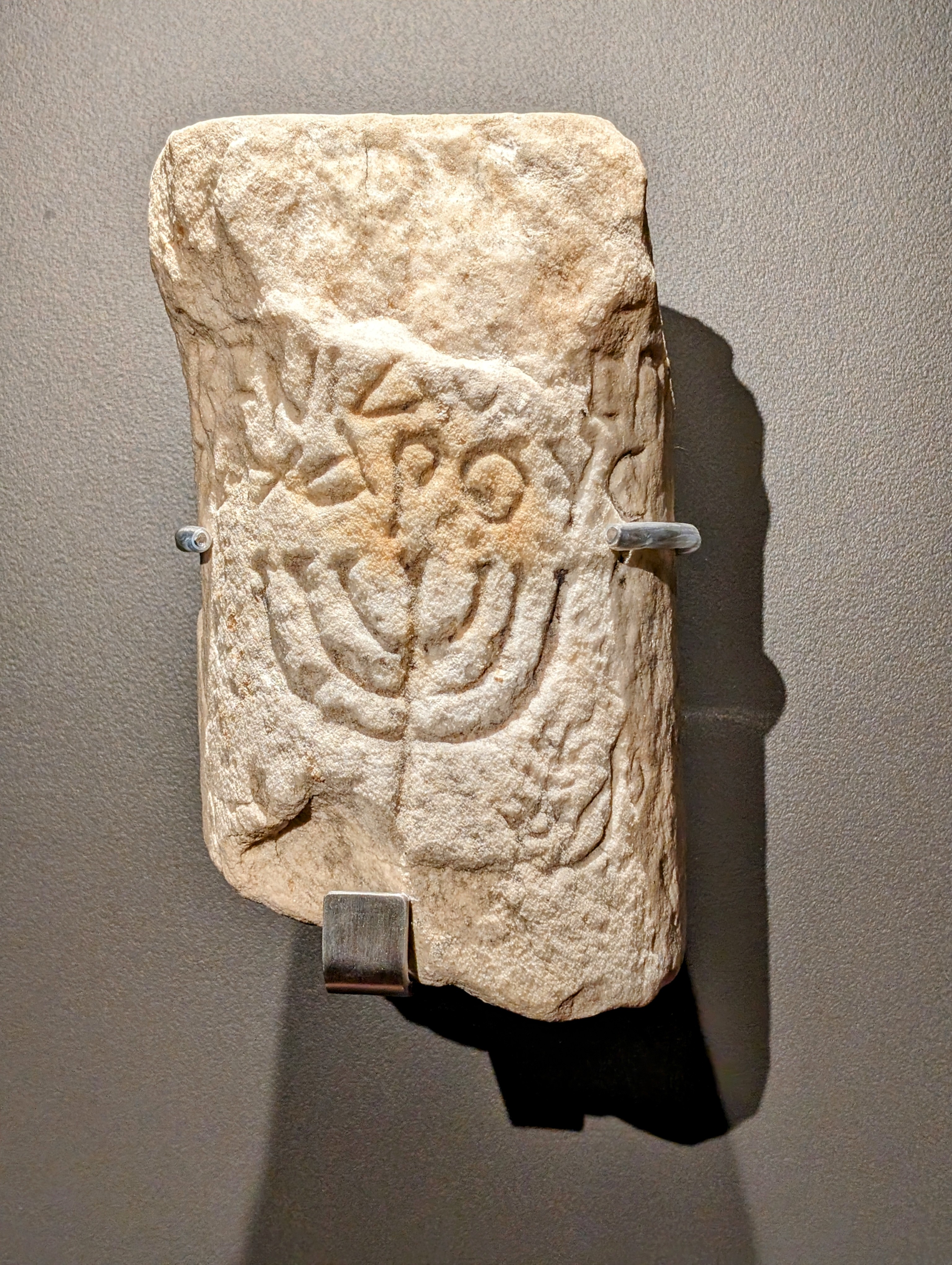
The exhibits trace the history of the Jews in Greece from the Second Century BCE to the present, including a funerary column (in Greek with images of menorahs), dedicated to a certain Benjamin, who was an assistant schoolmaster, around the Third Century CE (the 400s):
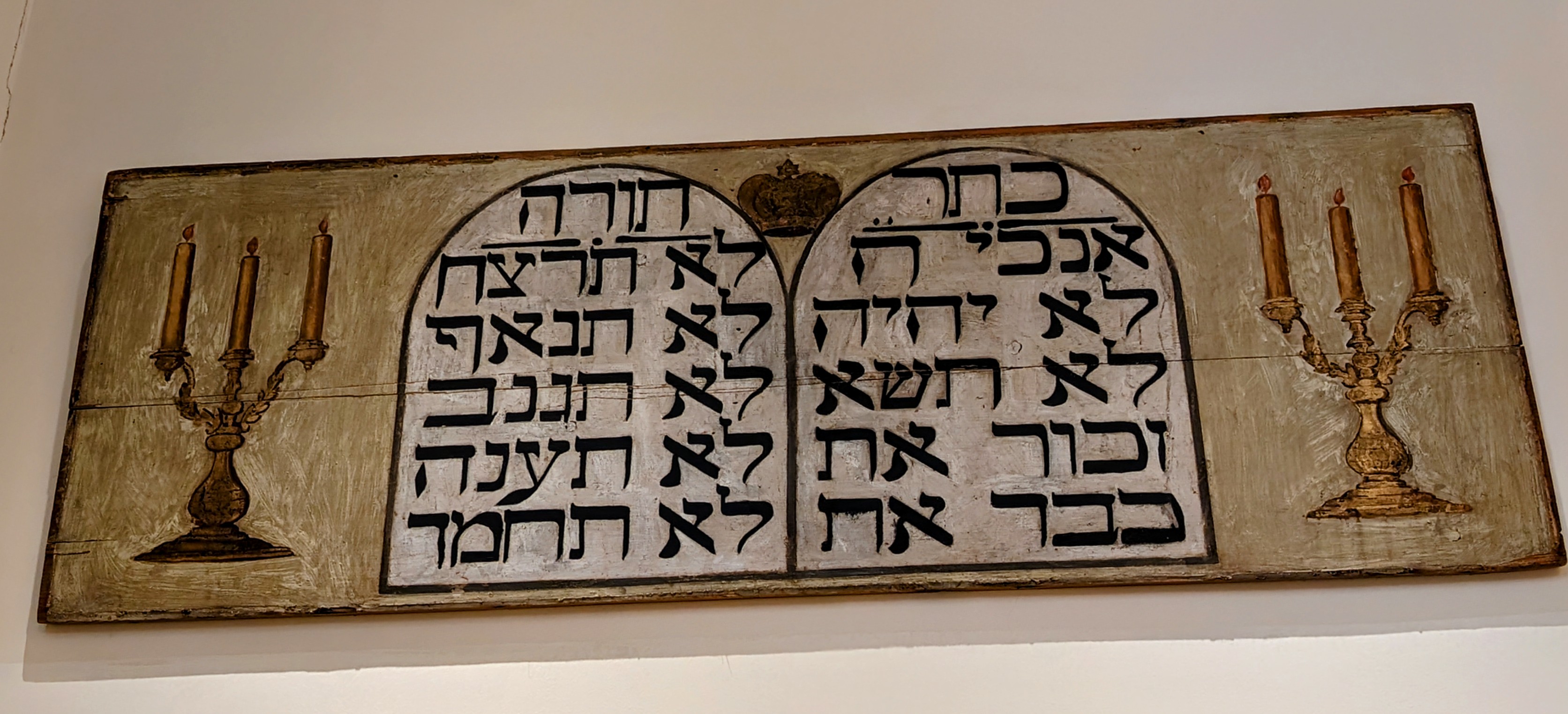
There was also a lintel from the old synagogue of Athens:
The majority of Jews lived in Salonica (Thessaloniki), and were Judaeo-Spanish speaking Sephardim, originated on the Iberian Peninsula; some were Greek-speaking Romaniotes, an ancient Jewish community native to Greece. We learned that the Jewish population in Greece was about 75,000 before WW2; about 87% of them were murdered, one of the highest proportions in Europe (sigh).
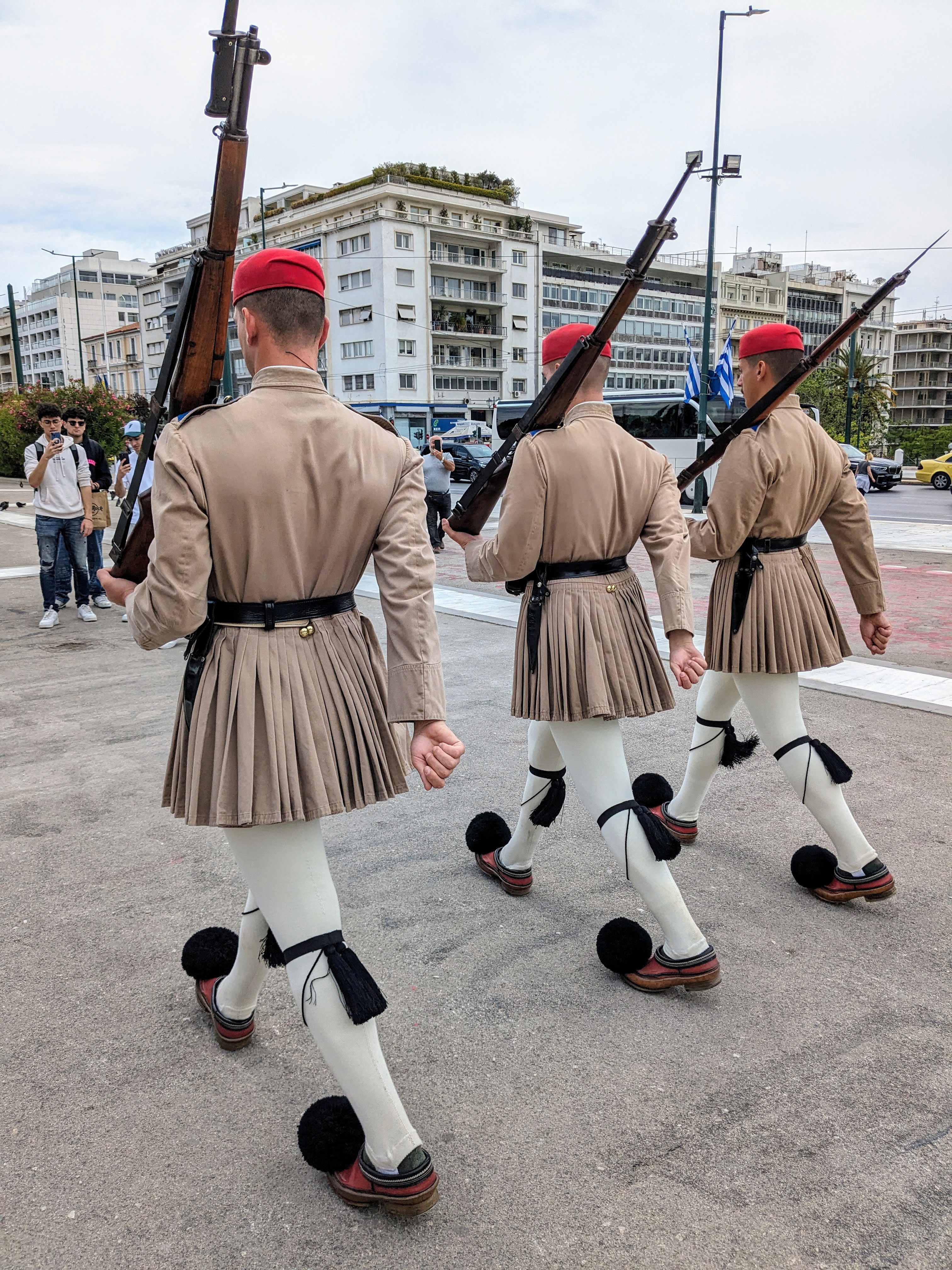
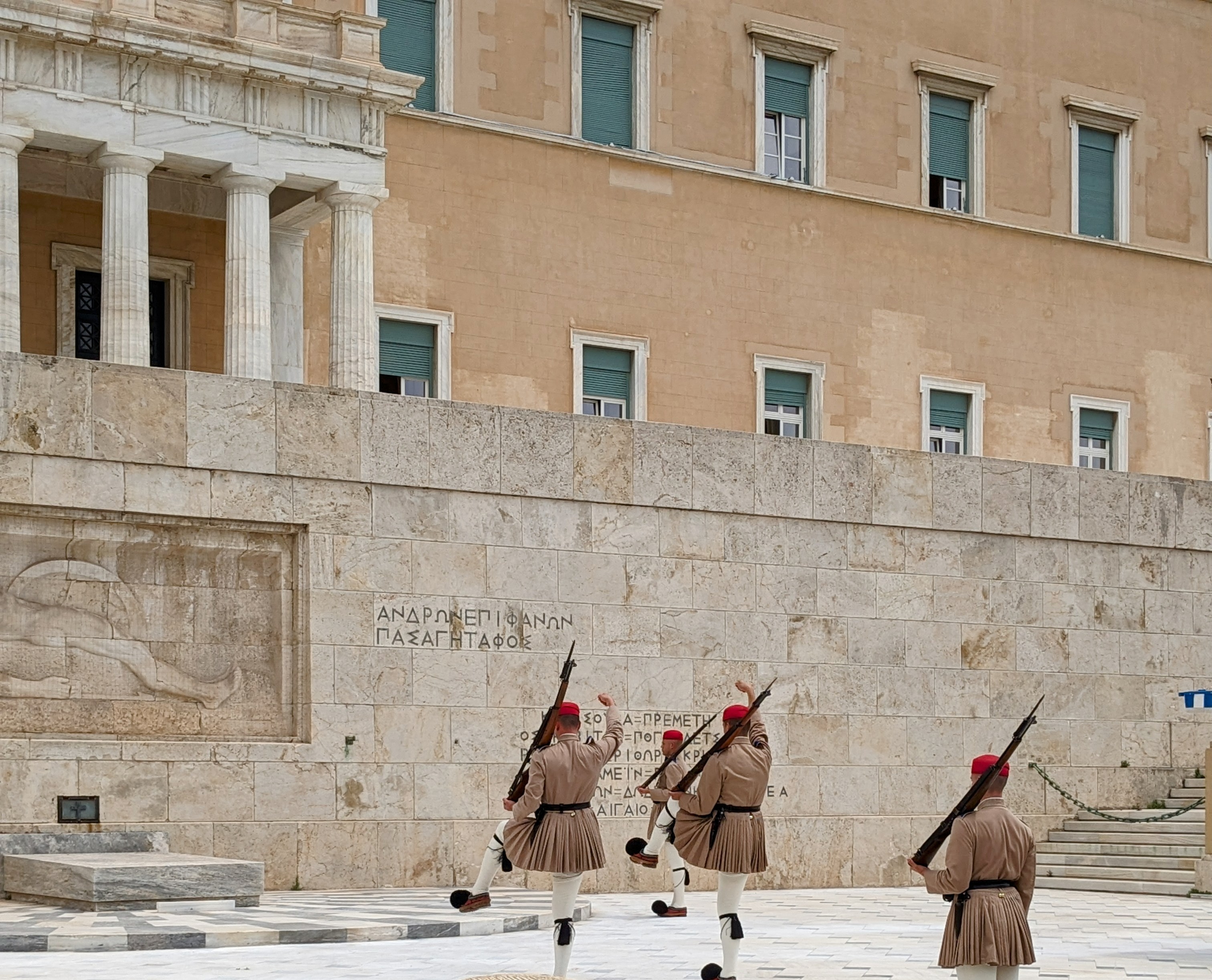
From the Jewish Museum we walked to the House of Parliament, where we joined the crowd watching the Changing of the Guard:
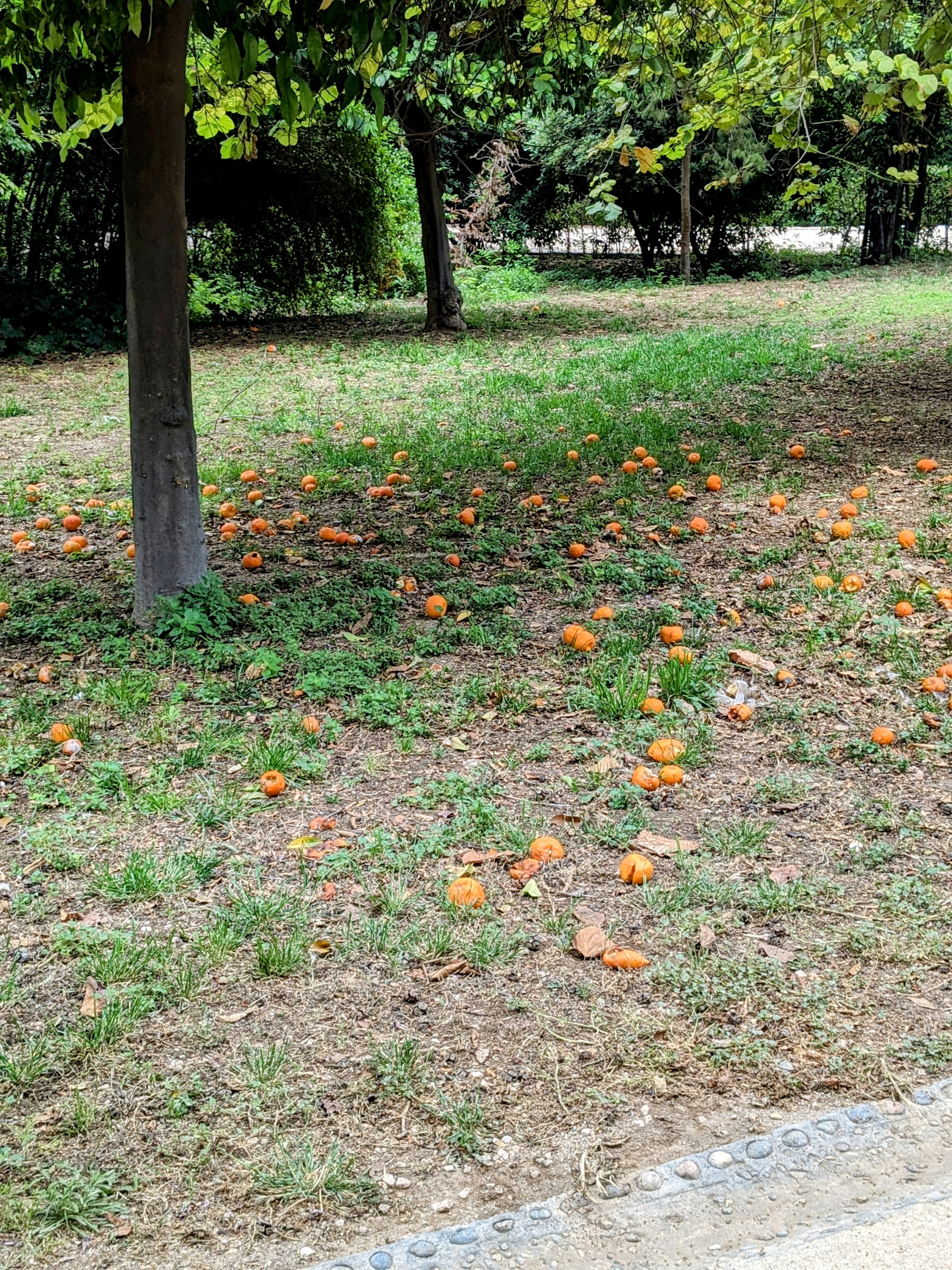
There is a garden behind the Parliament, where the bitter orange trees (the oranges are bitter, not the trees) shed their fruit:
By this time we were fading, so back to the hotel for a brief nap, then the Odysseys tour group get-acquainted dinner. Tomorrow, we’re playing hooky (not going on the long bus ride to and from Delphi)…………


Leave a Reply