
May 17-18, 2024: Mycenae, Epidaurus, Hydra.
Yesterday, we visited Mycenae, the seat of the kingdom of King Agamemnon. It’s a hilltop UNESCO site that represents the pinnacle of Greek civilization, from the 15th through the 12th Centuries BCE. This is the civilization that’s linked to epics of Homer, the Iliad and the Odyssey. These tell the tale of Agamemnon having traveled to Asia Minor to besiege the city of Troy, in an effort to recover Helen, the “Helen of Troy” of legend. Our guide, Nancy, pointed out that, since Helen was the wife of Agamemnon’s brother Menelaus, the King of Sparta, she is properly known as “Helen of Sparta.” So there.
The first stop was at the stone and earthen structure that housed Agamemnon’s treasury, and later served as the tomb of Agamemnon himself:

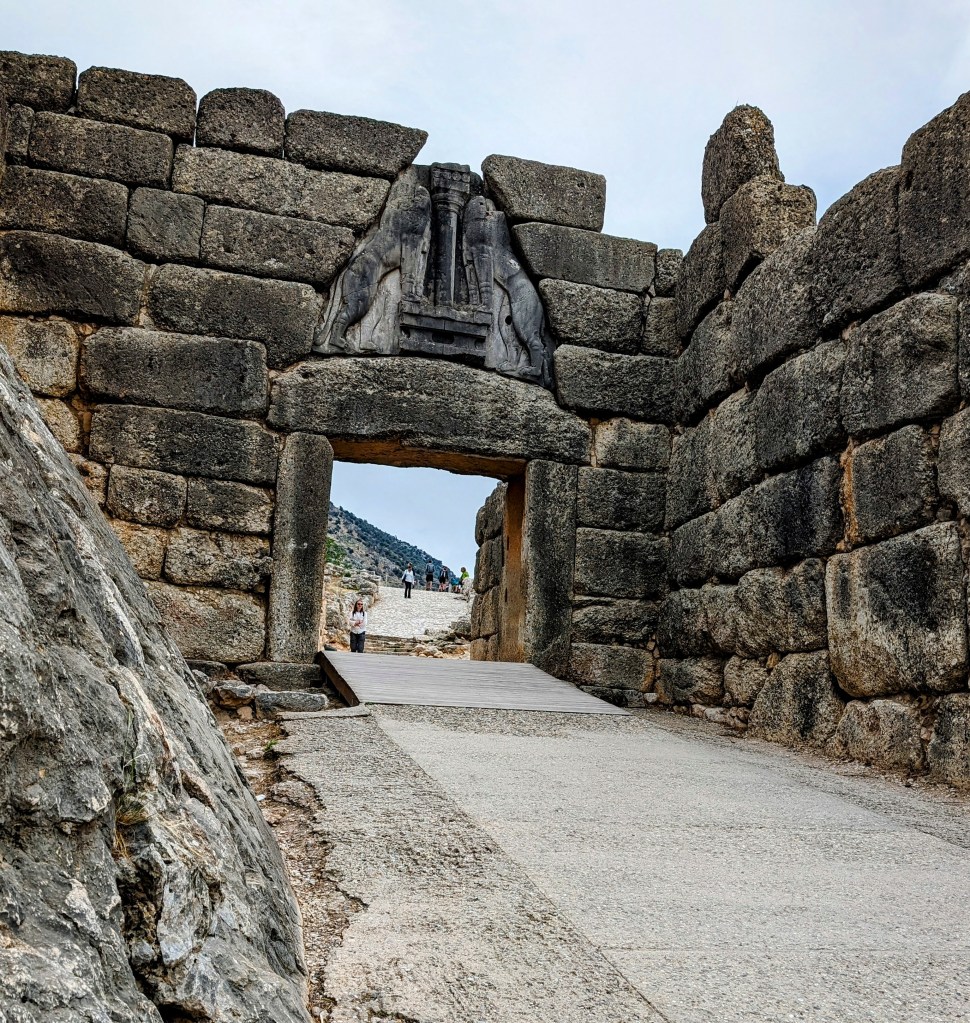
This structure was the highest and widest dome in the world for more than a thousand years, until the construction of the dome of the Pantheon in Rome in the 2nd Century CE. We also saw the Lion’s Gate, the grand entrance to Mycenae:
We then visited the site of Epidaurus, the center of healing and arts during the Mycenaean period. It was the birthplace of Asklepius, the Greek god of medicine, whose snake-entwined staff (the Caduceus) is still the symbol of medicine. The museum at Epidaurus showcased a mortar and pestle (that bore a strong resemblance to an orange juicer) and a bronze mirror.
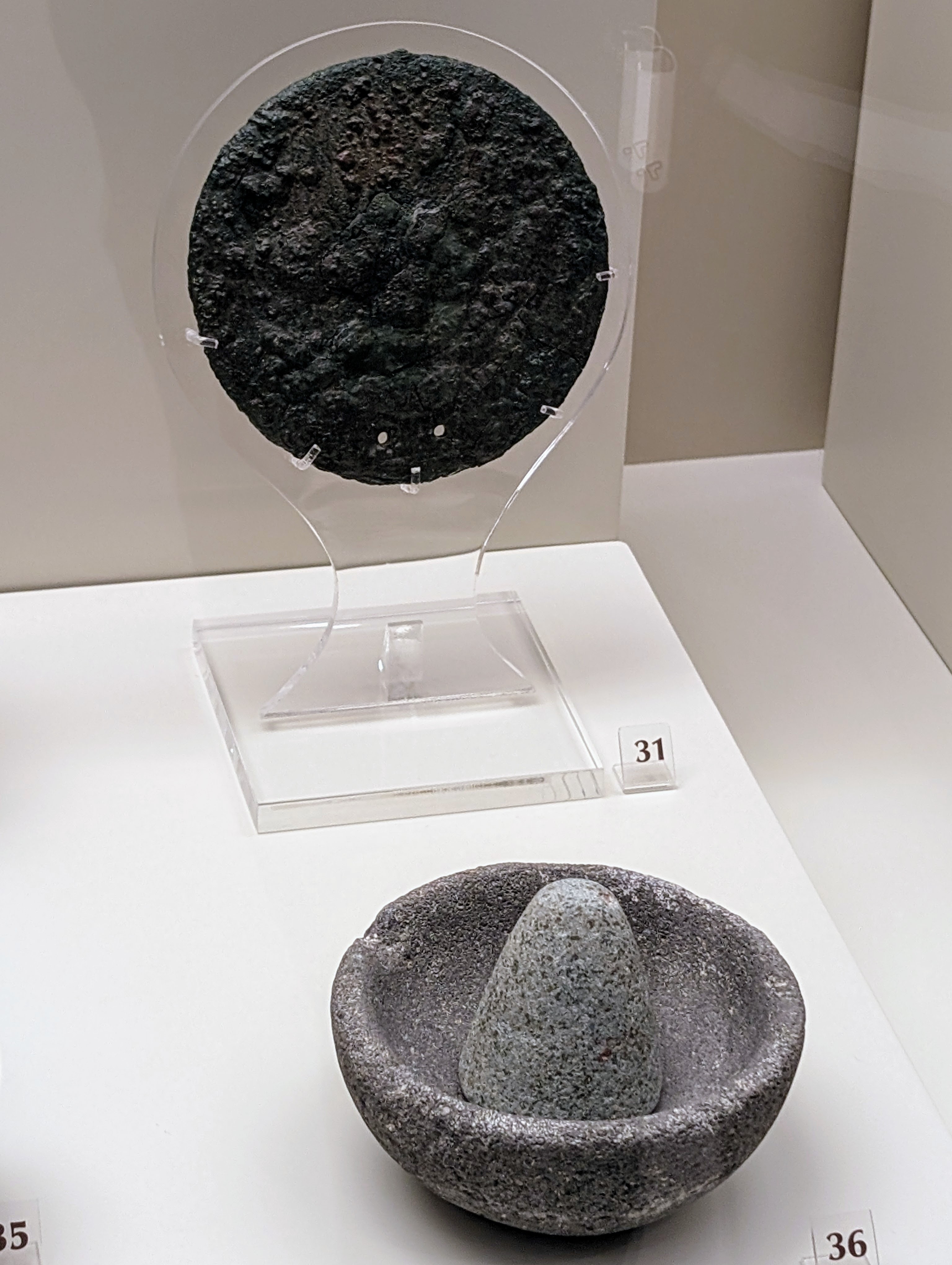
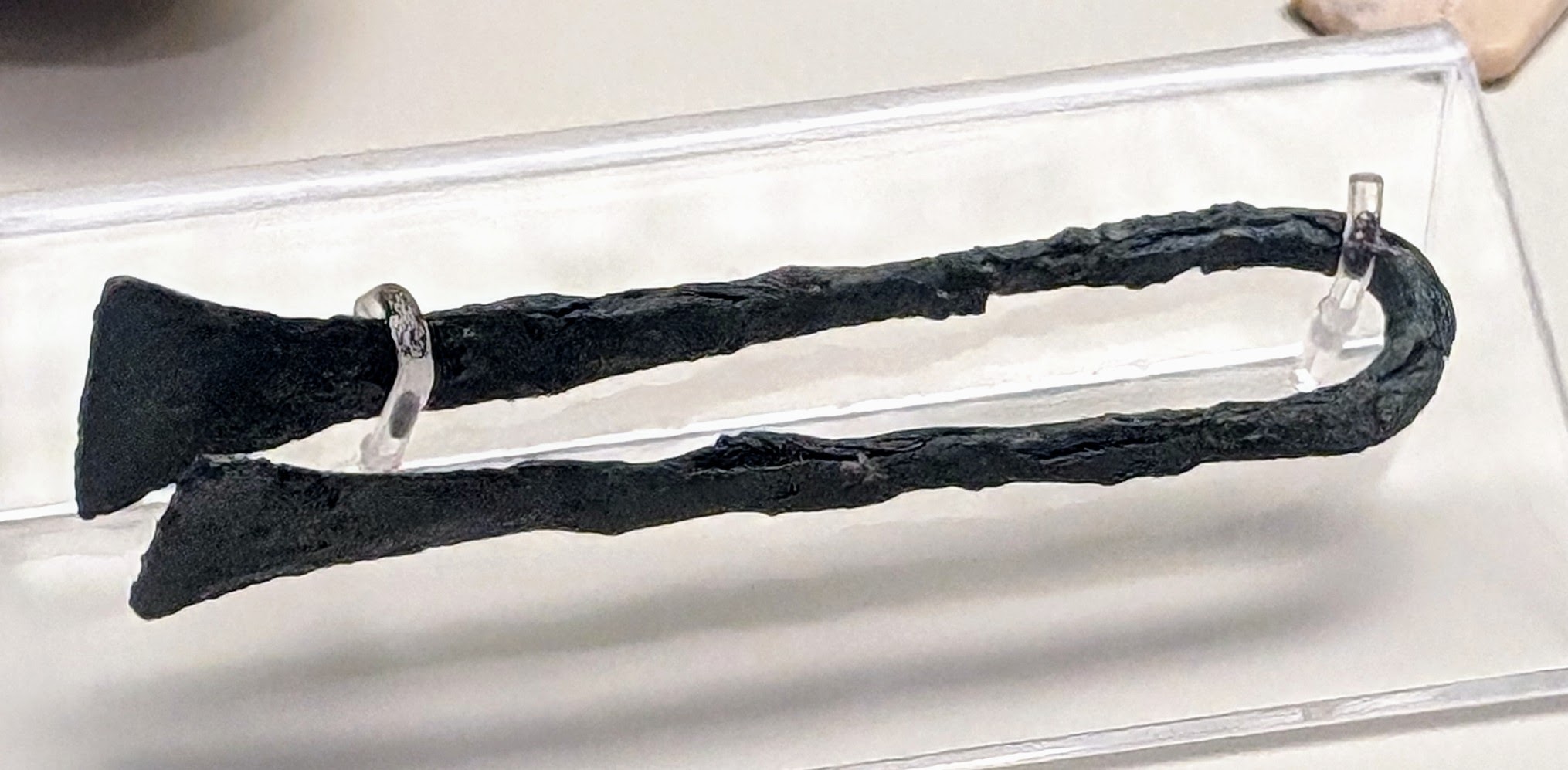
We’d seen these “mirrors” before, and wondered how they could have served that purpose, being (as you can see) wholly opaque. It was explained that the bronze disks were used by laying them flat, and filling them with water, the water serving to reflect the image of the viewer. (Clever design engineering.) But some things never change over the millennia, like this pair of Mycenaean tweezers:
We visited the nearby 2,300-year-old theater, a masterpiece of Greek architecture, and known for its perfect acoustics:
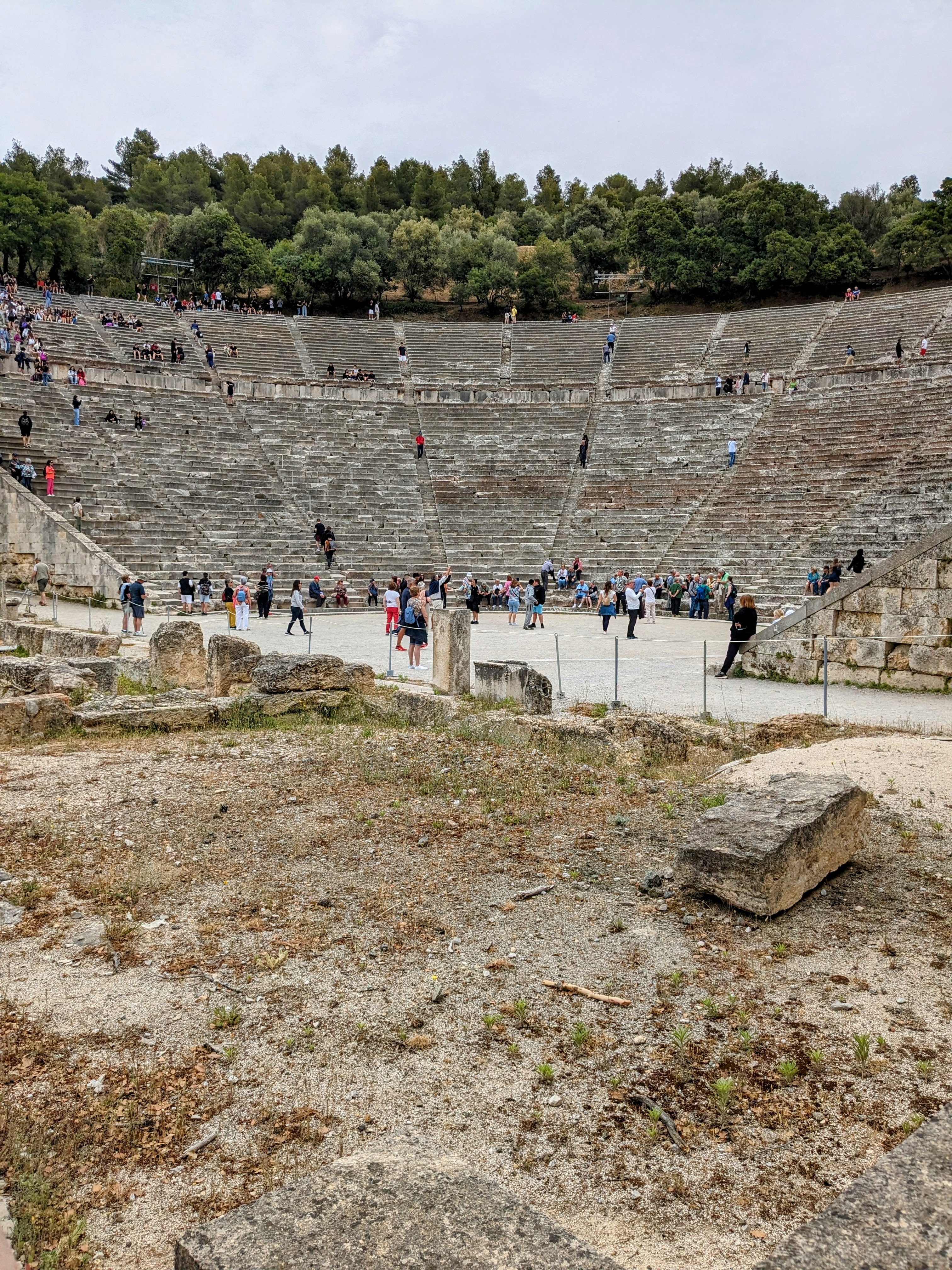
The design of the theater allowed every attendee (the place seated over 14,000) to hear the sound from the stage perfectly, without any artificial amplification.
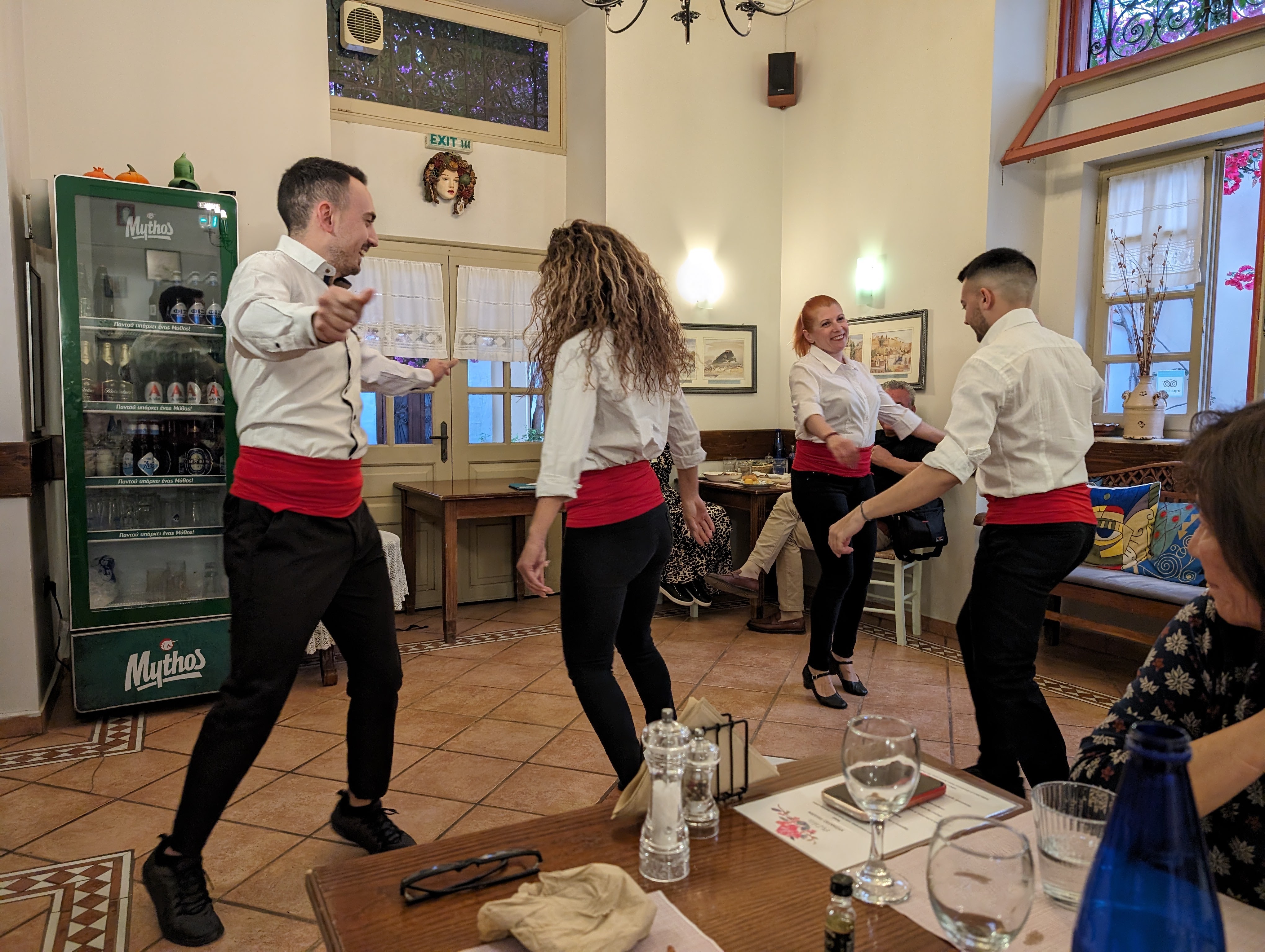
Then back to Nafplion for a delicious dinner at Taverna Vyzantio, where we were treated to live Greek dance by the waitstaff:
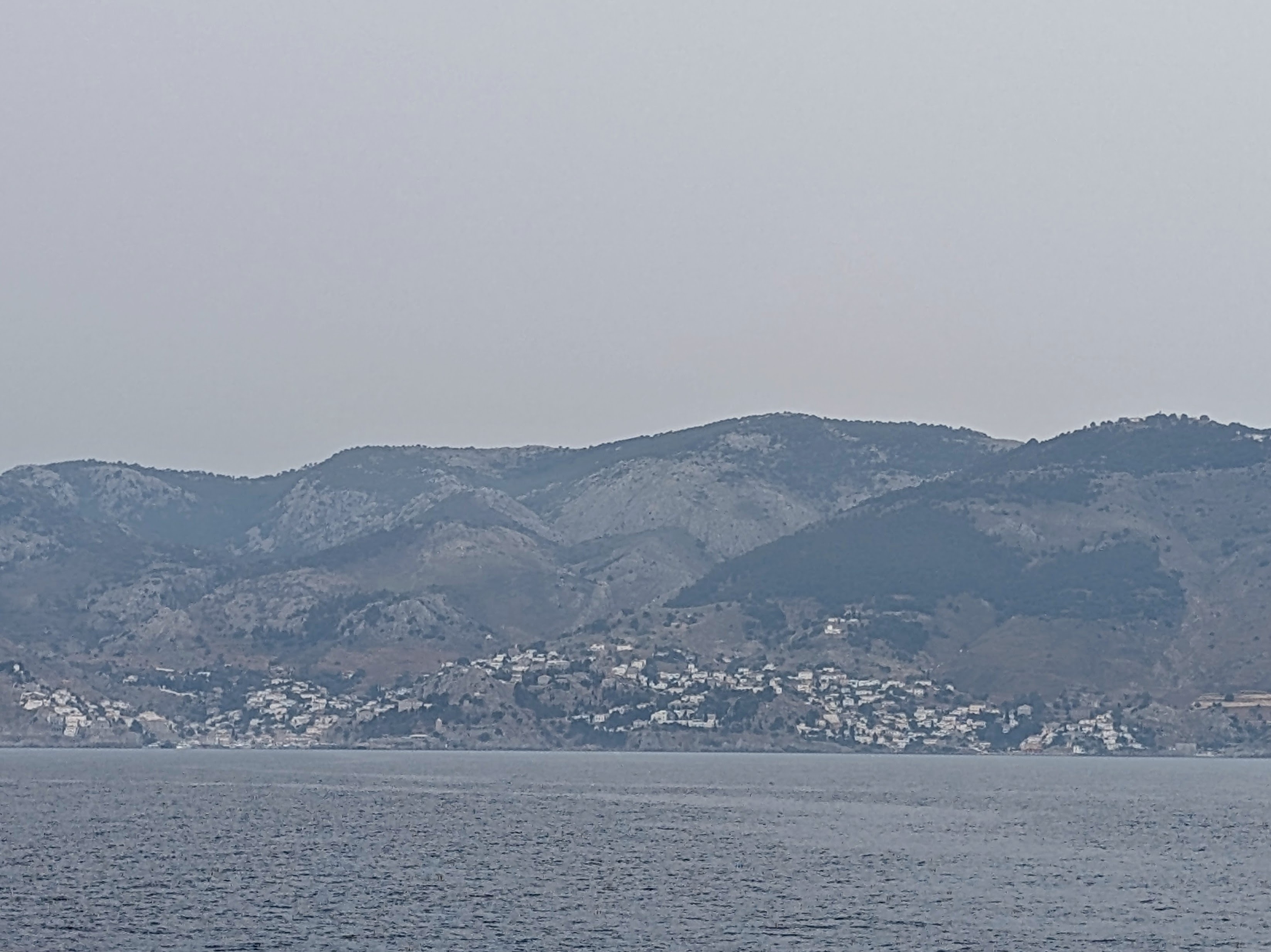
This morning (Saturday, May 18), we went on a two-hour bus ride to the town of Ermioni, where we boarded a boat to the nearby Saronic island of Hydra (pronounced “EE-drah”).
Except for a single garbage truck, no motor vehicles (no Uber!) are allowed on Hydra, and the only mode of transportation (besides walking) is donkeys:
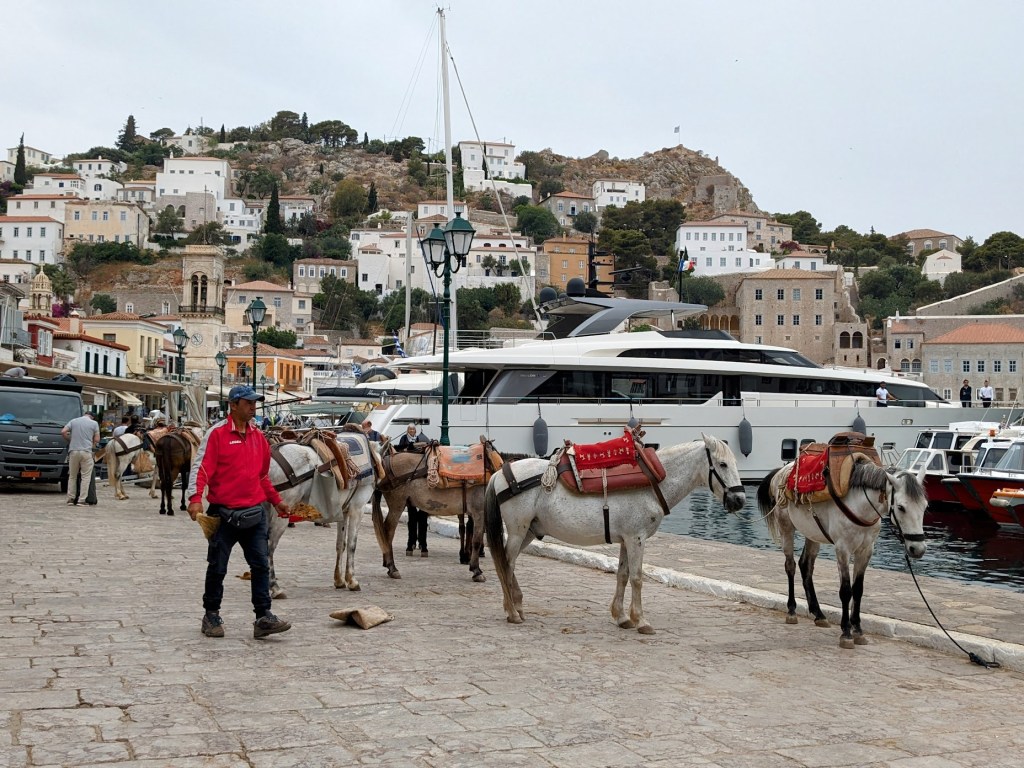
That meant that you had to pay close attention (ahem!) to where you were walking.
Hydra is studded with shops, markets and galleries, and we enjoyed lunch at a local taverna. The town is also replete with feral cats who slink under your table waiting for handouts. Tomorrow we fly to Crete for a three-day stay.


 Something to Declare
Leave a reply to DEBORAH GRAYSON Cancel reply