
May 20, 2024: Heraklion
(Playing Hooky, Part 2)
For today, Odysseys scheduled a visit to the Minoan ruins at Knossos. But we decided to indulge in Hooky Day #2. So we scoped out stuff online for Heraklion and found some other interesting things, like the Venetian Walls and the Rocca a Mare Fortress, and the Museum of Ancient Greek Technology.
The Technology Museum is housed in Palazzo d’Ittar, one of Heraklion’s cultural heritage sites, built around 1,500 CE. It was way cool. All kinds of devices using Bronze Age technology to solve engineering problems and explain the natural world. Apparently, the technology of the ancient Greeks was shockingly similar to the beginning of our own modern technology.
Way before Columbus, it had occurred to these people that the world was a sphere. But they knew only the smaller area of Europe, Asia and Africa where they all lived:
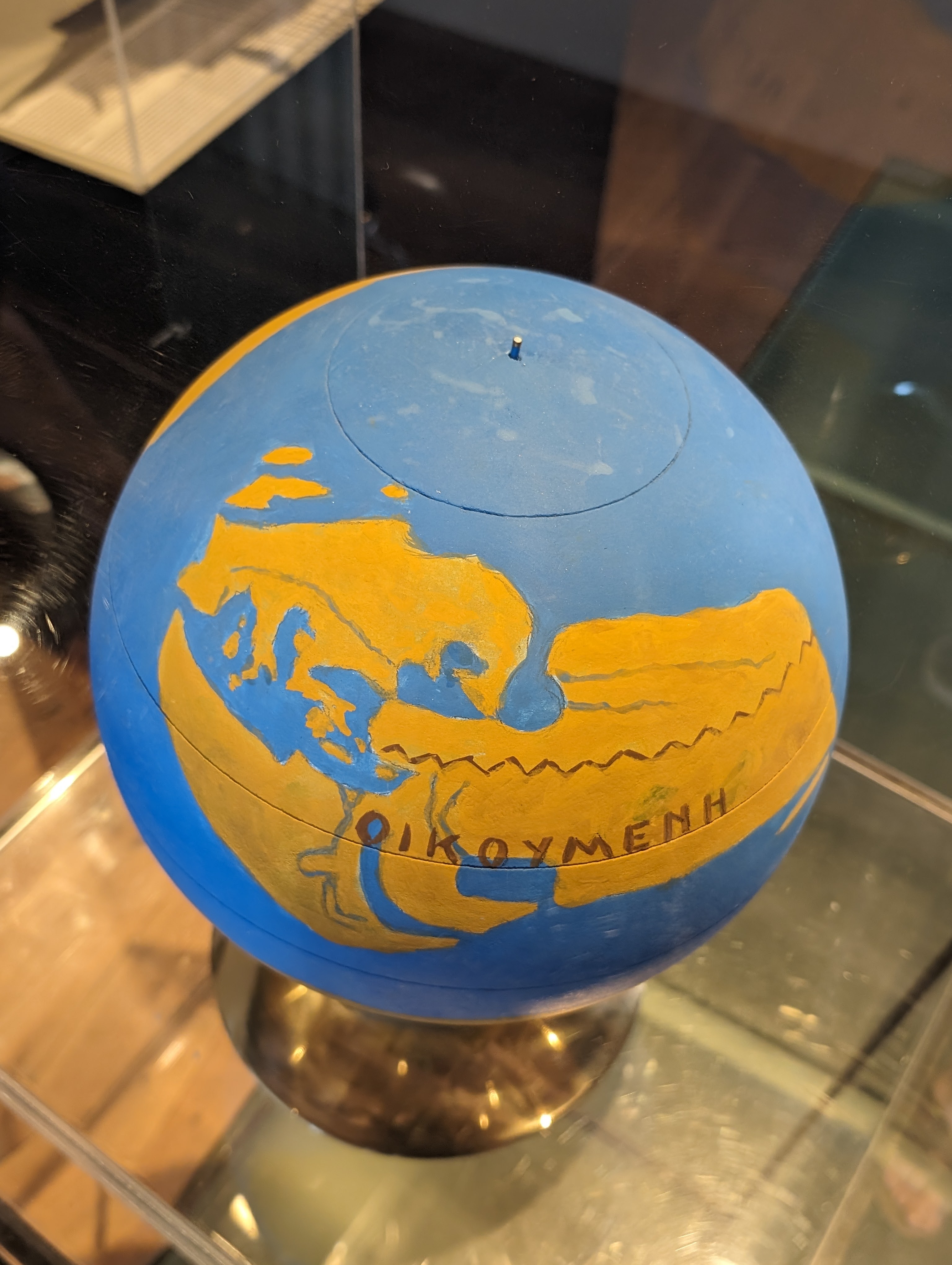
As we proceeded through the exhibits, the first question that came to us was: How did it occur to these guys to think up these things? The second question was: How come we’re having such trouble understanding how these things worked? Here’s a few examples of the fascinating displays featured at this unusual museum.
The folks in the 3rd Century BCE built robots that could provide the services of serving maids; these fabricated automatons were always female (ancient Stepford Wives?). Like this metal lady who could dispense measures of wine:
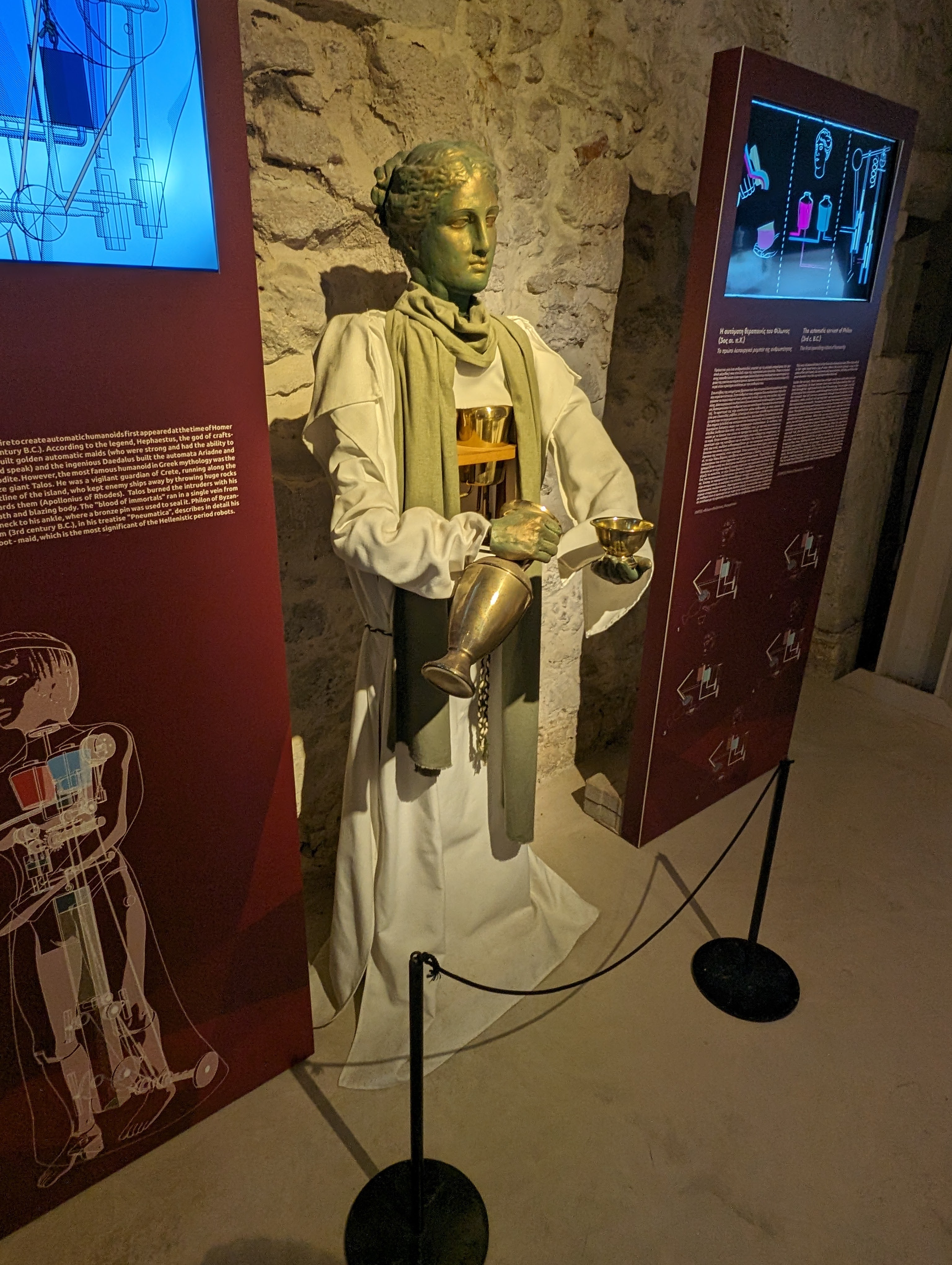
It worked with an elaborate internal system of levers and pulleys, shown in this cross-section:
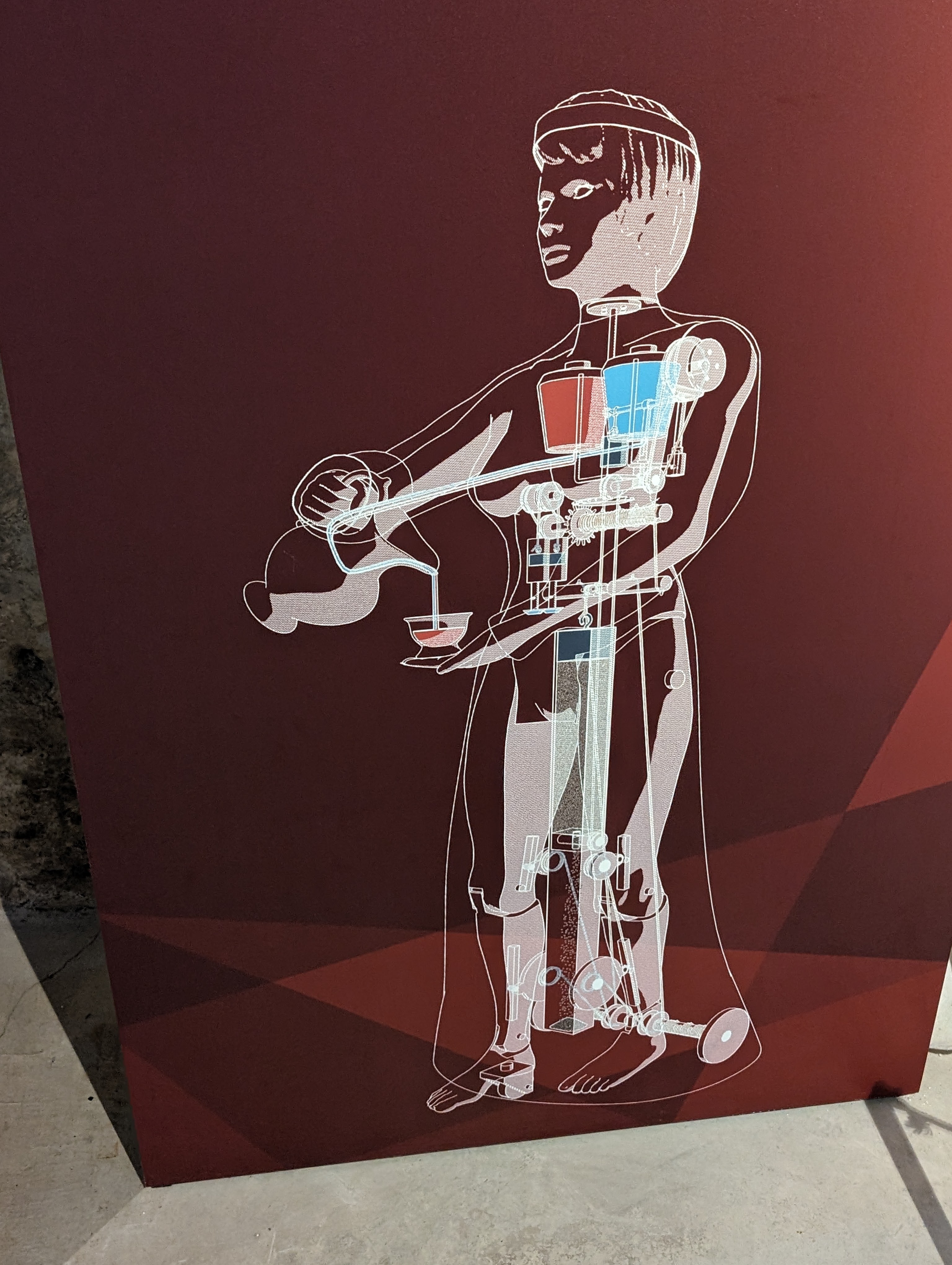
Made me wonder: All of this to pour a glass of wine? Why not just open a bottle and tip it in the direction of your glass?
Another mesmerizing invention was the development (1st Century CE), of the world’s first vending machine:
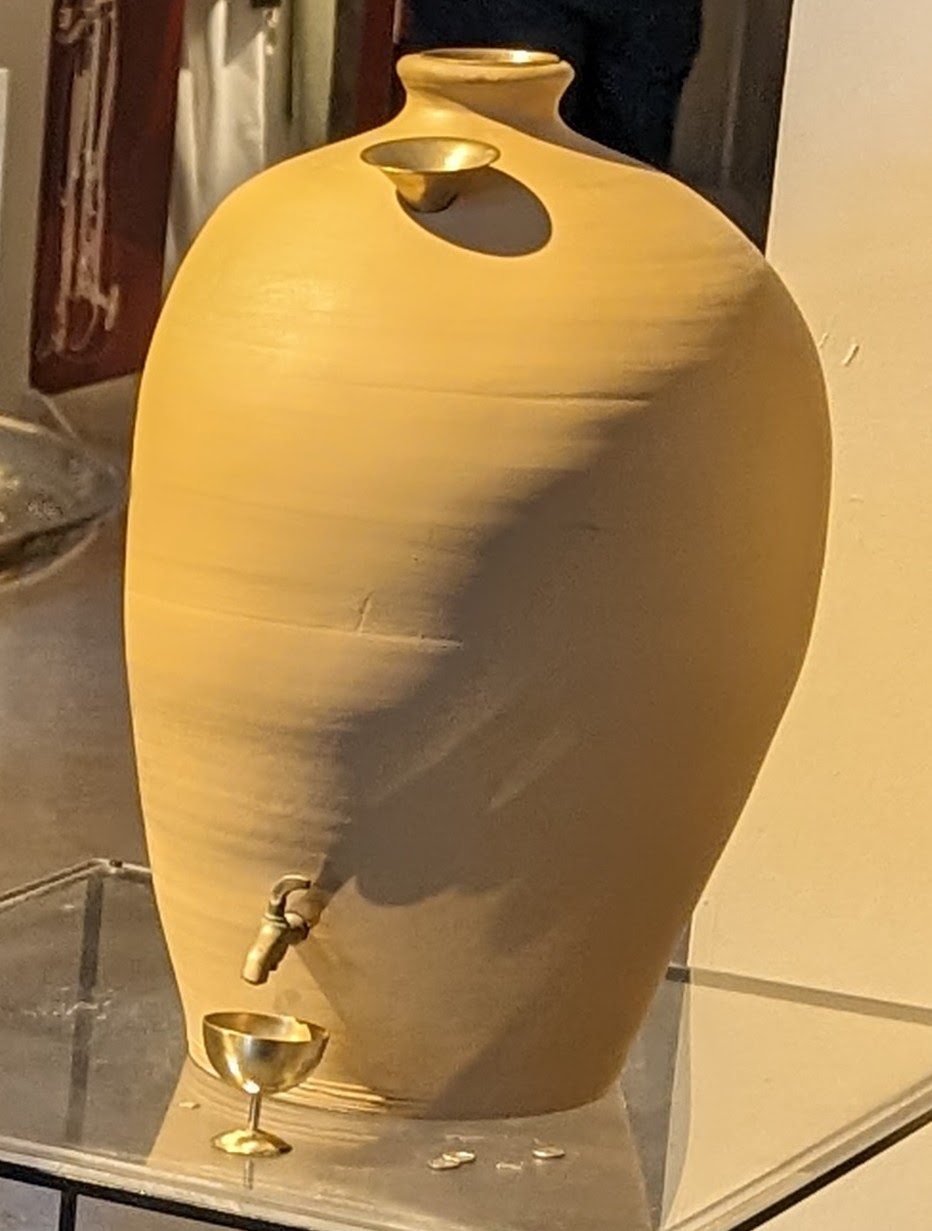
It was a device into which you insert coins, which depresses a spoon, which causes a lever to go up, and dispense some of the liquid inside through the external spigot:
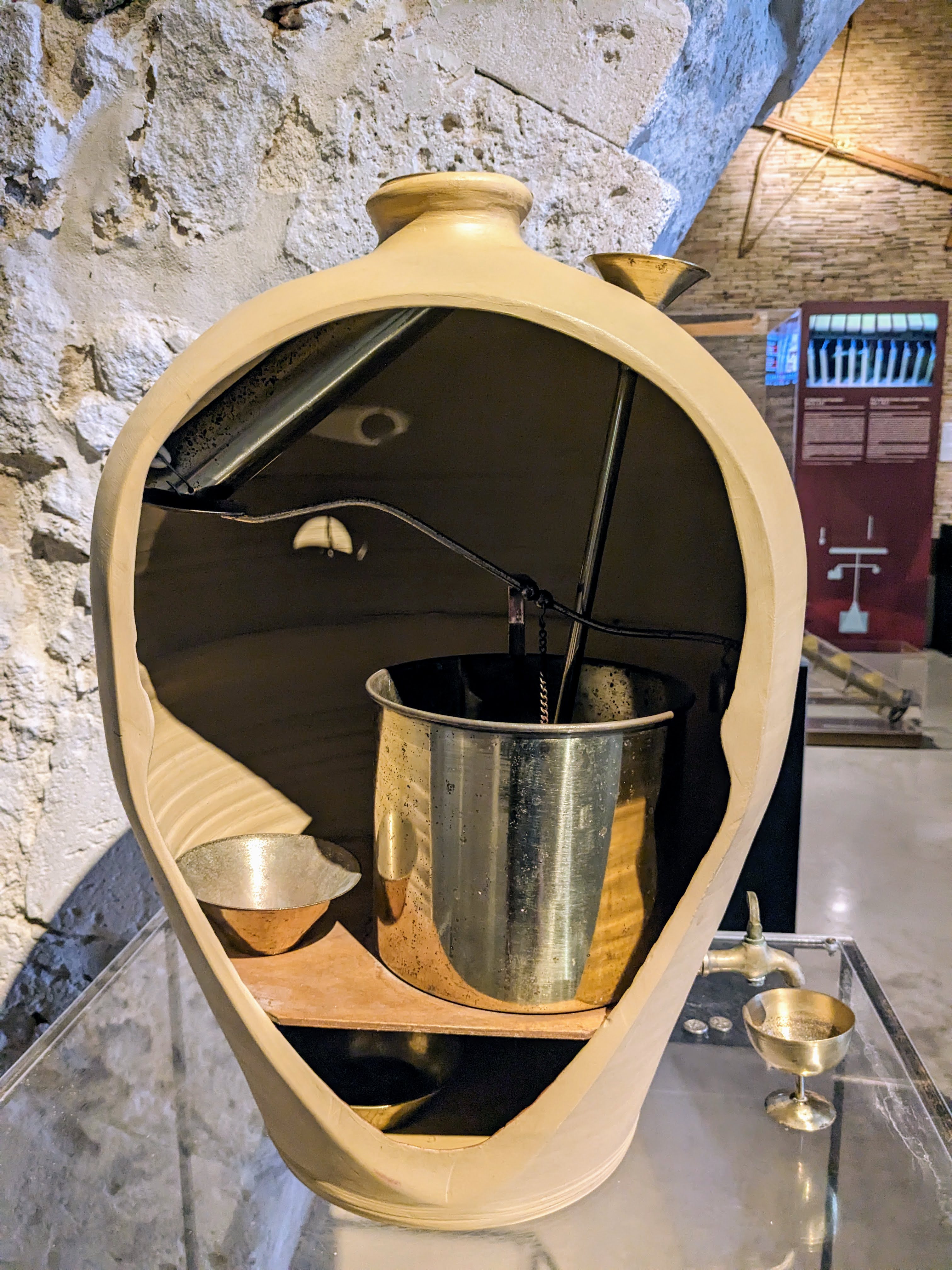
When the right amount of liquid is dispensed, the change in weight causes the lever to return to its original position. They were placed outside temples to sell measures of holy water.
The Greeks also invented astronomical clocks that gave the positions of the heavenly bodies at any time in the past, present or future. Here it is rendered in a lucite facsimile:
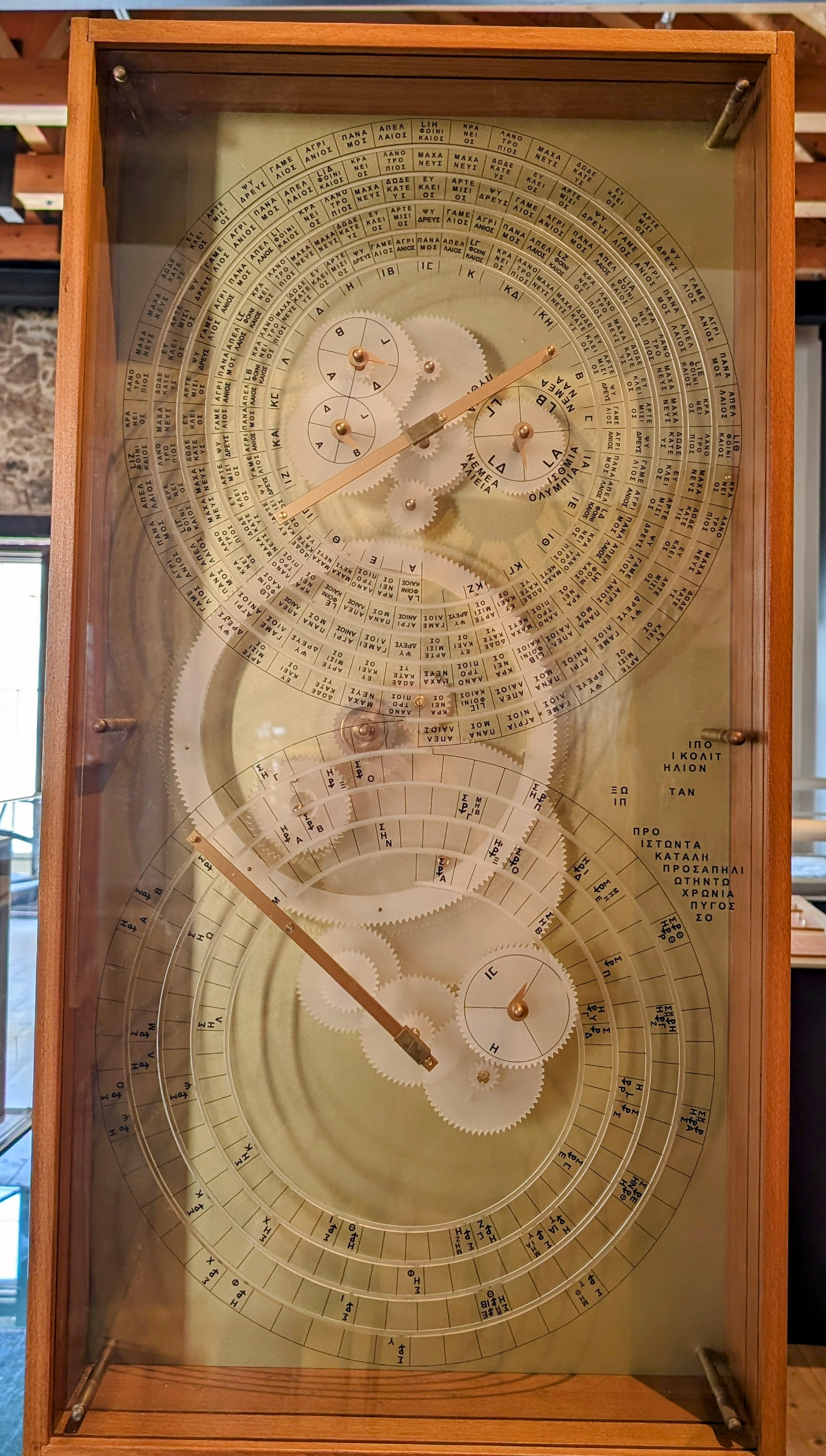
The original object was supposed to have looked more like the stylized picture below:
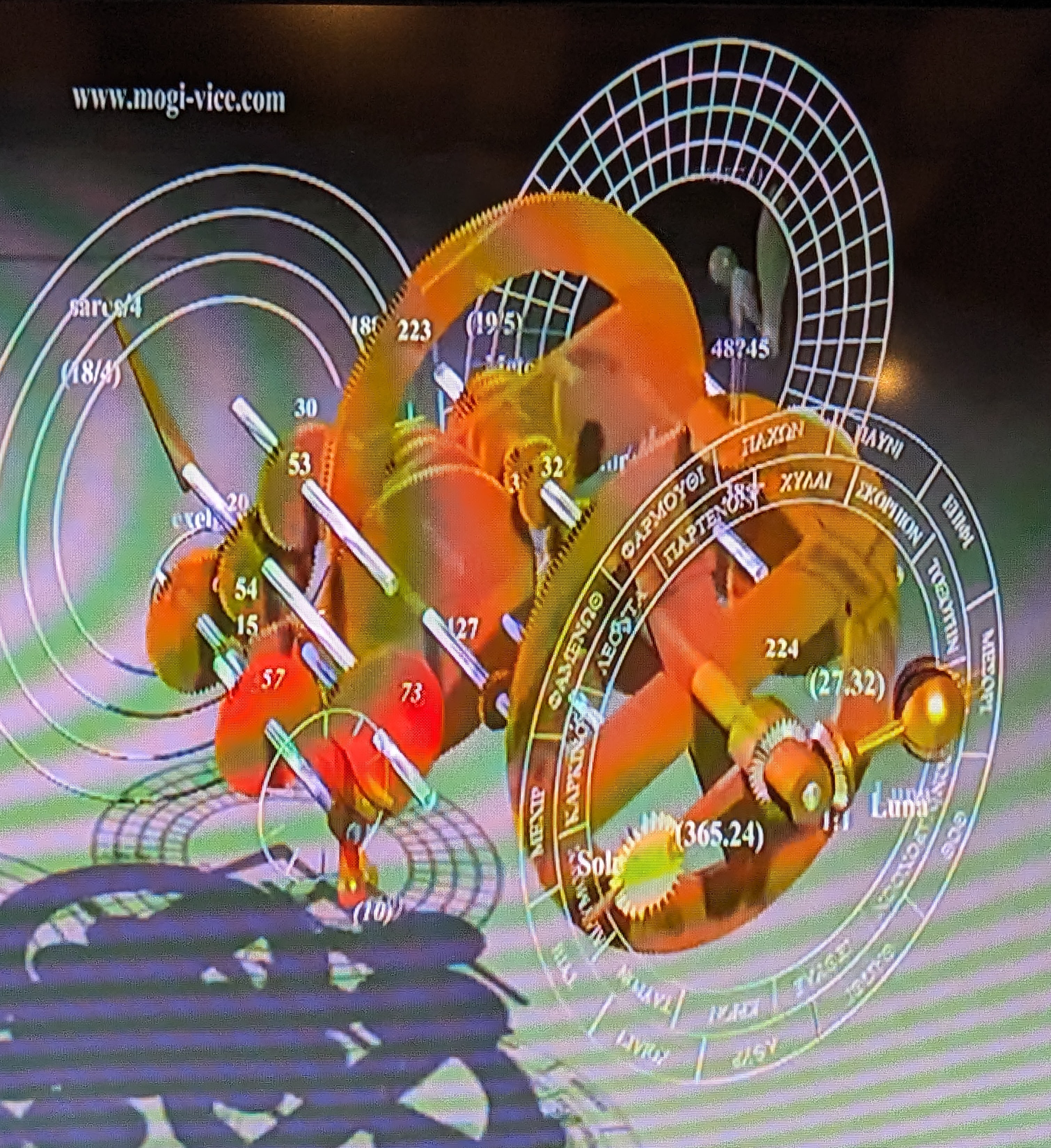
(Damned if I could have figured out how to use this.) They also developed weapons, like a catapult, which used a taut rope to hurl metal balls at the enemy:
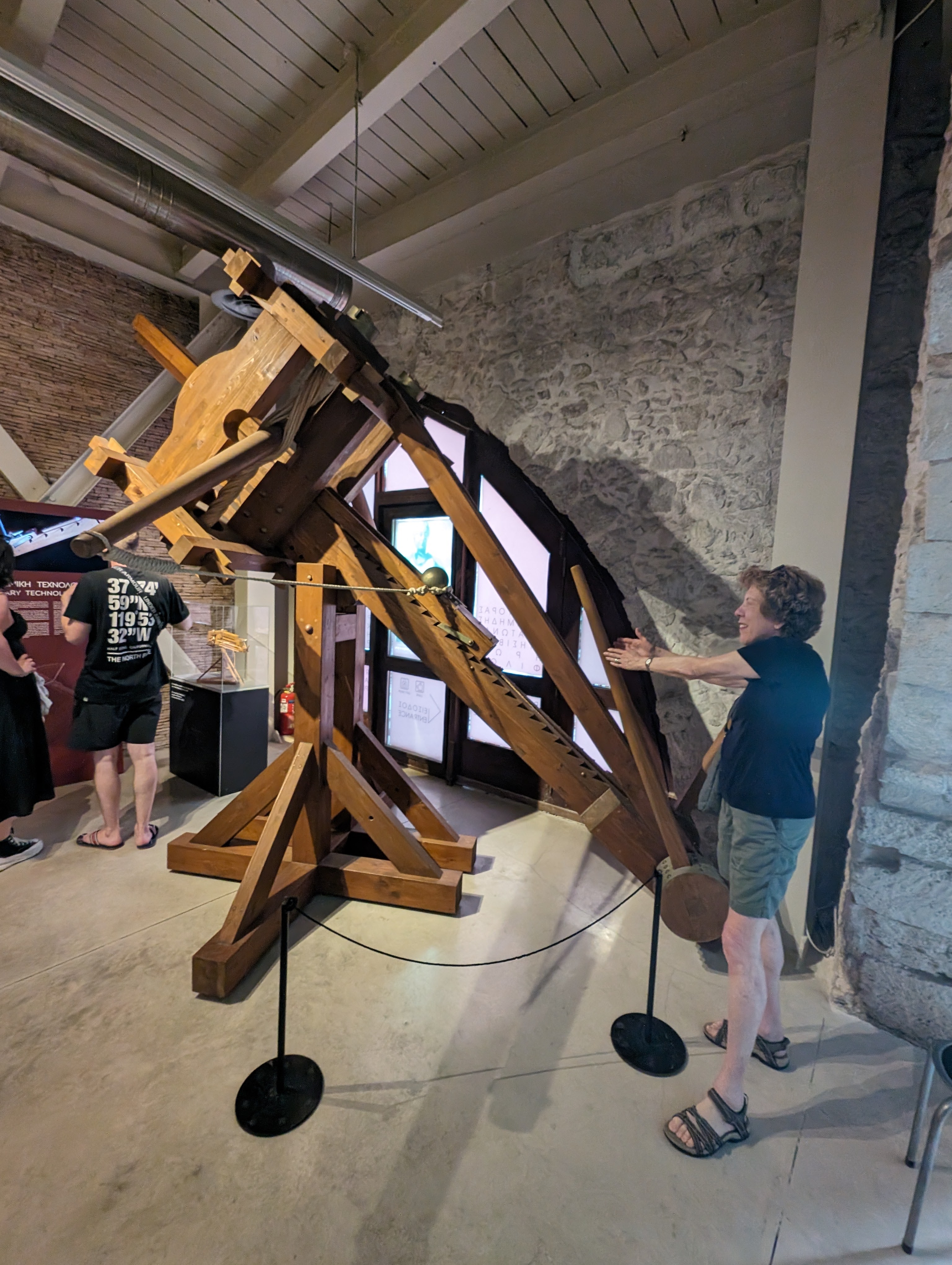
(Stef got to be a very good shot with this thing.) And they had also invented the flying rocket, powered by water pressure supplied by a hand pump:

By this time, we were feeling a little hungry, so we strolled down to the Venetian Harbor for lunch (grilled sardines and the inevitable Greek salad) and a gander at the Rocca a Mare fortress, built by the Republic of Venice in the early 16th century:
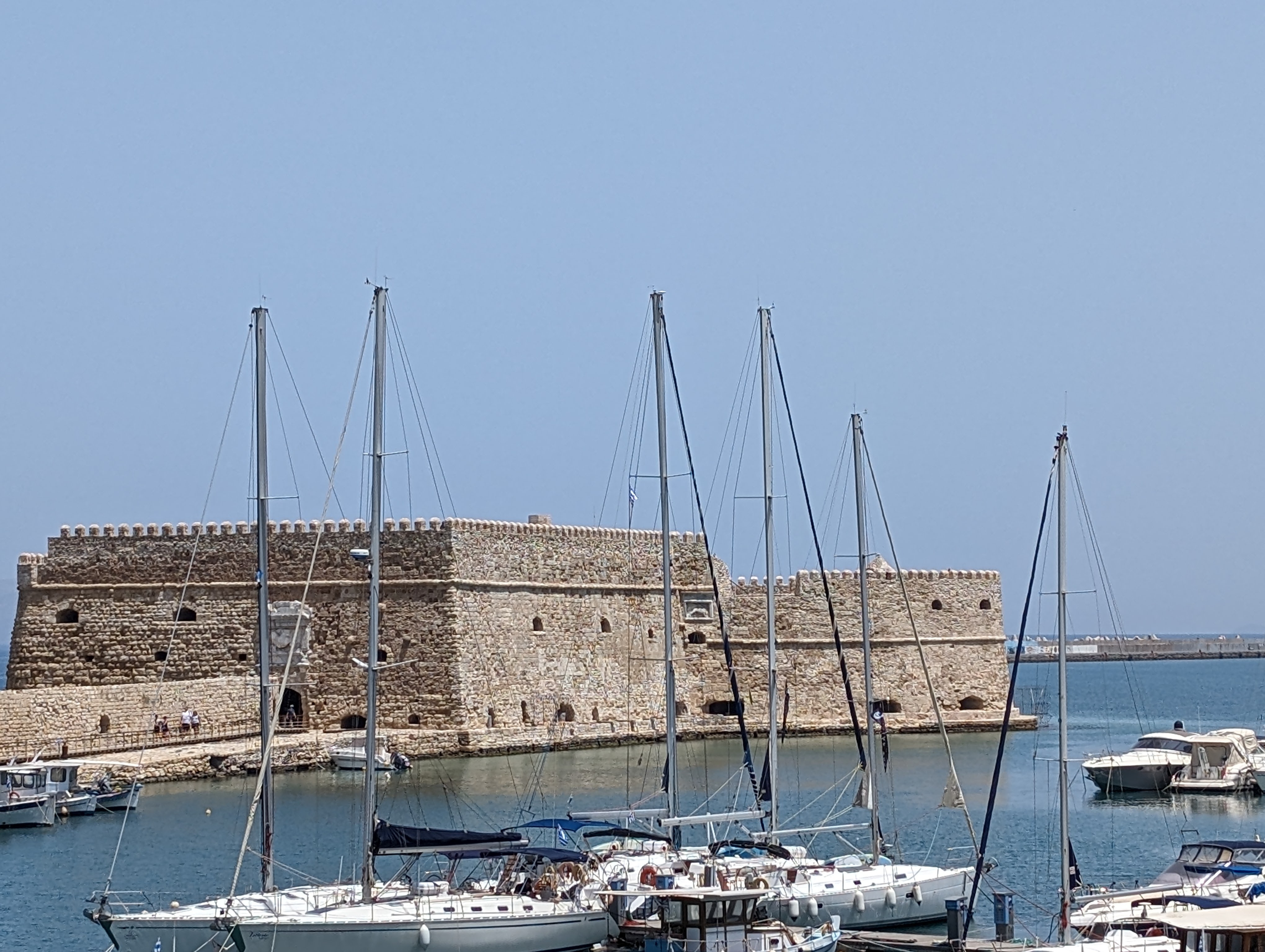
Tomorrow, we take a wooden boat through the Bay of Elounda to Spinalonga….stay tuned!

 Something to Declare
Leave a reply to jbjahr Cancel reply