
July 17, 2024: Schönbrunn, Naschmarkt, and Karlskirche
We took the UBahn this morning to Schloß Schönbrunn, the Habsburg summer palace.
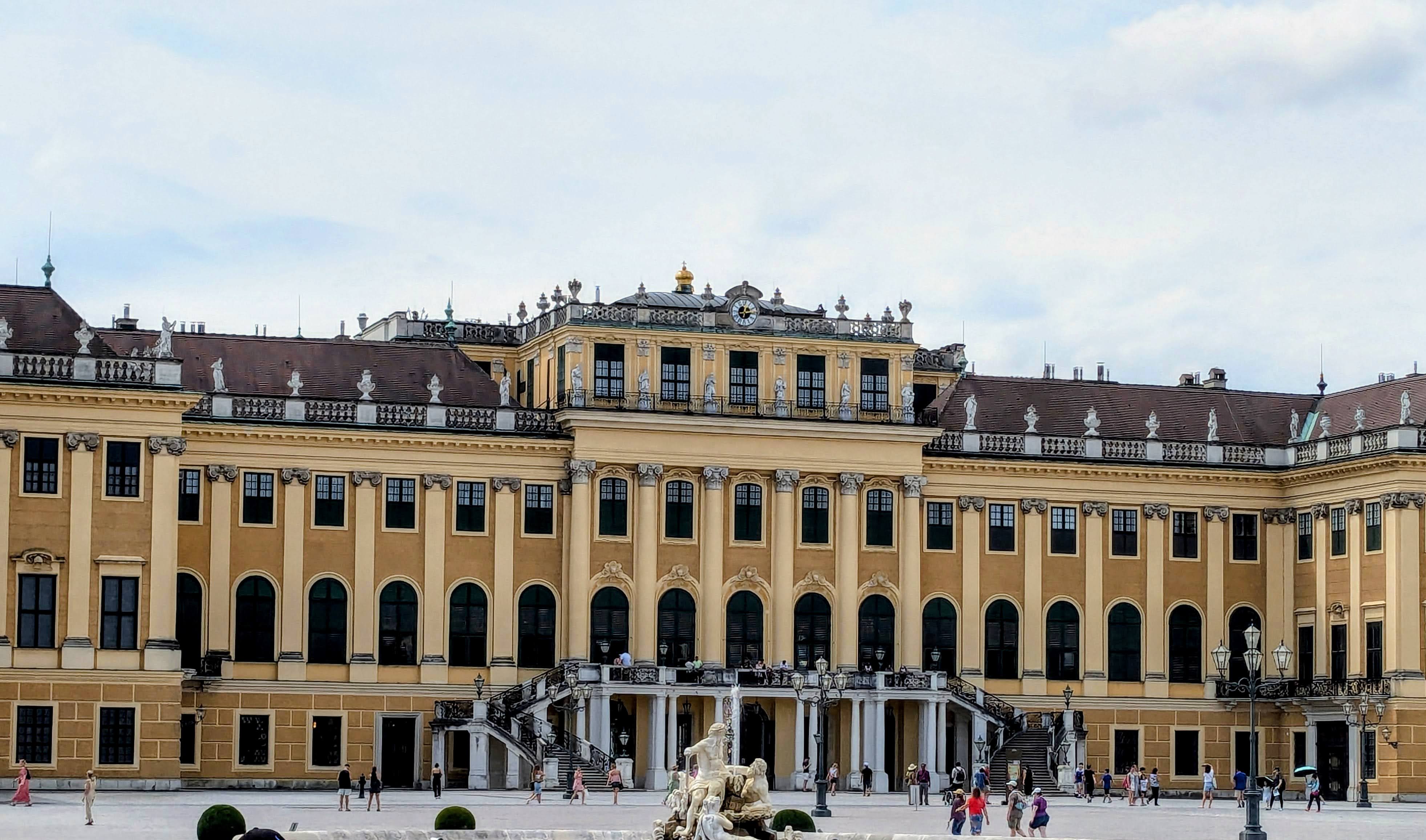
We took a self-guided tour of the State Rooms, a small portion of the former imperial palace:
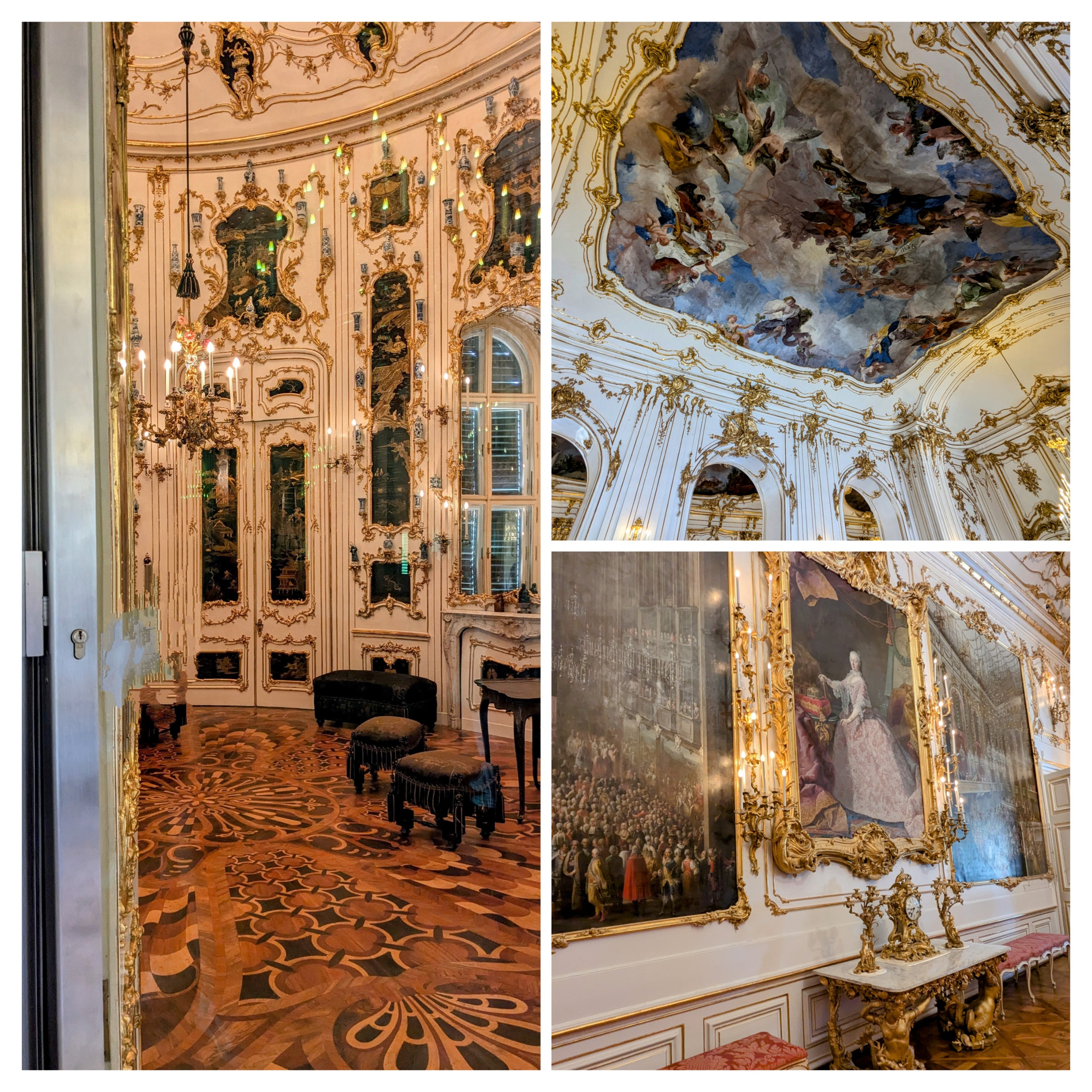
These included the Lantern Room, the Great Gallery, and the Hall of Ceremonies. You will note, as we did, that the décor is minimalist and understated (hah!). I think I read somewhere that Rococo is “Baroque on Steroids.”
Below is the reception of the wedding of Empress Maria Theresa’s son and successor, Joseph, to the Bourbon princess Isabella of Parma.
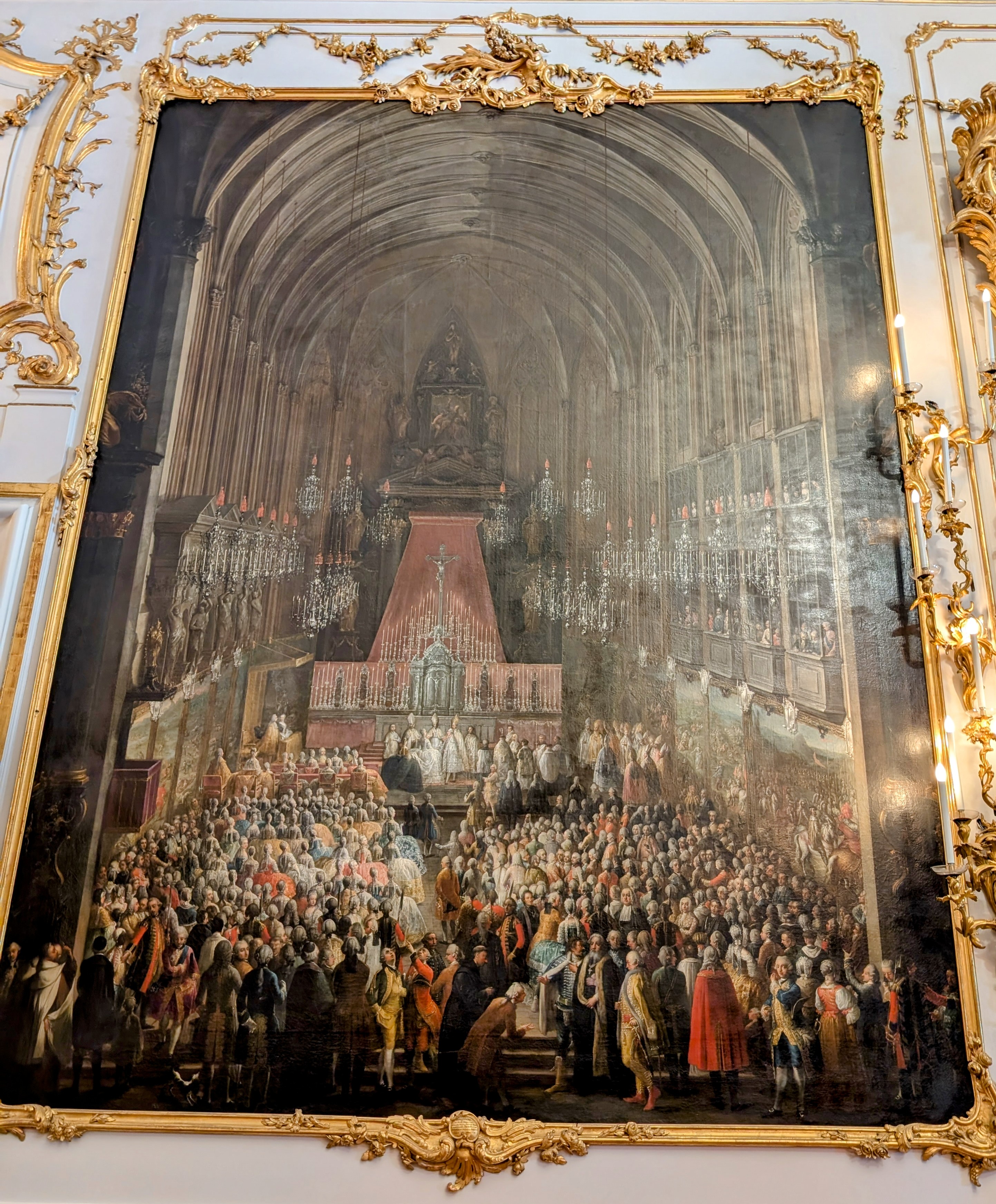
Supposedly the painting includes a representation of Mozart. But even having had experience with “Where’s Waldo?,” we couldn’t find him. Turns out that, at the time of this shindig, Mozart was only 4 years old, and not actually in attendance.
We learned another snippet of a factoid, informing us that the child Mozart did, at another time, perform for the Habsburgs. At the conclusion of his concert, he is reported to have jumped into the lap of the young Marie Antoinette, and asked her to marry him. To be sure, that wouldn’t have fit into the plans these families made for intermarrying into the lineages of other royal houses. If she had married Mozart, however, it might have saved her from a trip to the guillotine in 1789. Oh, the choices we’re forced to make!
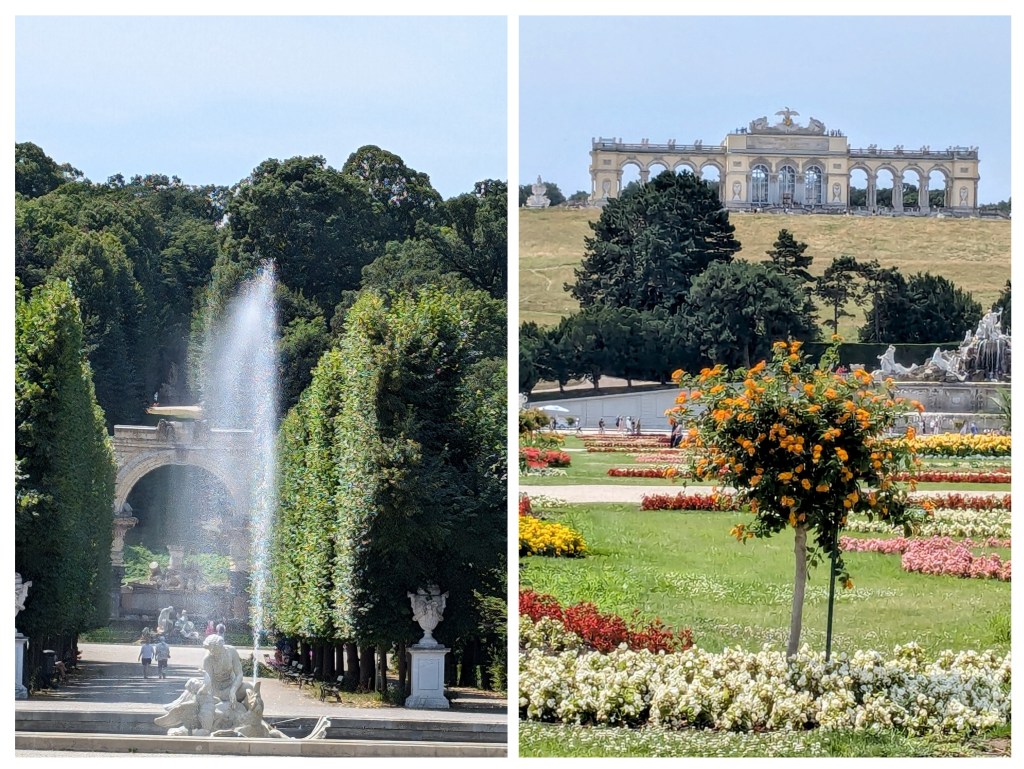
We also strolled through a portion of the gardens. At the top of the photo on the right is the Gloriette, a purely decorative monument celebrating an obscure Austrian military victory.
We then made our way to a restaurant called Josef II. No Wienerschnitzel this time (not yet, at least): Lunch was vegetarian, consisting of balsamic lentils with bread dumplings, and spinach dumplings in tomato butter:
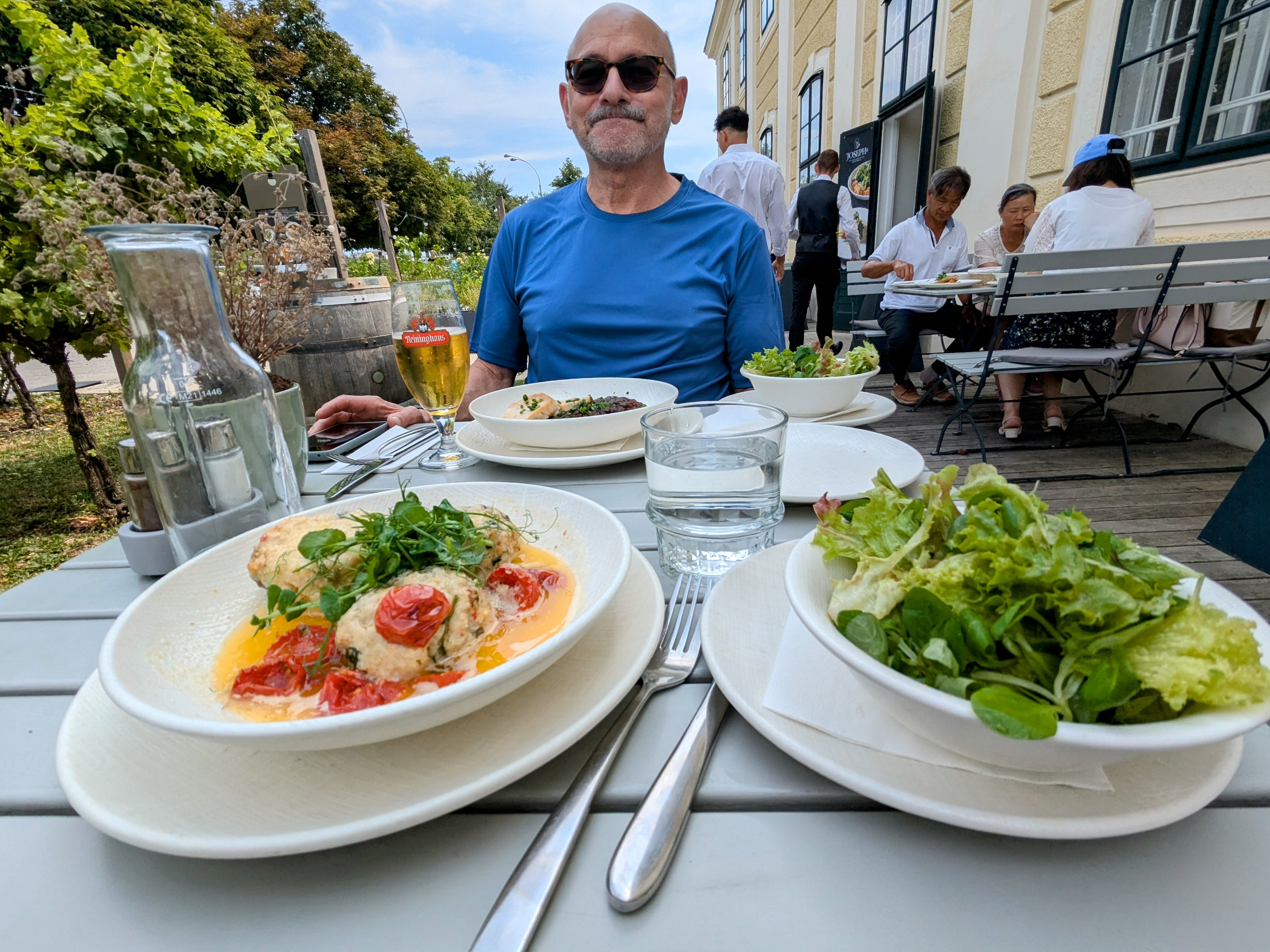
These people really know their carbohydrates! It was delish.
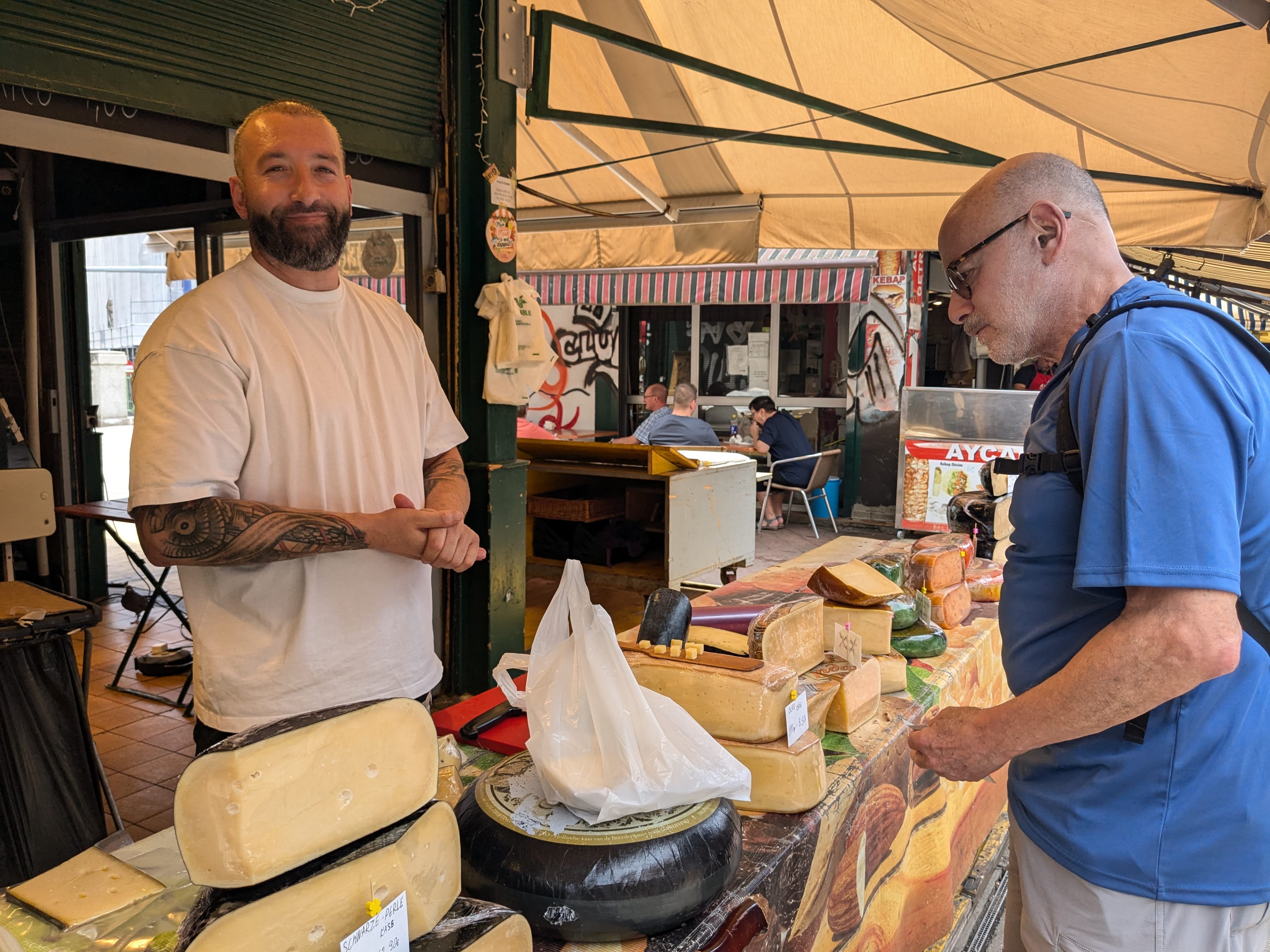
So, back to town on the UBahn, where we again strolled through the Naschmarkt, where I was talked into buying some cheese laced with truffles.
We ended up at Karlsplatz, the location of the Karlskirche, a cathedral that was dedicated by the Emperor Charles VI to his namesake, St. Charles Borromeo:
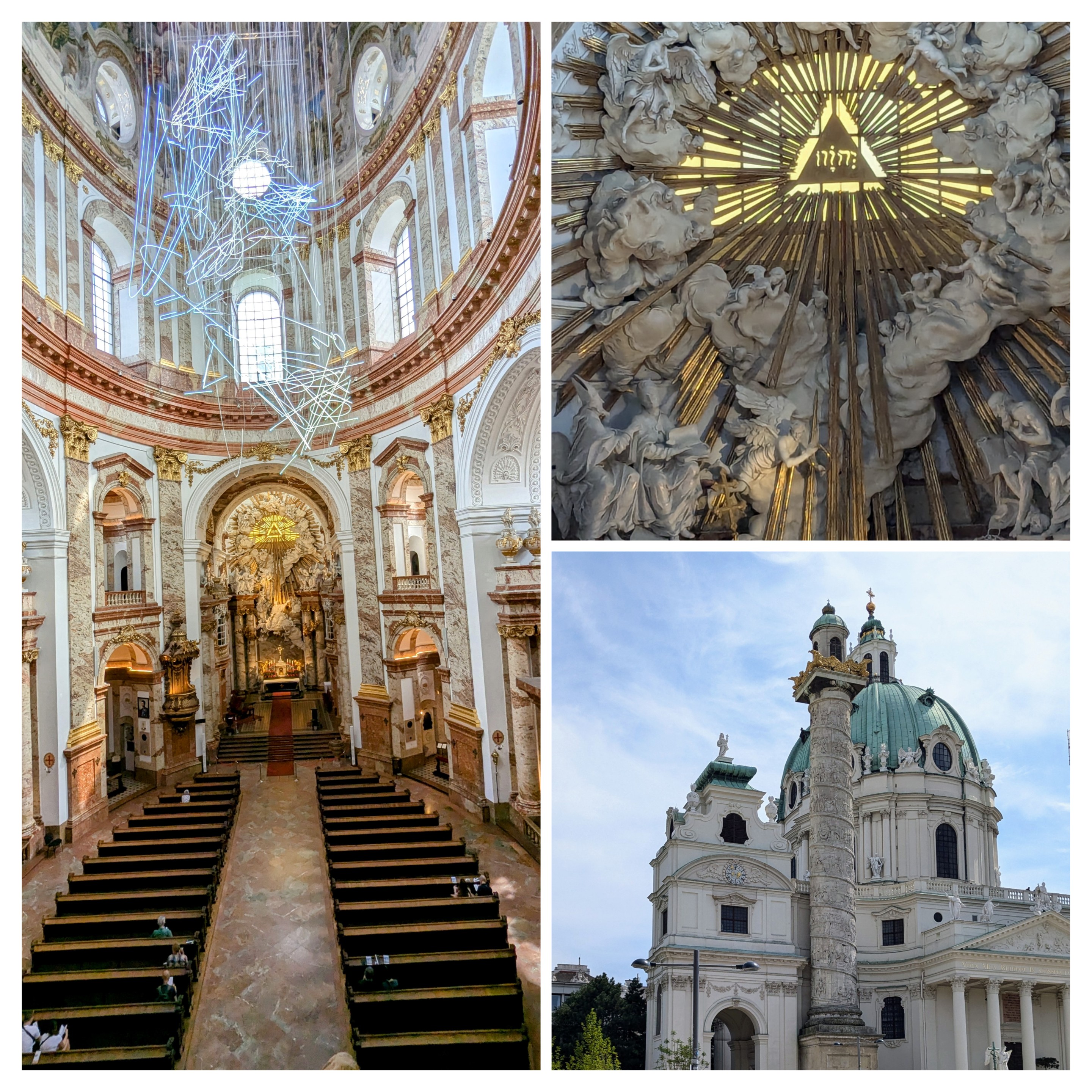
St. Charles was reported to have saved Vienna from an epidemic in 1713. A portion of the decoration above the altar (above, upper right) does show the name of the Deity in Hebrew. Ecumenical? Probably not: The fresco in the dome shows some angels burning a Protestant Bible:
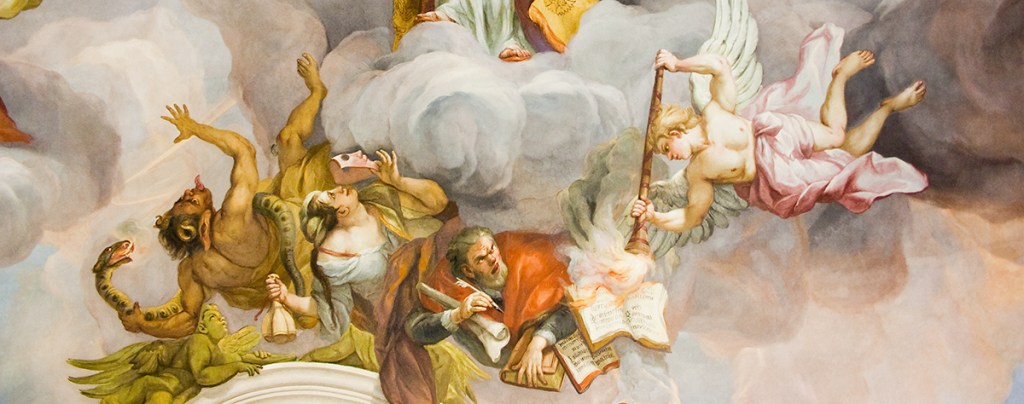
These folks clearly took their sectarianism seriously.
P.S.: Stef did manage to connect with the Archivist at the Stadttempel. No sign, alas, of great-great-grandpa Solomon Colme. She now thinks that he was the rabbi at a different temple, the Leopoldstädter Tempel, formerly the largest synagogue in Vienna.
The Leopoldstädter Tempel was destroyed in Kristallnacht in 1938. As most of us know, Kristallnacht was a two-day pogrom carried out by the Nazis and the Hitler Youth. They destroyed 267 synagogues throughout Germany, Austria and the Sudetenland. Over 7000 Jewish businesses were damaged or destroyed, hundreds were killed and 30,000 Jewish men were arrested and sent to concentration camps. Now, nothing remains of the Leopoldstädter Tempel except for a monument marking the location. Sorry to end again on grim note!


 Something to Declare
Leave a reply to DEBORAH GRAYSON Cancel reply