September 10-11, 2024: Arrival in Tirana
Tuesday, September 10, 9:30 pm. This was a weird one. On Monday I was something of a wreck. Getting into the car to JFK without Stef? Negotiating airport security without Stef? Hanging out in the Lufthansa lounge without Stef? You get the picture.
I’m writing this part of the post in my room at the Oxford Hotel in Tirana, Tuesday evening. I met up with Ilir, our Albania tour guide. Also my tour-mates, very pleasant people. Ilir (name derived from those ancient Illyrians who originally settled Albania) took us on a brief walking tour of the neighborhood.
The walk took us to a large square, named for the great hero and savior of Albania, Gjergj Kastrioti Skënderbeu, now known as Skanderbeg.
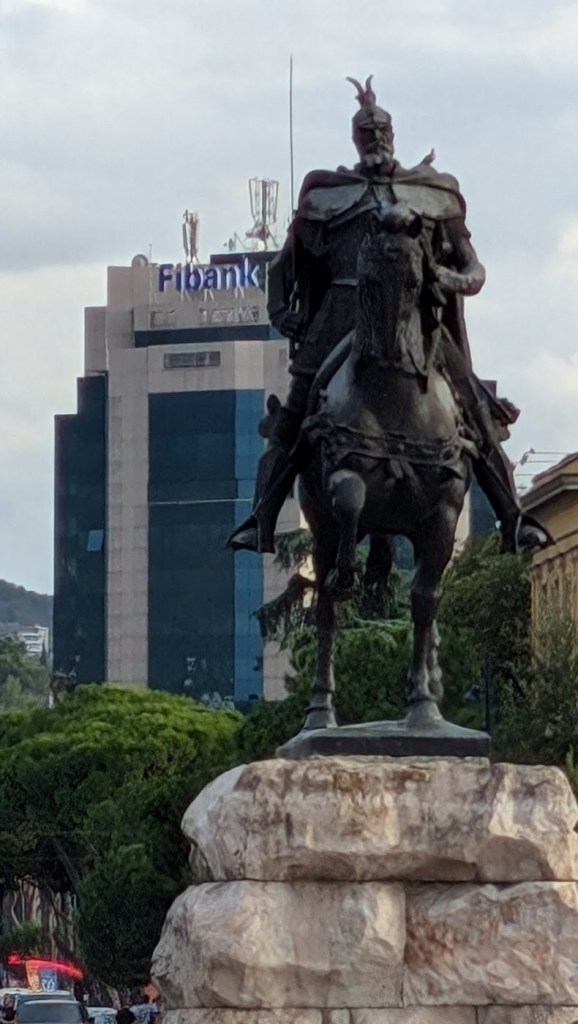
He’d been an Albanian, kidnapped by the Turks, and raised in the Ottoman Empire in the 15th century. After becoming a successful general for the Ottomans, he later returned to Albania to save the country from Ottoman aggression (the Empire must have loved that).
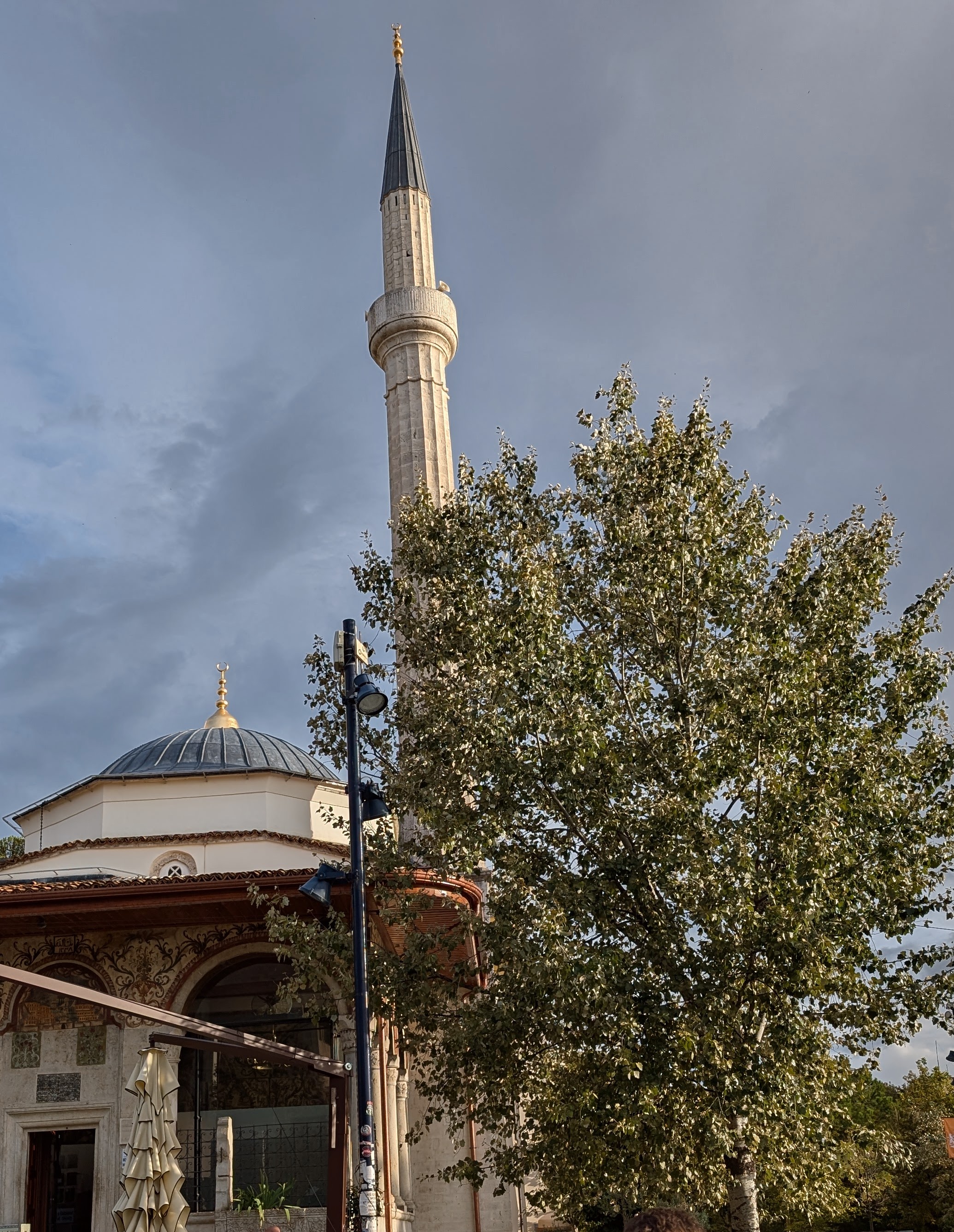
From the square, we could see lots of historical stuff, including the Et’hem Bej (Eten Bey) Mosque, built in 1821 and named for the grandson of the founder of Tirana, Suleiman Pasha.
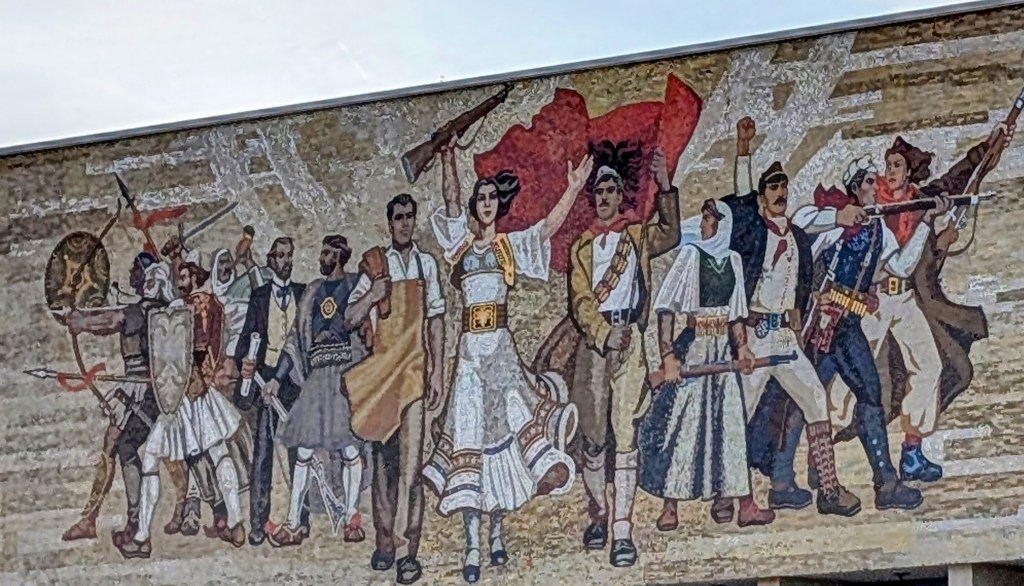
The largest mosaic mural in Albania, depicting “the Albanian people,” still stands on the former Tirana City Hall.
There was a lot of modern stuff, too:

We were informed that six floors of the building in the lower right, above, constitute the Israeli Embassy to Albania.
Time for dinner. Ilir recommended a seafood restaurant, which serves the traditional Mediterranean grilled fish. In this case, sea bream (dorade).
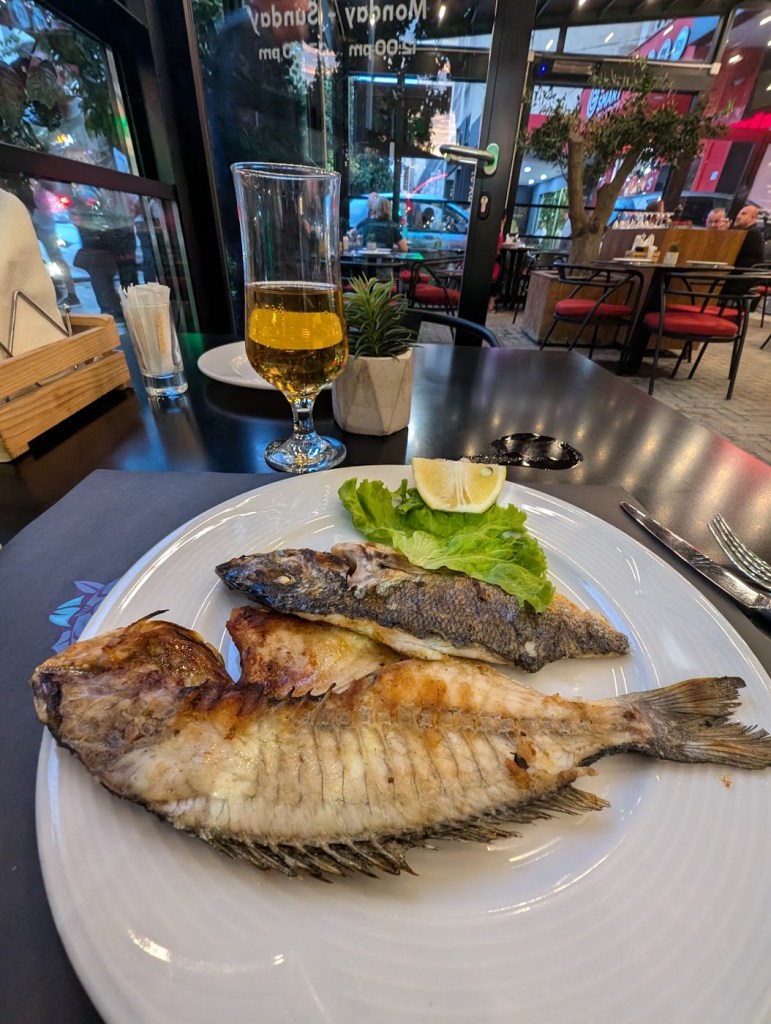
Yum.
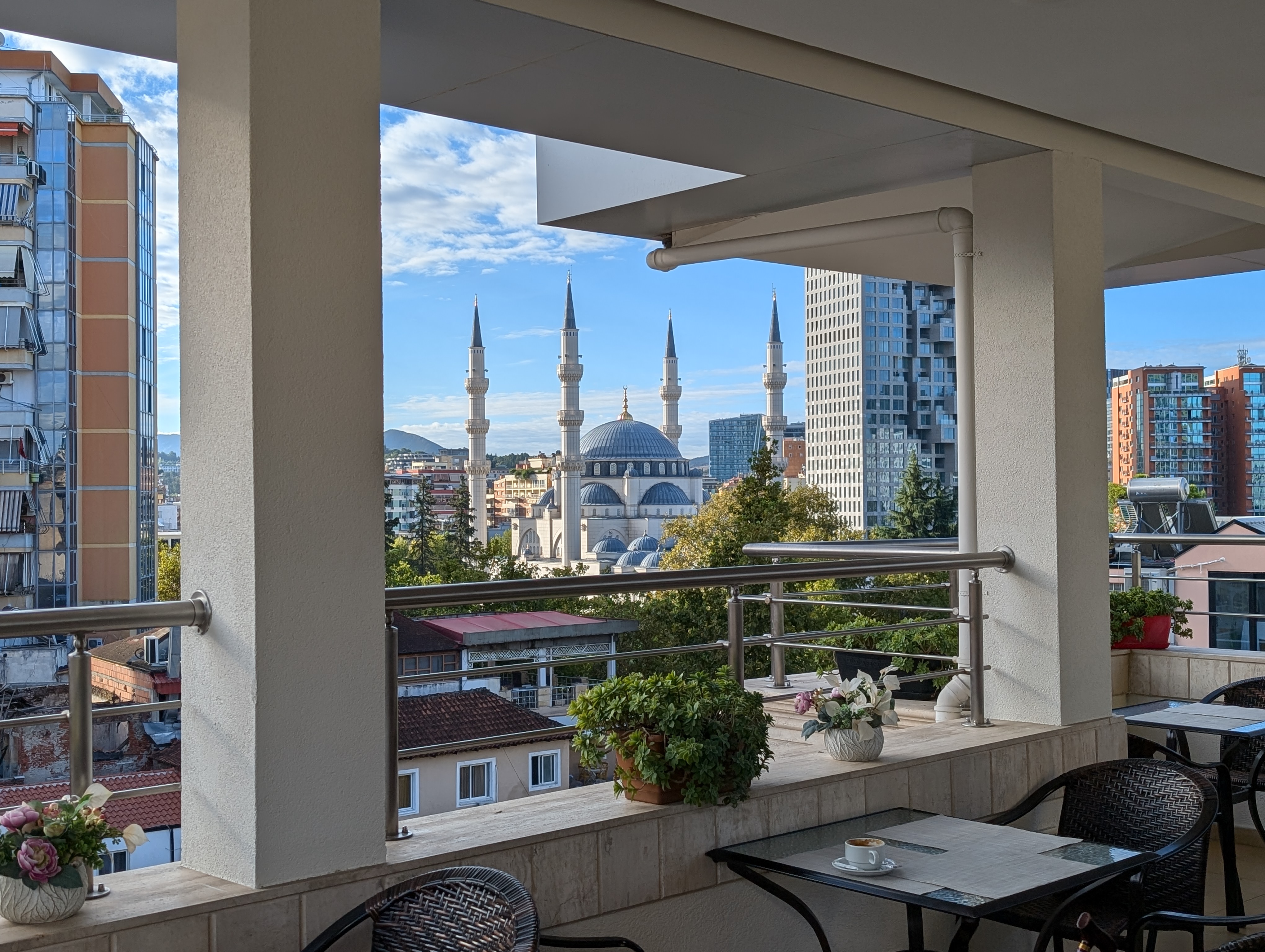
Wednesday, September 11, 8:45 pm. This morning was our first breakfast at the Oxford Hotel. The dining room has an outdoor terrace with a view of the lovely New Mosque (not yet open):
We walked to the Bunk’Art Museum. During the Communist period, the paranoid leadership constructed upwards of 175,000 (!) reinforced concrete bunkers, of various sizes and configurations. These were supposed to defend against nuclear attack. One of the biggest was connected to the Interior Ministry. This was the ministry in charge of the Sigurimi, the secret police (think Gestapo, Stasi, KGB). These guys were charged with the continuation of political repression established when King Zog set up the Gendarmerie in 1930.
In 2014, this bunker was converted into a sort of museum. It had extended from an above-ground dome, to a series of underground corridors and rooms used by the Ministry and the Sigurimi. These now contain exhibits of Communist rule and photos of atrocities:

The exhibits also include collections of dossiers on Albanians suspected of disloyalty (above, center). This group consisted of, well, almost everyone. About 25% of the population were engaged in some form of surveillance of the other 75%. There was an exhibit of how the Sigurimi would occupy the apartments next to those of suspects, so they could spy on them with listening devices.
There was also a barber’s chair (above, lower left) which had been set up in the airport: Visitors to Albania whose hair and beards were seen as too long were taken for mandatory shearings. Former Communist leader Enver Hoxha was quoted as decreeing: “The People’s Republic of Albania is closed to enemies, spies, hippie tourists, and other vagabonds.” OMG.
From Bunk’Art, we walked to the cable car that took us to the top of Mount Dajti, with beautiful views and a restaurant:
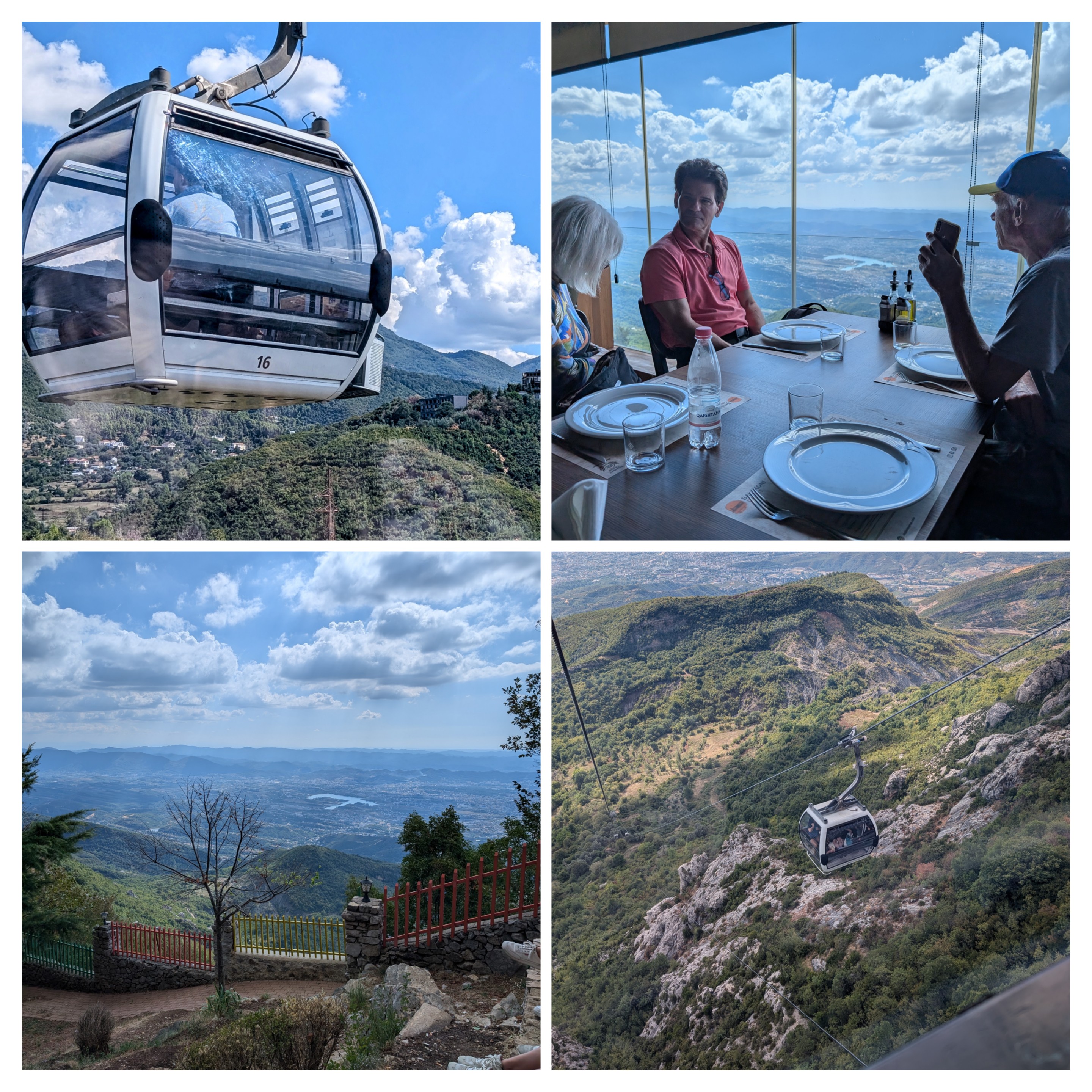
Lunch consisted of traditional Albanian dishes including corn bread in yogurt, peppers in ricotta cheese, and meatballs (cue the food porn):

As you might infer, the local cuisine is heavy on the dairy. Lactose-Intolerant travelers beware!
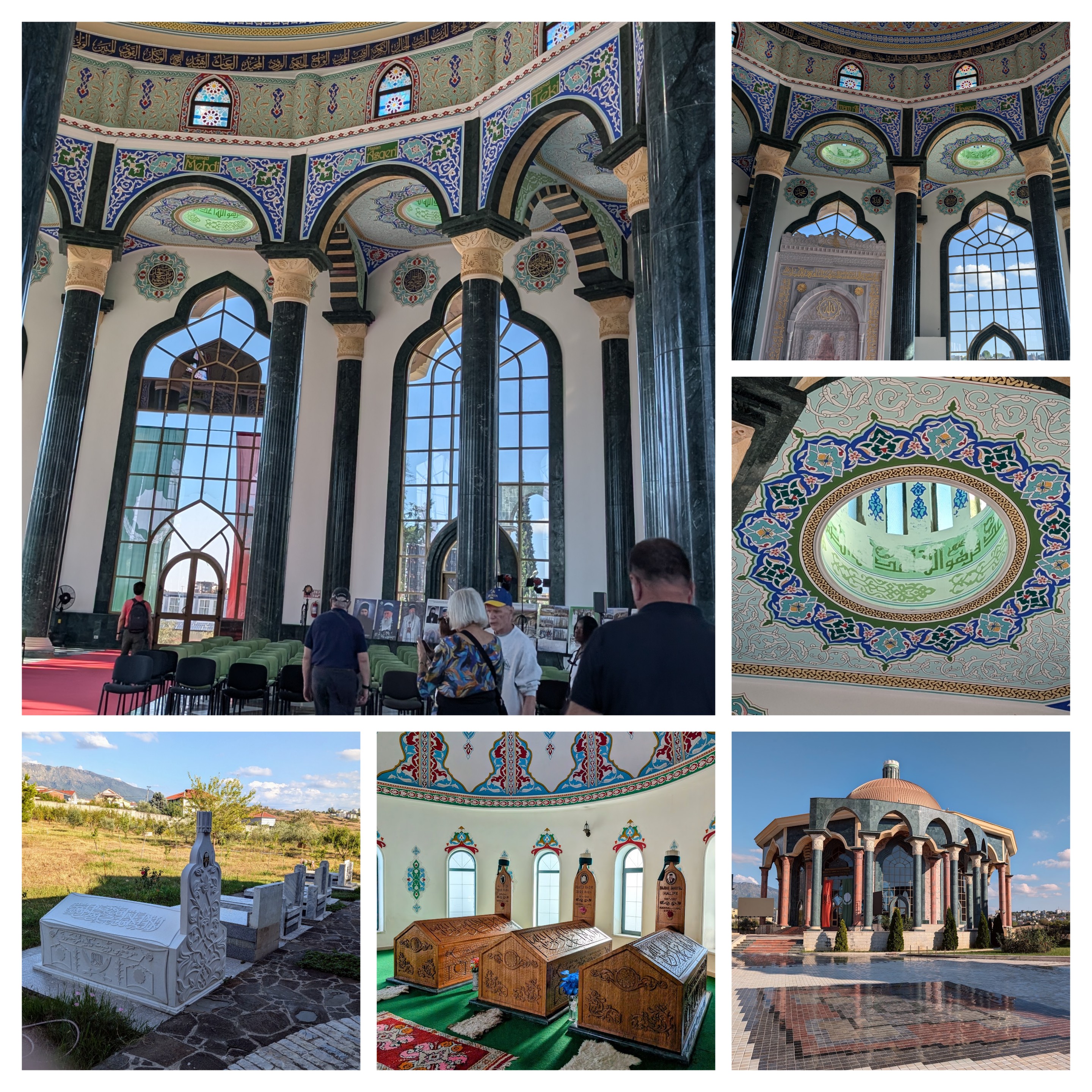
The last item on today’s itinerary was a visit to the world headquarters of the Bektashi movement, which oversees the Sufi sect of Islam. Ilir appeared to draw a distinction between Sufi and Sunni Islam. It was difficult to understand, as was the position of the Shia in all of this. In any event, it brought home the significance and influence the Muslim faith has in Albania.
The Bektashi sect was established by a Persian, Haxhi Bektash Veli (1282-1321), who established the first of their Tekkes (mosques without minarets) in the 13th Century. The higher clergy are divided into Babas and Dervishes (the latter of whom no longer “whirl,” at least in Albania), and whose tombs are part of the compound:
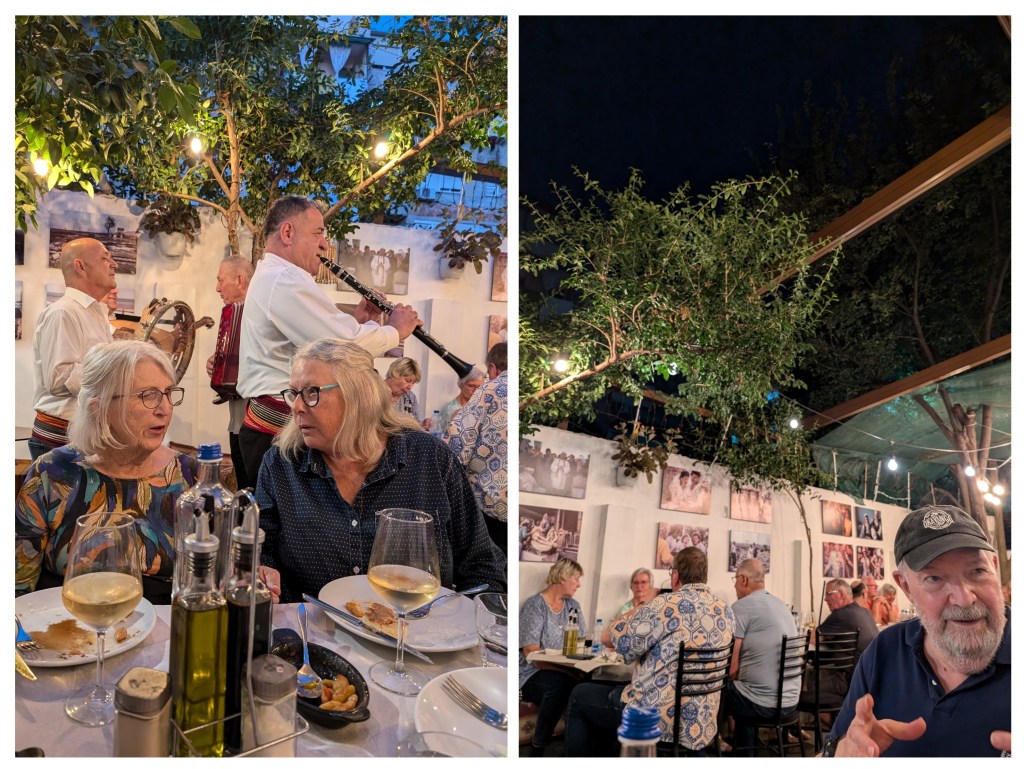
Dinner this evening was in an open-air restaurant called Oda (“Living Room”). The spinach burek (Albania’s answer to Greek spanakopita), fava beans and stuffed eggplant were accompanied by live traditional music: clarinet, cifteli (a kind of mandolin), def dajre (a kind of tambourine), accordion, and vocals:
Tomorrow is the day trip to the town of Berat. There are supposed to be lots and lots of twisty, slippery, steep cobbled streets (ulp!).


 Something to Declare
Leave a reply to Linda M Zolinsky Cancel reply