
September 15, 16 and 17, 2024. Dubrovnik
We left Shkodër in Albania Sunday morning, September 15, to drive through Montenegro on the way to Dubrovnik in Croatia. Once past the Montenegro border, most of the drive was along the Adriatic coast, passing St. Stephen Island (below, upper left), taking a car ferry across the Bay of Kotor (below, upper right) and stopping for lunch in the town of Budvar ( below, right center and bottom, and bottom left):
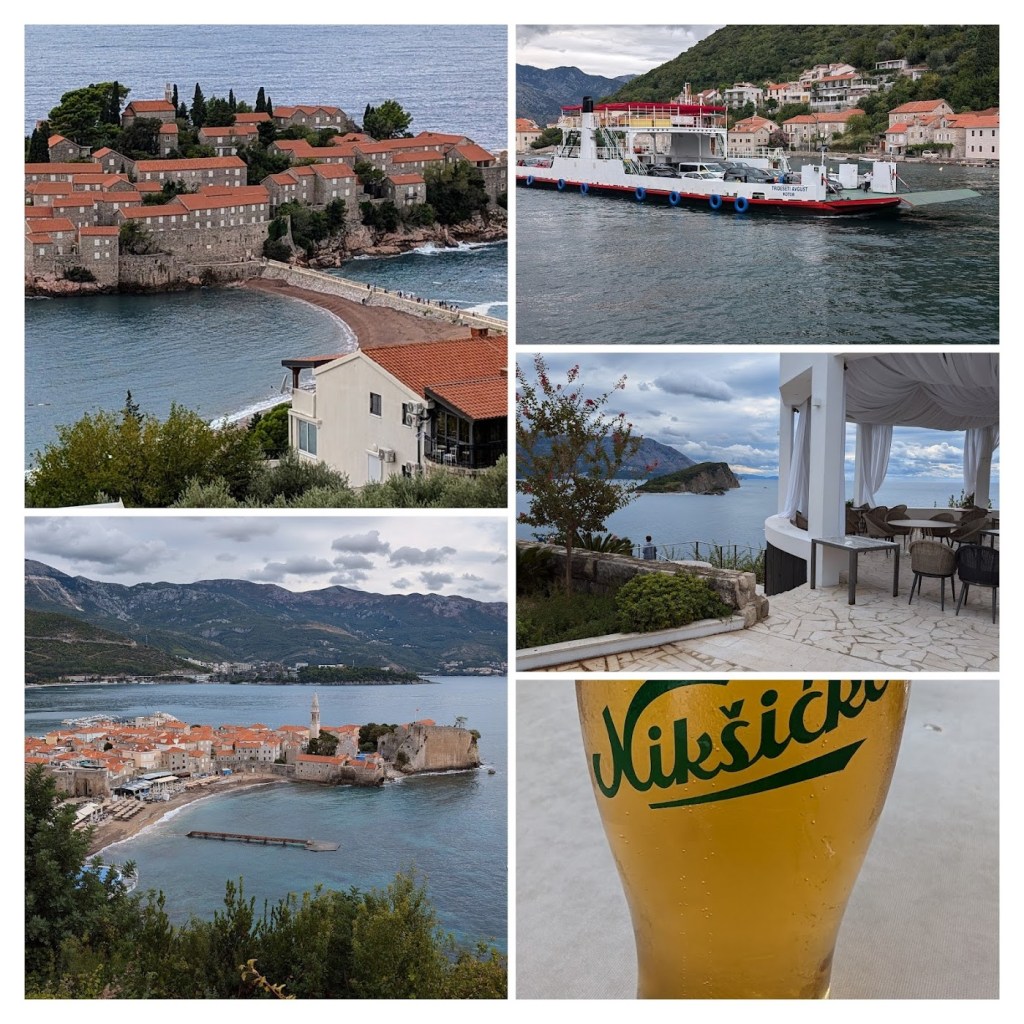
Lunch was accompanied by a local beer with the name “Nikšićko,” pronounced “nick-SHITCH,” (I preferred to pronounce it “Nick-SICKO.” ) After passing the southern Croatian border, we met our tour guide for the rest of the tour, Ms. Elsa Lojic (pronounced “LOY-itch“).
Elsa informed us that Dubrovnik forbids auto traffic in the Stari Grad (Old Town), so we would get there from the hotel by public bus. She noted that the Tirena Hotel is in a large Valamar Complex that resembles an upscale Club Med resort. Beautiful, modern buildings, large, spacious rooms, with restaurants, shops, parks, swimming pool, gym and other amenities.
When we were in the lobby of the Tirena, checking in, Steffie came downstairs to greet us (be still, my heart!). She’d gotten there the day before, and had learned the lay of the land.
This morning, we had our post-breakfast group meeting, to discuss the logistics of the trip, including a blanket prohibition against any discussions among tour members of US politics. Elsa noted that Balkan politics were volatile enough, thank you very much. (We have already violated this edict.)
We took the No. 6 bus from “Valamar-land” to the last stop (Old Town). The HUGE crowds were due to visitors from the gigantic cruise ships that dock here. Elsa introduced us to our Old Town guide, Daniella (below, upper right) who showed us the Palace of the Rectors. This was the home of the government when Dubrovnik was an independent city-state between 1358 and 1806. (1806 was the year Napoleon took over Venice and the rest of the Adriatic).
In order to reduce corruption, Dubrovnik’s executives (Rectors) had 30-day terms, and they couldn’t run for re-election until two years had passed. During their terms, the Rectors could not leave the Palace without permission.
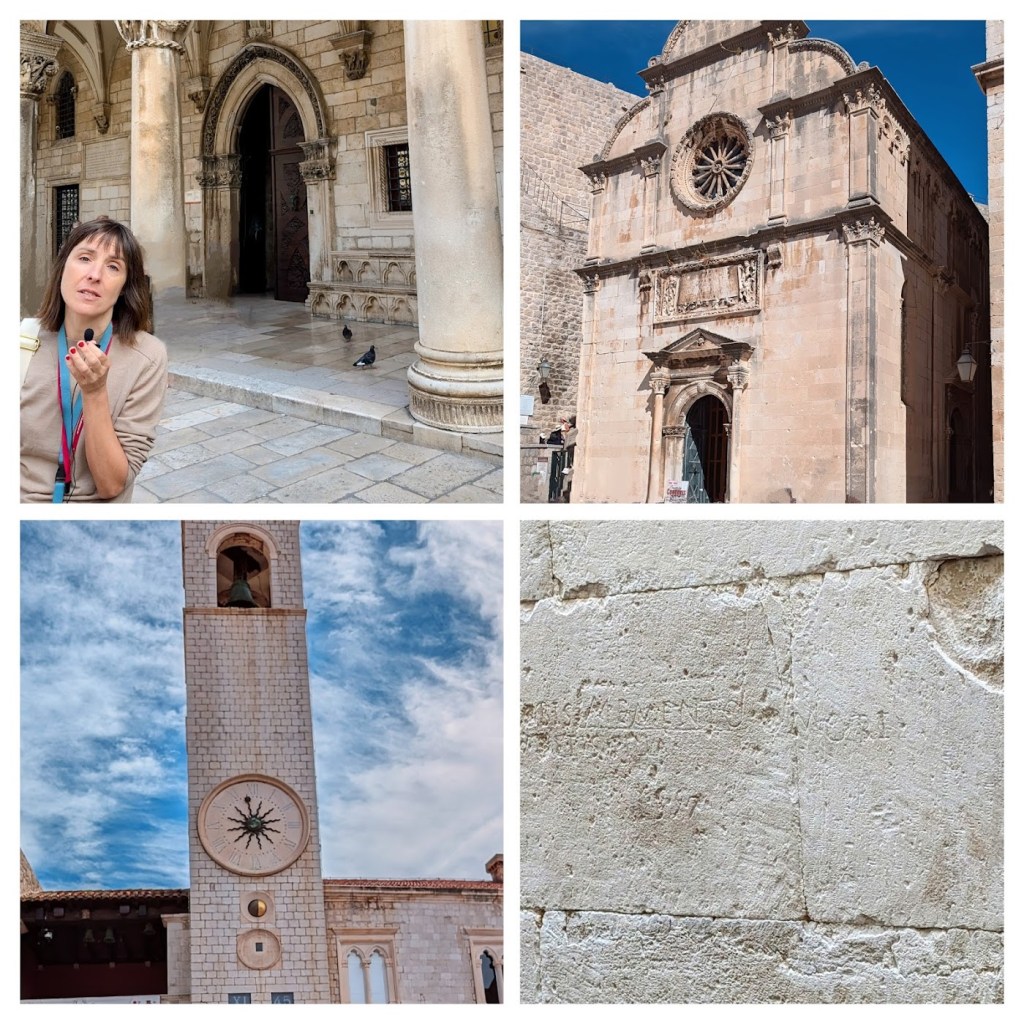
Daniella showed us the Church of Our Lady, which goes back to the 9th Century, and supposedly rebuilt by Richard Lionheart (above, top right). Notice the holes from shrapnel during the 1990s war. We saw the clock tower (above, lower left), and the Church of St. Roch (above, bottom right). The church had some 15th century graffiti etched by a priest, “Pax Vobiscum” and “Memento Mori” (“Peace be with you,” and “Remember Death“). Cheery.
Plague and death were preoccupations in those days. St. Roch’s claim to fame was that he had supposedly been able to cure the plague (or was cured, not clear). Dubrovnik had a rule that visitors who’d come from places where plague was endemic had to go through a waiting period before being allowed to enter the city. The period was 40 days (hence the word, “quarantine“).
Another interesting factoid: The only product exported by Dubrovnik was salt. Don’t laugh, salt was very precious in those days; people were often paid for their work in salt (hence the word, “salary“).
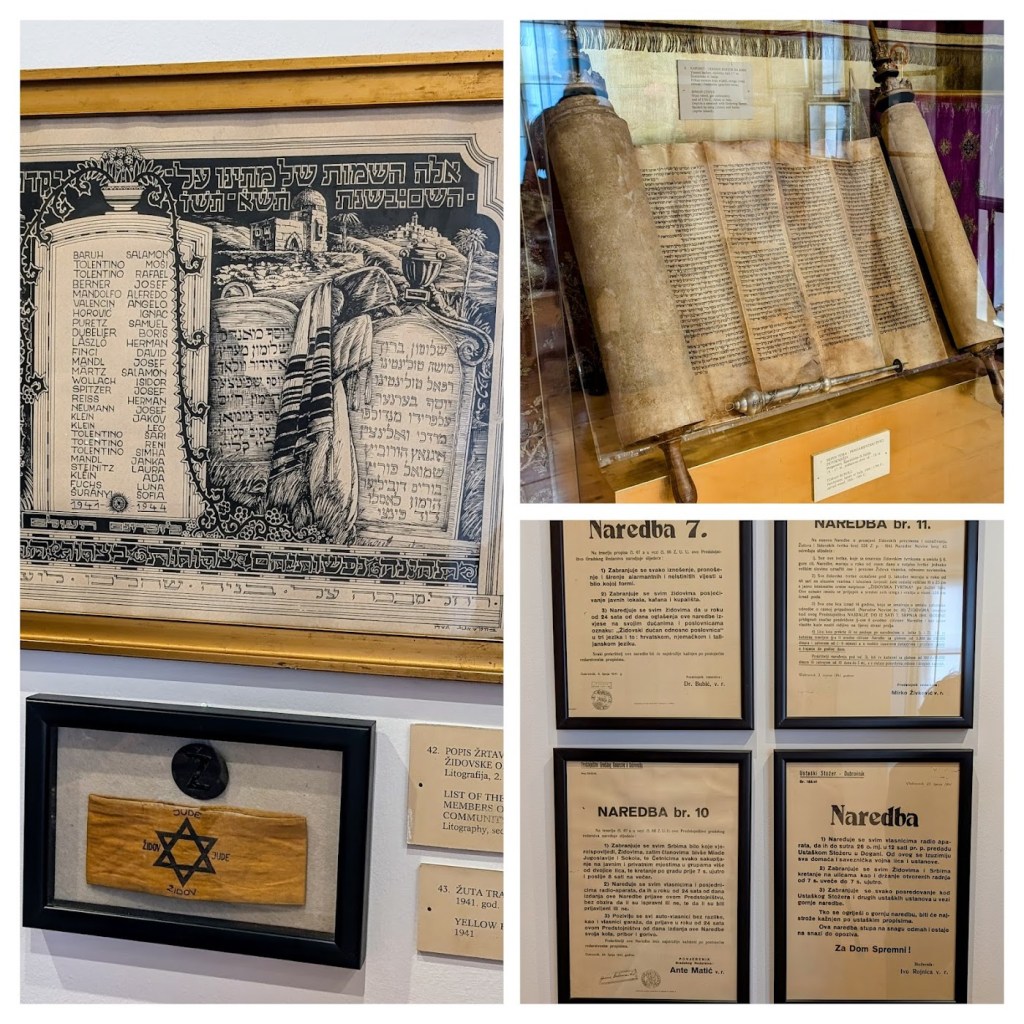
We took a break for lunch, and afterwards Stef and I went off to the former Jews’ Street (Ulica Žudioska), where we visited the Synagogue:
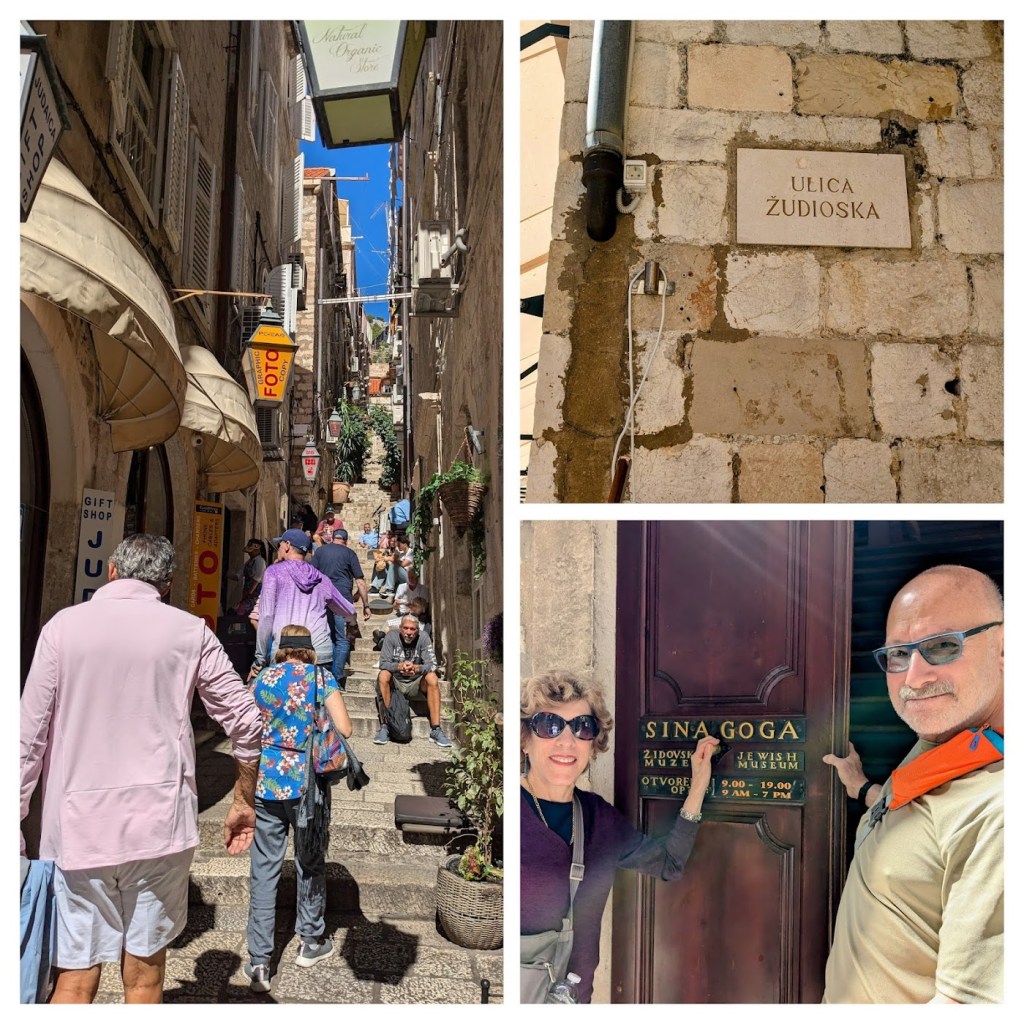
It’s the oldest Sephardic synagogue in use in the world, and the second-oldest synagogue in Europe.
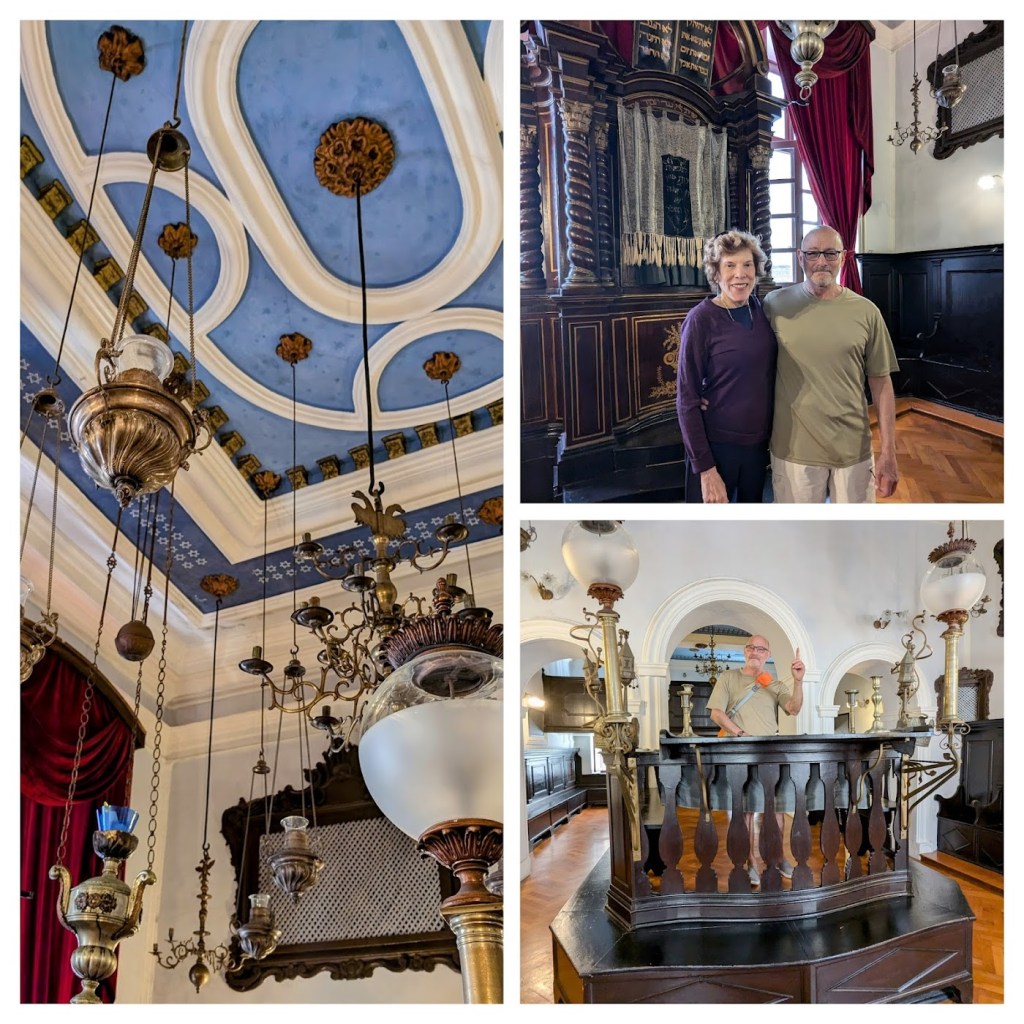
Since there are only 30 Jews in Dubrovnik, and only one Rabbi for all of Croatia, religious services are sort of catch-as-catch-can. The building also houses a small museum with Torah scrolls going back to the 15th Century, and mementos of the German occupation.
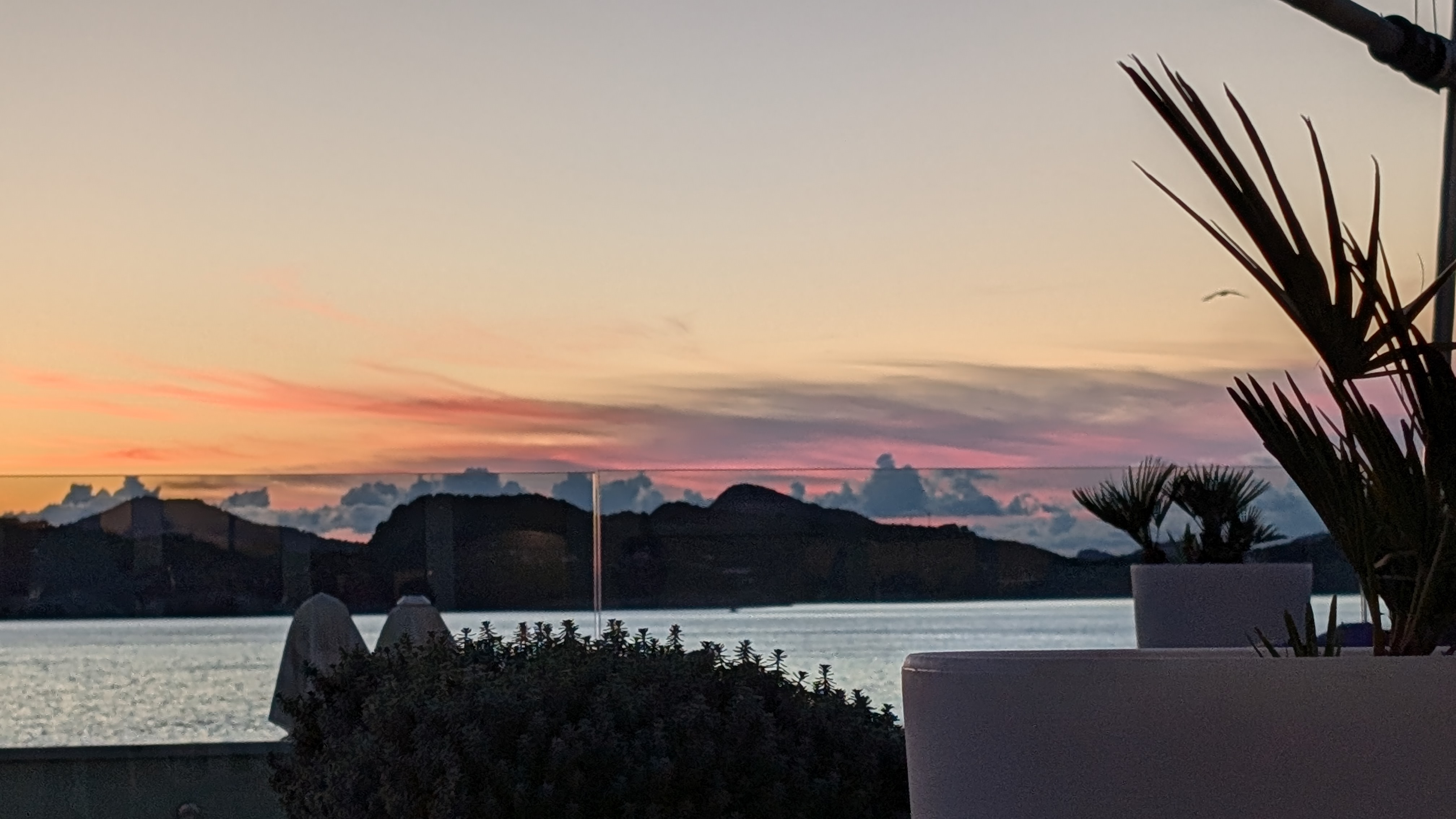
That evening, we enjoyed drinkies and snacks with OAT friends during the sunset over the Adriatic:


 Something to Declare
Leave a reply to jbjahr Cancel reply