
September 21 – 23, 2024. Sarajevo, Ðakovo, Karanac.
After fighting what seemed to be regular cold symptoms for three days, Stef got achy, so much so that it seemed sensible to take a Covid test. And wouldn’t you just know it? Two red lines! Covid!
This needed to be disclosed to Elsa and the rest of the tour group. Luckily, Elsa was an old hand at this (in her last group, seven people had Covid). This meant that we had to mask, segregate from the group, eat separately, and not participate in indoor tour activities. Luckily, Bosnia/Herzegovina does not have a quarantine requirement. We’d also packed Paxlovid, which was started immediately.
So Stef did not join the group for the tour of the Sarajevo Tunnel on Saturday. The “Tunnel of Hope” was constructed in 1993, underneath the airport, connecting free Bosnian territory and the city of Sarajevo (surrounded by Serbian forces). It was used to ferry people in and out of Sarajevo, and to bring needed supplies to the city.
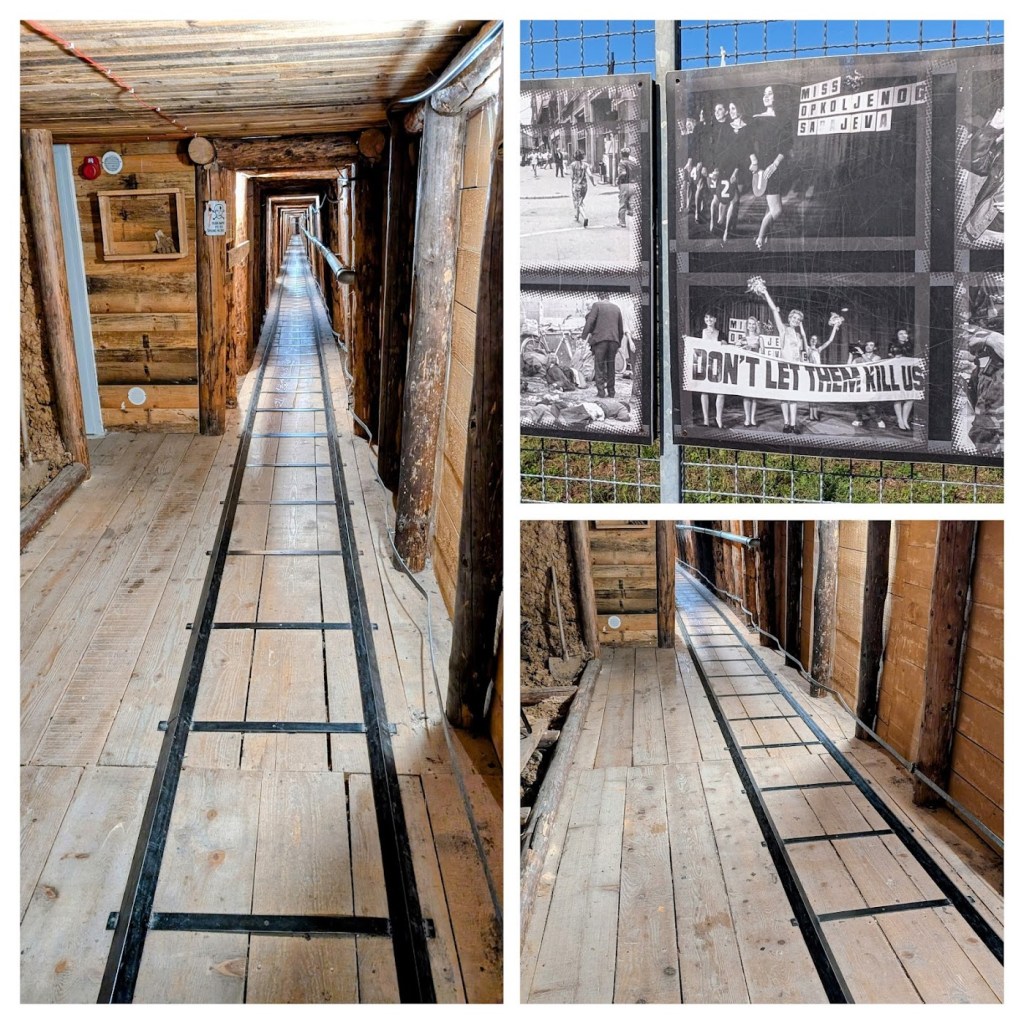
The tunnel is a reconstruction, with nice wood flooring. The floor of the actual tunnel was mud, and five inches of water.
Since the airport was officially U.N. territory, the Serbian attackers were precluded from bombing it. Another reason it was not attacked: It also facilitated the Black Market, in which both Bosnians and Serbians profited.
After the tunnel tour, I left the group and joined Stef at the hotel. She was feeling much better, so the two of us went out, masked, for our own little tour.
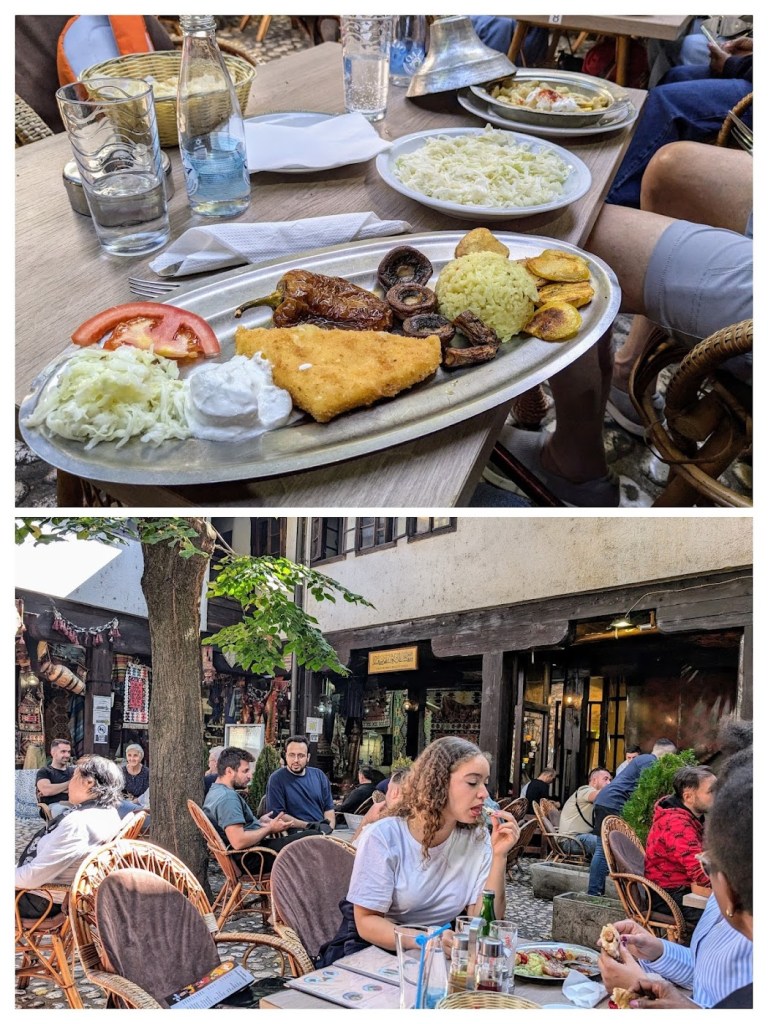
First was lunch, back at the place where we’d had our “coffee experience.”
We also noted the streets festooned with campaign posters for the upcoming elections. Elsa told us that there are about 110 parties (!) vying for power. Everyone wants to be a politician, it seems, partly because the jobs are high-paying (plus with lots of opportunities for graft). Stef pointed out that Hrabro Služimo Čengić, a candidate of the Starom Gradu (Old Town) party, bore a resemblance to J.D. Vance (do you agree?):

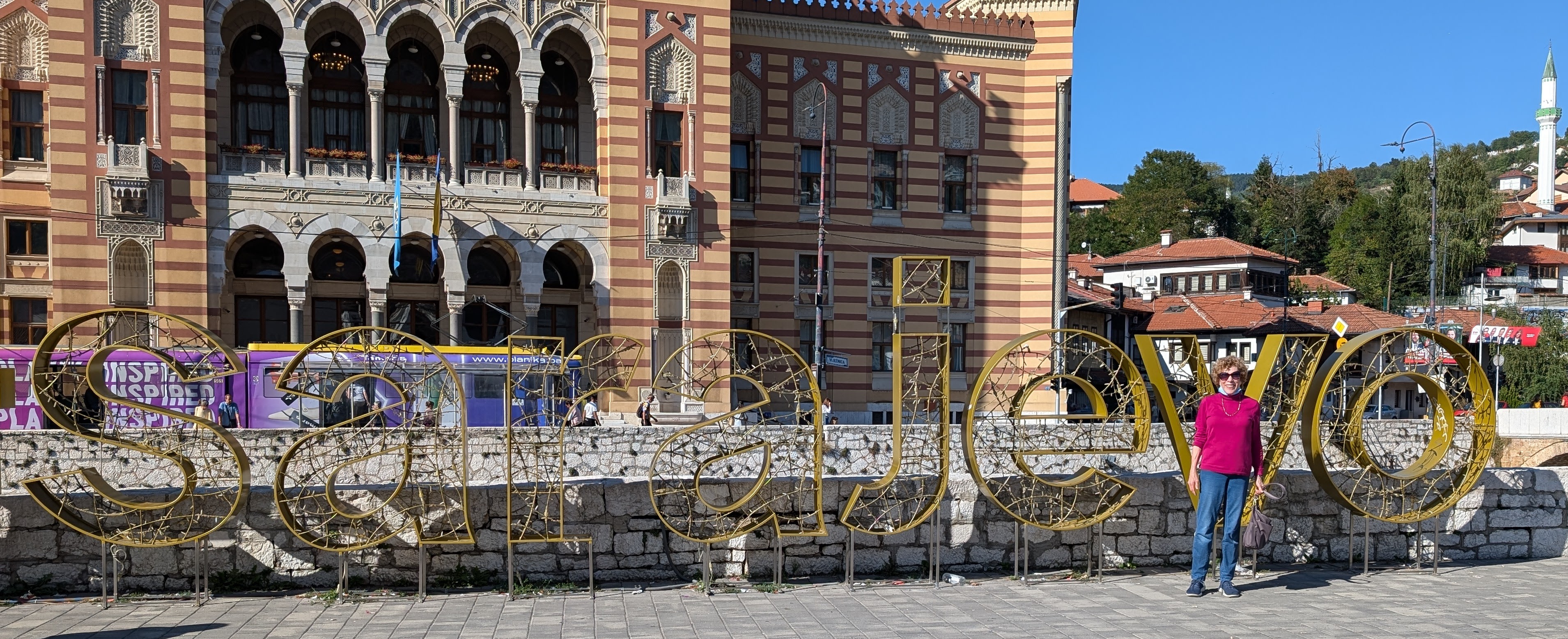
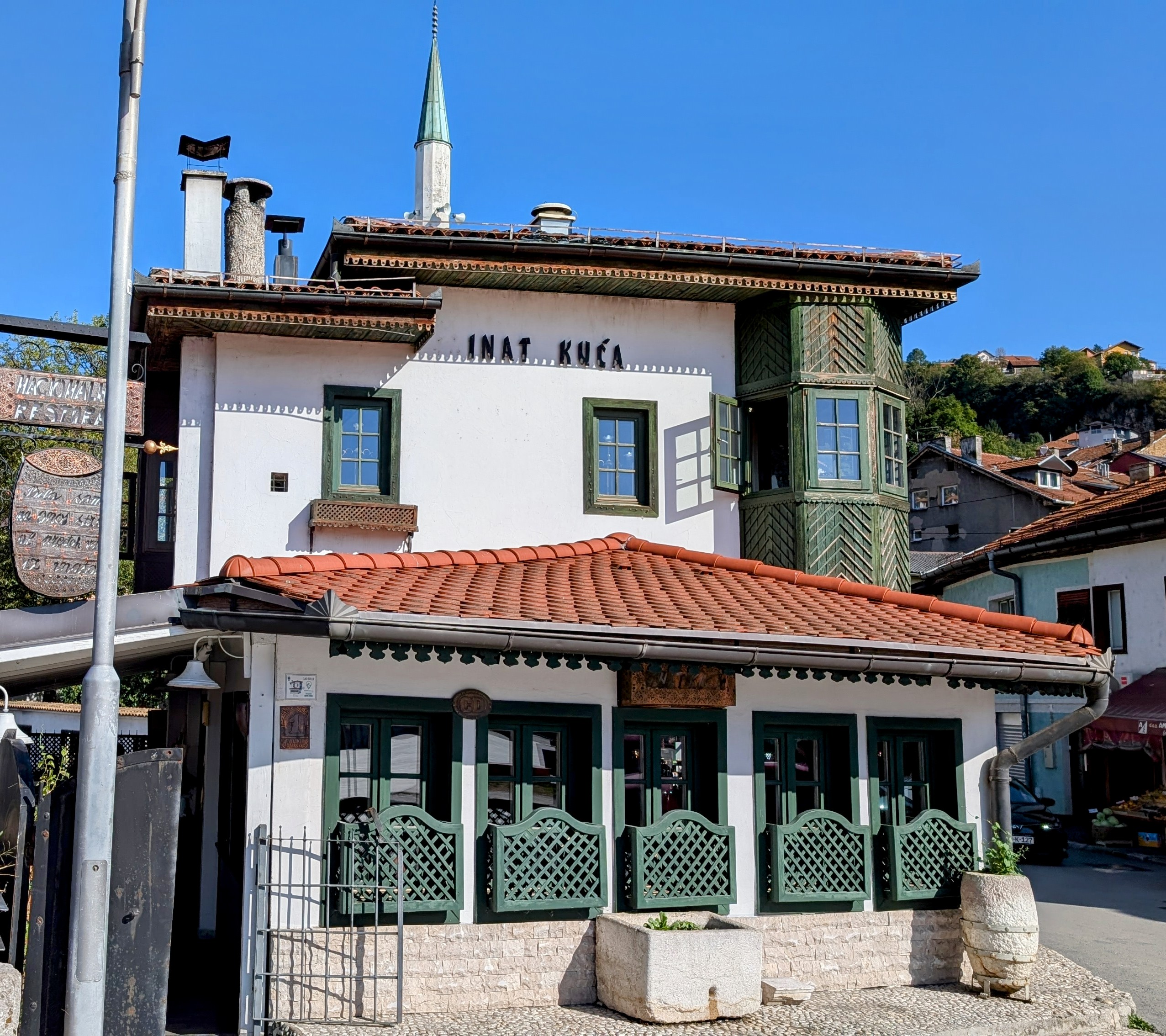
We then visited the Inat Kuća (“House of Spite”). House of Spite? In the late 19th century, the Austro-Hungarian empire wanted to build an impressive City Hall in Sarajevo (as previously noted, in the “Moorish” style). The problem was that the site was already occupied by an Ottoman-style house owned by a stubborn man who refused to give it up. After a great deal of wrangling, he finally accepted a large bag of gold for the house, so long as the empire agreed to disassemble his house, brick by brick, and re-assemble it, brick by brick, on the other side of the Miljacka River. The place is now a restaurant with a water view:
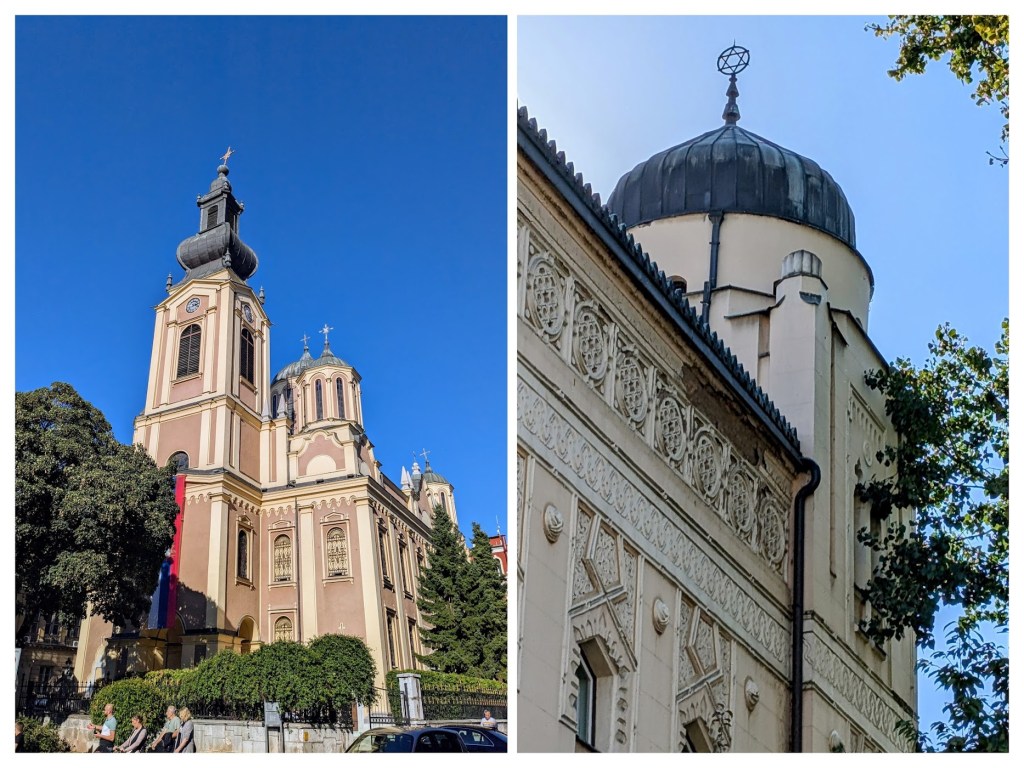
Our walk also included the Ashkenazi Synagogue, built in the “Moorish Style,” in 1902. (The Sephardim had already been in Sarajevo since the 15th century.) There was also the (Serbian) Orthodox Church of the Nativity of the Theotokos, decorated with crosses that seemed to be off-kilter:
Followed by dinner at Klopa:

Lamb chops are presented as a Bosnian specialty. Stef had a tofu and vegetables pot (surprise!).
On Sunday, we left Sarajevo to return to Croatia, specifically the rural eastern part of the country. We stopped at Ðakovo, where we visited one of six stud farms used by the breeders of the world-famous white Lipizzaner show horses (named for the town of Lipica in Slovenia).
On this farm, there is one retired Lipizzaner male a/k/a/ No. 1 Stud:
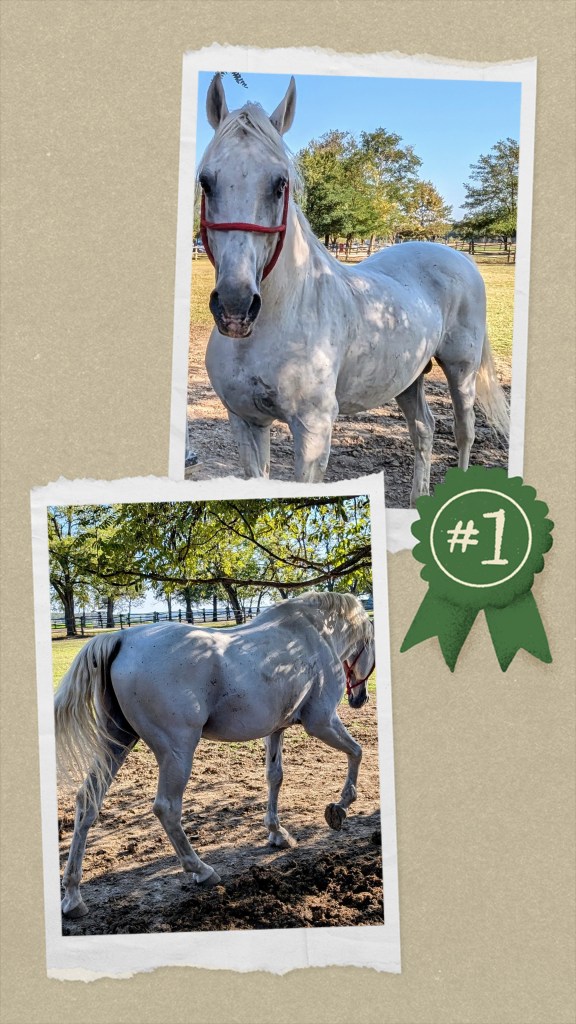
His job is to produce LOTS of offspring (the younger horses are brown and grey, and turn white only in adulthood).
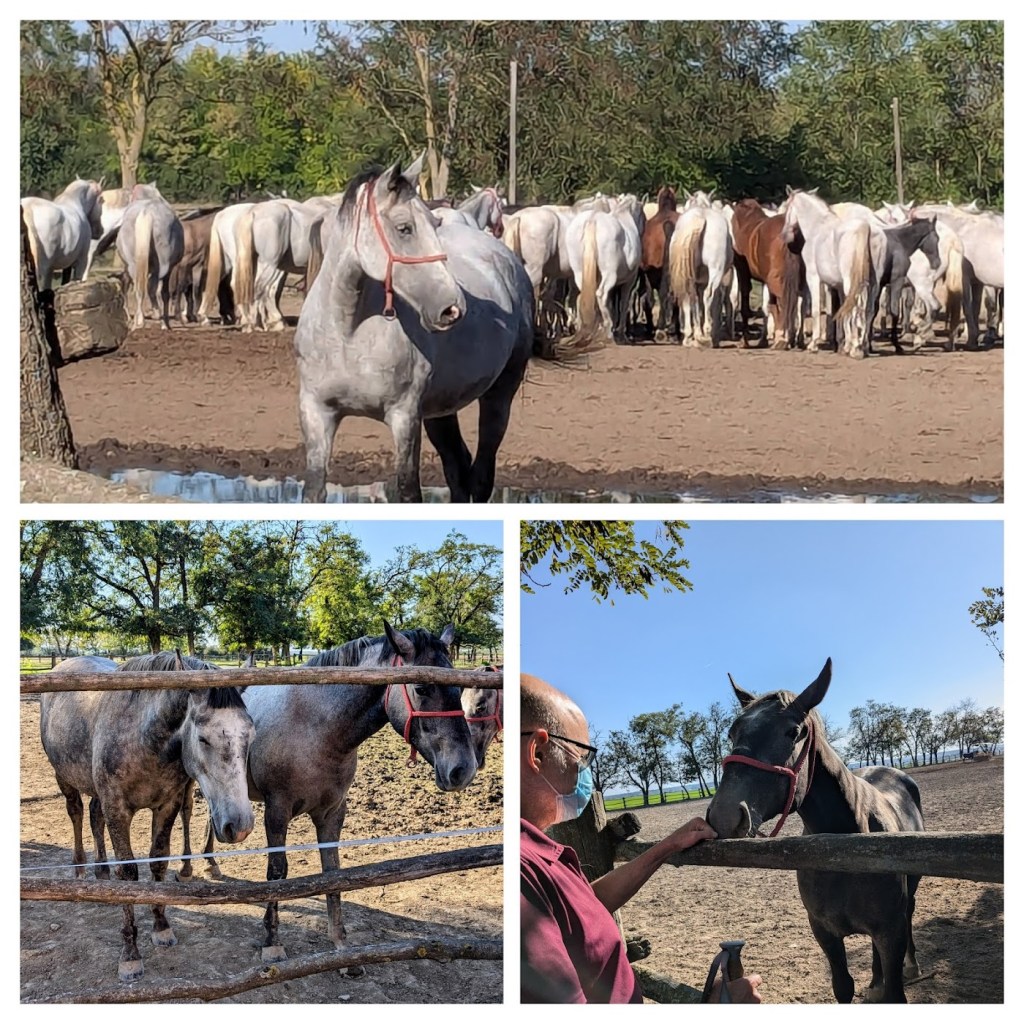
I know, it’s a rotten job, but somebody has to do it.
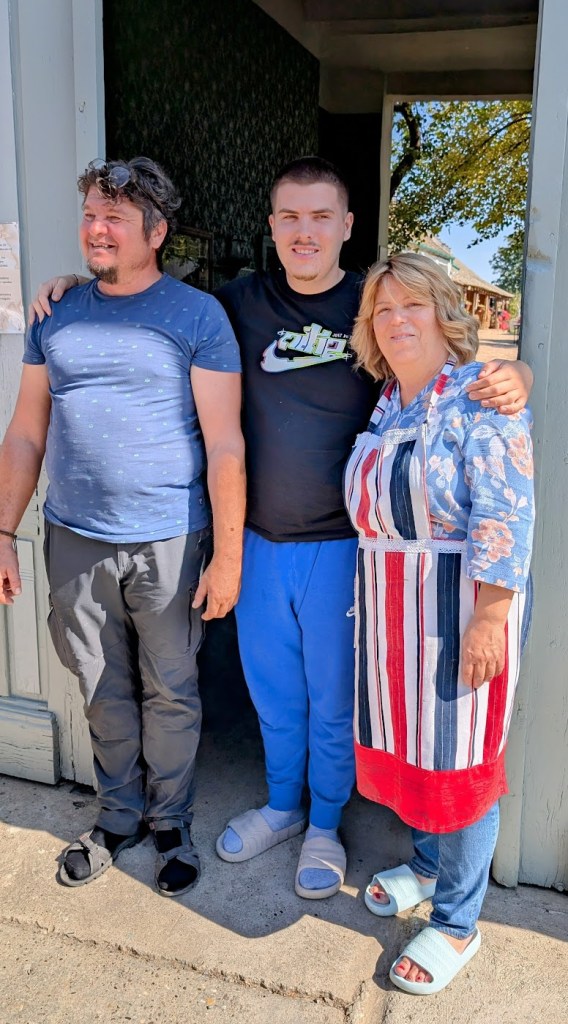
Entering the Croatian area called Slavonia (the “breadbasket of Croatia”), we arrived at the village of Karanac (Ka-RA-nats). There we were hosted by the Sklepić family (Denis, his wife Goca [GO-tsa], and son Stephen), who greeted us with glasses of rakija (local brandy, sort of like grappa).
The experience included cheese-making (see nice heart pattern created by paprika), to be served the next morning with breakfast.
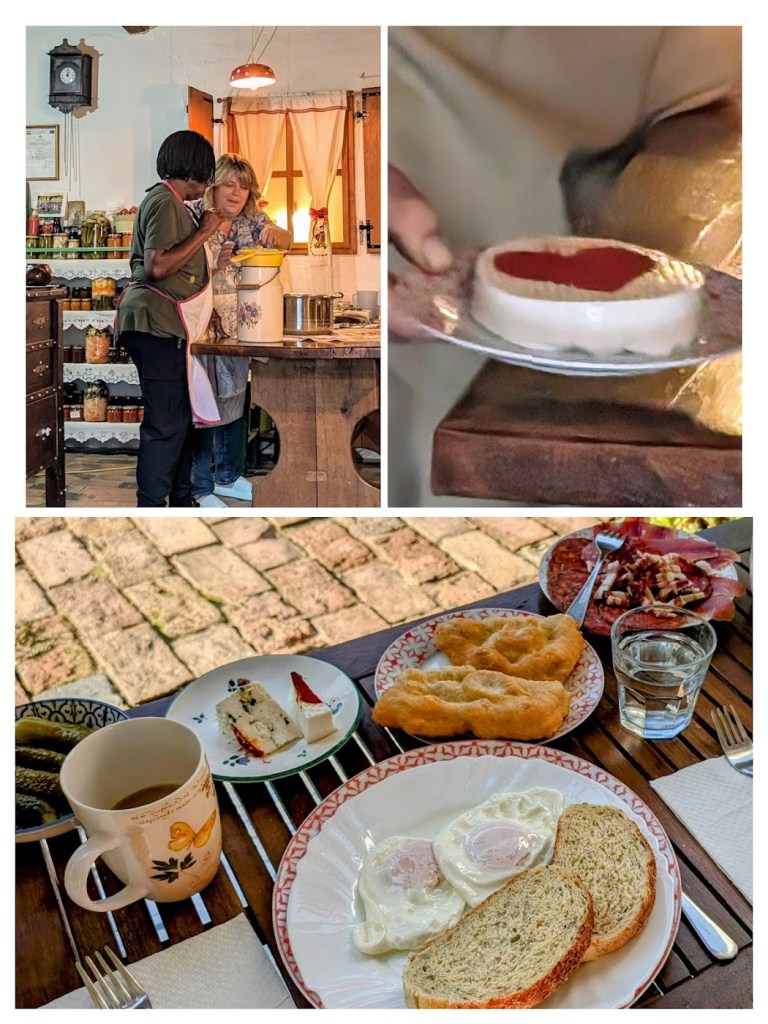
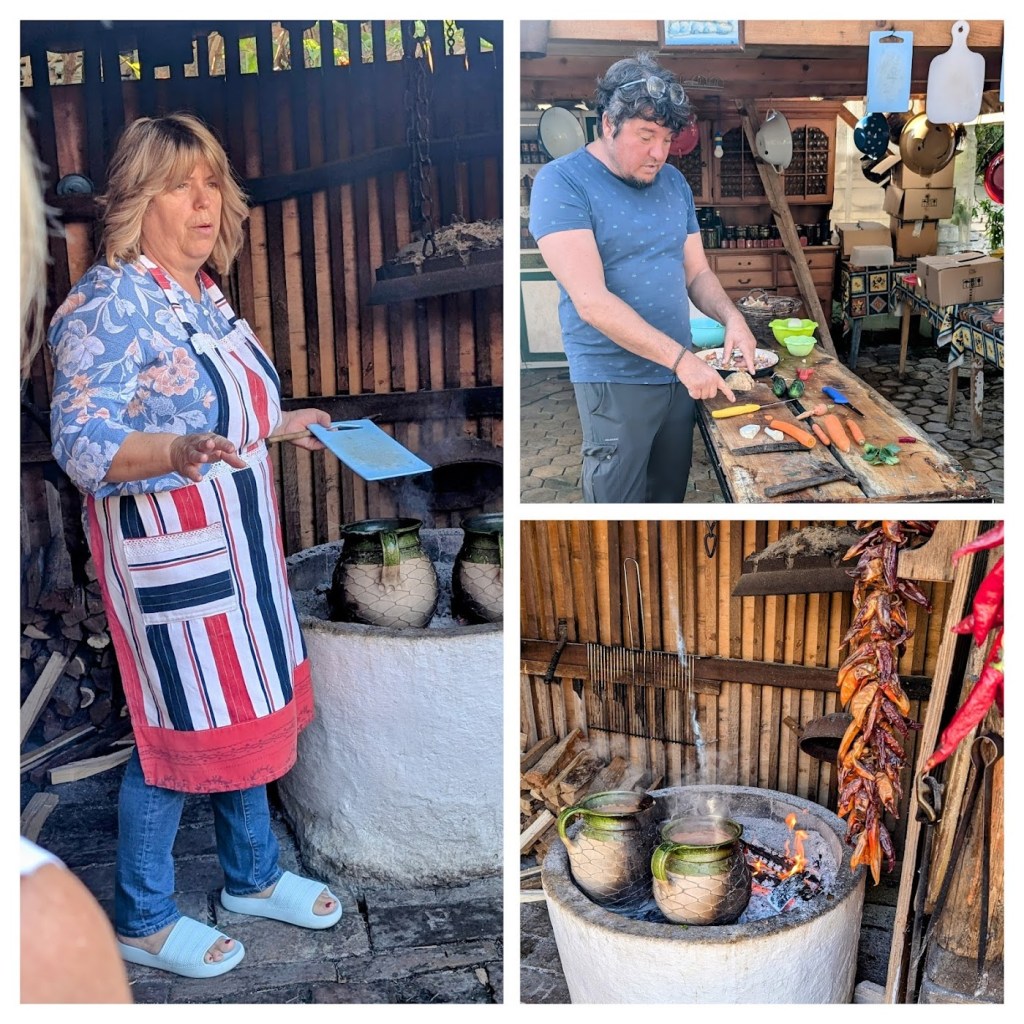
The next day, we observed the preparation of delicious goulash for our lunch.
We also learned the traditional Croatian art of stenciling. The art was intended to beautify walls and hide imperfections (before wallpaper was invented). The process was demonstrated by Goca (a master of the craft), assisted by Stephen:

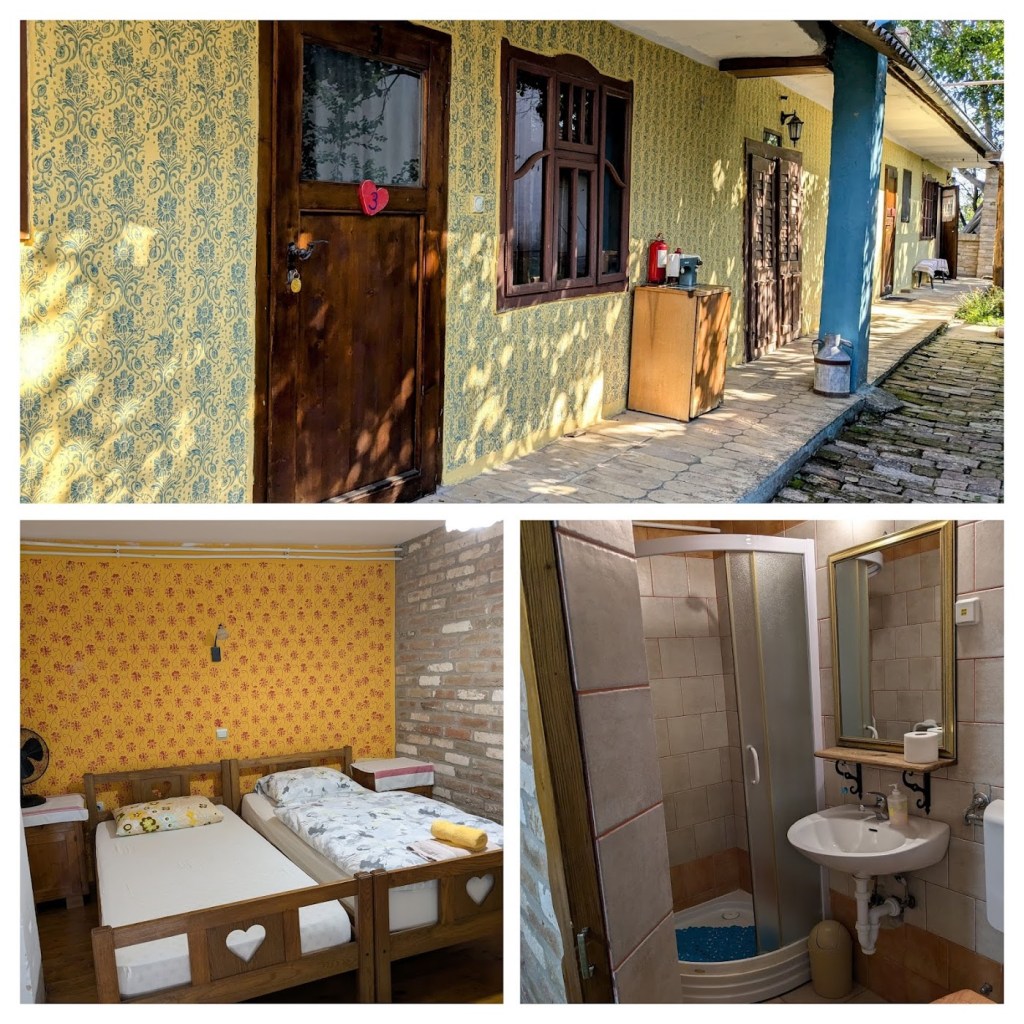
We stayed in country-style guest rooms on the farmstead, rooms and walls decorated with the above-referenced stenciling:
A fond farewell to the Sklepić family, with thanks for introducing us to farm life in Croatia.
Then off to Zagreb, the bustling, urban capital city of Croatia!


 Something to Declare
Leave a reply to ssingerphd Cancel reply