
September 28, 2024. Postojna, Arriving in Ljubljana.
This morning, we left Opatija (Croatia) and crossed into Slovenia, the last country on our Balkan itinerary. Only one item on the menu today, a world-famous cavern. A lot of southwest Slovenia consists of the Karst Plateau (Slovenija Kras). This is a geologic region where limestone predominates, and where the topography is characterized by underground rivers, gorges and caves.
In Karst landscapes, rainwater and flowing water from rivers pick up carbon dioxide from the air. As the water percolates through the soil, it turns into a weak acid. This slowly dissolves out the limestone, creating fractures, some of which become large enough to form caves. One of the most prominent of these cave formations is in Postojna (po-STOY-na).
Postojna cave (Postojnska jama) was carved by the Pivka River over millions of years. There are stalactites (formed from limestone-suffused water dripping down from the “ceiling,” stalagmites (formed on the floors of the caverns by the dripping from above, and formations called “curtains” or “draperies” (that look like folded curtains). The cavern system is 15+ miles long and is made up of four caves interconnected by the same underground river.
At the entrance to the cave, visitors board an open-air, rather speedy train that goes for 2 miles, and then they continue on foot for an hour-long walk. Temperature inside the cave is a cool 50 degrees at all times. The cave is so huge that it boasts its own underground post office station, and is the site of concert performances that can accommodate up to 10,000 people.

I took the train but didn’t trust my footing for the walking part. The following photos were taken by the more intrepid Stef:
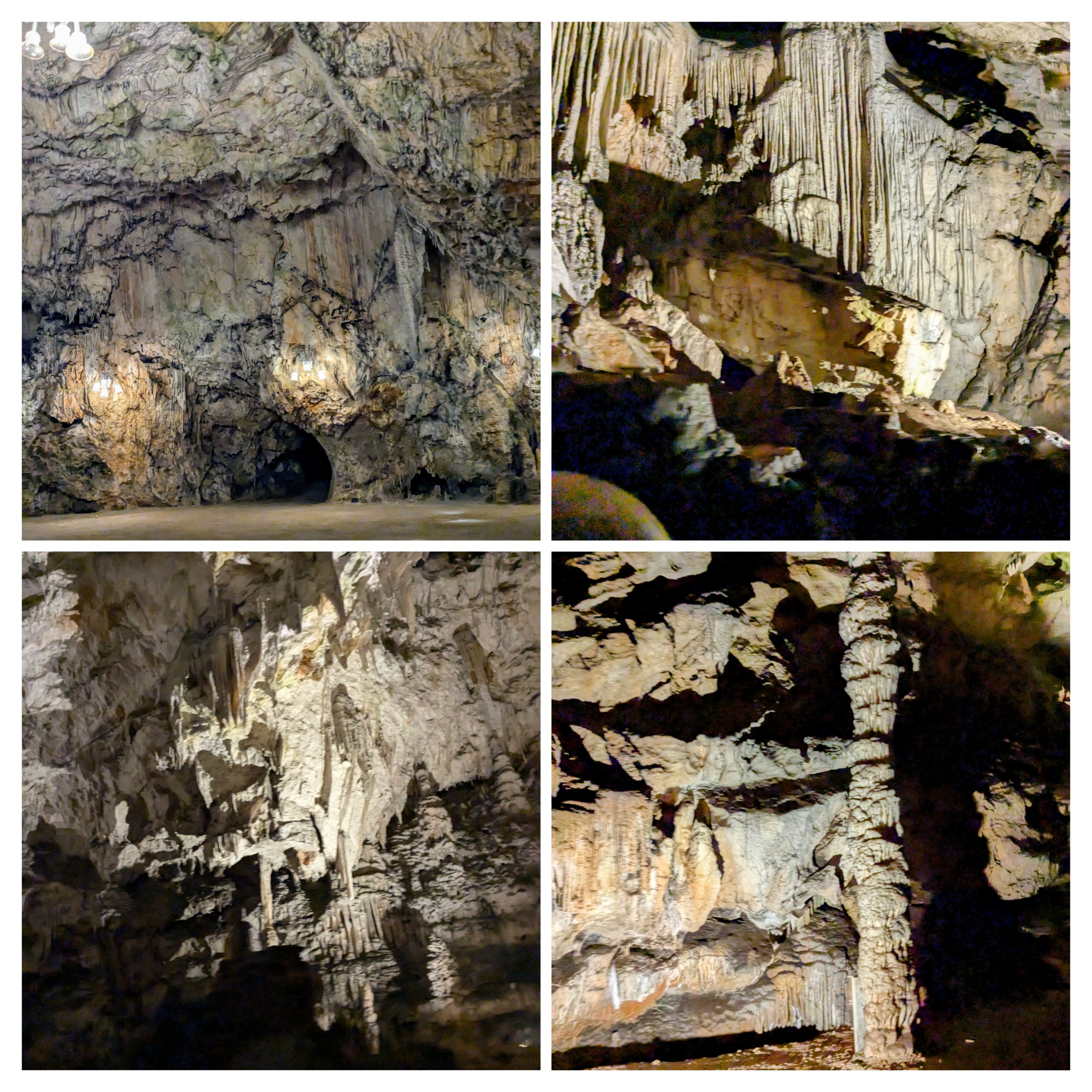
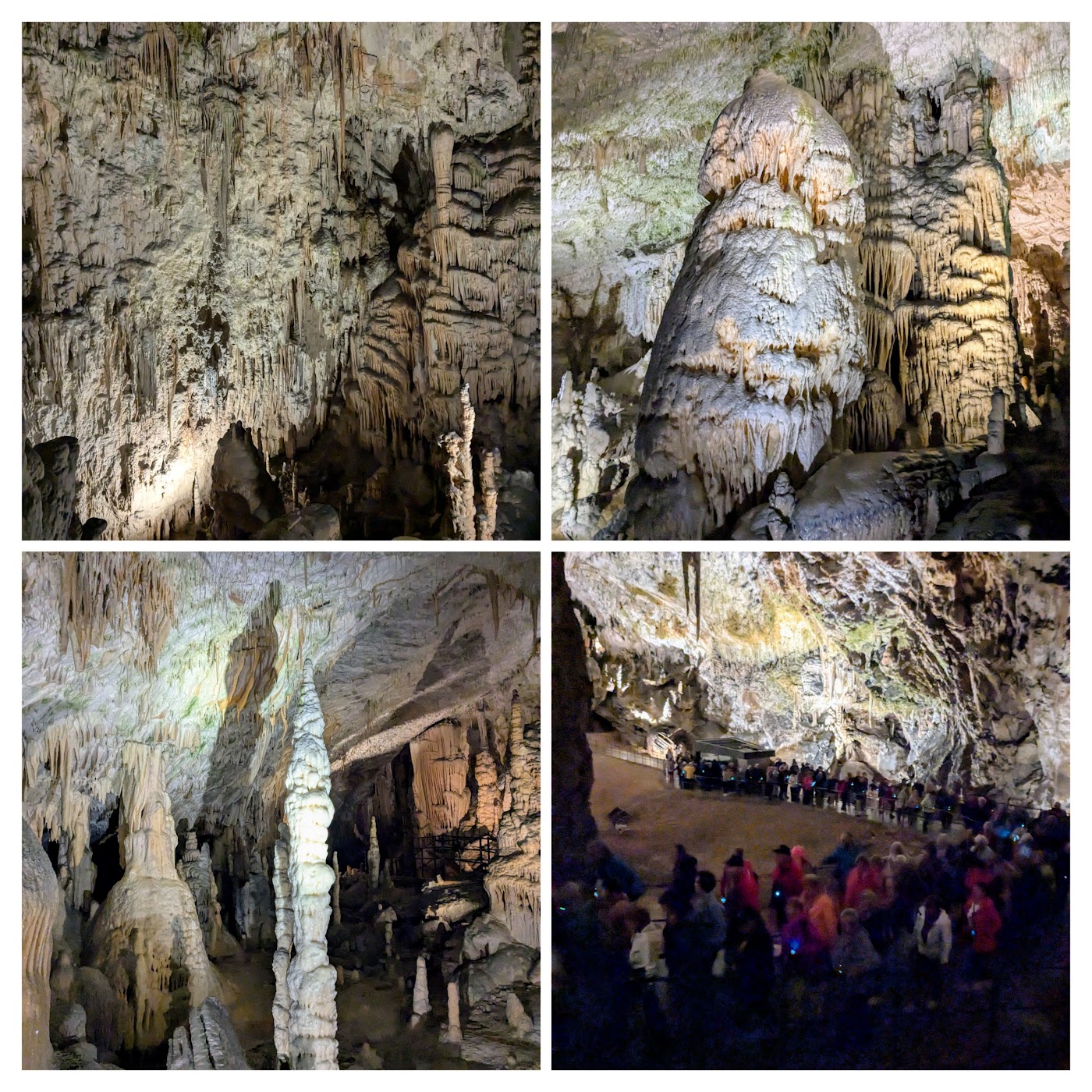
Pretty impressive, no? After lunch at Postojna, we continued to Ljubljana (lyoob-lee-ANA), the capital of Slovenia.
Slovenia is seen as the political and economic success story of the Balkans. To be sure, the country was a part of former communist Yugoslavia. But, unlike Bosnia & Herzegovina and Croatia, it didn’t suffer as much during the Balkan Wars of the 1990s. It also benefited from strategic location (closeness to western Europe), diverse economy, commitment to innovation, strong education system, skilled workforce, stable political environment, and pro-business policies. More like Belgium than Albania.
Tomorrow (Sunday), we go to the resort area of Lake Bled, which features a 17th century church on an island in the middle of the lake, and an 800-year-old castle clinging to a rocky cliff, all set against the scenic Julian Alps. Cameras are ready!

 Something to Declare
Leave a reply to Sharon Wieland Cancel reply