
The Musical Instrument Museum
Tuesday, October 22, 2025
Tuesday was somewhat problematic. We ran into some technical problems (washing machine, computer) that absorbed most of the morning. But all got fixed.
In the afternoon, we visited the Musée des Instruments de Musique, or Muziekinstrumentenmuseum, or MIM. It’s in the Upper Town, near the Royal Palace. Stef and I had been to the terrific Musical Instrument Museum in Phoenix, AZ so we wanted to check out what Brussels has to offer.
The Brussels MIM is housed in a beautifully-renovated Art Nouveau building that used to be the Old England Department Store, which opened in 1899. I can imagine that, in its day, it was a Belle Epoque masterpiece:
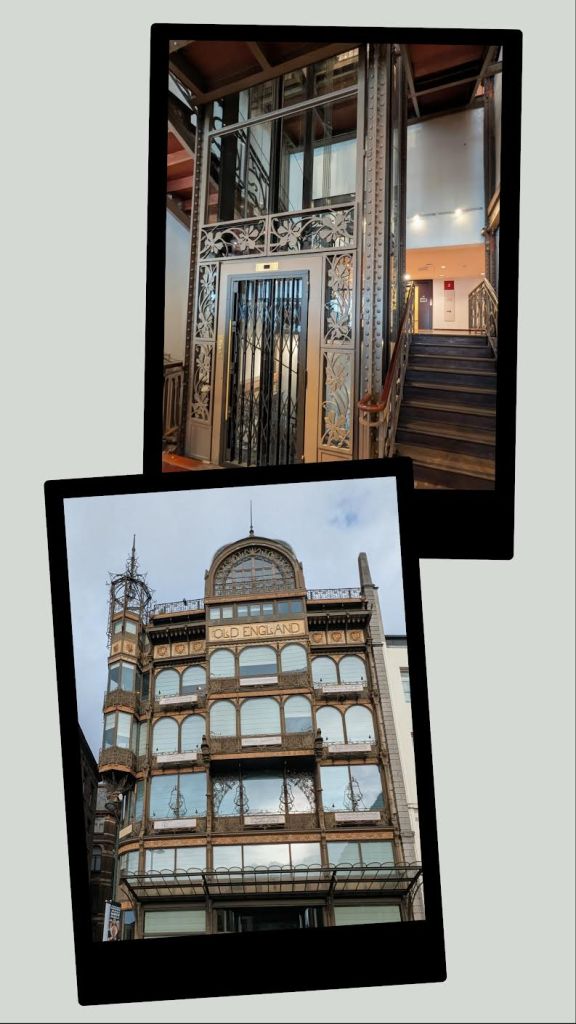
The museum houses about 1,500 instruments, going back to before the Middle Ages. Each visitor is given a headset, to hear what the instruments sounded like.
Our first stop was the third floor, which was dedicated to keyboard instruments. The earliest were the pipe organs, followed by the virginals, clavichords, and harpsichords (which used keys to pluck strings, like a harp).

In 1698, Bartolomeo Cristofori, a Florentine harpsichord maker, had the idea of making a harpsichord in which the strings were not plucked, but instead were struck by hammers. This allowed some greater control over the volume of sound, from soft (piano) to loud (forte), giving rise to the fortepiano, or pianoforte.

Ludwig van Beethoven had tried to come up with a name for the new instrument: “Schwachstarktastenkasten,” an unpronounceable amalgam of “soft,” “loud,” “keys” and “case.” Nice try……..How about “piano?”
In addition, there were many other instruments that created sounds by pressing pedals rather than keys, or pushing and pulling rods or buttons (below, top and lower right).

And, of course, there is the good old pianola, or player piano, in which rolls or perforated paper cause the keys to be pressed without human intervention (above, center). And the bandoneon (a variation on the accordion, associated with Argentine tango) (above, lower left).
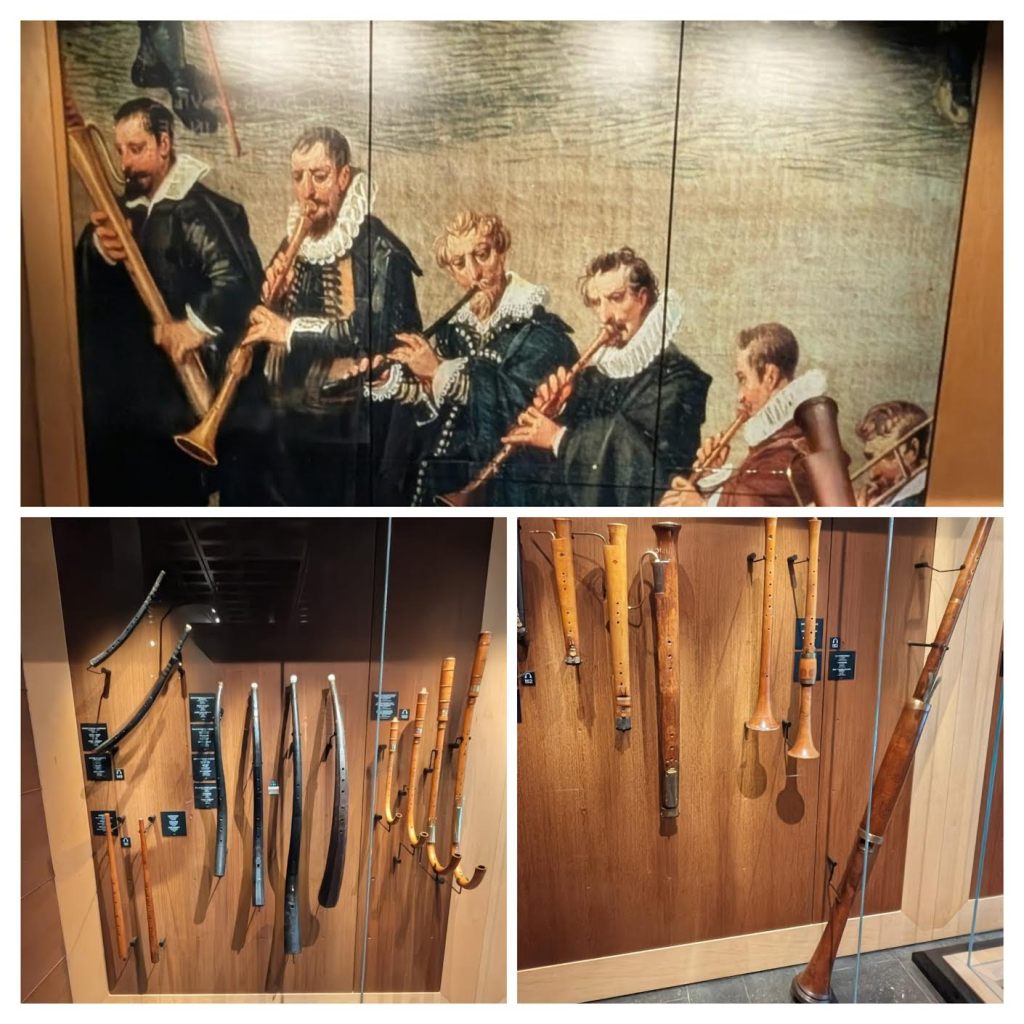
One floor down were ancient and modern wind instruments (krummhorns, hautboys, shawms) which gave rise to oboes, trombones, etc.
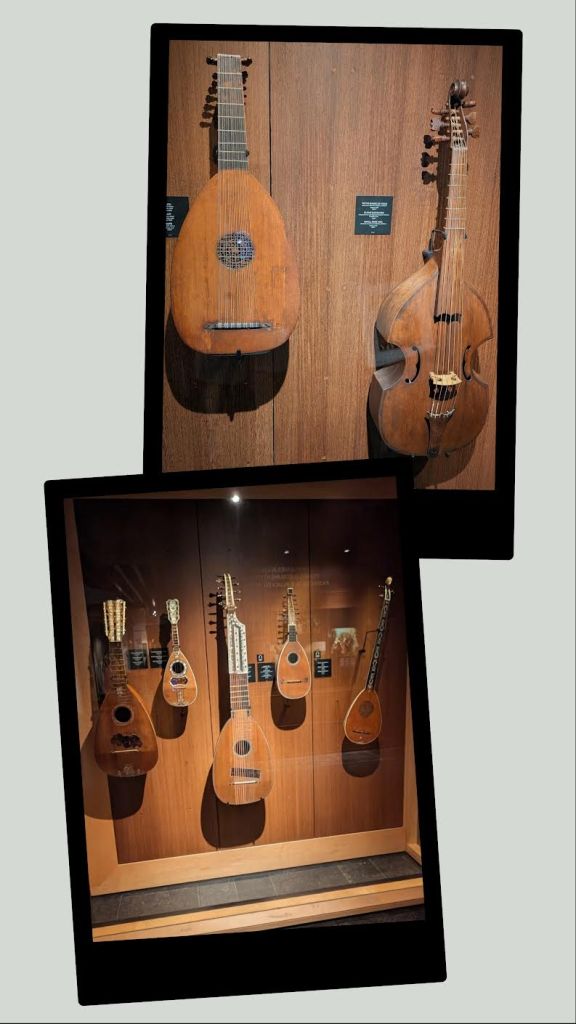
And the string instruments, e.g., the early lute, dulcimer, and viola da gamba.
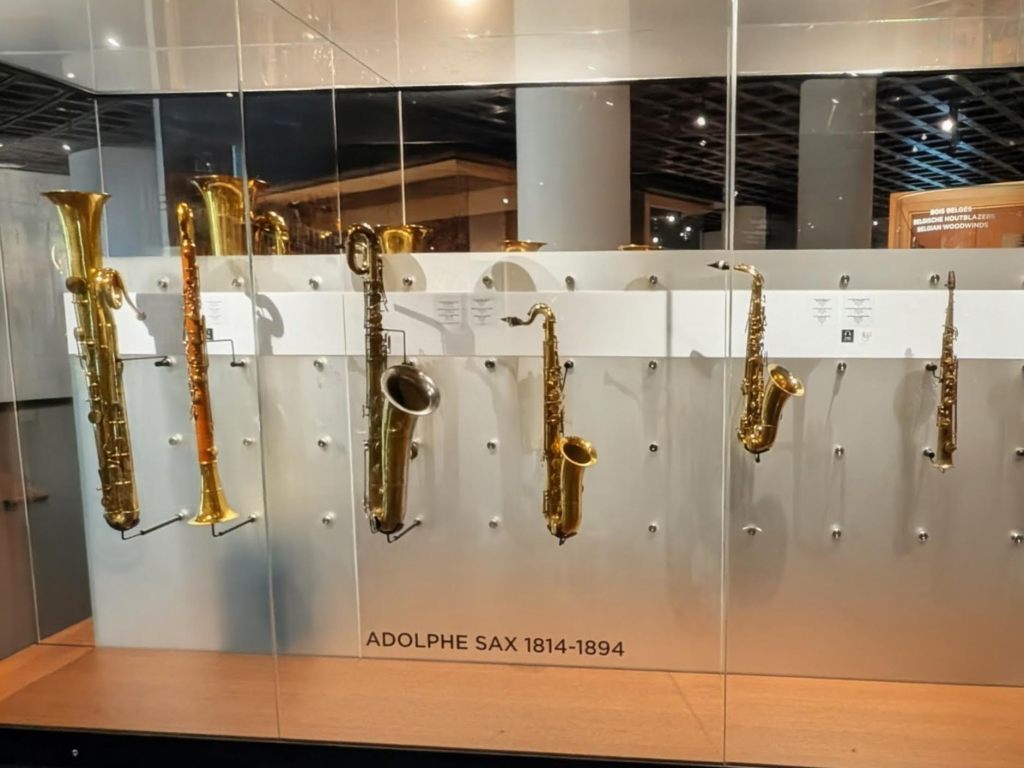
And our last stop at the MIM: the saxophone, invented by Belgium’s own Adolphe Sax.
So many instruments, so many types of sounds! Another harmonious, euphonious day in Brussels.

 Something to Declare
Leave a reply to Linda M Zolinsky Cancel reply