
Stef and Stan in Sarasota, continued…
Friday, February 13, 2026
On Monday (February 9), Stef and I visited Mote Marine Laboratory and Aquarium.
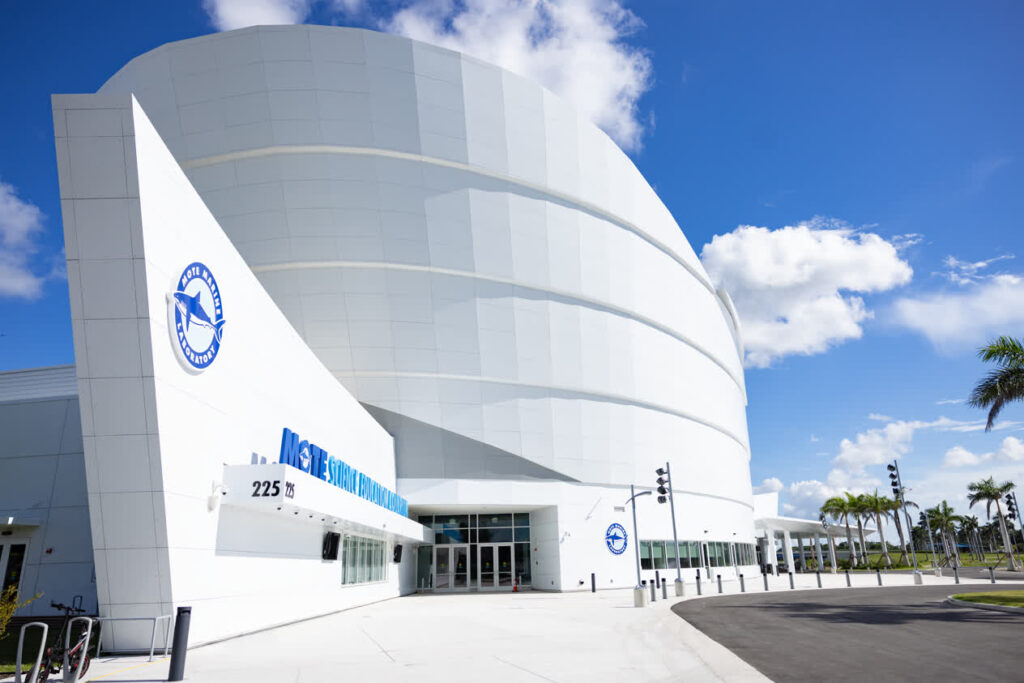
“Mote” isn’t an acronym; it commemorates its major benefactor, William R. Mote and his family. (Stef approves of this fundraising reference.)
Mote was established in Sarasota in 1955. On a previous stay in Sarasota, Stef and I had visited it in its old home, which was fairly modest.
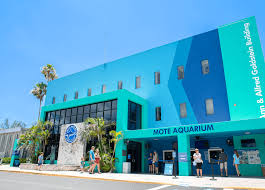
They opened in a new and expanded site just this past October.
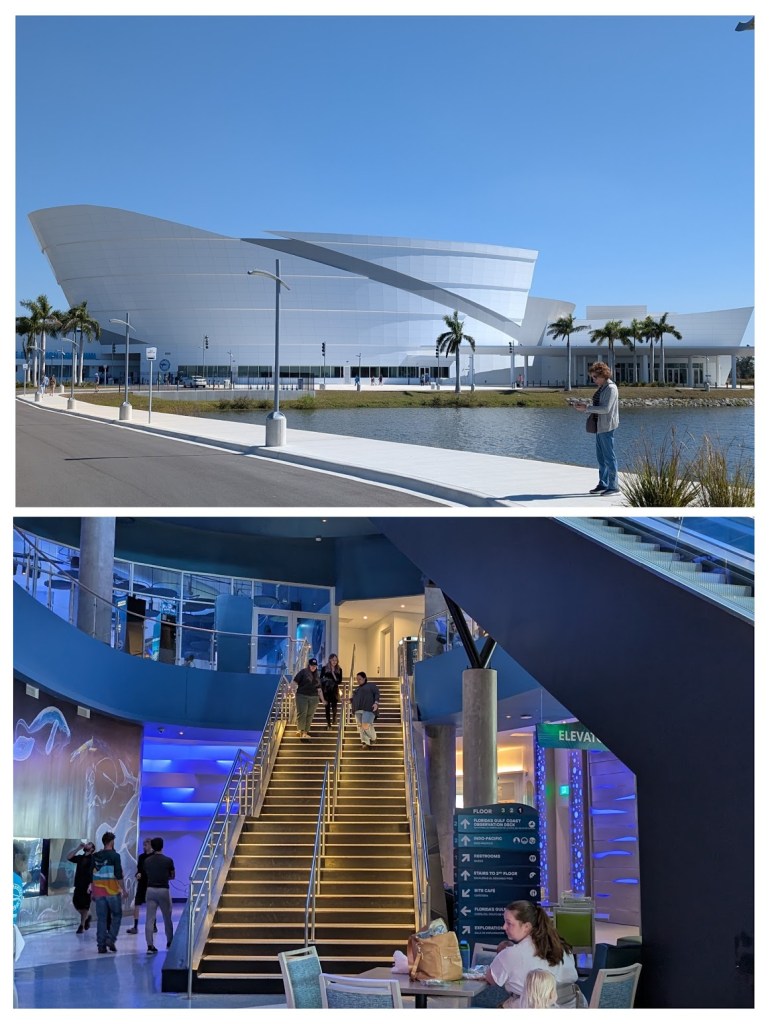
Mote is a non-profit marine research institution, showcasing marine science, conservation, education and technology. It features animals like sharks, sea turtles and manatees. Speaking of manatees……
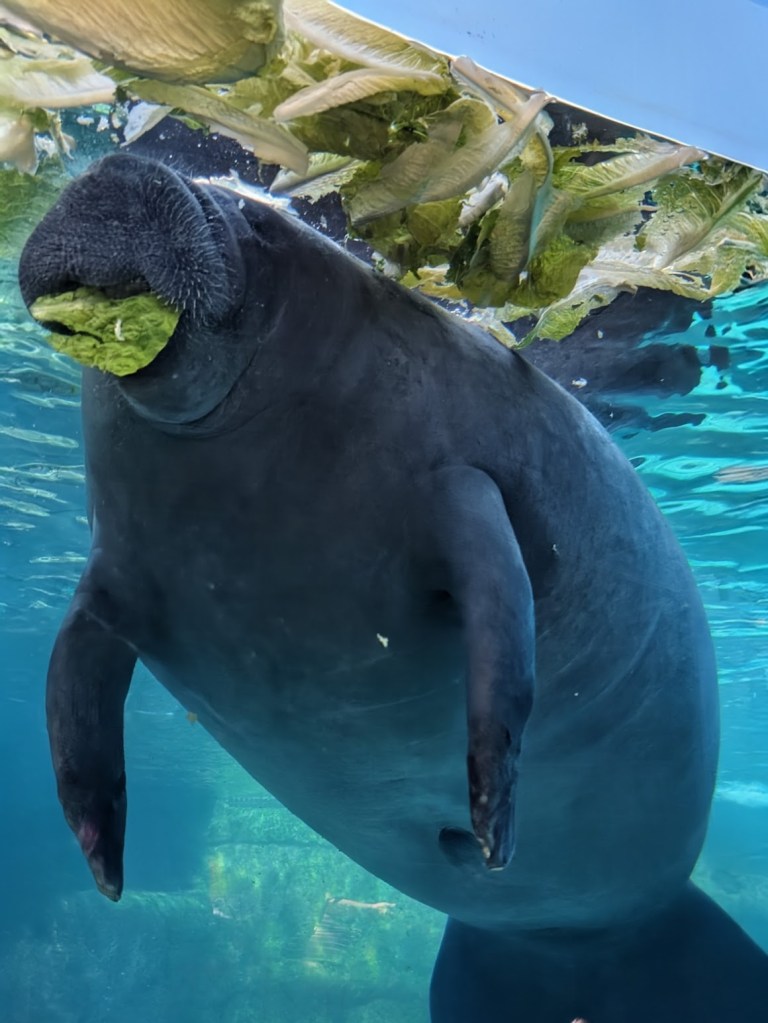
Manatees are large (adults weigh about 1000 pounds), gentle, herbivorous marine mammals, known for their graceful movements and paddle-like tails. Genetically they are related most closely to elephants (who’d have guessed?). An adult manatee (like the one shown above, chowing down on lettuce) eats up to 100 pounds of food per day. FYI, they prefer butter lettuce and romaine (up to 400 servings of caesar salad!).
Mote provides rehab services for sick or injured manatees, dolphins, turtles, even whales. This is from the website in January:
“Mote Marine Laboratory & Aquarium is proud to announce the arrival of its first two manatee rehabilitation patients, Sleet and Cabbage, marking a major milestone in manatee conservation. This transfer signifies the launch of Mote’s role as a secondary care holding facility for manatee rehabilitation under the direction of the U.S. Fish and Wildlife Service (USFWS) and the Florida Fish and Wildlife Conservation Commission (FWC).
“Sleet was rescued by members of USFWS, FWC, Clearwater Marine Aquarium, University of Florida, and ZooTampa on January 8, 2025 from Three Sisters Spring in Crystal River with signs of cold stress. Upon arrival at ZooTampa, Sleet received supportive care including gradual thermal therapy, fluids, and nutritional support to stabilize his condition. After 110 days of recovery, Sleet was deemed stable and transferred to Mote to continue rehabilitation.”
Many of the displays relate to local reef environments:
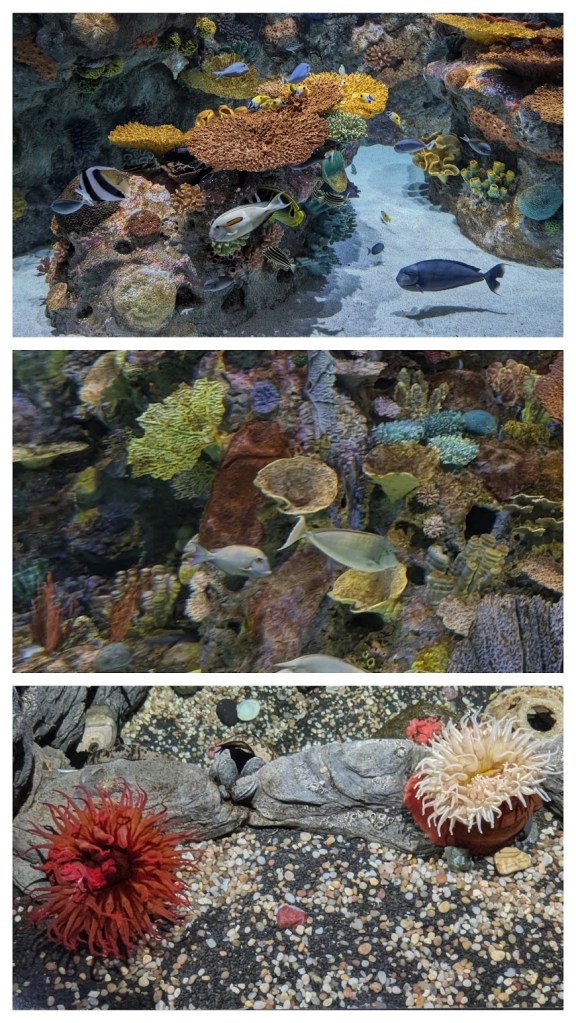
The sea anemones (above, bottom) are displayed in a tank that allows visitors to reach in and touch them. I tried it; they were soft and squishy-feeling. We also got more up-close and personal with some of the residents:
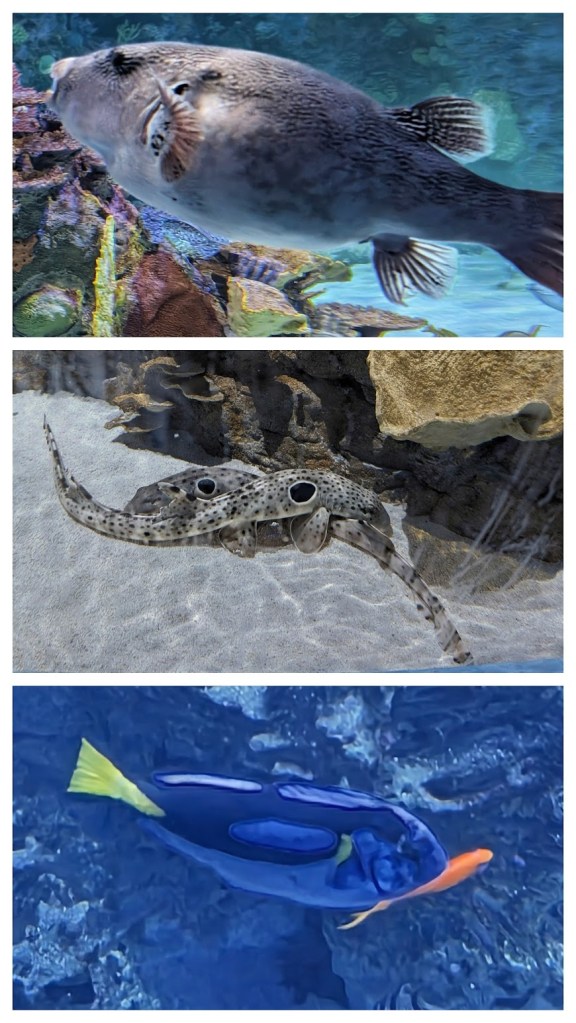
The ones above (middle) chilling out together, are “epaulette sharks,” referring to the pairs of dark circles.
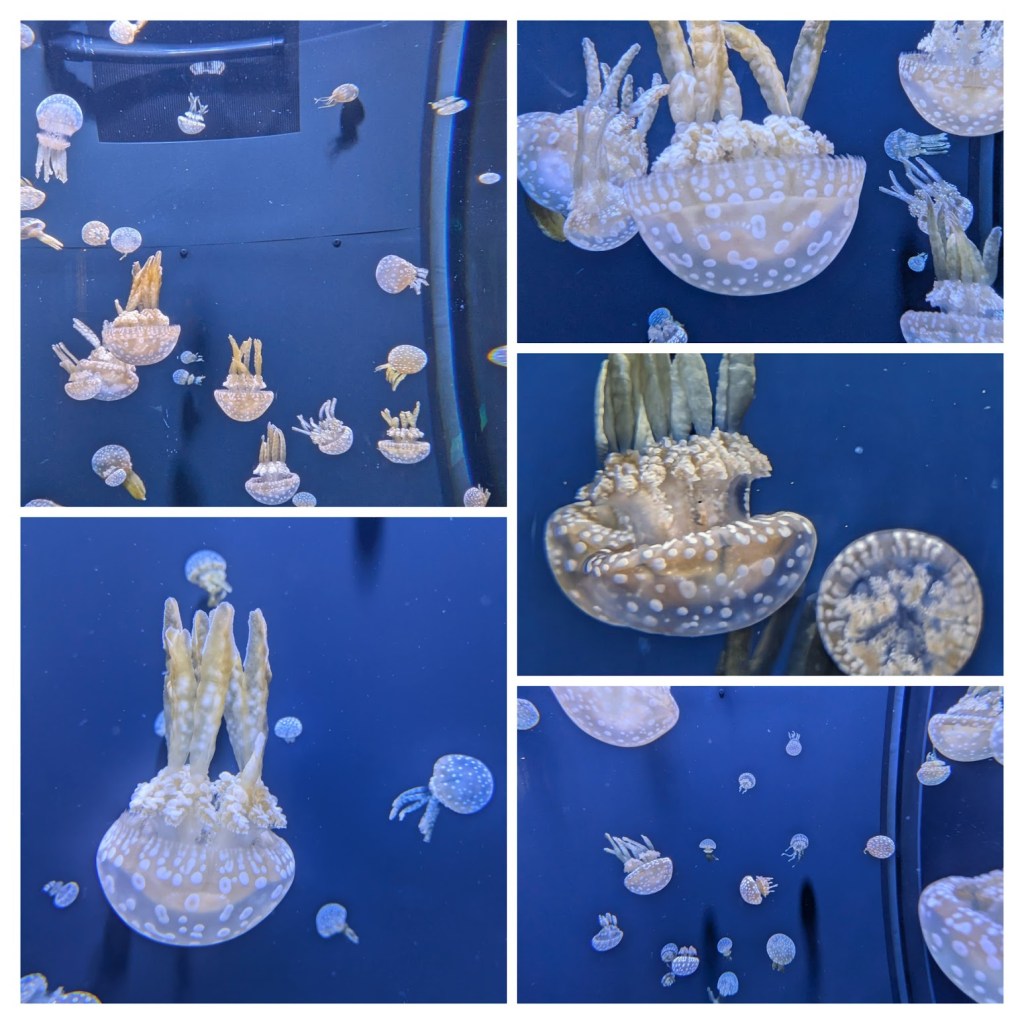
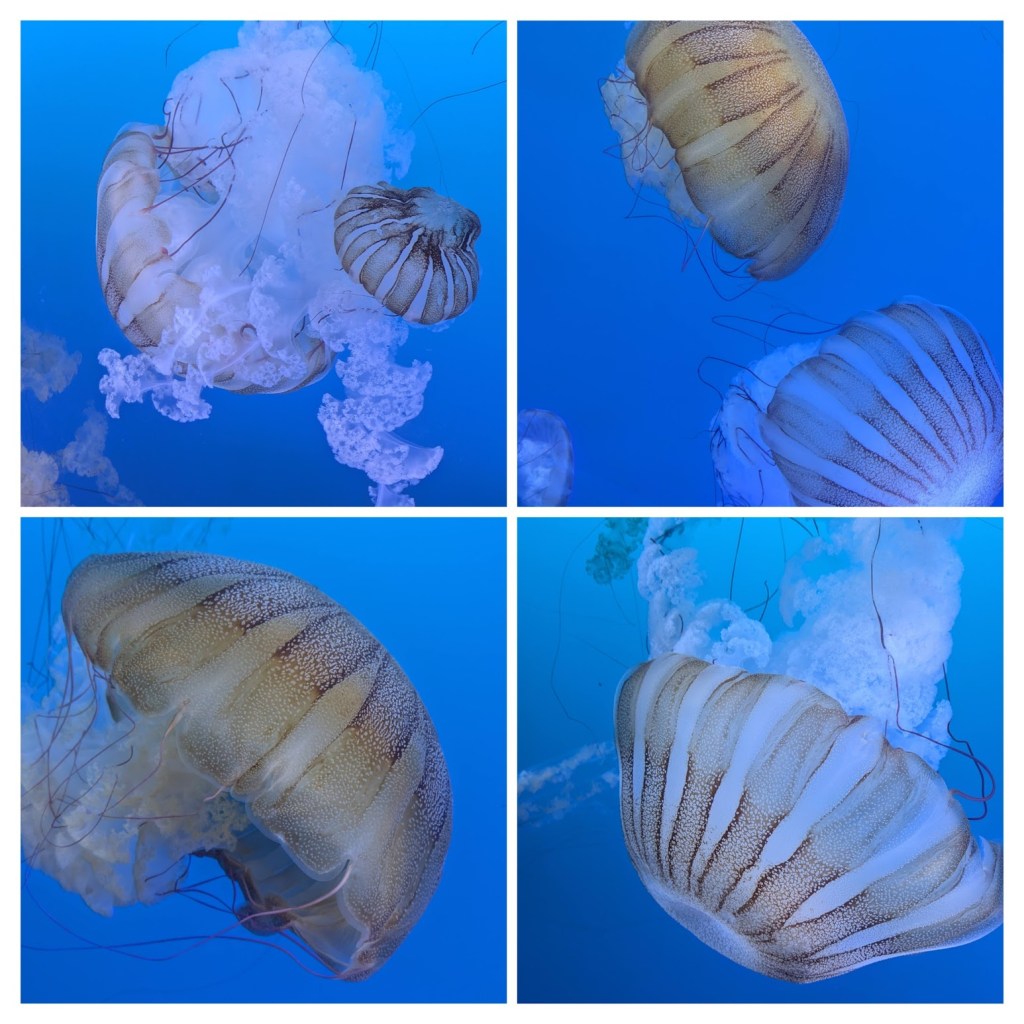
I am always a sucker (no pun intended) for jellyfish, and Mote did not disappoint. There were smaller ones….
…and bigger ones.
Another form of semi-aquatic life are the staff, who are responsible for maintaining the cleanliness and ecological soundness of the enclosed marine environments:
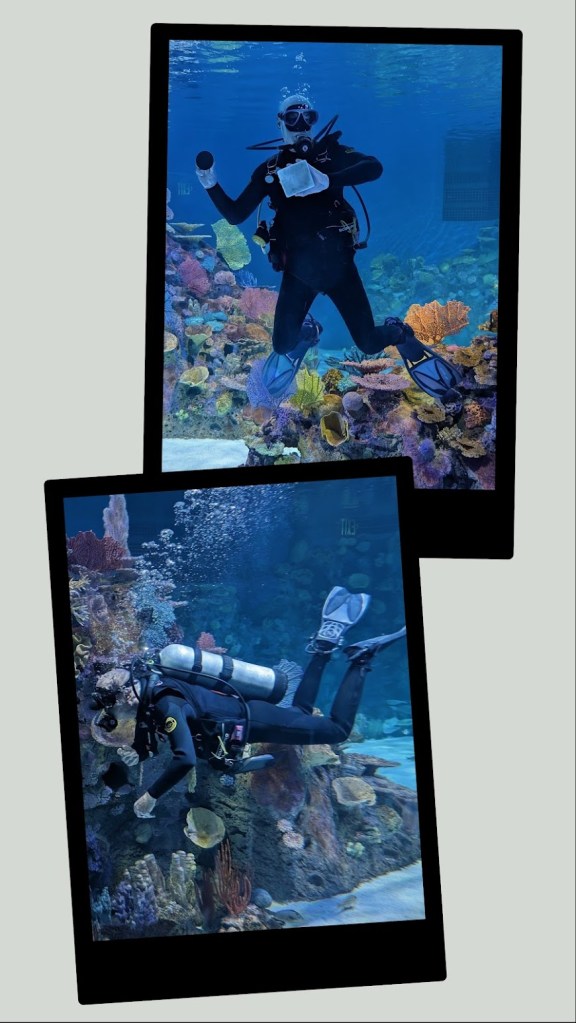
Staff members are also tasked with feeding the resident wildlife, including the penguins:
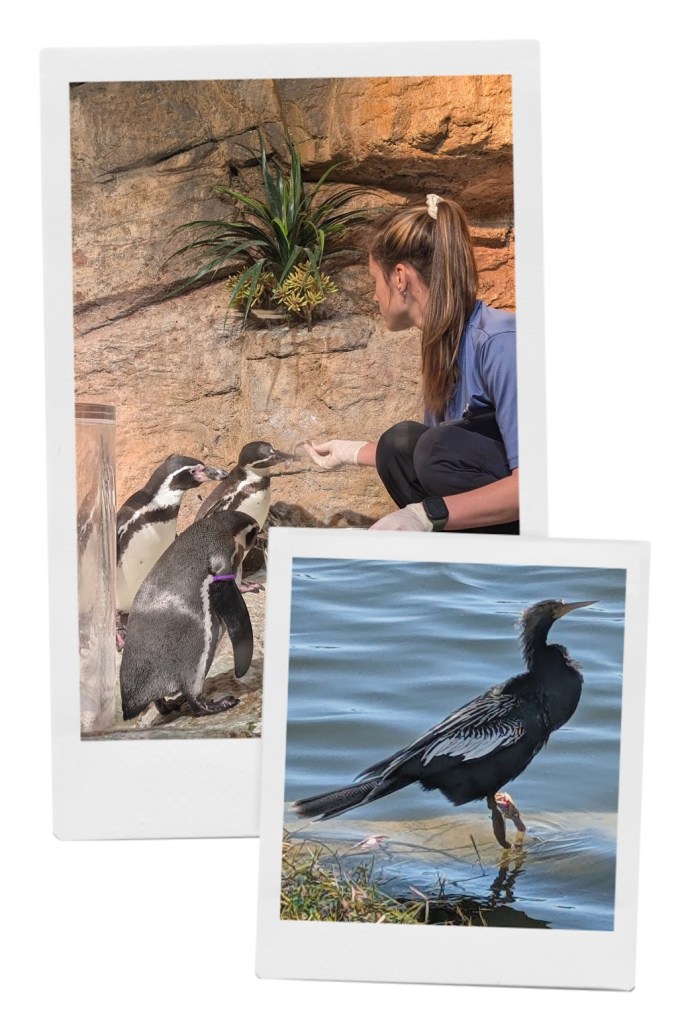
Their responsibilities do not include care of the cormorants, pelicans, snowy egrets and blue herons who reside outside Mote (like the one shown above, at the bottom).
We returned to our condo to have a dinner of….salmon (none seen at Mote).

 Something to Declare
Leave a reply to Sharon Wieland Cancel reply