
Kanazawa, May 11, 2026
Yesterday, I referenced the tradition of the staff of department stores bowing to customers at opening time. We were told not to take photos, but it didn’t occur to me that pictures are available on the internet. So here we go:
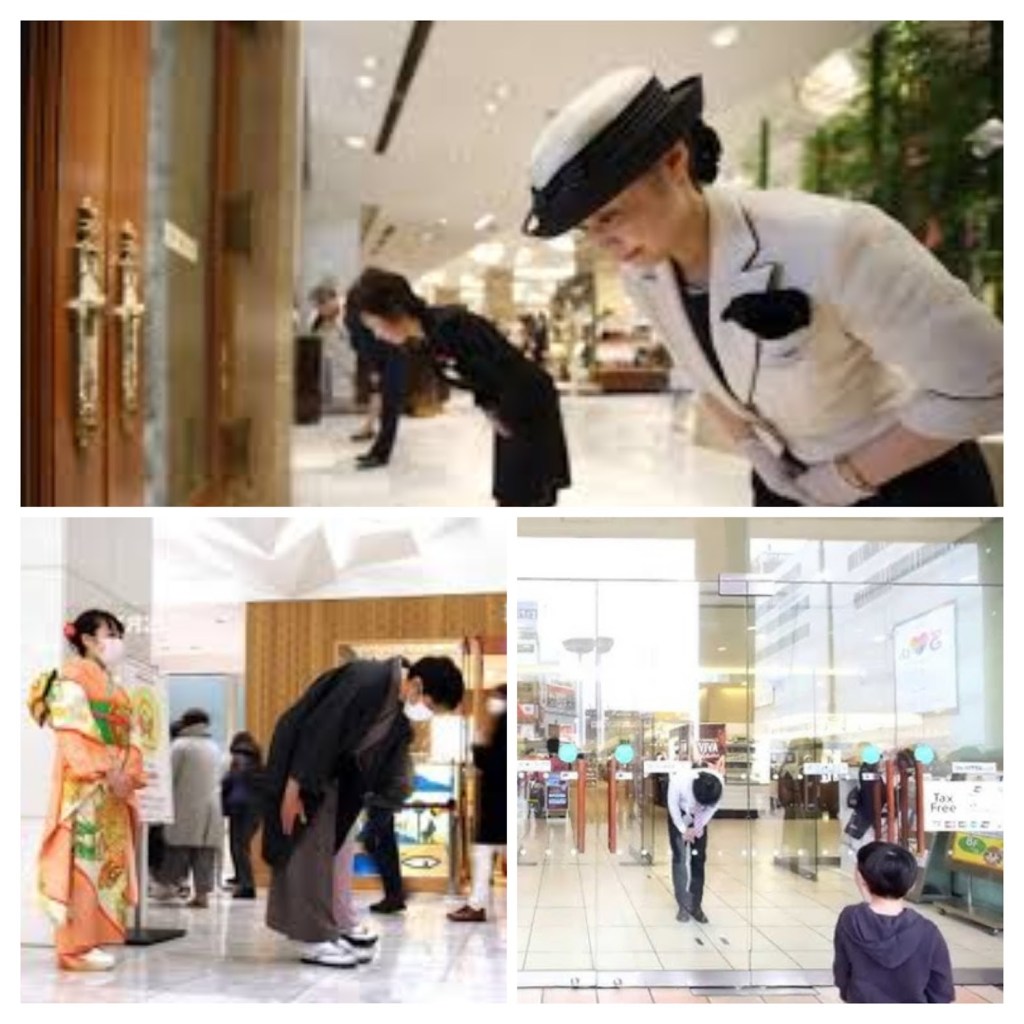
Andy pointed out that the word I had used for the practice, ojogi, means “bowing rituals” in general, not specifically what we experienced. Sometimes that’s called chorei (“morning bow”). Thanks, Andy, for the clarification.
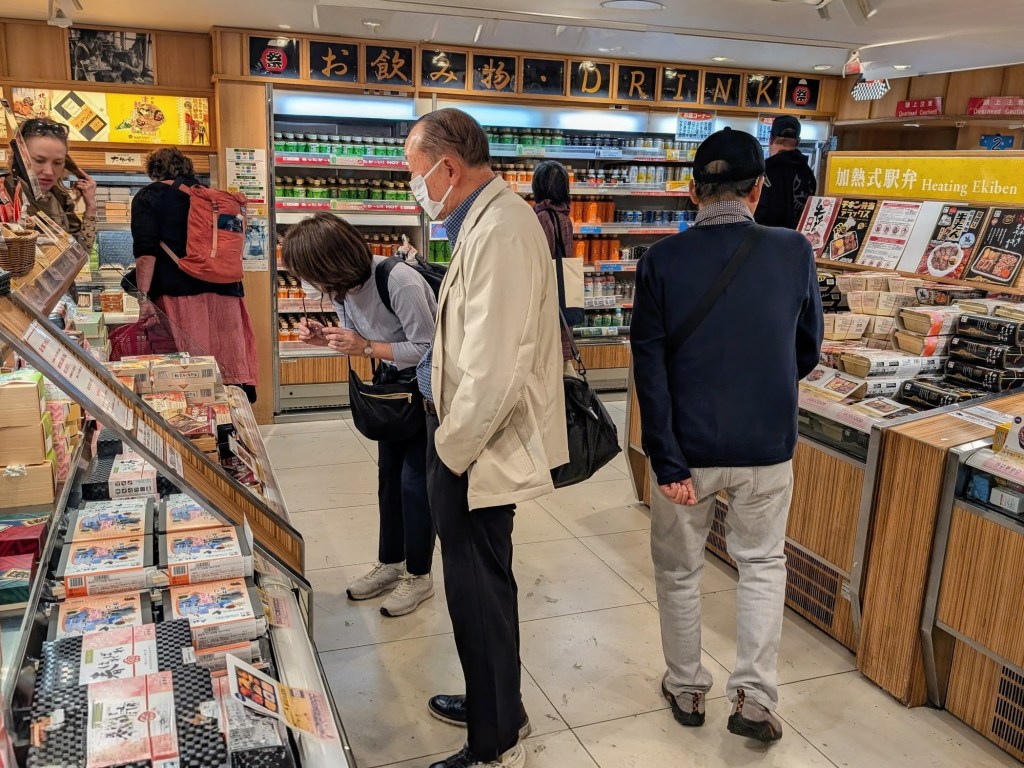
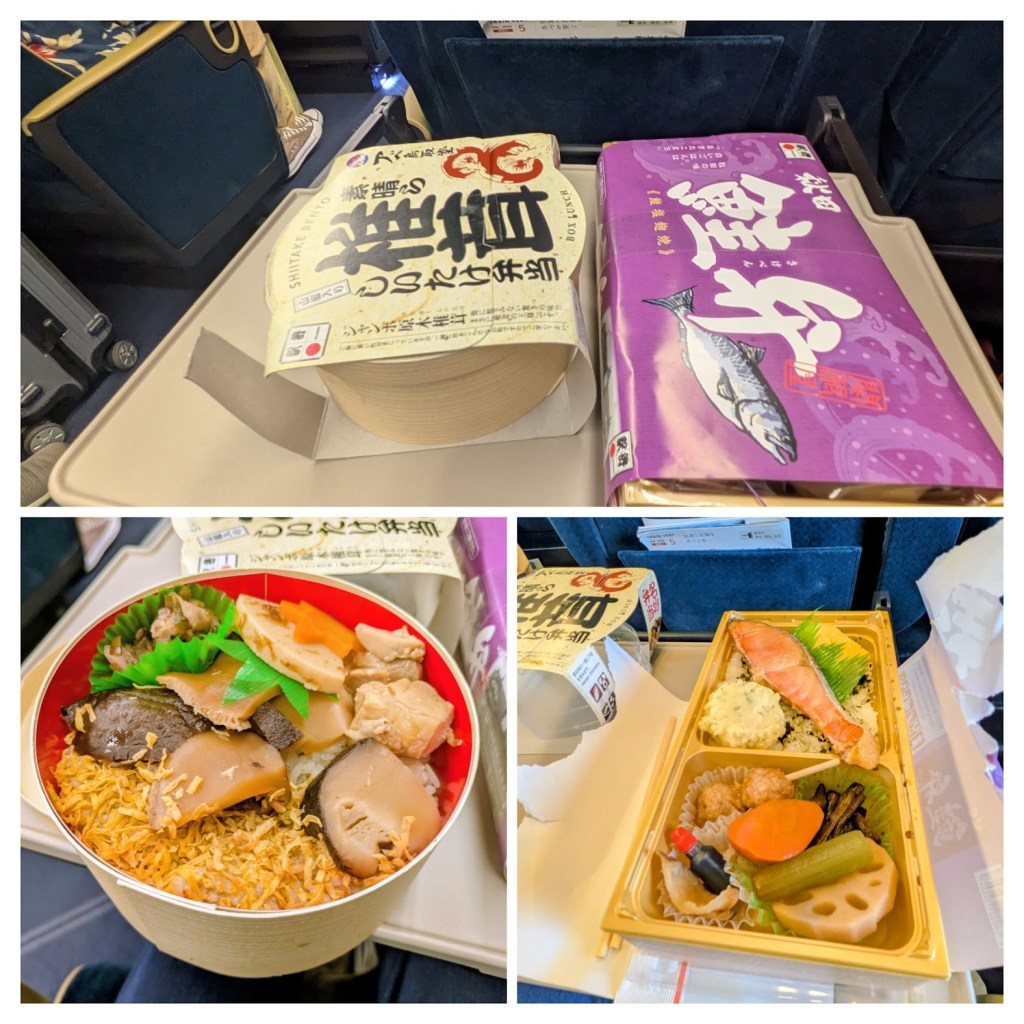
Okay back to “work”. On Tuesday, May 13, we checked out of Hotel Marunouchi and walked to the train station, where we selected bento boxes for lunch on the train to Kanazawa. There were lots of varieties from which to choose!
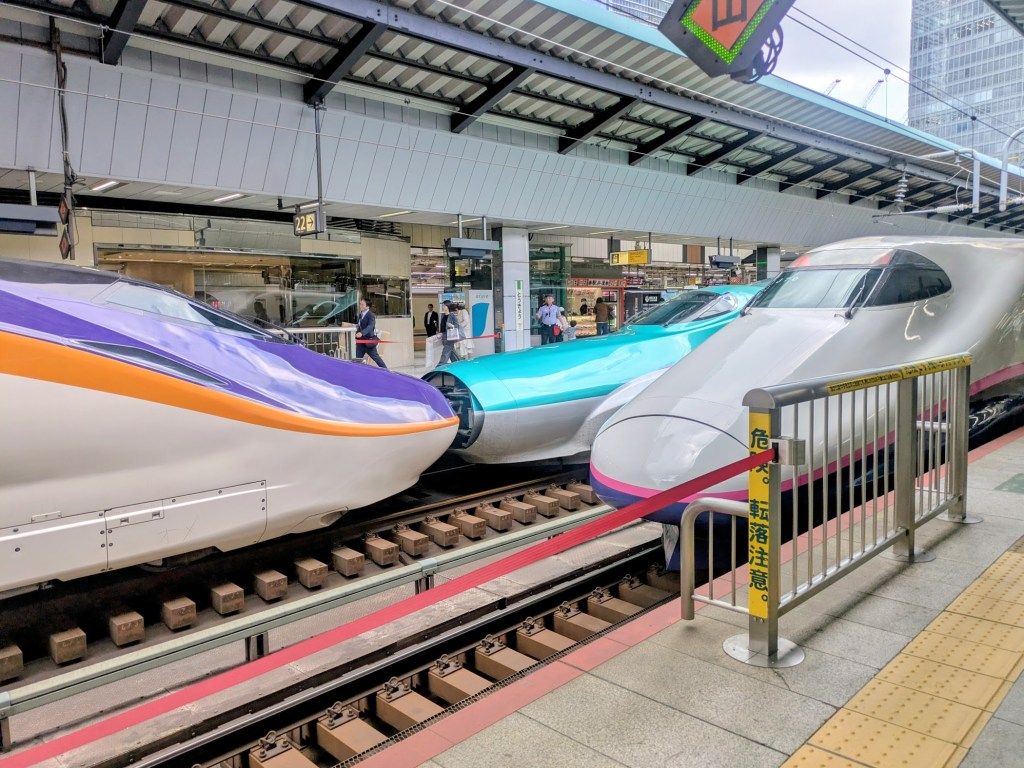
Stef got this shot of the front cars of shinkansen (bullet train); we think they resemble cute, colorful space shuttles.
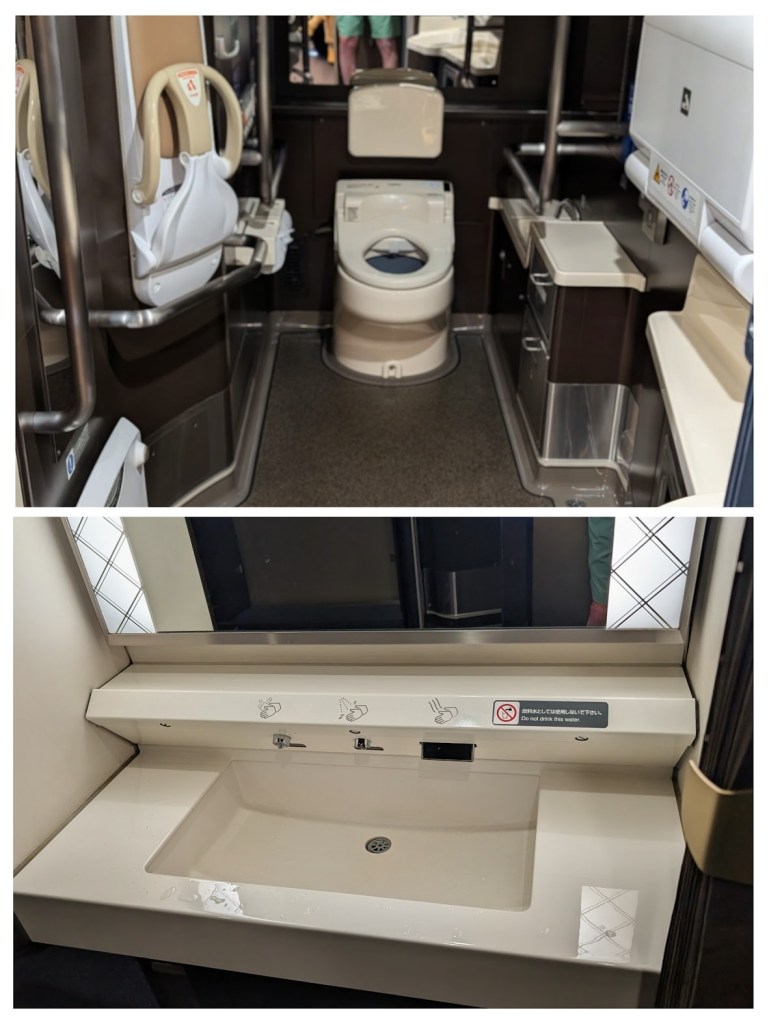
The trains themselves were a wonder, with bathrooms that were…..uh…..something of a cut above those we have on Amtrak.
And the bento boxes did not disappoint.
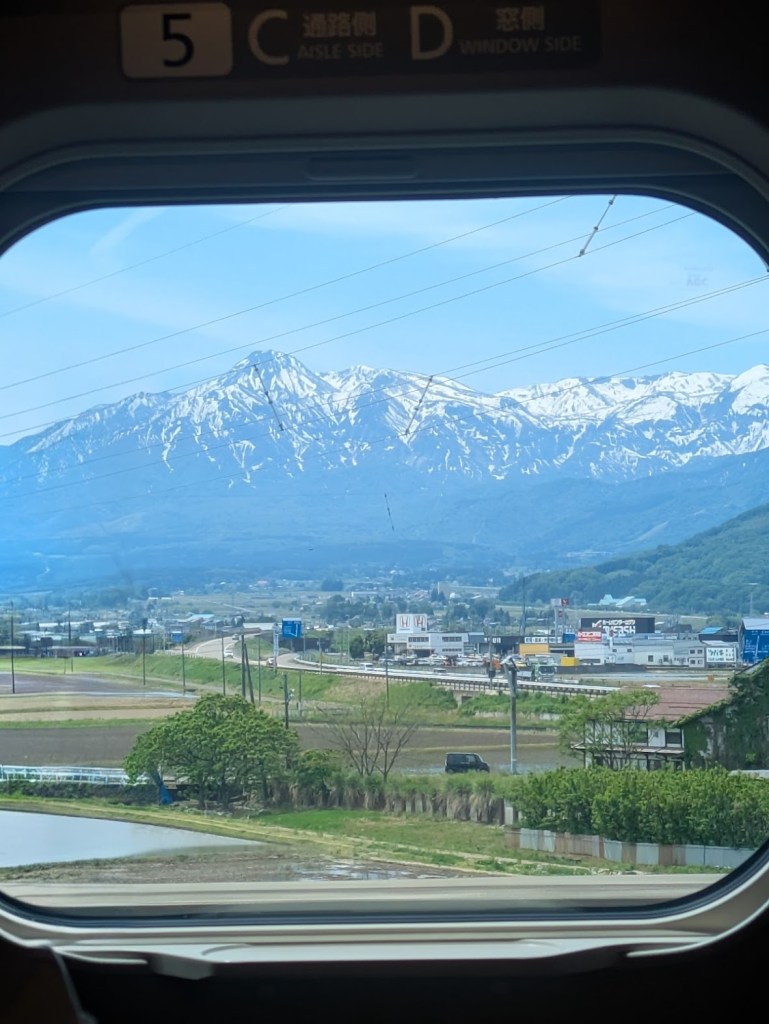
Stef took this picture from the speeding train window of the local (northern) range of the Japanese Alps:
On arrival in Kanazawa, we learned that, because of the long samurai tradition connected with that city, the modern steel lattice structure of the station was in the shape of a samurai helmet. We had some difficulty discerning this,
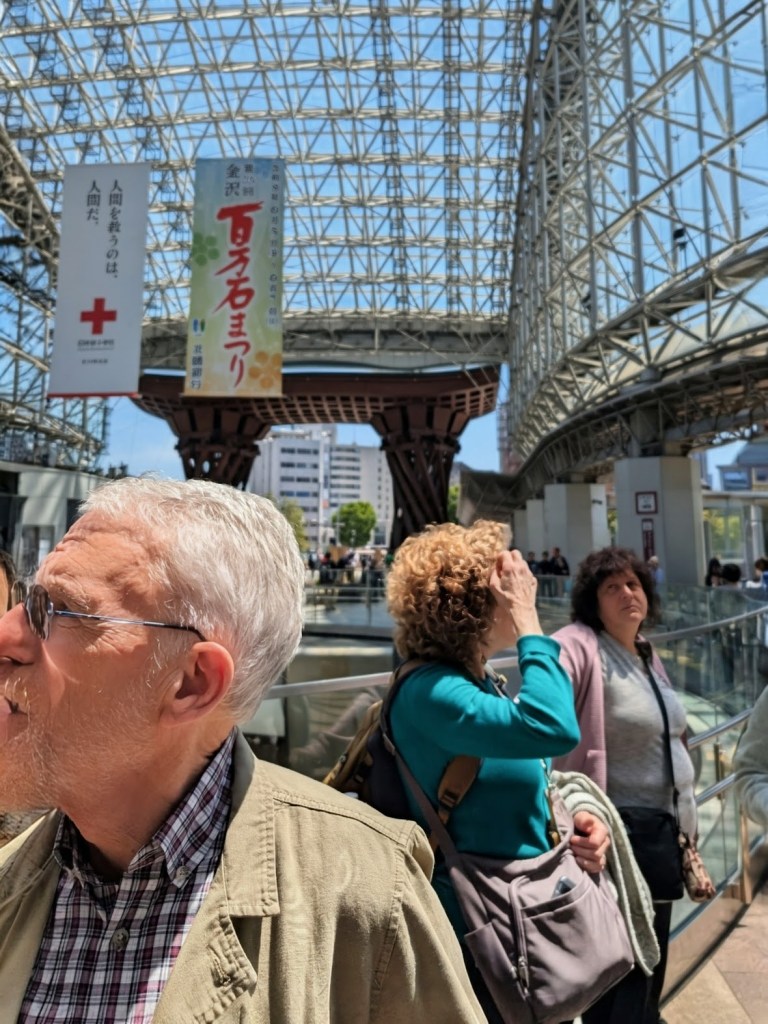
until we saw it from the outside:
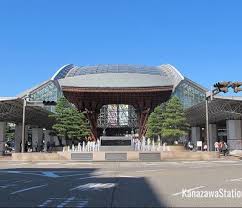
I could almost see Toshiru Mifune wearing it.

After checking into the Tokyu Hotel, we walked to Nagamachi, the former samurai district.
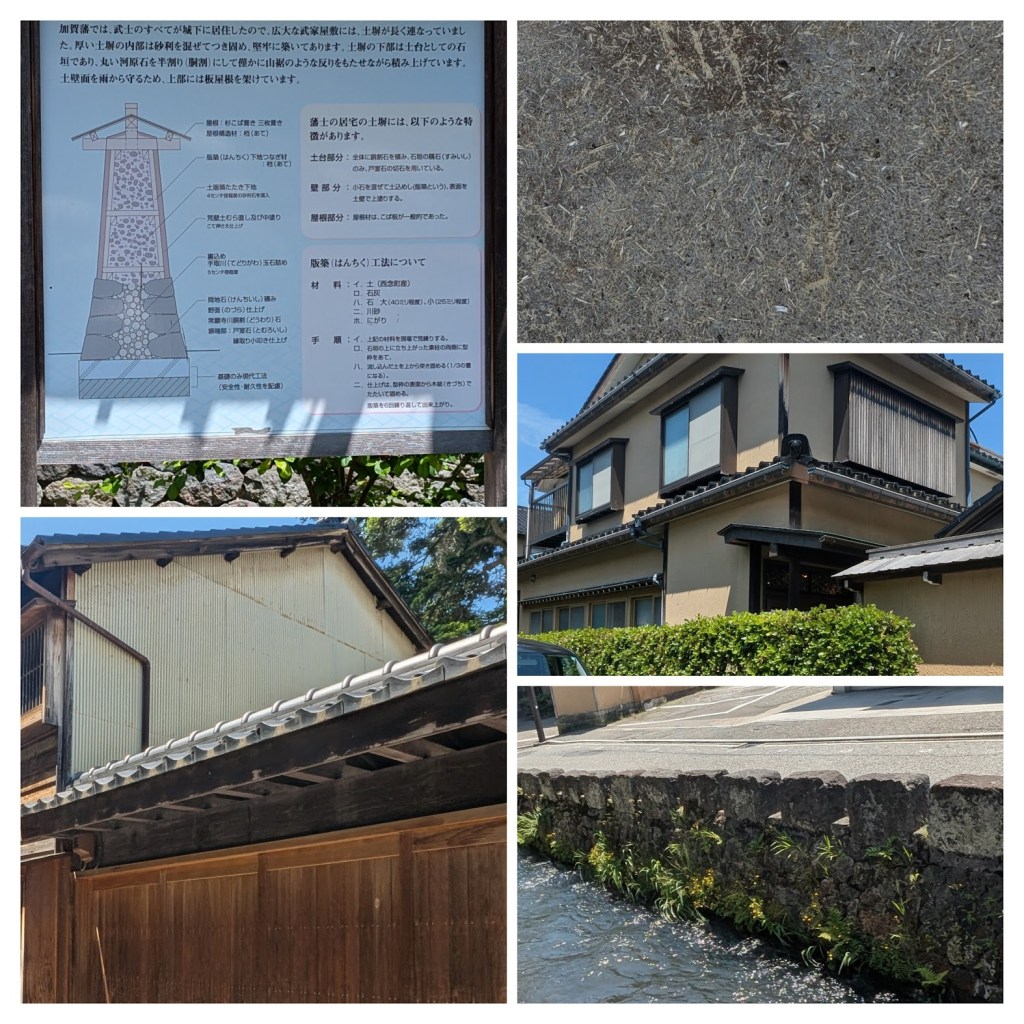
During the feudal Edo Period (1600 – 1867), a lord would hold a large estate granted by the Shogun, and the estate would be protected by professional warriors called samurai.
The former samurai buildings and their surrounding walls (dobei or tsuchikabe) were built from a mixture of mud and straw (above, upper right), which formed durable, fire-resistant earthen structures.
We visited the Nomura Samurai House, the former estate of 11 generations of an upper-middle-rank samurai family.
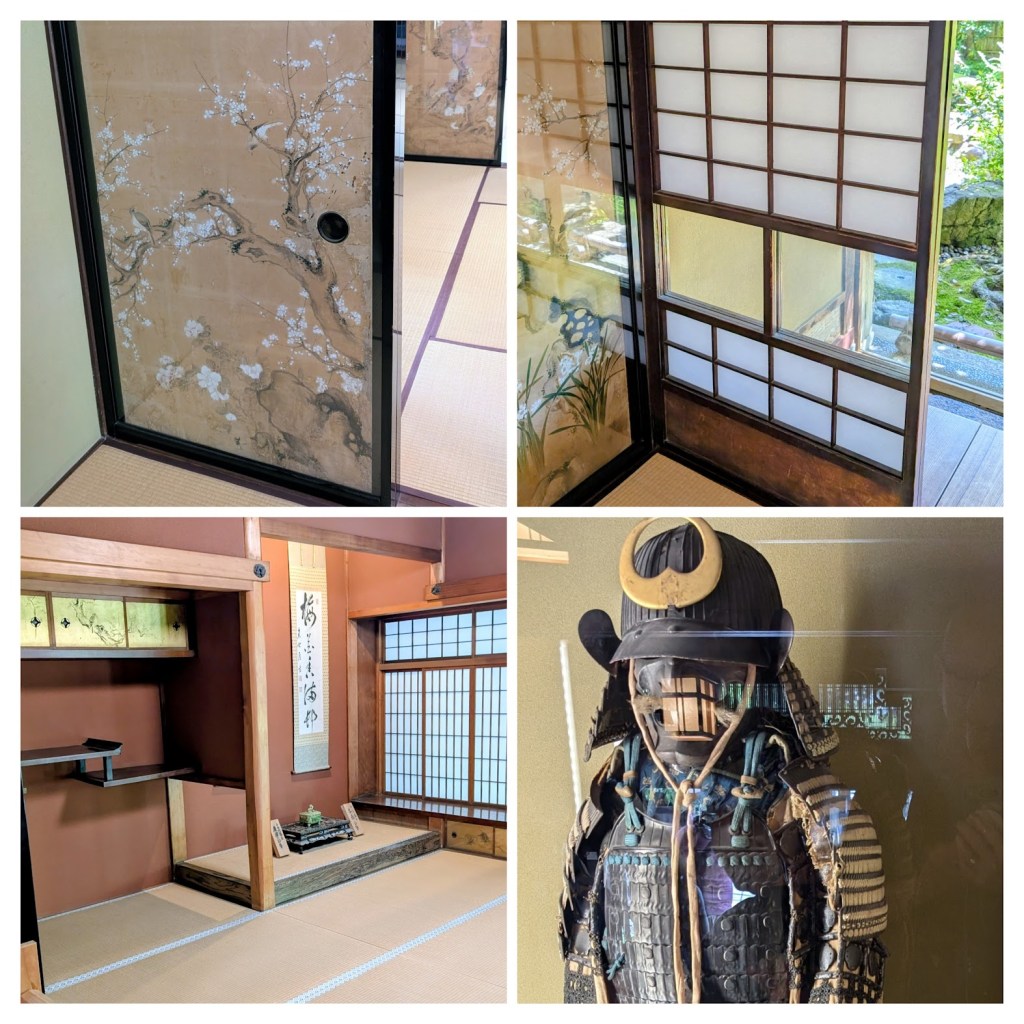
Note the display of samurai armor (above, lower right), and particularly the helmet. It does look like the design of the local train station, doesn’t it?
We then headed from the Nagamachi district to Higashi-Chaya-gai, a former geisha district (below, upper left). Geisha (“person of art”) originated in the 18th century. They were originally women who served as artistic assistants to high-ranking courtesans (Oiran). The geisha’s role eventually evolved into that of independent performer, engaging in music, dance and conversation. (It was only much later, after the Second World War, that prostitutes began to dress in the traditional Geisha costume, calling themselves a “geisha girls,” and giving the Geisha the inaccurate connotation of sex workers).
We visited the Shima Geisha House, a former ochaya (geisha teahouse), now a museum displaying Edo Period geisha culture, with preserved guest rooms, garden, a prep kitchen, and instruments used for entertainment (that’s Stef, below, upper right, getting instruction on playing the shamisen, a three-stringed banjo-like instrument played with a sort of a enameled guitar-pick, called a bachi.
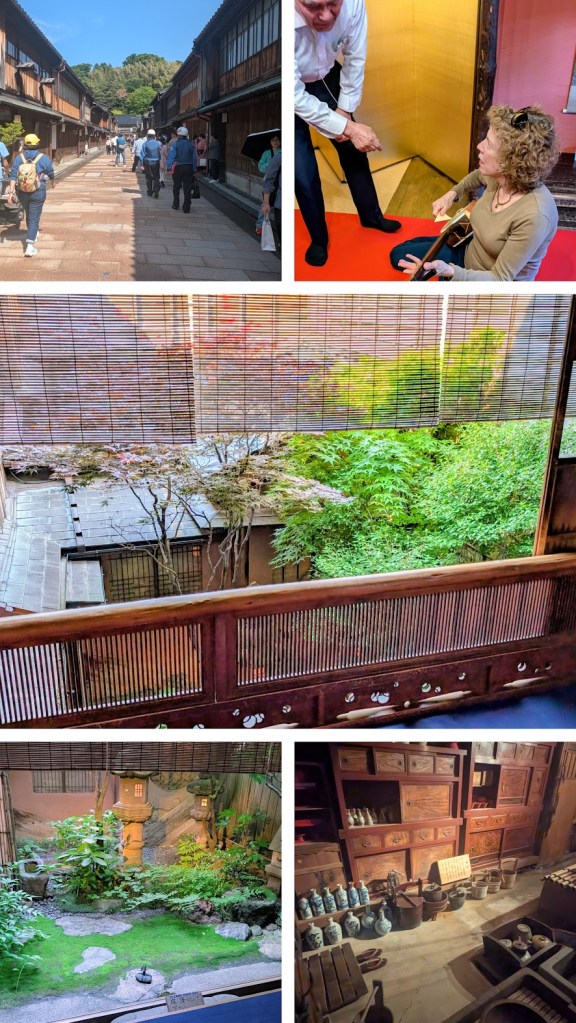
We were informed that this sort of ochaya would be for the entertainment of only the upper crust. And that the samurai (though brave and dedicated) were merely bourgeoisie, and would not be entitled to attend. Not fair!
Our incredible, memorable dinner was in a two Michelin-starred restaurant called Zeniya. It was established in 1970 by the father of the current chef Shinichiro Takagi. We partook of the traditional kaiseki (multi-course meal), involving a progression of flavors from light to rich.
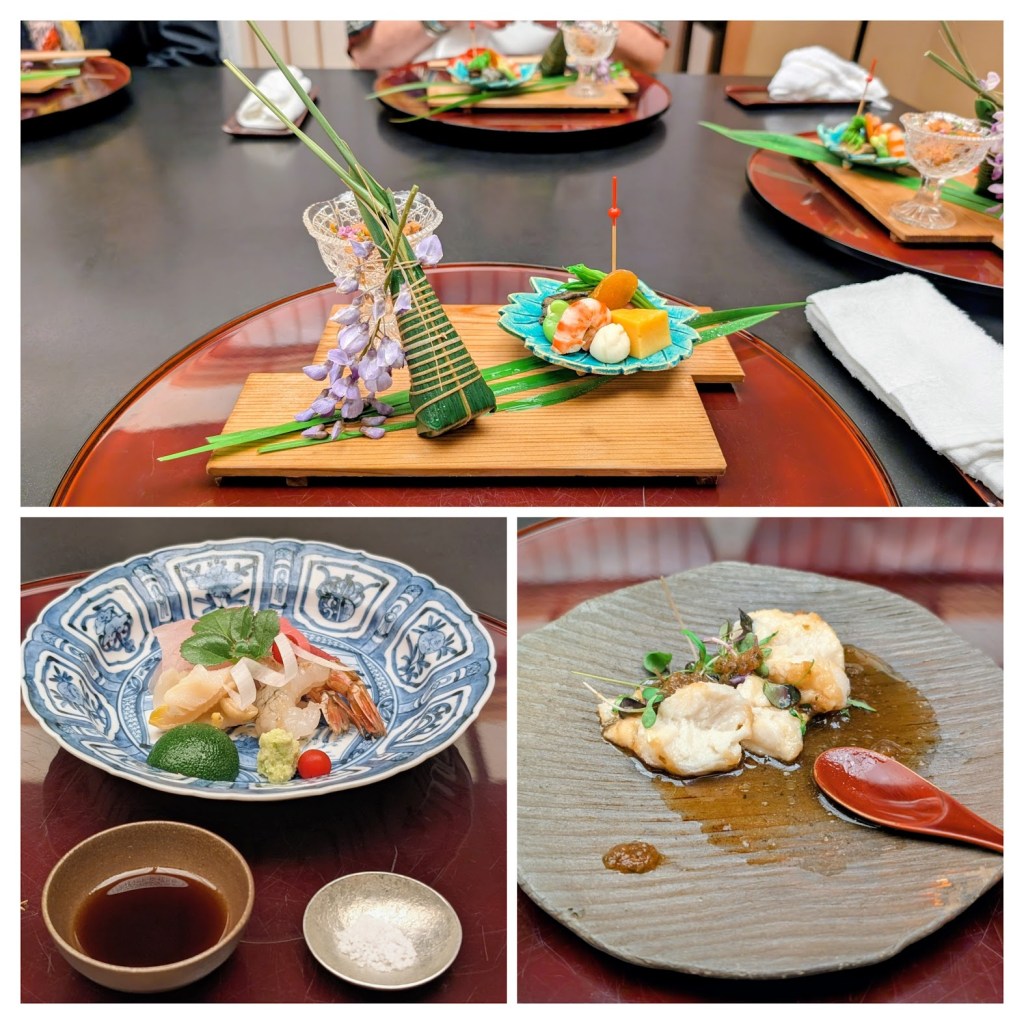
I was pleased that one of the middle courses was nodoguro, the blackthroat seaperch I’d referenced as a sushi specialty (below, top) in my blog post #2. Here it was braised rather than raw, and quite yummy.
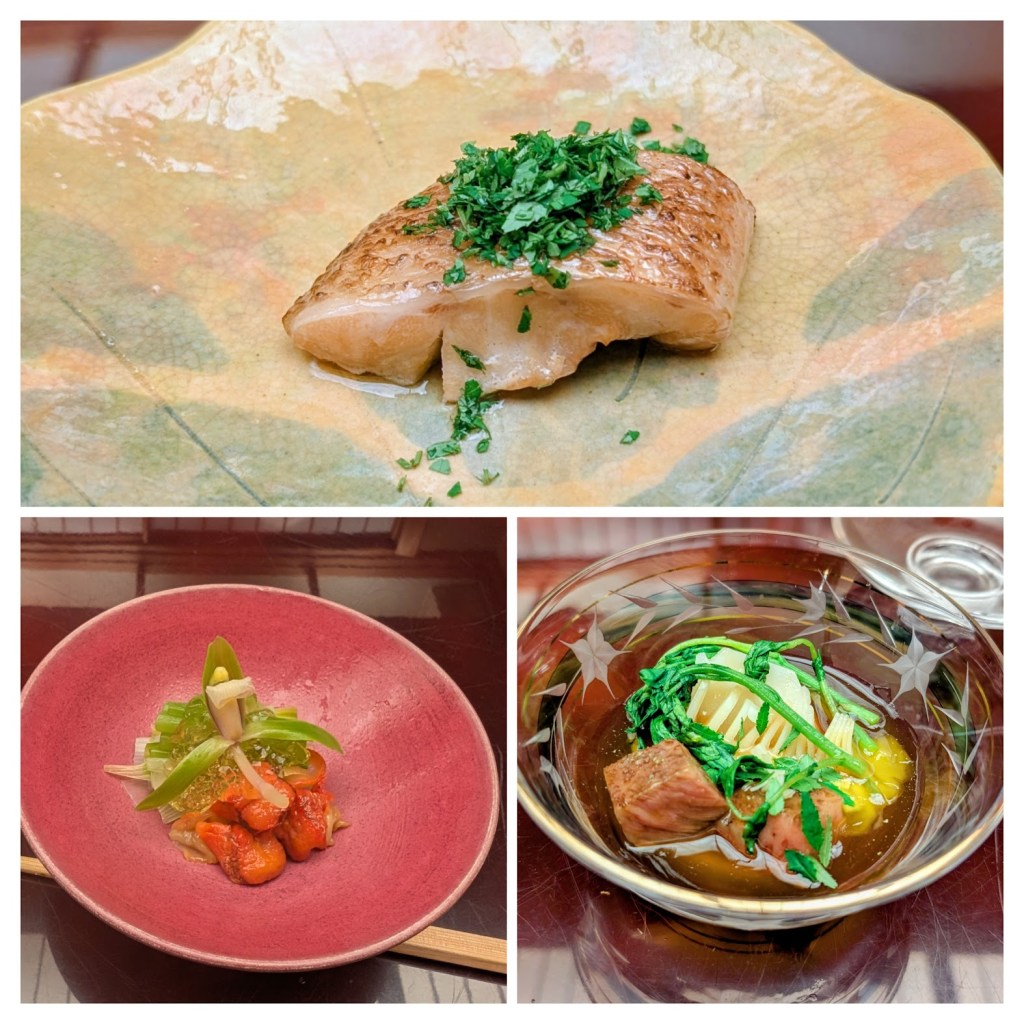
We were informed of the names of all the dishes, but it was such a delicious blur that, for the life of me (except for the nodoguro), I can’t recall any of them.
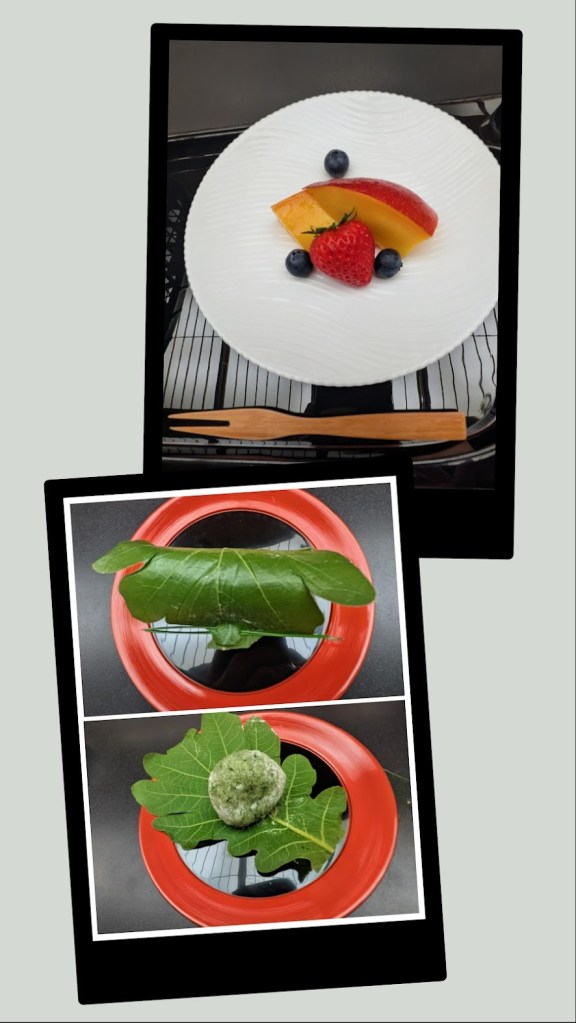
A hallmark of the Zeniya experience is its use of antique and artisanal Japanese tableware, some of which are over 200 years old. These items are selected each day to match the tone, texture and temperature of the food. To be sure, an extraordinary culinary welcome to Kanazawa.


 Something to Declare
Leave a comment