
Kanazawa, May 12, 2026
Tuesday, May 12, began in the Kenroku-en Garden, ranked as one of the three most beautiful strolling gardens in Japan.
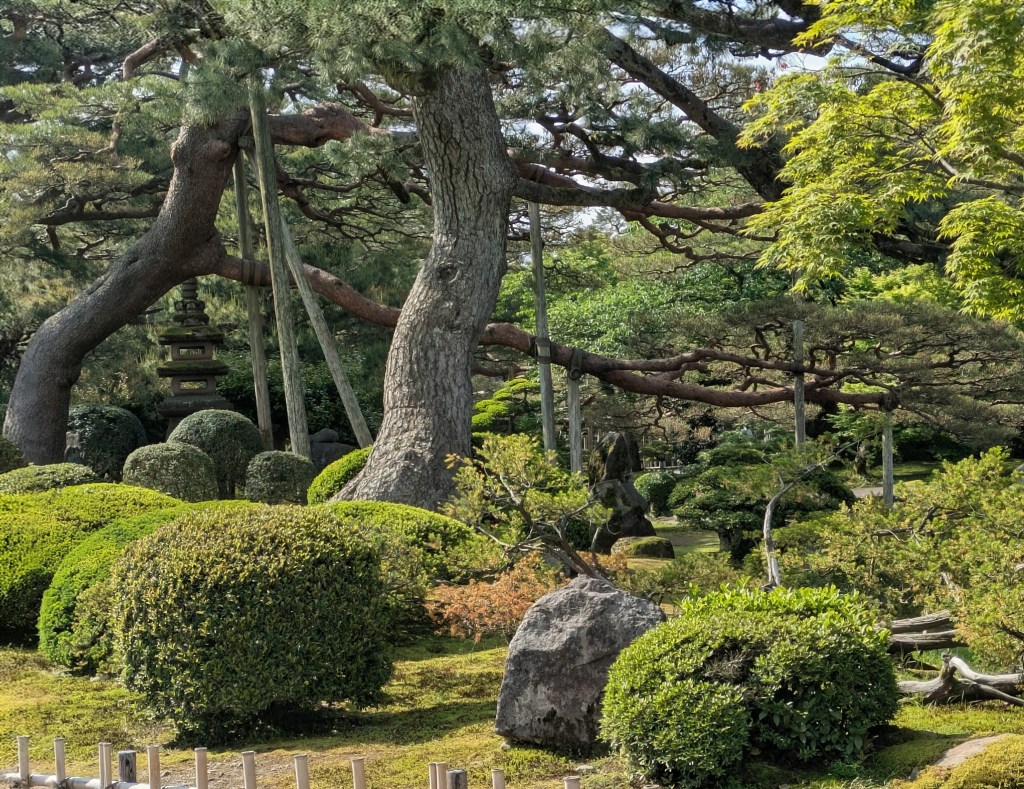
The 28-acre garden contains ponds, teahouses (see below)….
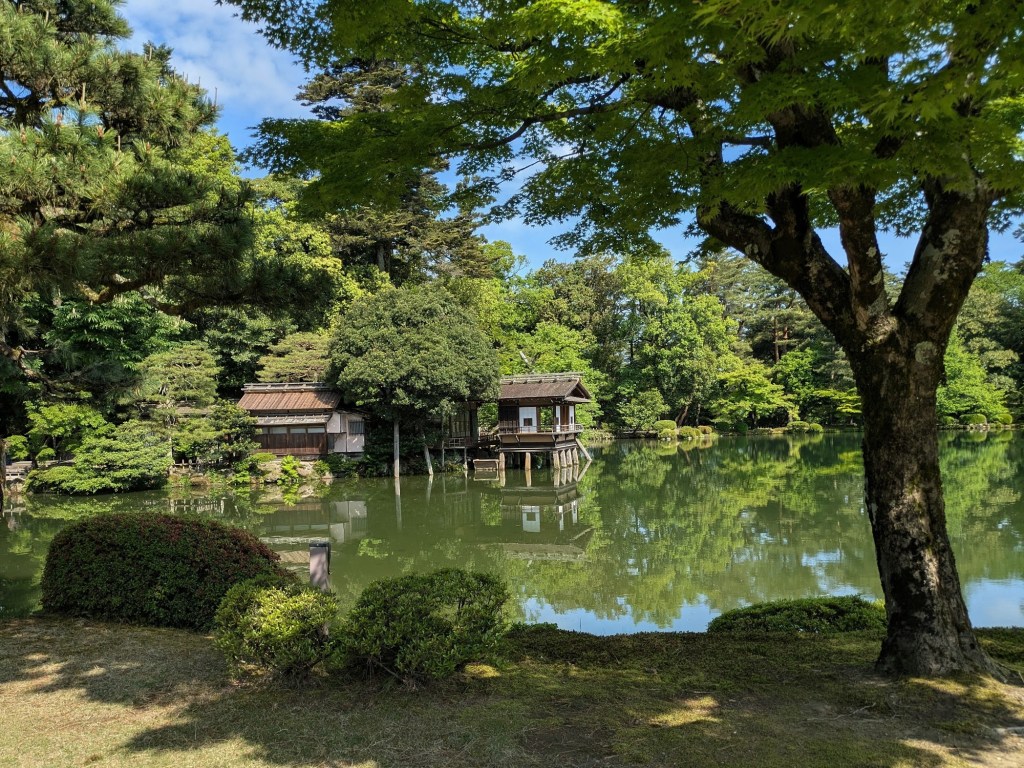
….waterfalls, and manicured shrubs and flowers.
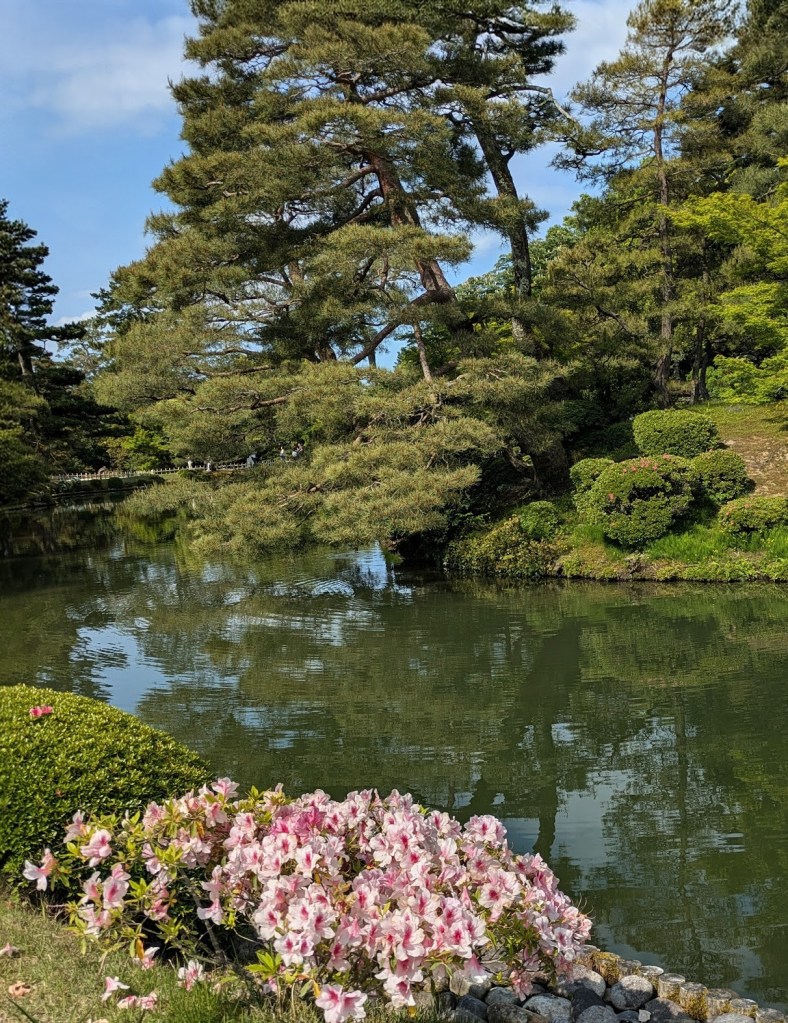
The garden was established in the 17th Century by the feudal lords of Kaga (which was the original name for the Kanazawa region) as their private garden. (What did Mel Brooks say? “It’s good to be King.”)
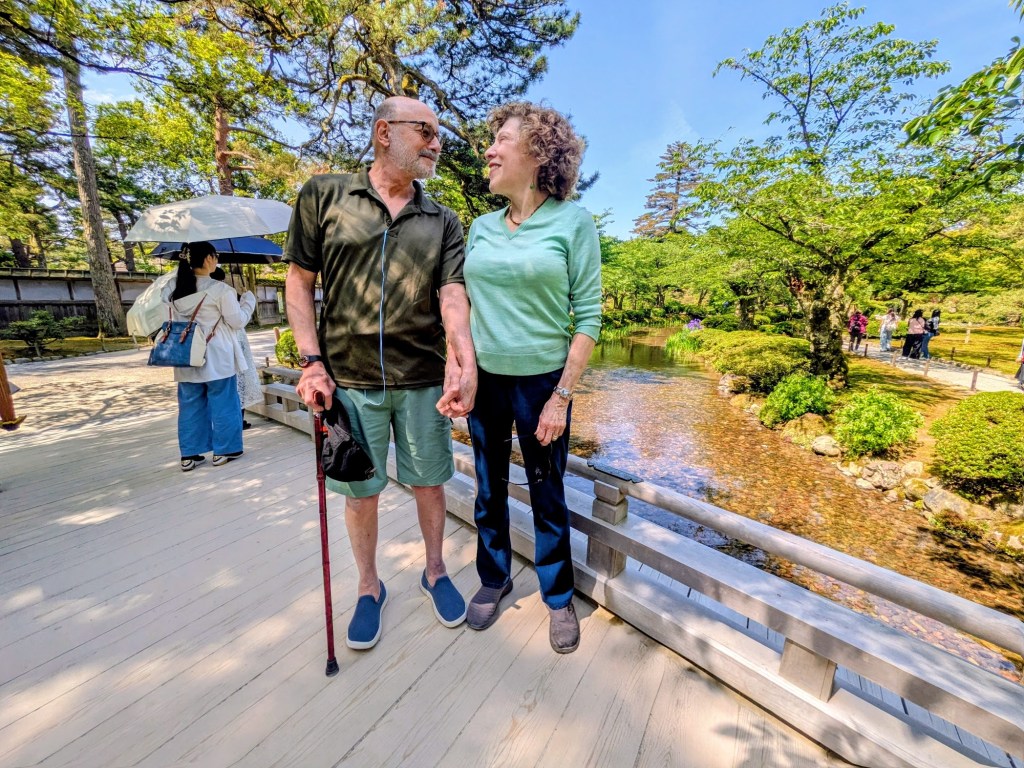
One of our tour-mates, Toni, took our picture on one of the scenic bridges:
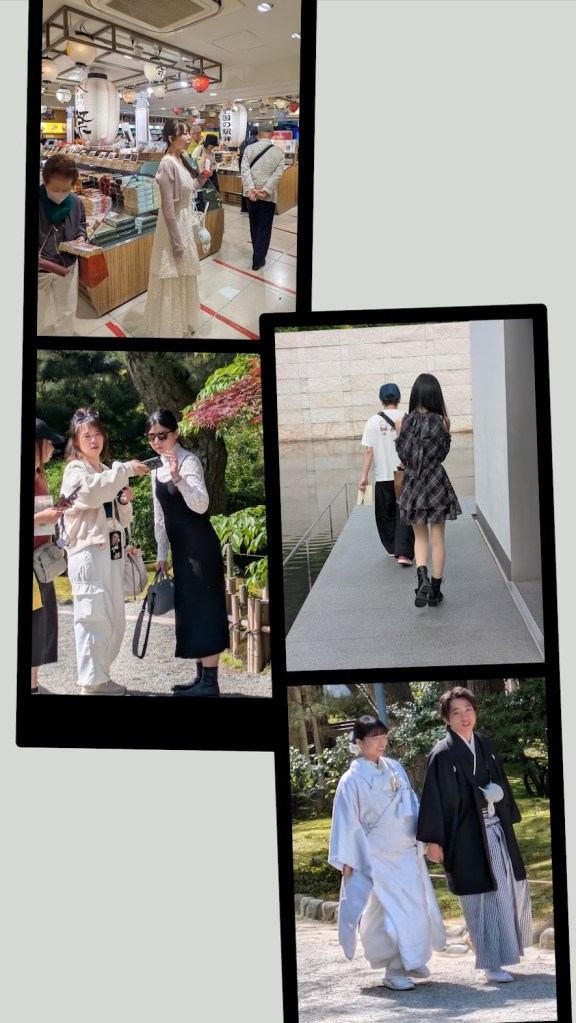
I’m inserting a parenthetical personal note: Stef’s granddaughter Reese is an aficionada of Japanese Anime. She told us that many younger Japanese girls engage in Anime cosplay. So we were on the lookout for examples. We did see several, both inside Kenroku-en Park and elsewhere). In the park we also saw a bride and groom in traditional dress (below, bottom right):
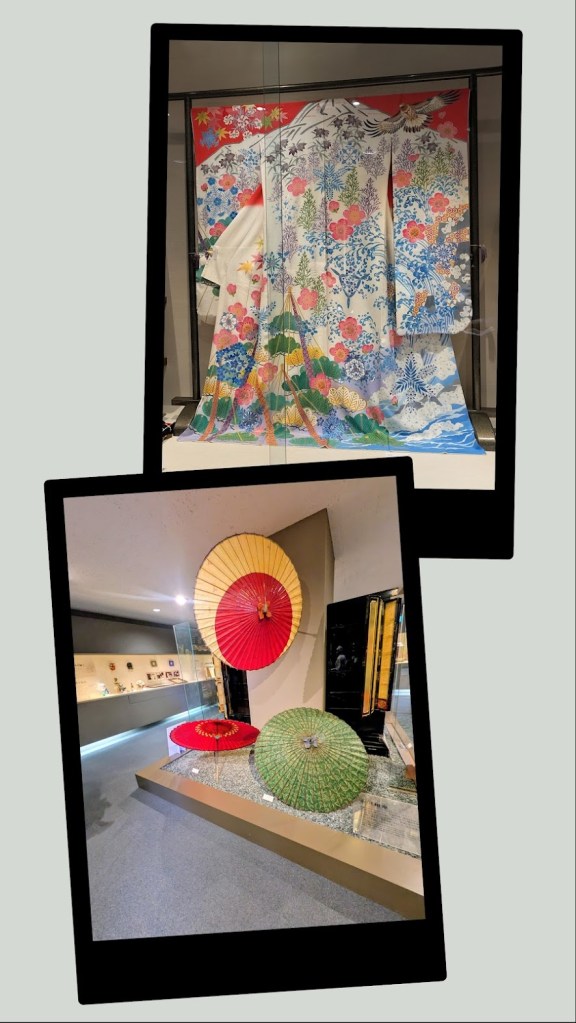
We then toured the adjacent Ishikawa Prefectural Craft Museum, showcasing 36 types of arts and crafts developed in Ishikawa (the precinct in which Kanazawa is located):
We had lunch at a restaurant called Coil, where we got our second lesson in making sushi. The staff rolled out large boxes with trays of ingredients, and we were instructed in the preparation of maki. These are the familiar sushi rolls, consisting of fish and other fillings, surrounded by rice, and enclosed in nori (seaweed).
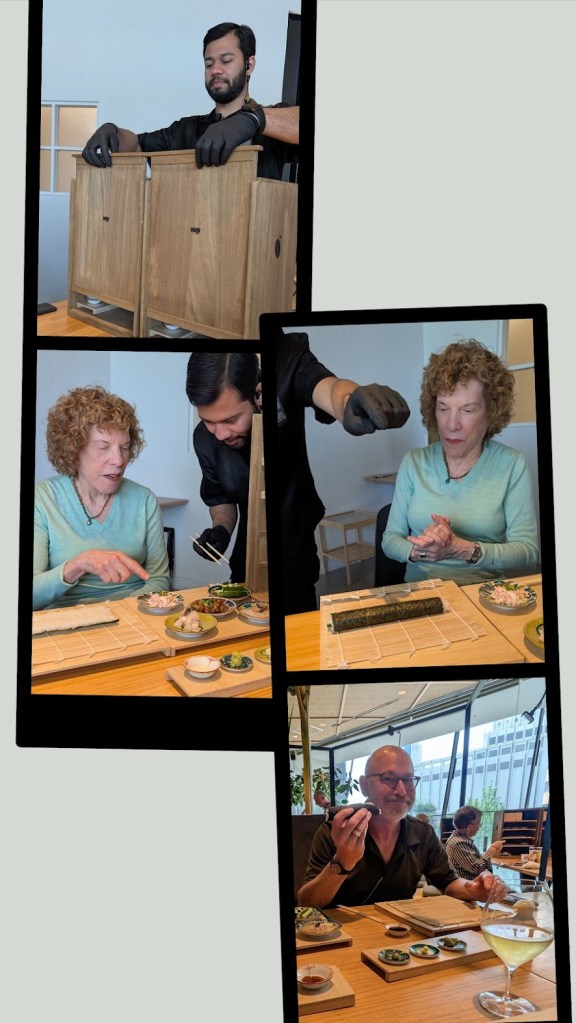
We were surprised to hear that maki are not supposed to be cut into inch-long pieces (like in U.S. sushi restaurants). Instead the diner is supposed to pick up the entire roll, dip it in soy sauce (with or without wasabe), and bite off pieces. I wonder how the staff of Upper West Side restaurants (like Sushi Yasaka or Tenzan) would react if we asked them not to cut up the maki rolls?
After lunch, we walked through the Omicho Market, which has been called “Kanazawa’s Kitchen“. Some in our group sampled the iconic soft-serve ice cream covered in gold leaf.
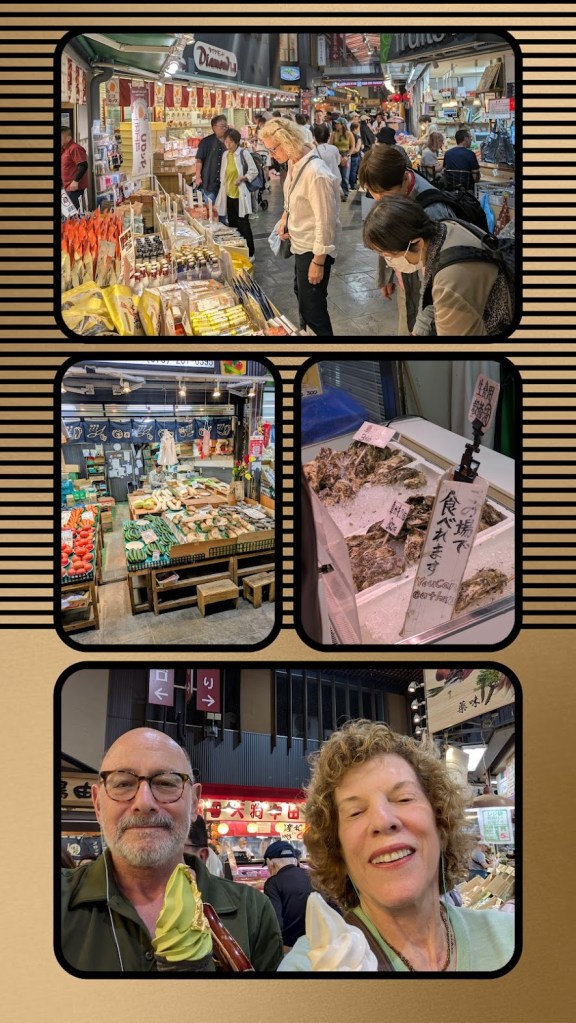
It was a subject of debate among us as to whether the gold leaf had a particular flavor, or was just “for show.”
The touring day concluded with visits to the D.T. Suzuki Museum and the 21st Century Museum of Art.
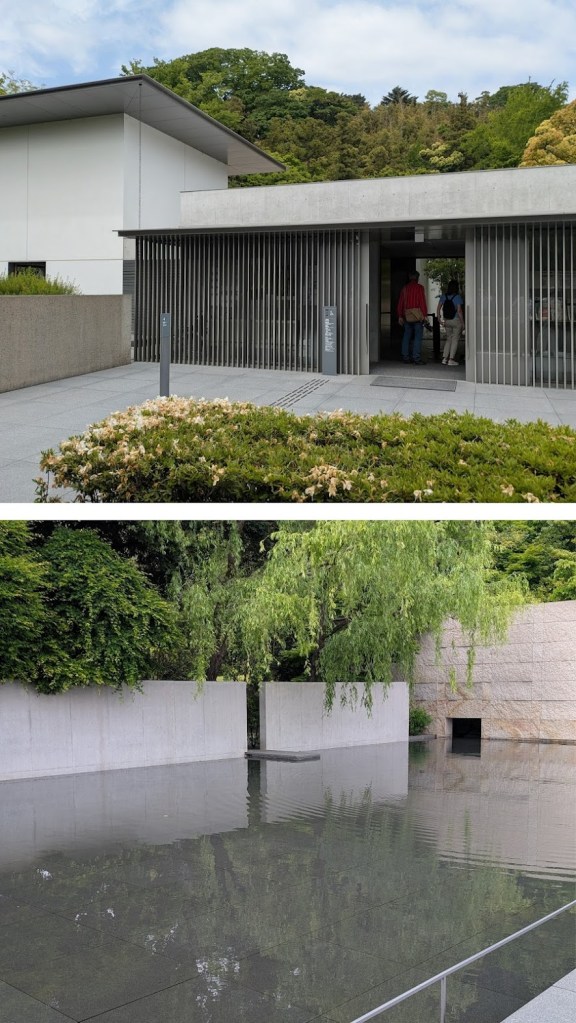
Daisetz Teitaro Suzuki (1870 – 1966) was a Japanese essayist, philosopher and religious scholar. He was an authority on Buddhism and Zen, and was instrumental in spreading interest in these (and in Far Eastern philosophy in general) to the West. The museum contained photographic exhibits of Suzuki’s life and work, and places of serenity and meditation:
The 21st Century Museum was designed by the prize-winning SANAA firm, with variegated exhibits of Japanese artists and designers:
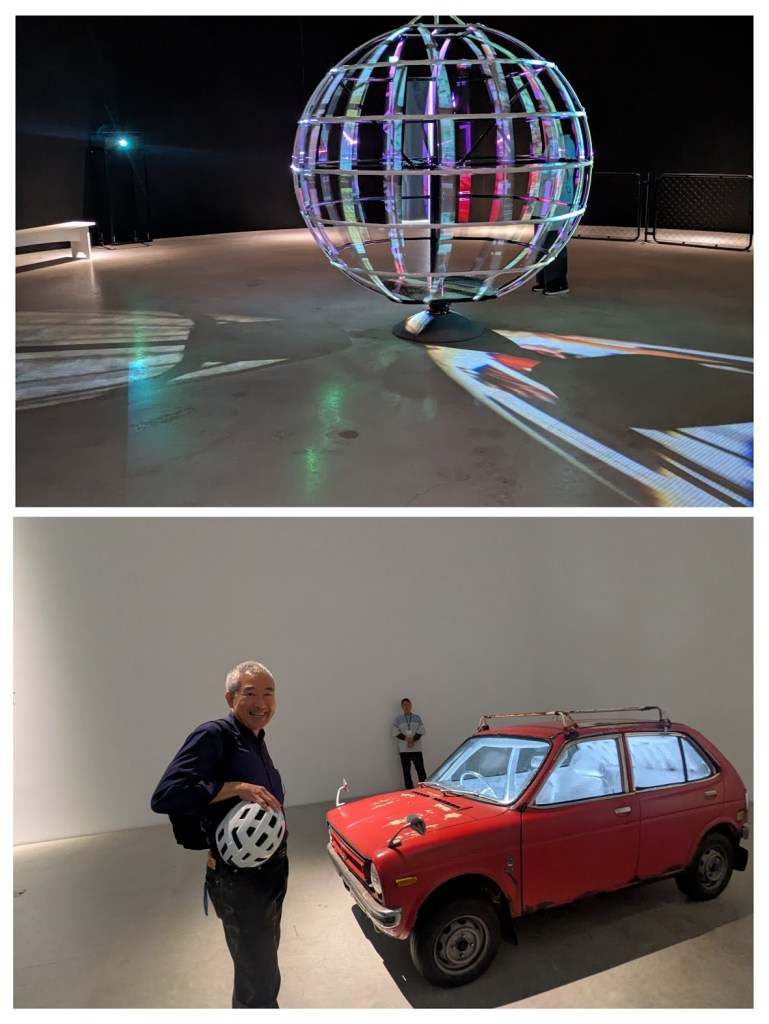
Shown next to the red car is Kei Okada, a former colleague of Stef’s from Visiting Nurse Service Hospice; he left New York City a year ago to live in his childhood home town of Kanazawa. A happy reunion!
Dinner was “on your own,” so most of our group gathered in the Hotel lounge for conversation along with wine, nuts and other snacks. That’s all for Kanazawa. Tomorrow: On to Kyoto!
We had an intimate dinner at the Kosa restaurant in our hotel. It’s a striking setting, with huge Japanese lanterns hanging from the ceiling, and view of a lovely garden.
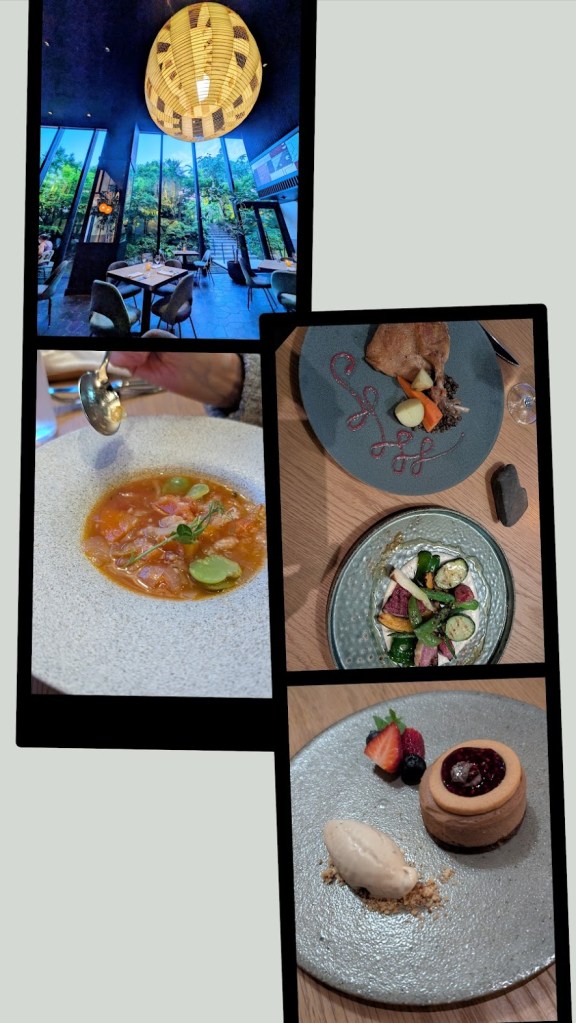
Dinner consisted of a subtle “Japanese”-style minestrone, and a mélange of vegetables (Stef) and duck confit (Stan). The server (whose English was perfect and unaccented) noted that the duck (1) was her favorite dish, and (2) would be removed from the menu (due to seasonal changes) in June. Therefore, I should grab it when we had a chance. And it turned out I’d chosen wisely. Dessert was chocolate mousse with a dollop of ice cream. Stef has been chocolate-deprived for most of this trip, and the mousse was much appreciated.


Leave a Reply