
Osaka & Kobe, Monday, May 18, 2026
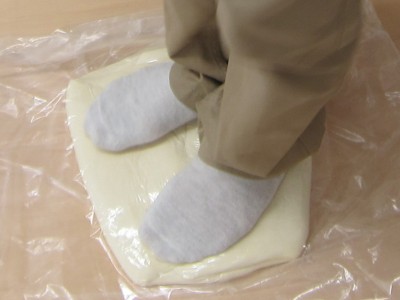
We opted to play hooky this morning with respect to the udon noodle-making class at Iricosky. From what I could gather from our tour mates, it was something of a hoot, as well as delicious, involving kneading the noodle dough (in plastic wrapping) with the feet. I guess you had to be there.
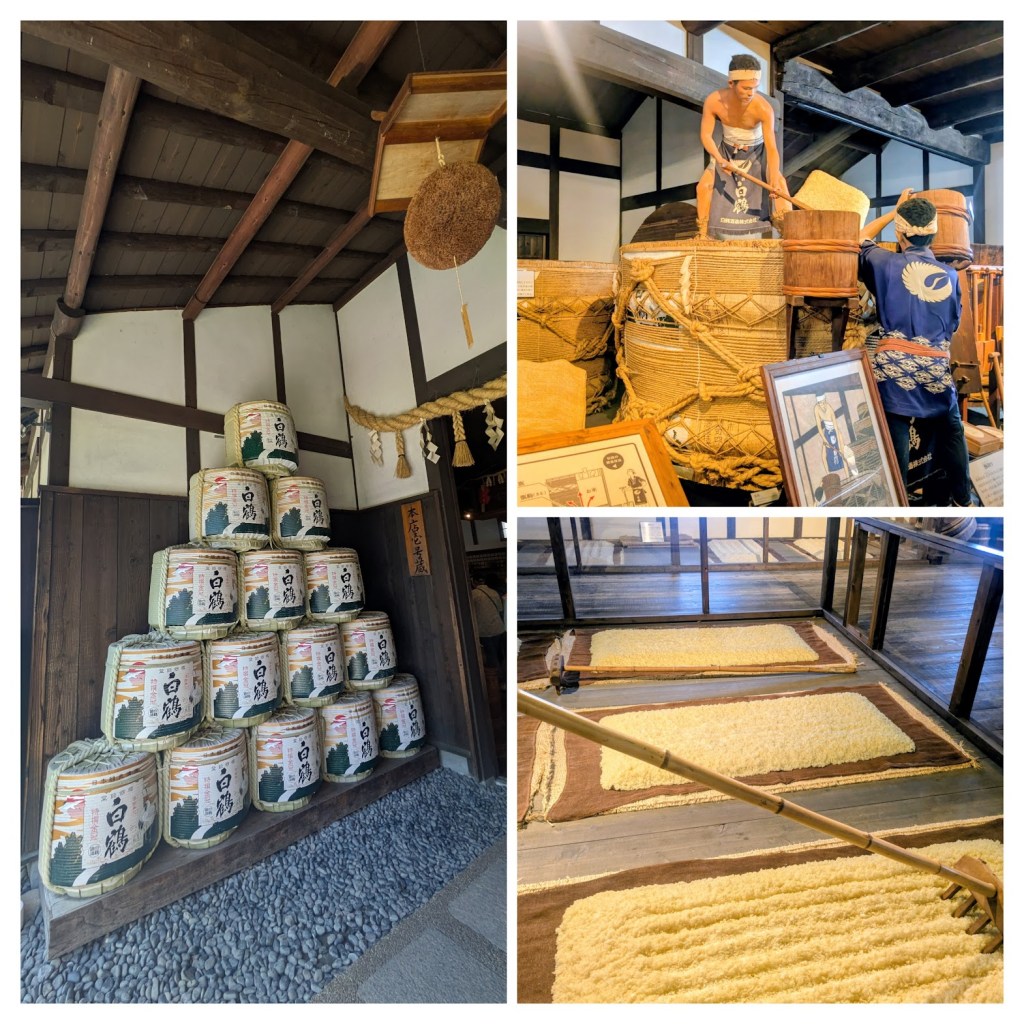
After lunch, we departed Osaka for Kobe, to visit the Hakutsuru Sake Brewery, founded in 1743. Hakutsuru is Japanese for “white crane,” which is supposed to be an auspicious symbol of longevity. It’s one of Japan’s leading sake breweries and exporters.
The older Hakutsuru brewery building is now a sake museum, complete with examples of the older brewing vessels and machinery, and mannequins of brewery workers at their tasks.
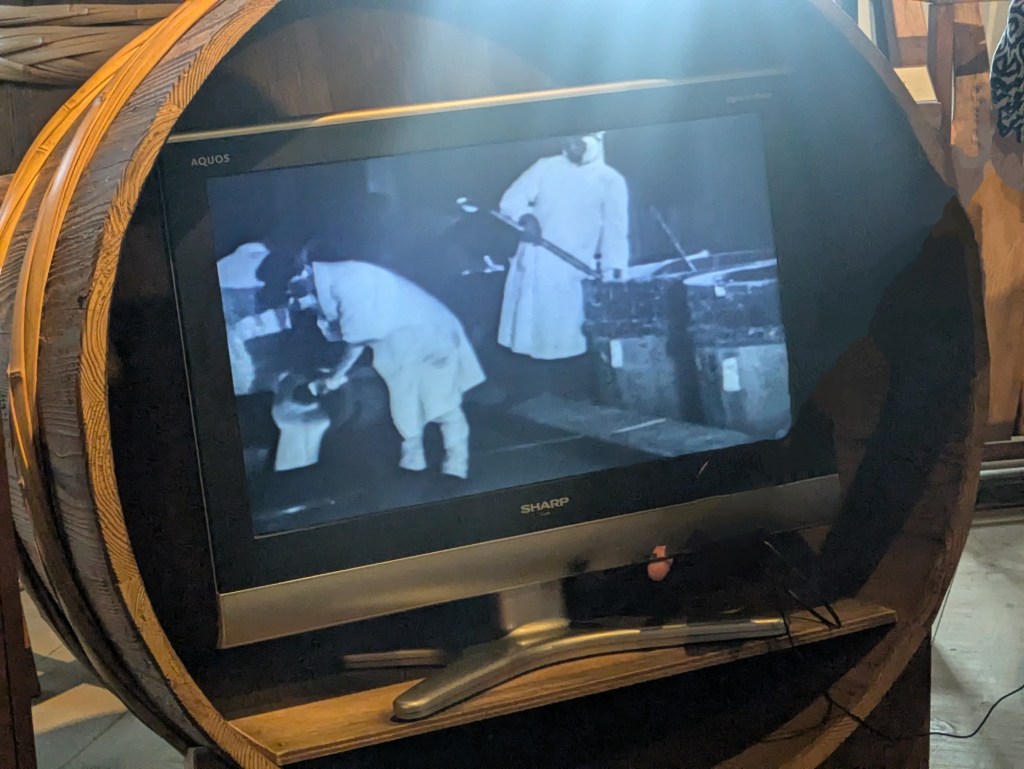
We also had the opportunity to see silent films (from 1928) of the older brewing methods.
The buildings housing the present-day manufacture of sake are more industrial-looking.
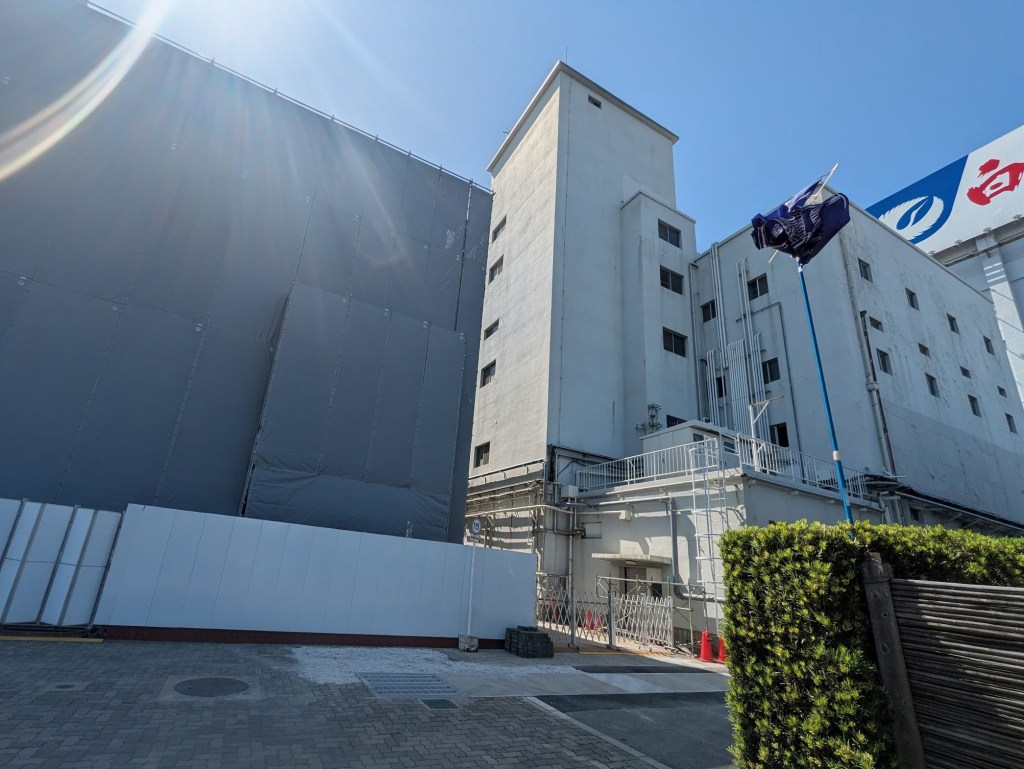
Our guide explained that the building shown above right is soon to be torn down and replaced by the structure on the left, which will be more earthquake-resistant.
Our guide noted that sake is made of rice, water, koji mold, and yeast. The brewing of sake is done in steps. First the rice is polished, with the outer husk and outer layers of the grain milled away. The more milling, the higher the quality of the sake. By removing 30% of rice grain, the result is the basic product, “Junmai.” When it’s polished down to 50%, you get “Ginjyo.” Remove yet another 20% (only 30% of the original rice grain remaining) and you are making the high-test, “Daiginjyo.” Higher quality means sweeter, and I tend to prefer the drier, more mineral-y Junmai.
Our visit continued:
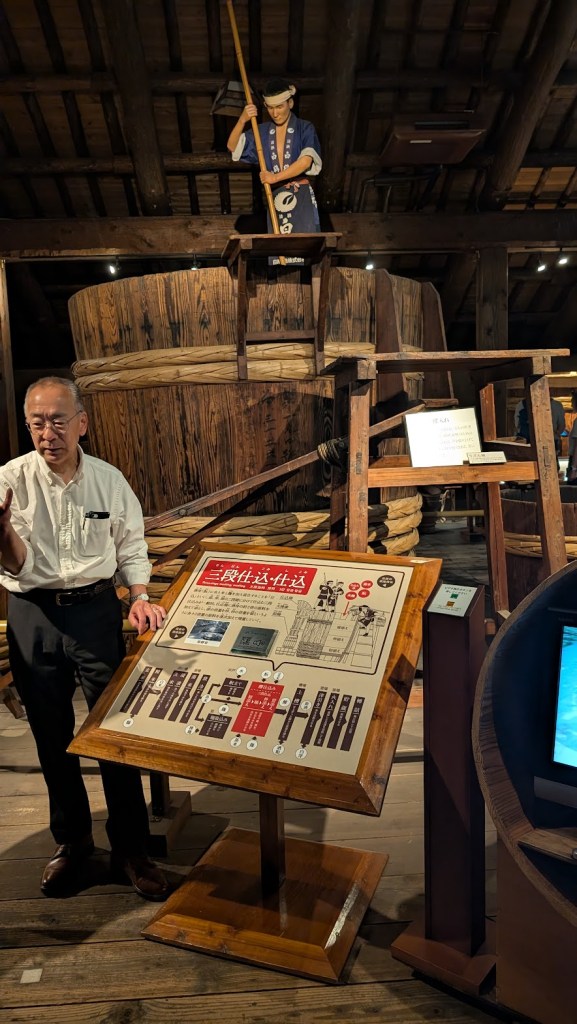
After the rice is polished, it’s washed, soaked, and steamed. A portion of the steamed rice is cooled and inoculated with aspergillus oryzae (koji mold). The rice is kept in a warm, humid room (the koji muro) for about 48 hours, allowing the mold to grow and create enzymes that convert the grain’s starches into fermentable sugars.
The rest of the steamed rice, water, koji (with the addition of yeast) are mixed, and the mixture ferments for about two to four weeks, with the koji converting starches to sugar and the yeast instantly converting those sugars to alcohol.
The fermented mash is pressed to separate the clear liquid sake from the leftover white lees (sakekasu). The sake may be filtered for clarity and pasteurized (heated) to kill remaining bacteria and enzymes. The sake is usually aged for several months before blending, diluting with water to reduce alcohol content, and bottling. 出来上がり! or Dekiagari! (Japanese for voila!)
We proceeded to the Ijinkan neighborhood in the city of Kobe. This was a sort of foreigners’ colony, established in the 19th Century, featuring more Western-style architecture, when Japan began to open up to the West.
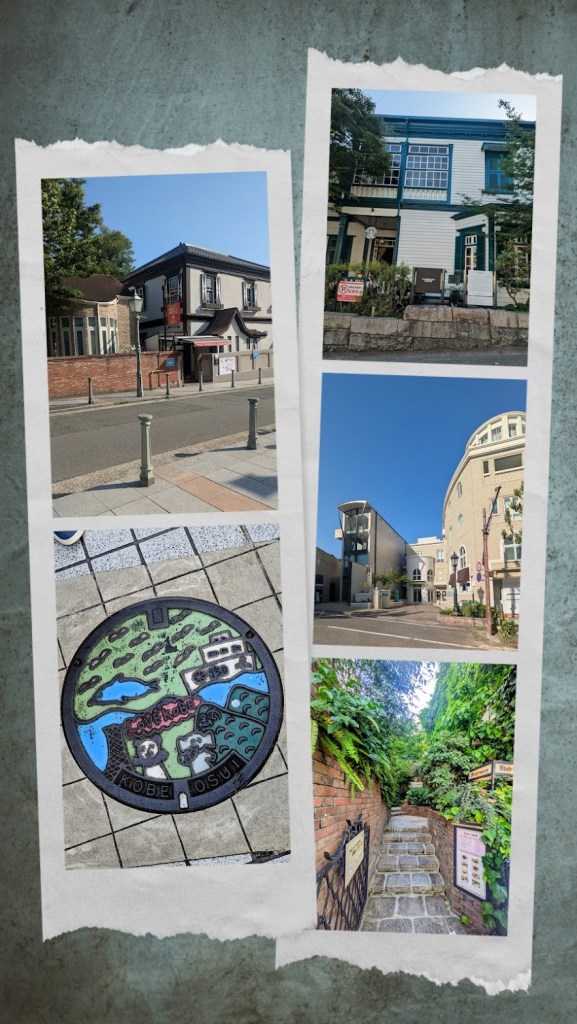
Note the colorful Kobe manhole cover (above, lower left). Most towns/cities in Japan have their own unique manhole covers, celebrated as miniature works of urban art. As we walked, we came across some interesting-ly clad young ladies, and a bridal couple.
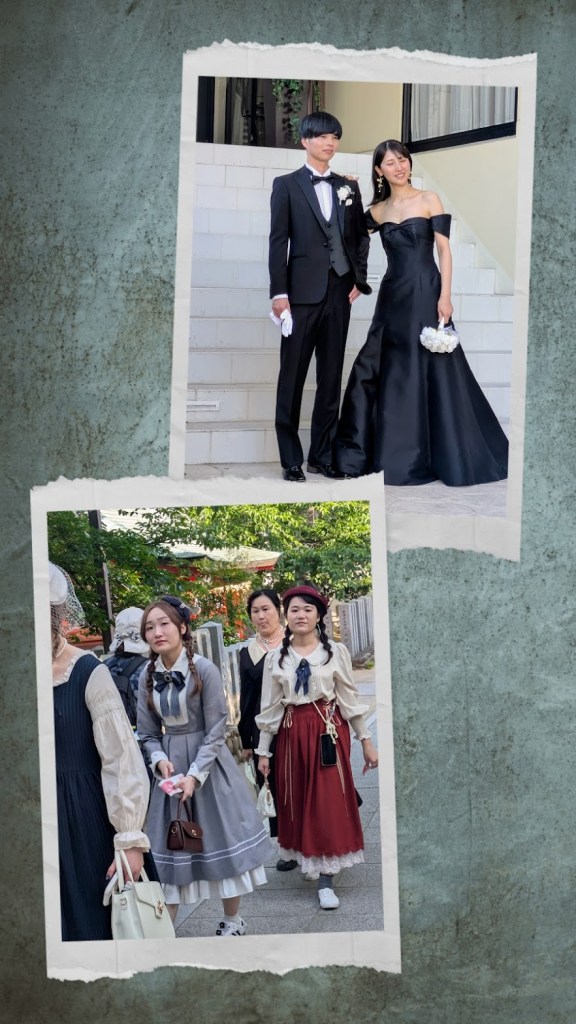
Some Japanese brides wear black because it represents high formality, elegance and fierce devotion by the bride to the husband. It also is a way of demonstrating a break with Western standards.
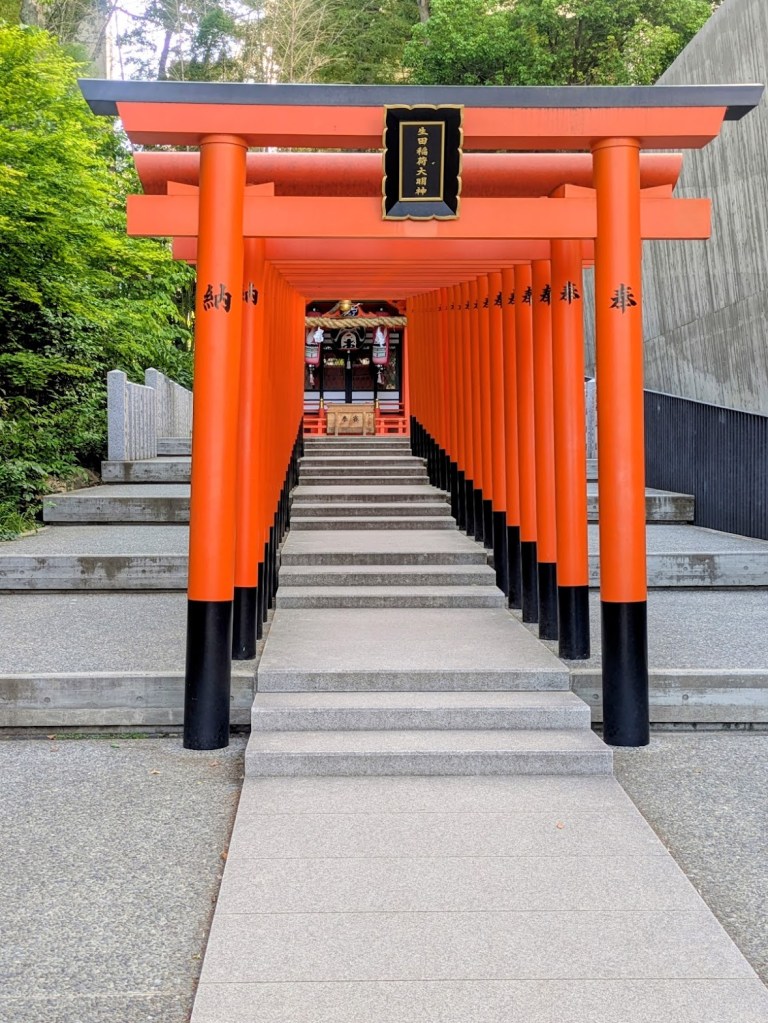
Our destination was the Ikuta Shrine, one of the oldest Shinto shrines in the country.
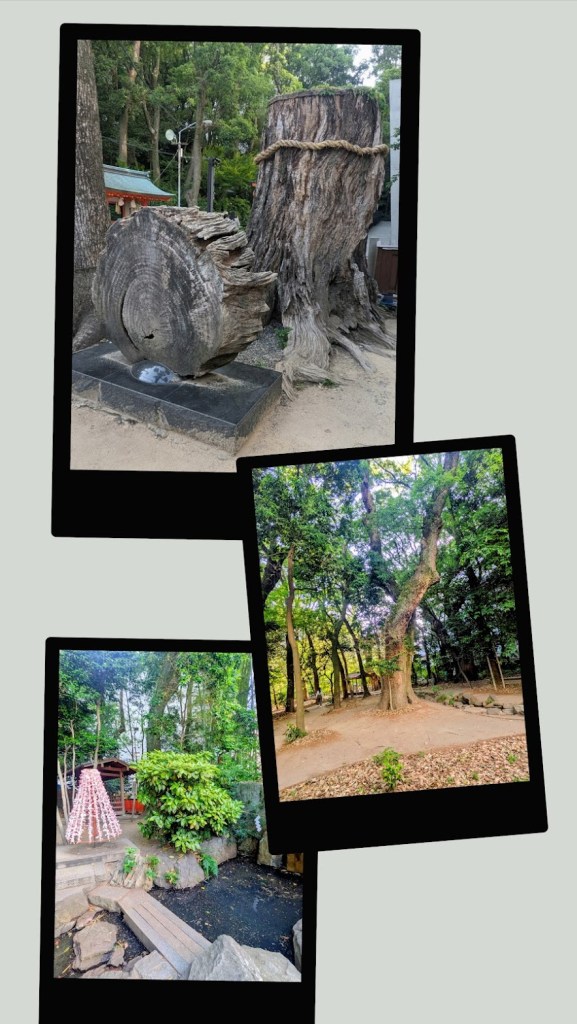
Ikuta Shrine features a renowned sacred camphor tree –below, top–(approx. 500+ years old) formerly located in a forest near the shrine. The tree was severely burned during World War II, and the remains of the original trunk are visible. Sections of the tree continue to live on, wrapped in sacred shimenawa (ritual ropes of rice fibers), a symbol of revival and reconstruction.
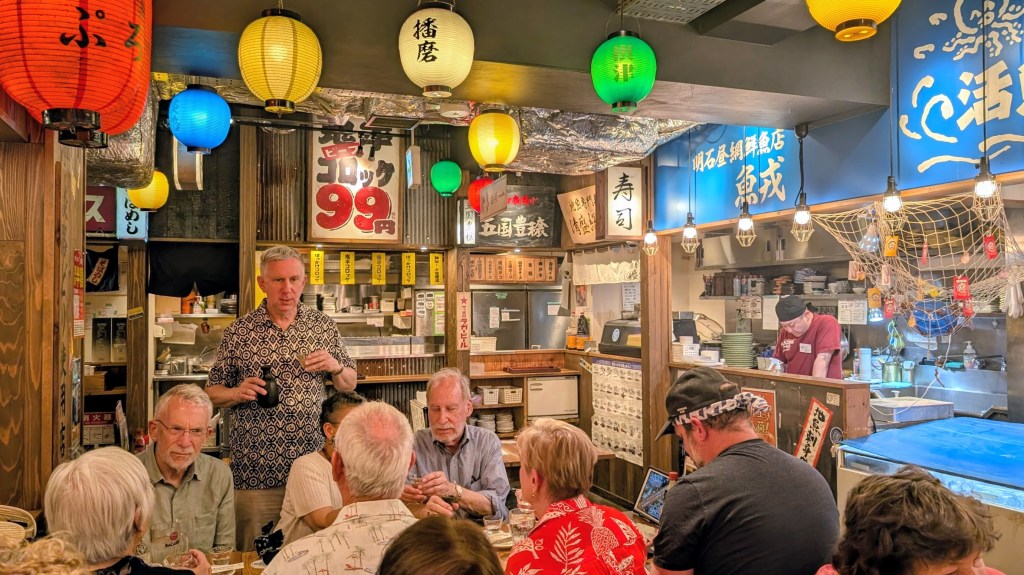
Okay, enough sightseeing! Andy then took us to the colorful drinking spot, Hyogo Gokoku World, for a satisfying group sake toast.
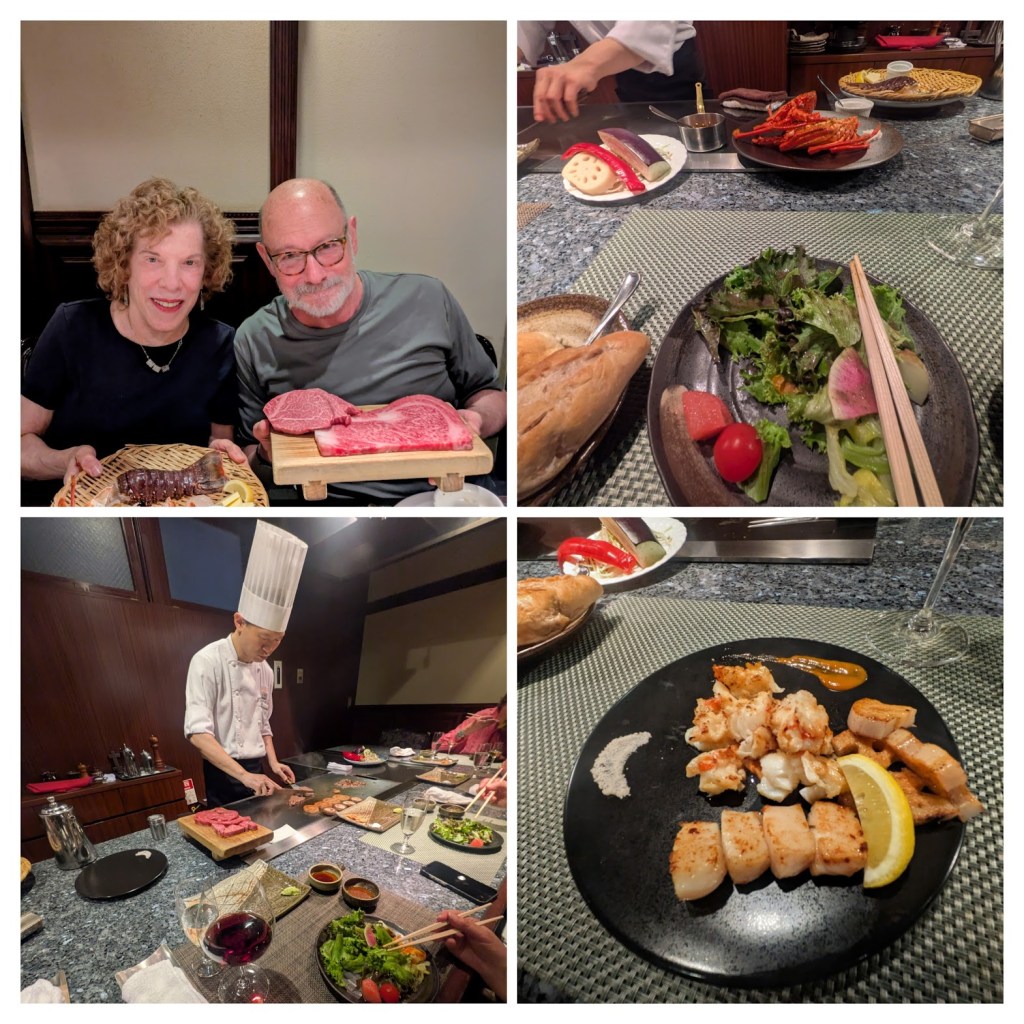
Then on to a farewell dinner at Royal Mouriya, for a classic Kobe beef preparation around a teppan grill. Stef was honored by being given a private chef who prepared a sumptuous seafood platter for her as a meat alternative:
That’s all, folks! Tomorrow we say さよなら (sayonara) to Japan, and return to the U.S. We are already starting to plan our next big trip for spring 2027, to Bologna, Italy (as a base city) with day trips to Modena (balsamic vinegar), Parma (cheese) and Ferrara (Cappellacci di Zucca, stuffed pasta filled with squash, cheese and nutmeg).
Rimani sintonizzato (stay tuned)!


Leave a Reply