
Home is Where the Art Is
July 23, 2026
The last time we did one of these “Abroad at Home” posts was (you may recall) when we visited Boston for the John Singer Sargent exhibit at the Museum of Fine Arts in December 2023.
Full disclosure: none of the photos in this blog are mine. All were taken from public websites.
MOMA and Marcel Duchamp
Sometimes these art “outings” are the product of planning and deliberation. A week or so ago, Stef had proposed a Day of Art, and we tried to come to a decision: The Frick? The Whitney? The Met? And I suggested MOMA, one of my personal favorites because it has (1) an incredible Design section, and (2) a café that serves really good hot chocolate.
And we read about the new exhibit of the works of Marcel Duchamp (1887-1968), a French-American artist who’s supposed to have fundamentally redefined modern art by prioritizing the idea over the physical object…
(I was about to continue, “…whatever that means.”)
Stef and I make it a point to read the printed blurbs alongside the displays of artworks. These purport to enlighten the viewer about the in-depth meanings and artistic significance of the piece. The commentaries frequently seem (to us) overblown and pretentious. We muse about where the commentator got that information. From the artist? From reviews by art critics? Did they make it up? But then again, what do we know?
One of the comments about Duchamp is that, along with Pablo Picasso and Henri Matisse, Duchamp chose to create art that didn’t merely please the eye, but that served the mind.
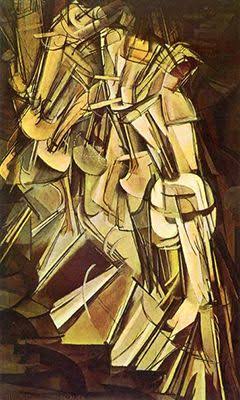
Again, what’s that supposed to mean? Compare “Nude Descending a Staircase…”
…with “Fountain…”
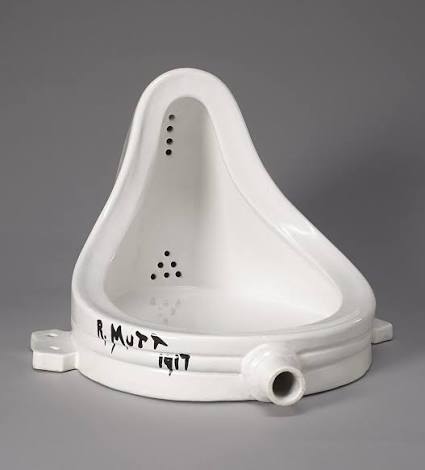
…the latter of which constituted a porcelain urinal purchased from a plumbing store, on which Duchamp signed, “R. Mutt 1917.”
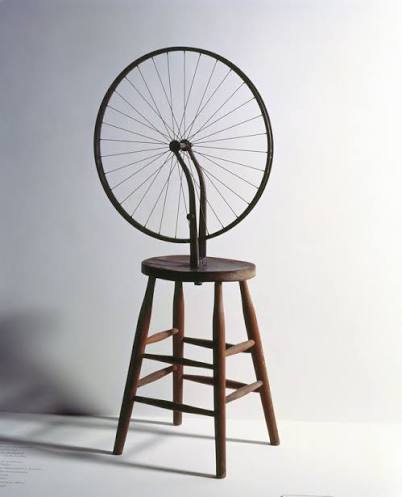
Pleasing the eye? Serving the mind? You tell me.
The Jewish Museum, Paul Klee and the Wiener Werkstätte
And sometimes our Art Experience involves a bit of serendipity. You’re reading the newspaper or the newsfeed on your phone, and you see something that triggers an association. Like the blurb describing a new exhibit at The Jewish Museum of New York, titled Paul Klee: Other Possible Worlds. And you recall an art poster you once had on the wall of your old music room decades ago, about an exhibit of Klee and Wassily Kandinski. And you recall liking it for no apparent reason (art history not being one of your strong suits).Despite the previous week’s disappointment with the Duchamp exhibit at MOMA, we made our way to the Jewish Museum.
FYI, the museum is housed in a building that was once the family home of the banker Felix Warburg (1871-1937).
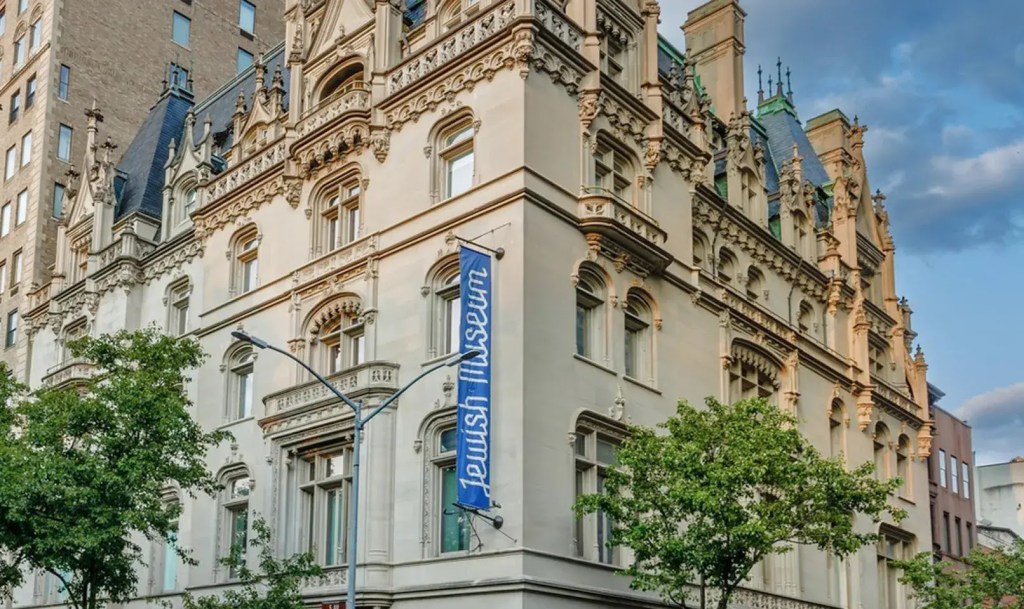
Beautiful, right? Incredible that they’d once considered razing the building for apartments!
Paul Klee (1979-1940) was born in Switzerland. He had a distinguished academic association with the Bauhaus in Dessau, Germany, before leaving for the art academy at Düsseldorf in 1931, where he wanted to concentrate more on his painting.
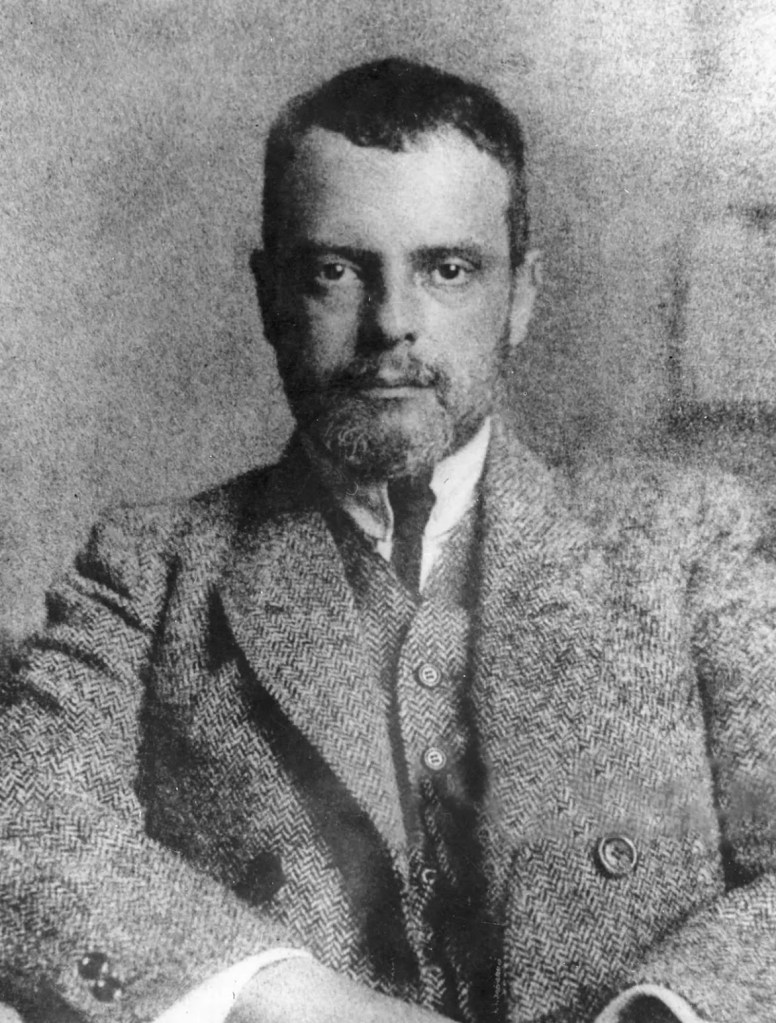
Timing was not in Klee’s favor. The Nazis (who were about to take over the government of Germany) viewed Klee’s art to be subversive and “degenerate,” and dismissed him from his position at the Düsseldorf Academy.
Klee had been born, as noted, in Switzerland, of a Swiss mother and a German father (both Christians). Under German law, his father’s ancestry made Klee a German citizen by birth. Nonetheless, Hitler referred to him as “a Galician Jew.” Geography was clearly not one of Hitler’s strengths: As we know from my previous series of blog posts from May 2023 (“Back In The Shtetl Again”), Galicia is mostly in Poland, not Switzerland. Ironically, Klee was forced into exile in Switzerland, an “immigrant” in the country of his birth.
Klee’s earlier style had been characterized as uplifting and colorful (the art aficionadi call it “chromatic”):
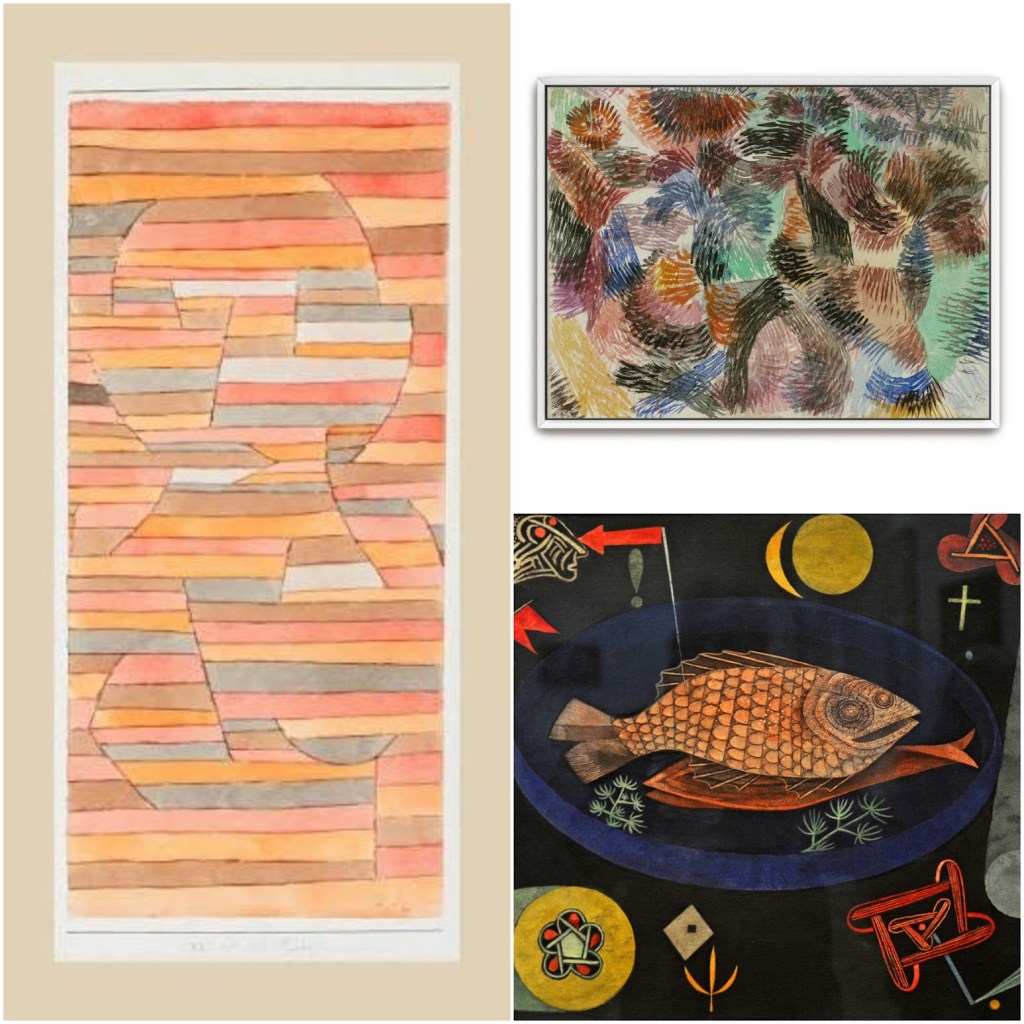
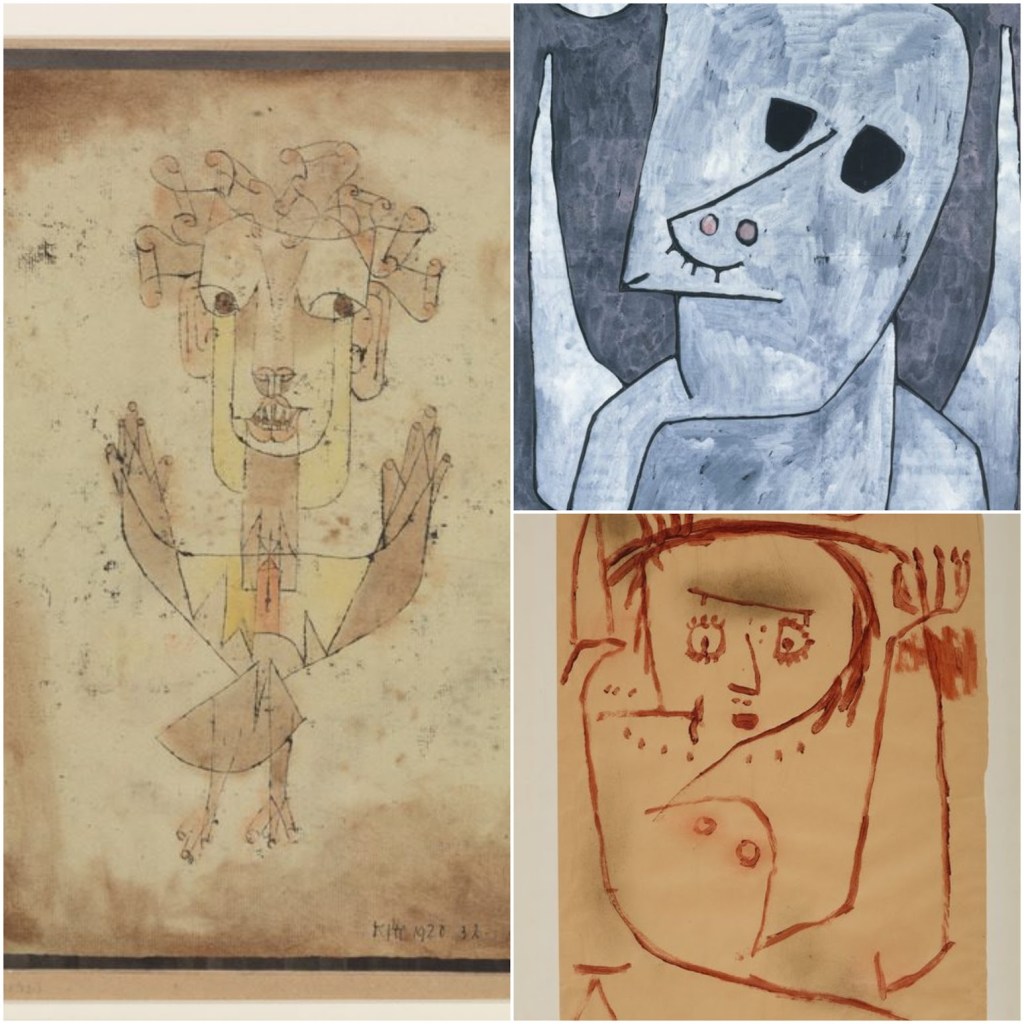
Experience with fascism was described as affecting his palette, with his work taking on a gloomier cast. Moreover, in 1935, he had to deal with the additional stress of scleroderma, a rare autoimmune disease involving the overproduction of collagen and hardening of the skin. Joint pain and stiffness resulted in his art taking on a style involving simpler forms, thick black lines, and darker, haunting themes:
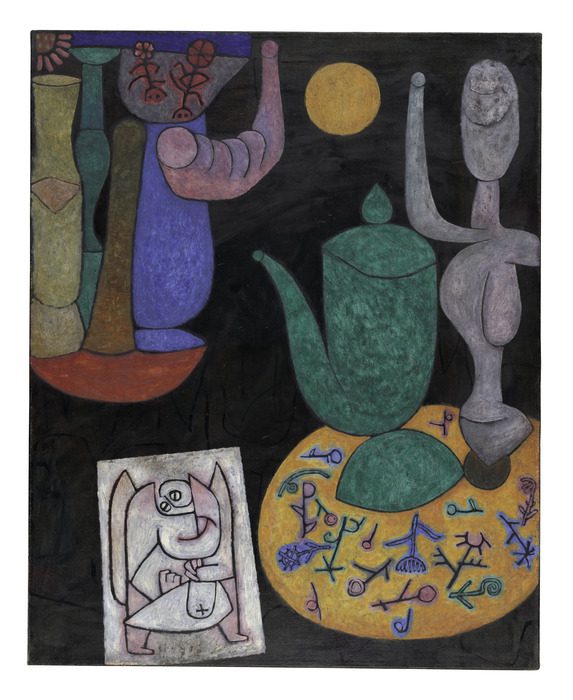
Klee died from the effects of scleroderma in 1940, leaving his last work (an untitled still life) on the easel:
Returning to the issue of serendipity: On our arrival at the Jewish Museum, we noticed another exhibit titled, “Modernity and Opulence: Women of the Wiener Werkstätte.“
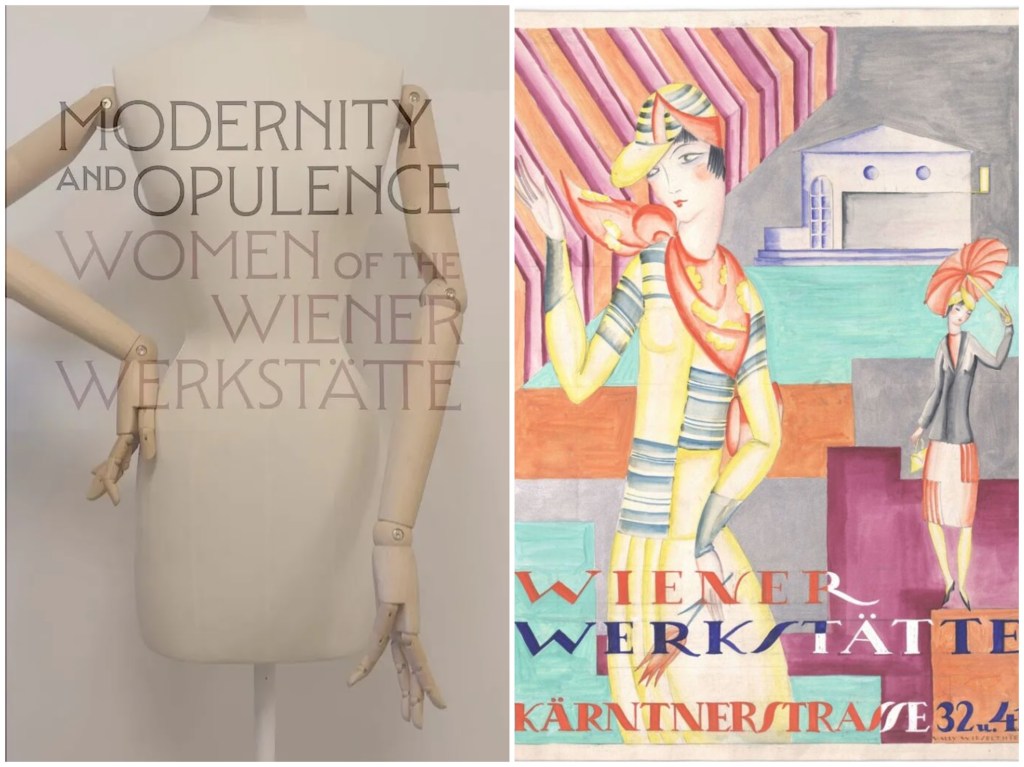
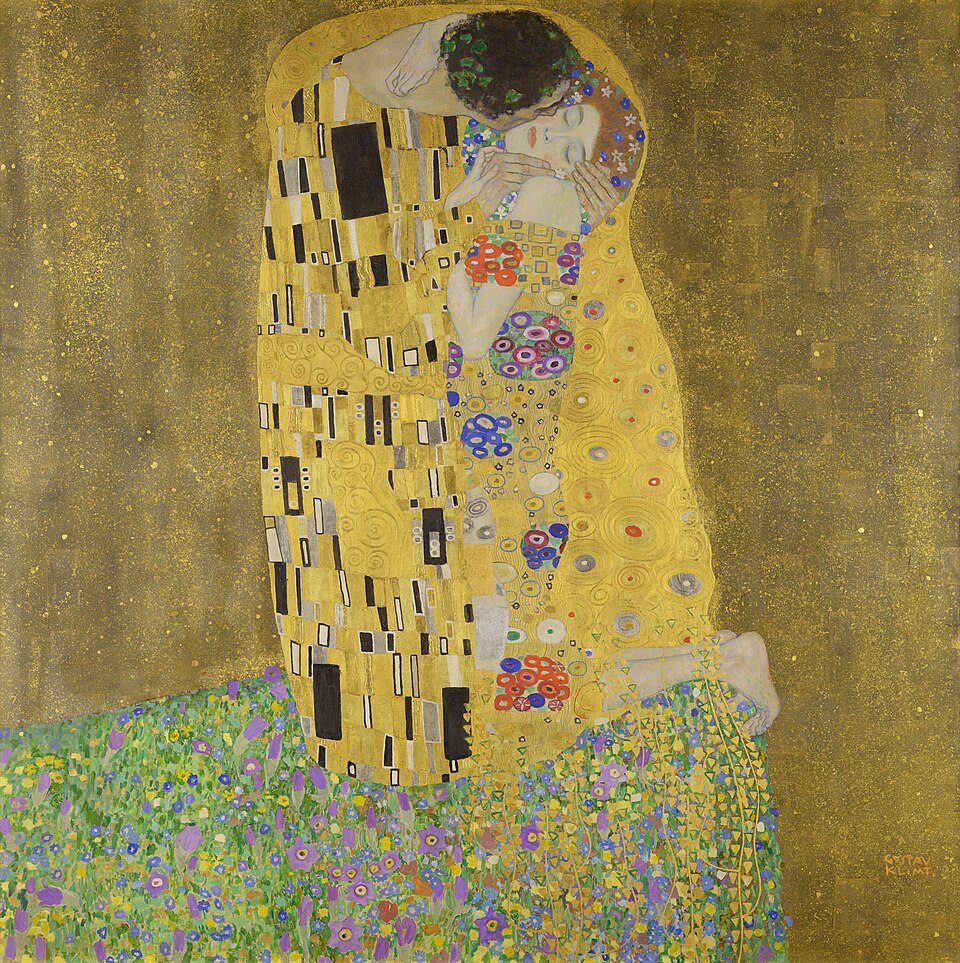
Stef and I are both Austria-philes, particularly after the trip to Vienna in July 2024 (see series of blog posts entitled “Vienna Waits For You“). We were particularly taken by the artistic revolution brought about by the so-called Vienna Secession, formed in 1897 by a group of Austrian artists. The Secession is described as rejecting the constricted historical style of the Academy of Fine Arts, and initiating the Art Nouveau movement, which favored aesthetic freedom, viz., the works of Gustav Klimt, like the well-known, “The Kiss:”
The Wiener Werkstätte (“Vienna Workshops”) constituted a cooperative of artists, designers and artisans, founded in 1903 by Secession members Josef Hoffman and Koloman Moser. They had the goal of uniting fine arts with applied arts and crafts, to make good design part of everyday life and everyday objects (furniture, fashion, jewelry, e.g.).
The exhibit focused its attention on the women (specifically the Jewish women) who made up the Werkstätte.
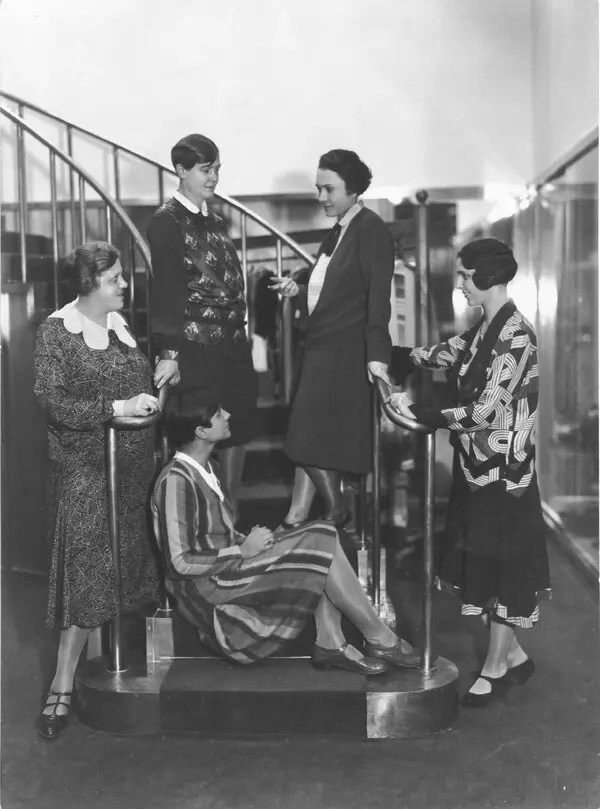
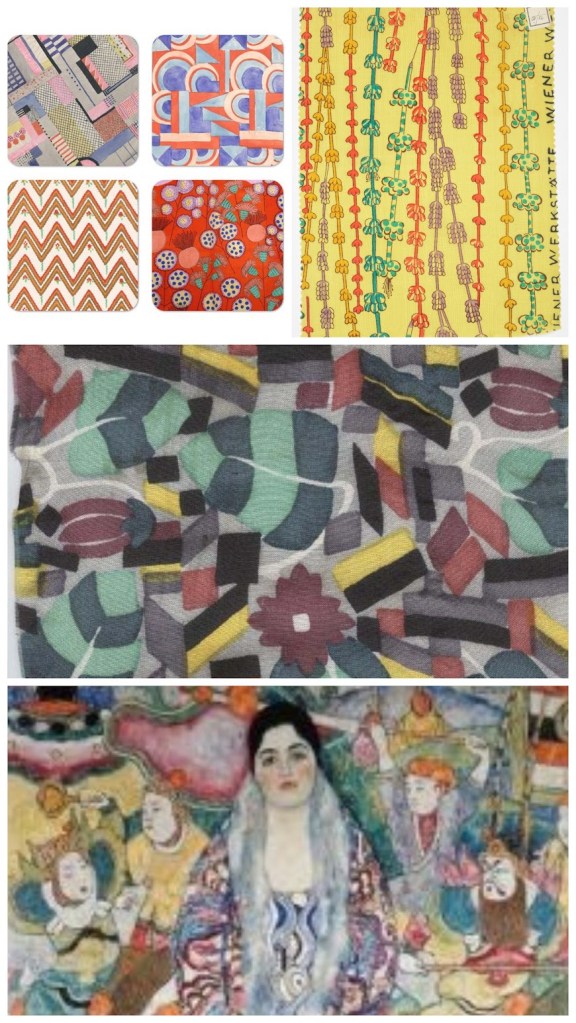
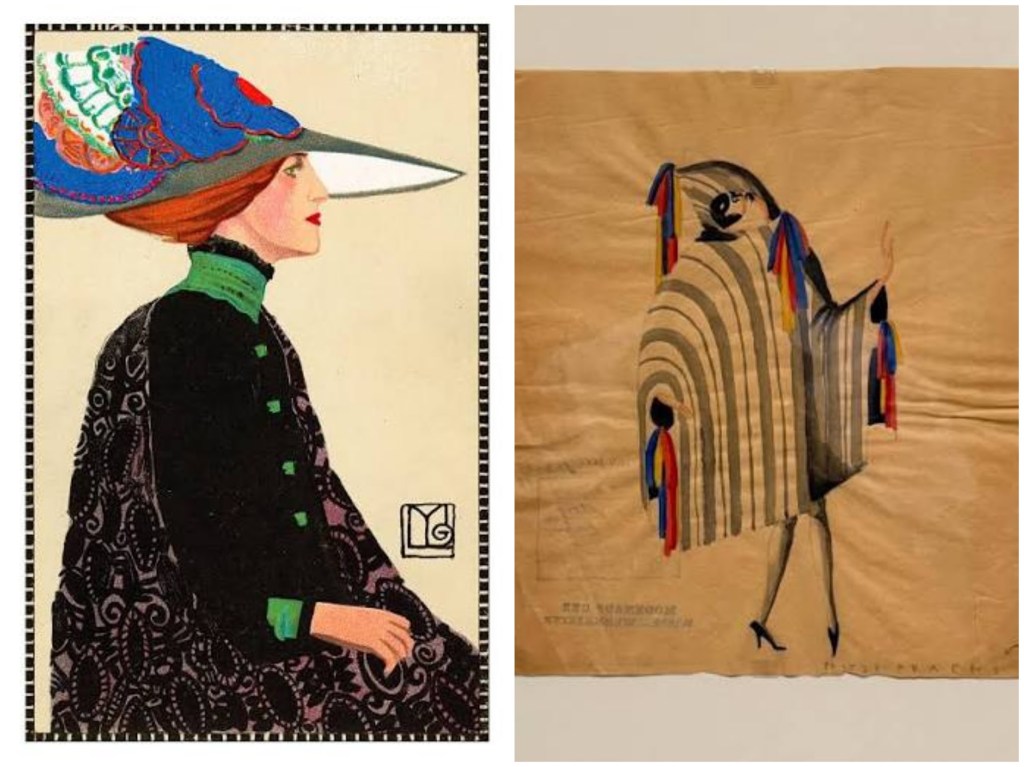
Of particular note was the change fostered in women’s fashions…..
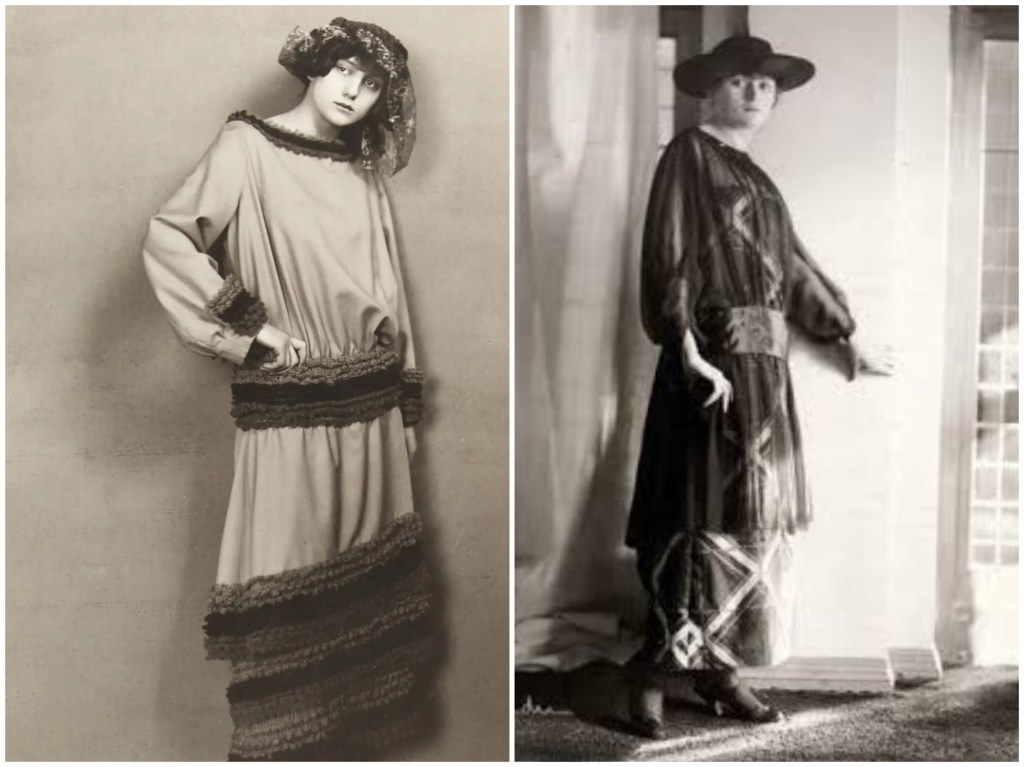
…..moving away from the 19th century bustles and corsets, to freer-flowing designs that facilitated physical comfort and movement. Of course, the black-and-white photos don’t do justice to the colors of the fabrics these women designed:
The creativity extended to tableware, furniture, postcards.
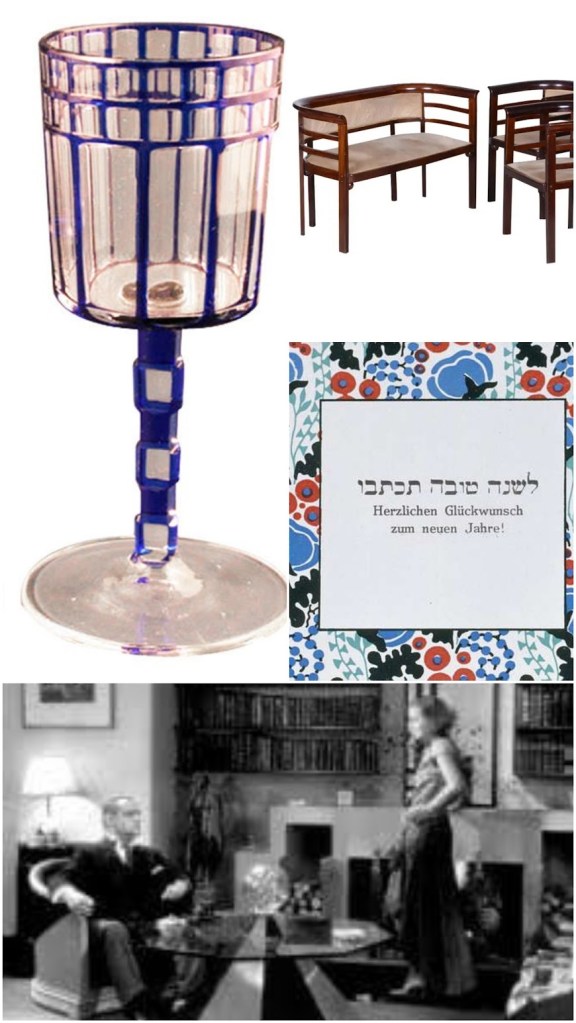
The still in the lower part, above, is from the 1929 silent film “The Kiss,” with Greta Garbo, Conrad Nagel, Anders Randolf, and the up-and-coming screen heartthrob, Lew Ayres. Boy, could they act in those days, using just their bodies and faces!
Can you imagine what it would have been like to stroll around Vienna in the midst of the Secession and the Werkstätte? (Sigh.)
But all good things come to an end. The Werkstätte wound up having to deal with financial and economic trauma at the end of the 1920s, and it closed in 1932. So sad.
Speaking of art and design, Stef and I are taking a Road Scholar tour of the art and architecture of Chicago. That’s going to be at the end of this August. Stay tuned.


 Something to Declare
Leave a comment