Stef and Stan in the Second City, Part 2
August 25, 2026
Today was our day for Chicago neighborhoods. First, off to the North Side to see Wrigley Field, home of the Chicago Cubs.
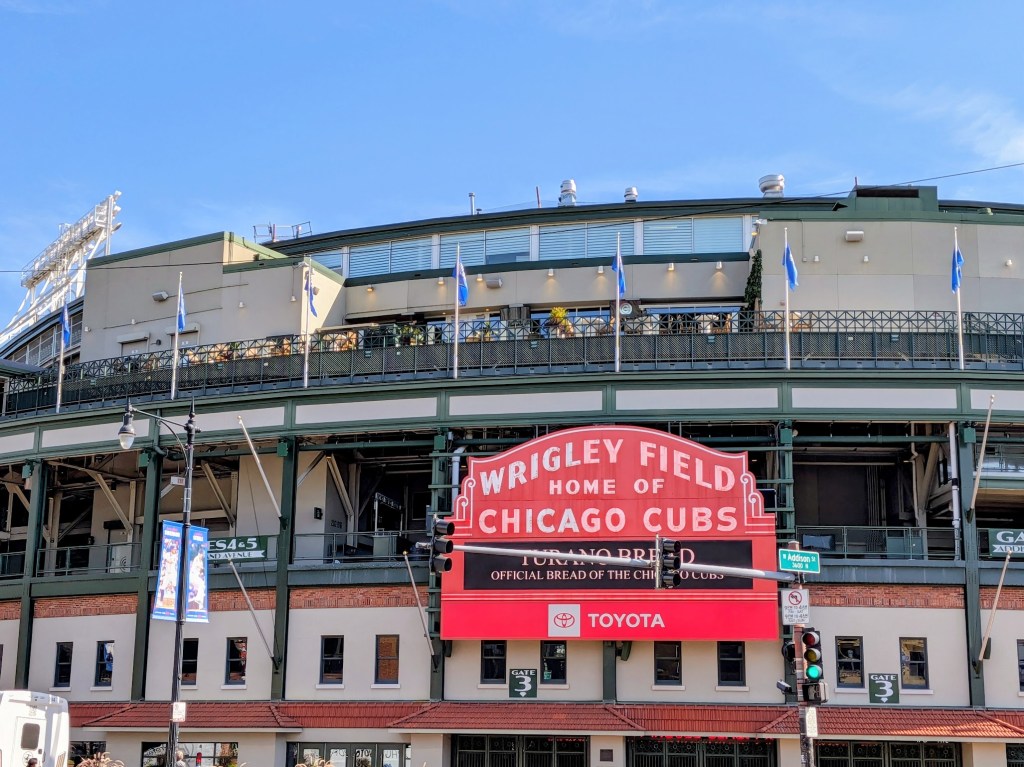
The field opened in 1914 as the home of the Chicago Whales (?), a team that lasted only one season. Their successors were the Cubs; the name was chosen to suggest youthful energy and exuberance. They played (and won) their first game in 1916, at what came to be called “Cubs Stadium.” The team was acquired in 1920 by chewing-gum magnate William Wrigley, Jr., who gave the place its present name.
Our next stop, traveling southward, was Lincoln Park, which is Chicago’s largest public park, and an historic lakeside neighborhood. It is also the home to the one of the oldest zoos in North America and one of the last free-admission zoos in the United States.
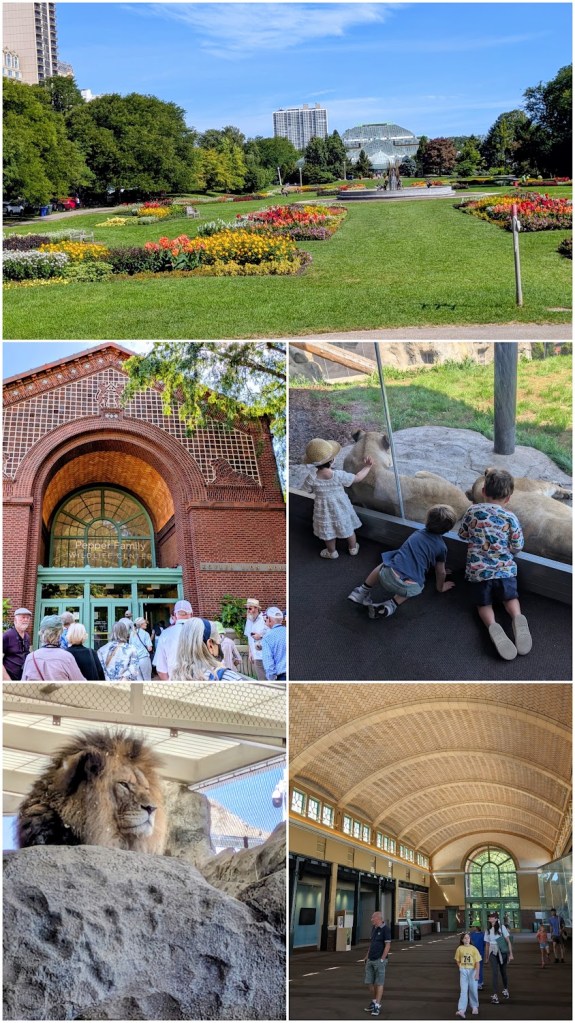
We visited the Lion House and tried to see the resting lionesses through the window semi-blocked by young children. We had a better vantage point to see the male lion sporting his mane.
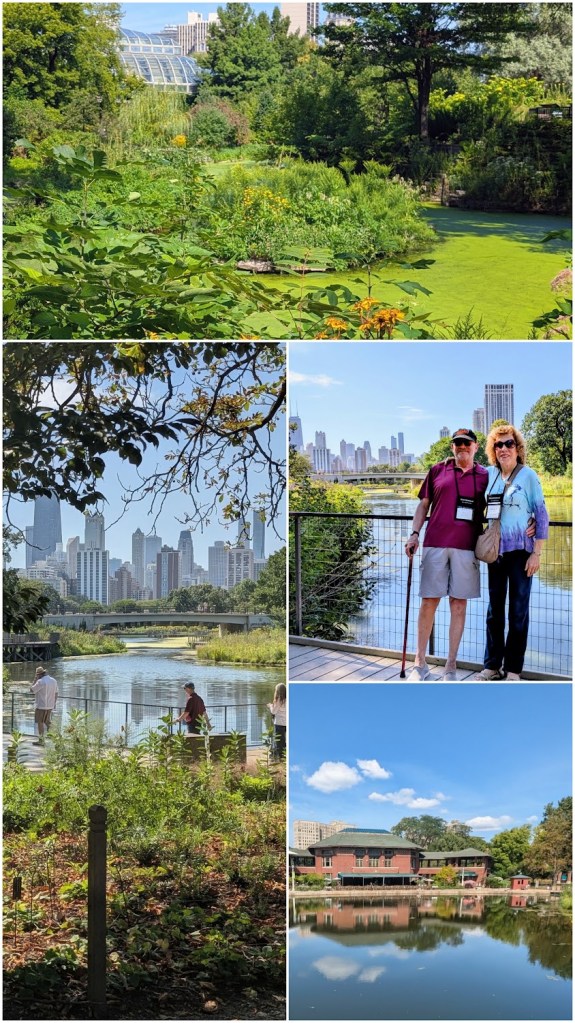
Then a leisurely walk around the zoo’s attractive grounds, including more views of the city skyline through the foliage.
We then continued south for a visit to the “Rookery,” a famous office building on South La Salle Street. The building is considered to be a masterpiece of early skyscraper construction, designed by the architectural firm of Burnham & Root.
The site had been occupied previously by a two-story temporary City Hall and water tank. This former structure had attracted large flocks of pigeons and crows (sometimes called “rooks”) and, as a result, it came to be called “The Rookery.” The older building was razed in 1885 and, even though the new building didn’t suffer from a bird infestation, it continued to be called The Rookery.” Burnham & Wood had also included relief images on the façade that were supposed to be of birds, and the name was also embedded into the flooring of the vestibule:
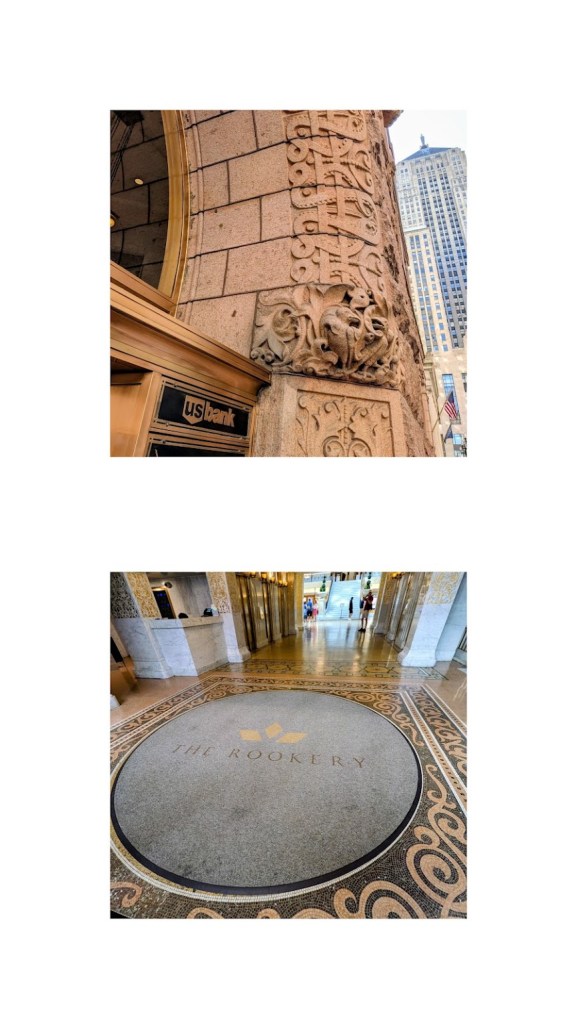
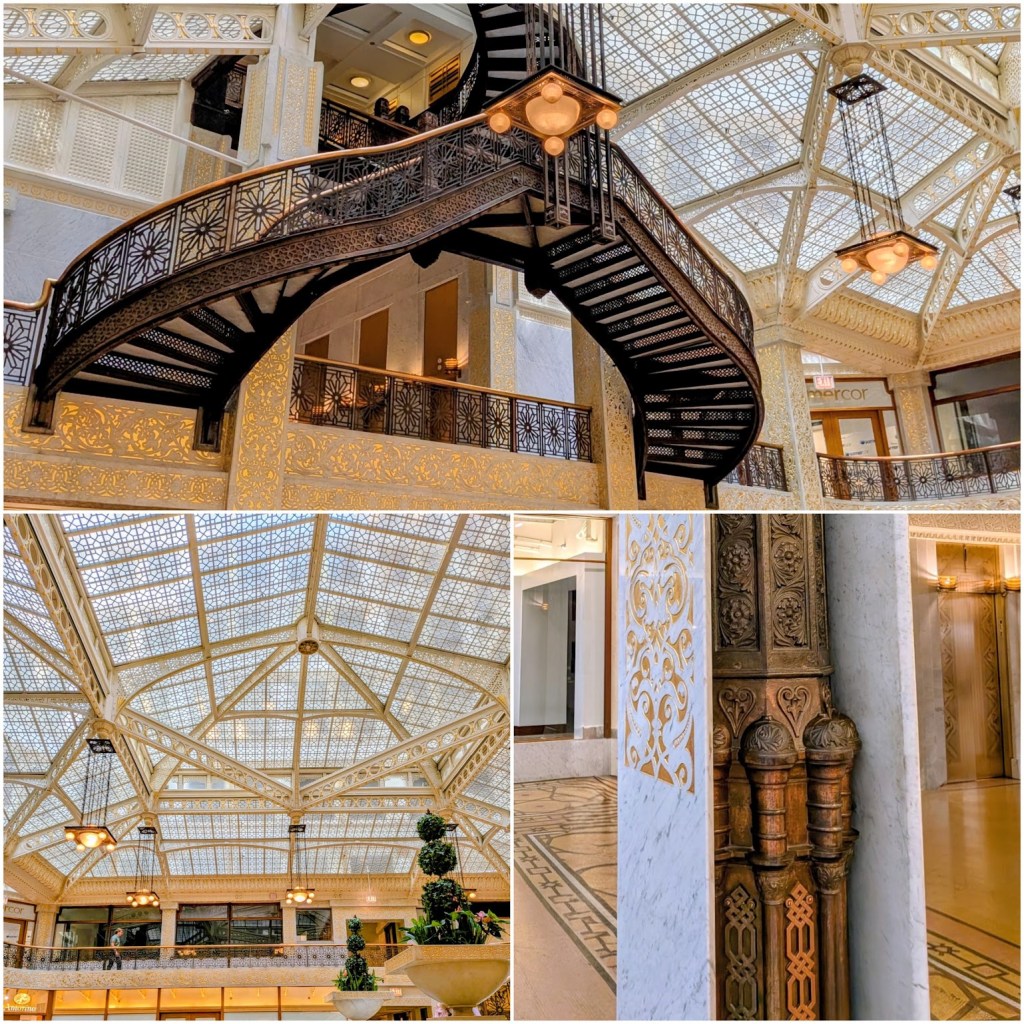
The new building was completed in 1888 and (in keeping with the retention of the name of the former structure) the atrium took the form of a giant bird cage, with a grilled skylight.
In 1905, the young Frank Lloyd Wright was commissioned to re-design the interior of the ground floor. He had the grillwork painted white (a staircase was excepted), and much of the dark, heavy ironwork was replaced with white Carrara marble, carved and gilded with delicate Persian-inspired patterns. One of the marble columns was left open on one side to show the former, darker material (below, lower right):
Then it was lunchtime, and we drove to the neighborhood of Chicago called “Greek Town.” There, at a restaurant called “Greek Islands,” our group enjoyed a luncheon feast including flaming saganaki (cheese), moussaka (casserole of layered eggplant, potato and béchamel sauce), pastitsio (Greek lasagna), spanakopita (spinach and feta pie), mixed vegetables, chicken souvlaki (shish kebab), and baklava (pastry filled with crushed nuts, honey, and warm cinnamon and cloves) and walnut cake for dessert.
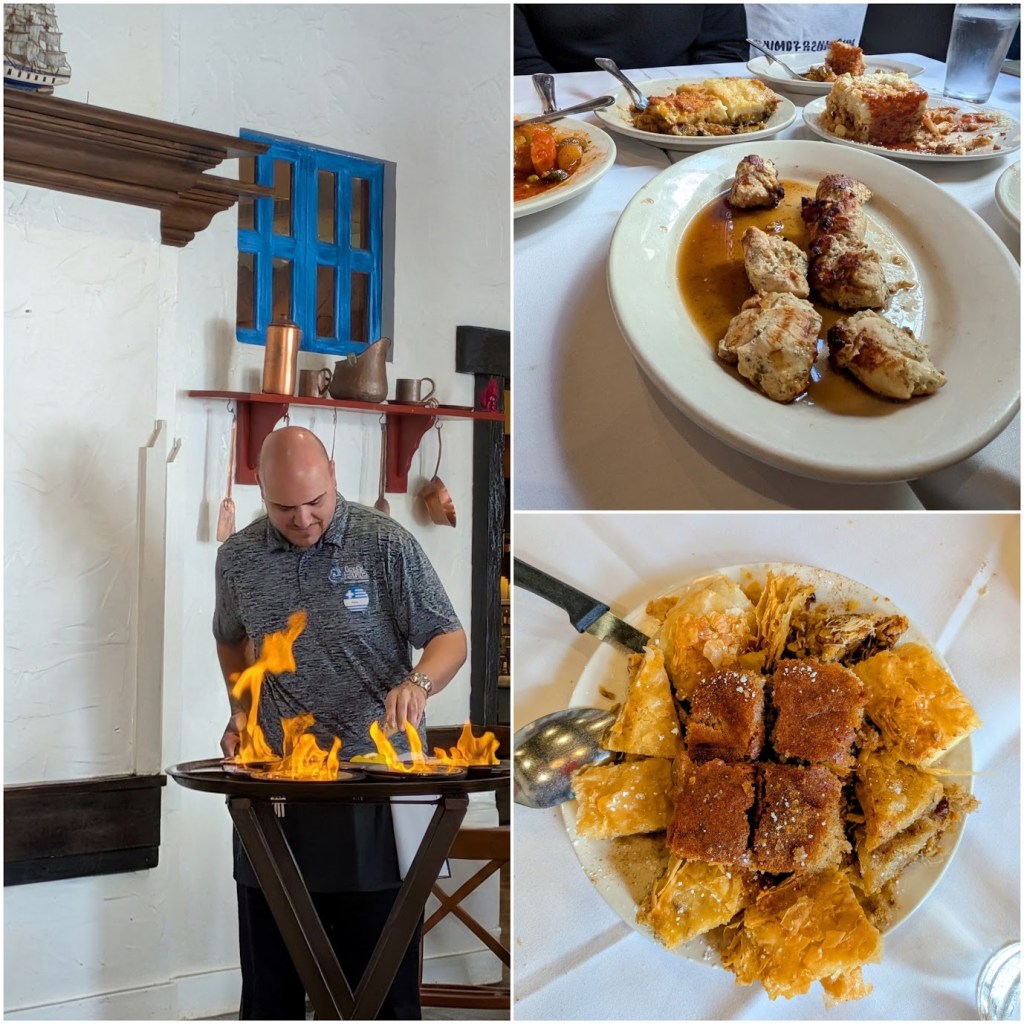
Too much food. (I know, I know, you can’t imagine me declaring something like that, right?)
The last item on today’s itinerary was the newly-opened Obama Presidential Center on the South Side of Chicago. Although tickets are sold out for months already, we made a visit to see the exterior and the public indoor areas that are quite thrilling and emotional. The façade itself was incredibly impressive, bearing a carved quotation from Obama’s 2015 speech honoring the 50th anniversary of the Selma to Montgomery marches:
“You are America. Unconstrained by habit and convention. Unencumbered by what is, ready to seize what ought to be. For everywhere in this country, there are first steps to be taken, there is new ground to cover, there are more bridges to be crossed. America is not the project of any one person. The single most powerful word in our democracy is the word ‘We.’ ‘We The People.’ ‘We Shall Overcome.’ ‘Yes We Can.’ That word is owned by no one. It belongs to everyone. Oh, what a glorious task we are given to continually try to improve this great nation of ours.”
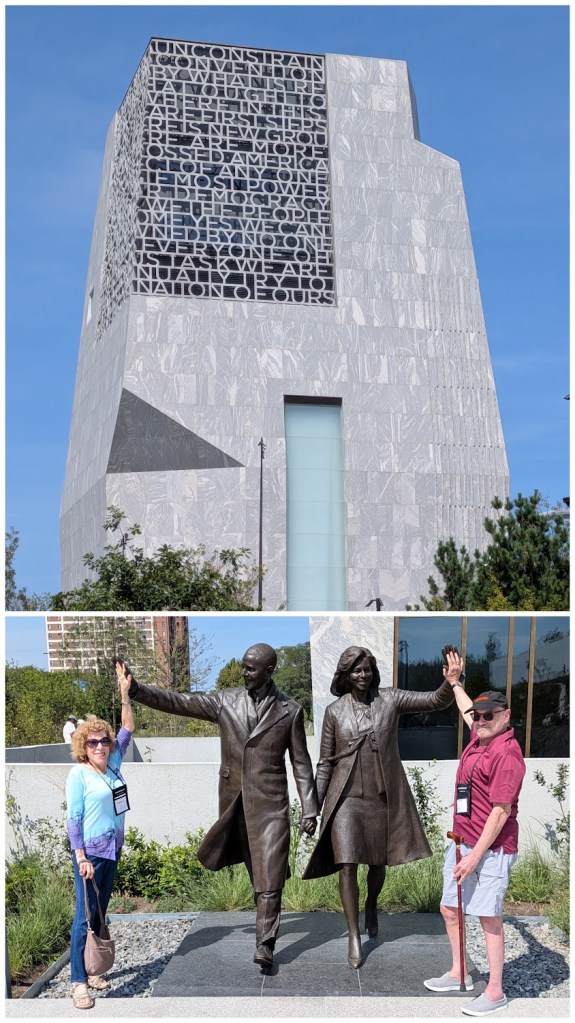
We were pleased to give “high fives” to the statues of Barack and Michelle.
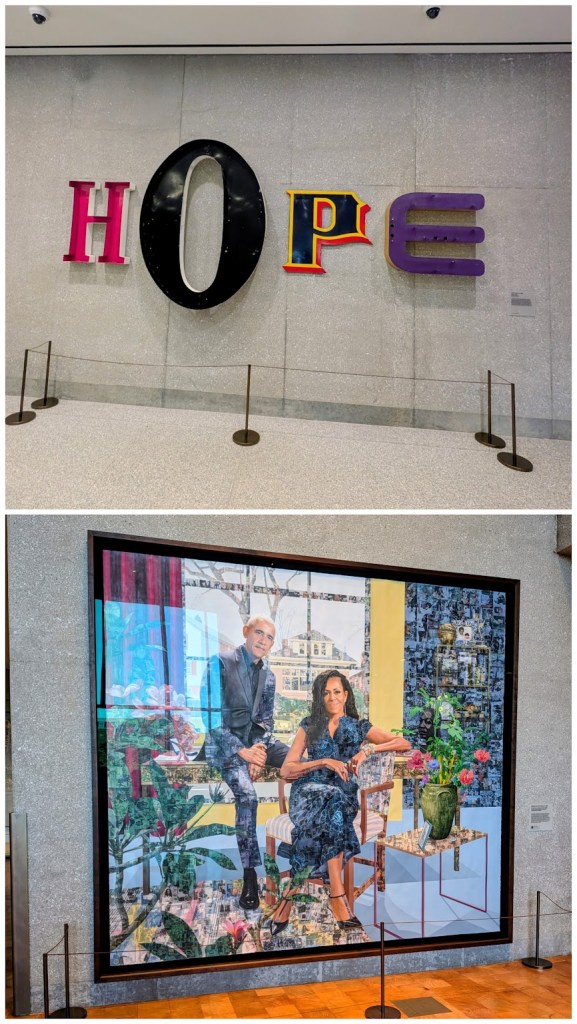
The lobby contained a reference to Obama’s motto of “Hope,” and showcased a portrait of the former President and First Lady:
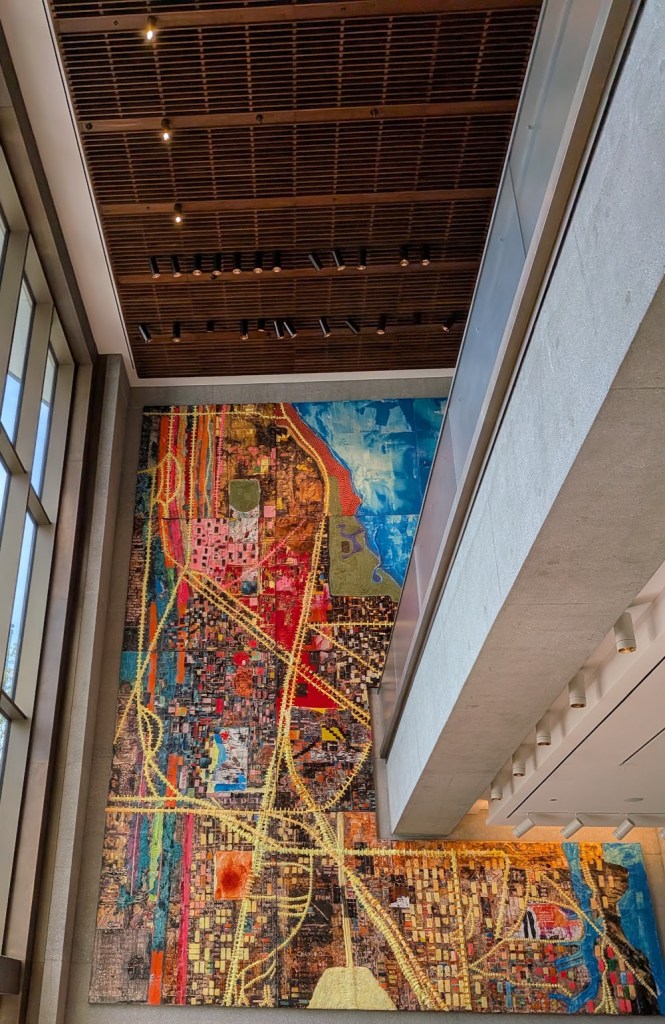
The ground floor and lower level were decorated with a colorful array of installations. Below, is City of Big Shoulders, a dynamic landscape of color, texture and movement, using layers of recycled paper, rope and string to depict Chicago’s South Side as the heart of the city.
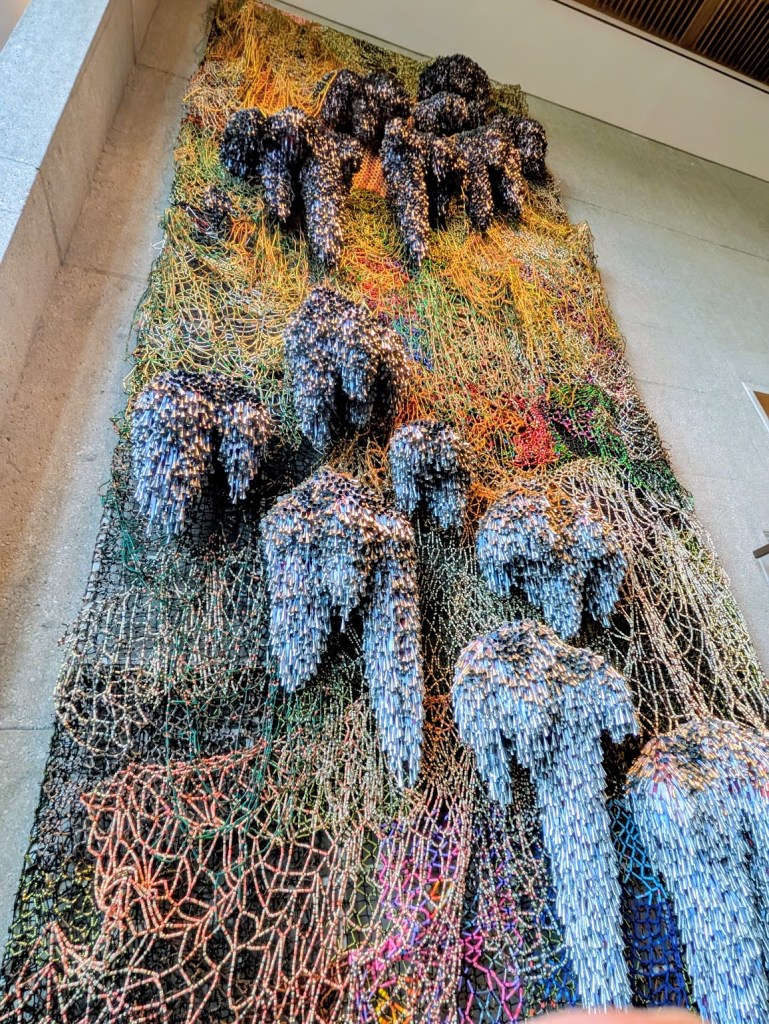
This artwork, above, called This Land, Shared Sky, is made of pony beads, shoelaces, nylon net, steel, jingles, satin ribbon and mesh.
Of particular interest to Stef (the fundraiser): Major donors to the Obama Center use their naming rights to honor notable civil rights icons, artists and public servants rather than themselves. Naming opportunities include spaces, facilities and services for people such as Harold Washington, Elie Wiesel, John Lewis, to name just a few.
The Obama Presidential Center features a museum, a branch of the Chicago Public Library, a community basketball court, a playground, a cafe, a fruit and vegetable garden–not your typical “Presidential Library” but a real community asset.
N.B.: We learned that boxes of tissues have been placed throughout the Center, because so many visitors have been moved to tears. All in all, an emotional and uplifting experience despite our limited access.


Leave a Reply