
Stef and Stan in the Second City, Part 5
August 28, 2026
The official Road Scholar tour was over this morning, and we took advantage of the opportunity to have a leisurely breakfast, use the hotel’s gym, and schedule only one touristic activity. This was a visit to the International Museum of Surgical Science.
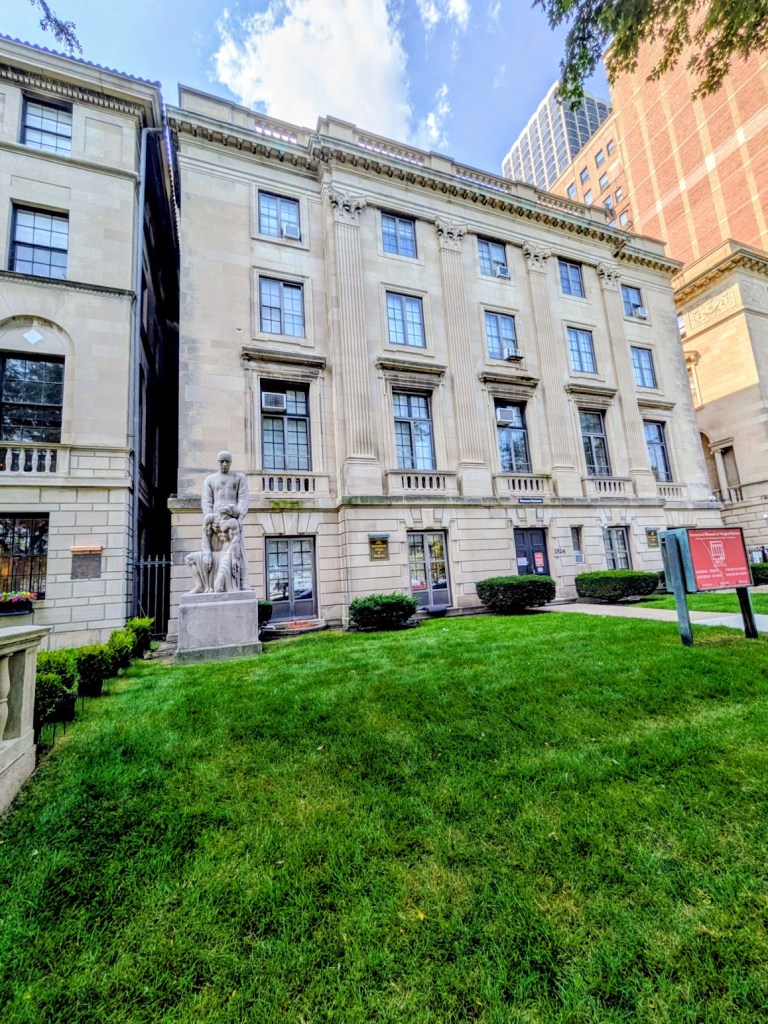
The IMSS is North America’s only museum dedicated exclusively to the science of surgery. It was opened in 1954 by Dr. Max Thorek and the International College of Surgeons. It’s located in an historic 1917 Gilded Age lake-front mansion on North Lake Shore Drive (in the neighborhood known as the “Gold Coast“).
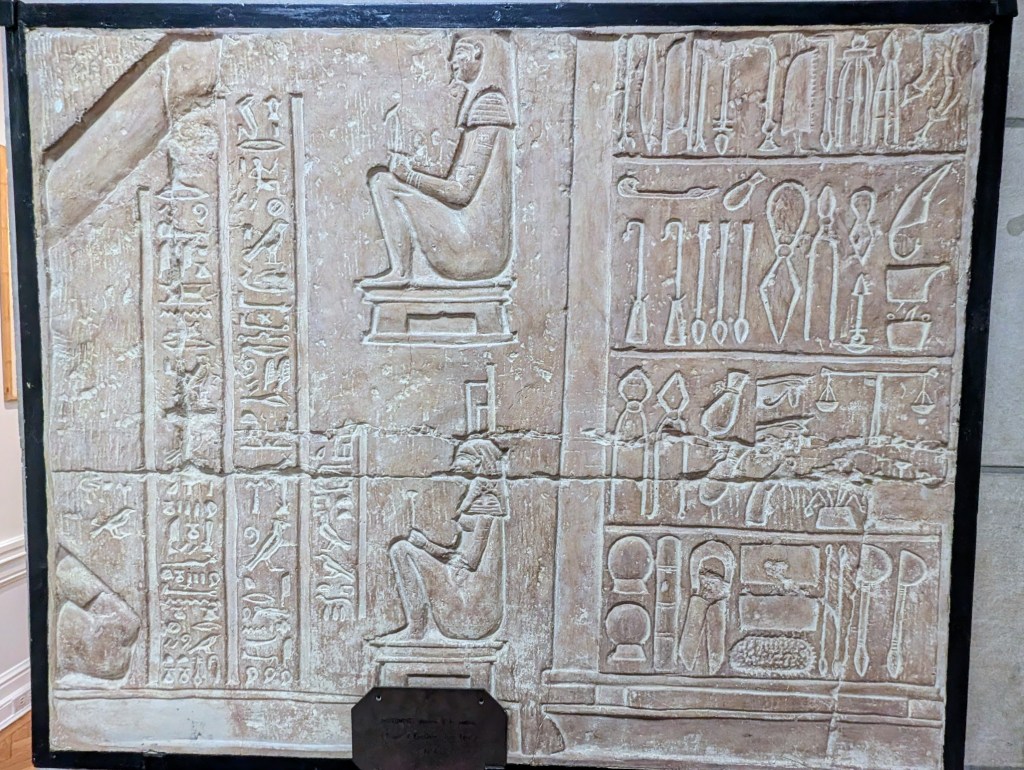
Being devotées of “ER,” “The Pitt,” “Chicago Med” and other medical dramas (soap operas??), Stef and I couldn’t resist this place. It displays objects and information regarding surgery that go back to the very beginnings, like a tablet from Egypt, dated 300 BCE, showing hieroglyphics and images of surgical instruments.
Some of these exhibits of early surgery bordered on the skeevy, like the display of remains of patients treated for headaches, head trauma and mental illness by a procedure known as “trephining” (cutting a hole in the skull to release evil spirits [below, top]). It may be hard to believe, but these surgeries were believed to have a decent survival rate.
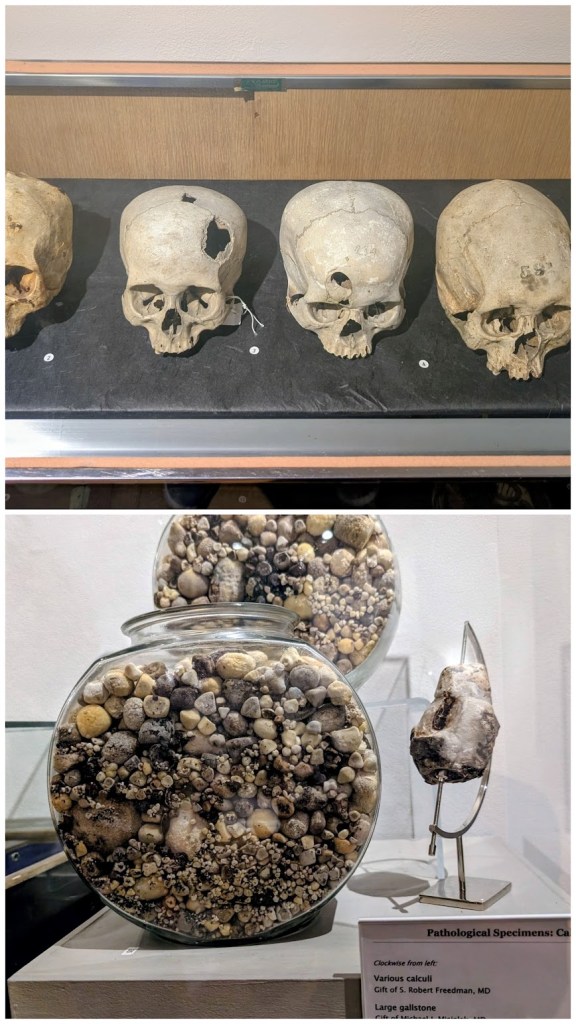
Another exhibit (above, bottom) displayed bowls of gallstones that had been surgically removed (Eeeuuwww!).
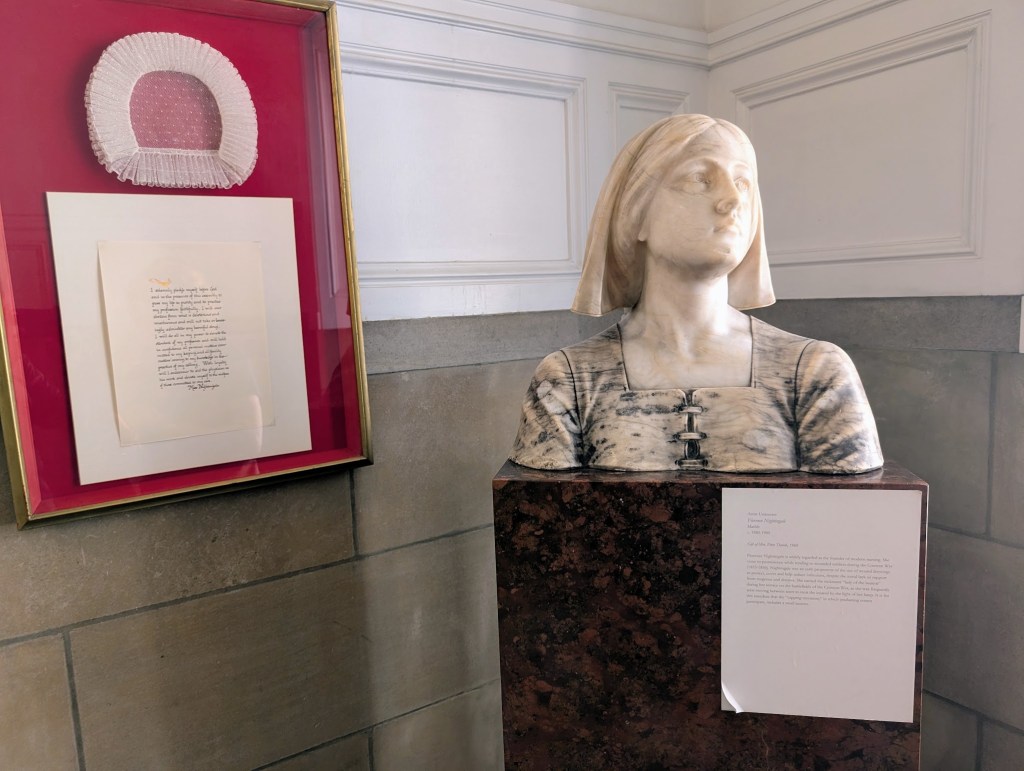
We were suitable impressed by a bust of Florence Nightingale and one of the actual nurse’s caps she wore, as well as a room devoted to the role of nursing in the history of medical care.
Several exhibits explained early medical products and treatments that would be banned today by the FDA, such as patent opiates to treat fussy infants; heroin (!) prescribed for pain relief; and products consisting (in no small part) of alcohol, mercury, arsenic and other toxic substances for coughs and colds.
We were interested to learn that heroin got its name from the word “heroic” due to its supposed healing properties. It later became apparent that it was very addictive, and its sale was discontinued in 1913 (after 14 years of being readily available from a Sears & Roebuck catalog!).
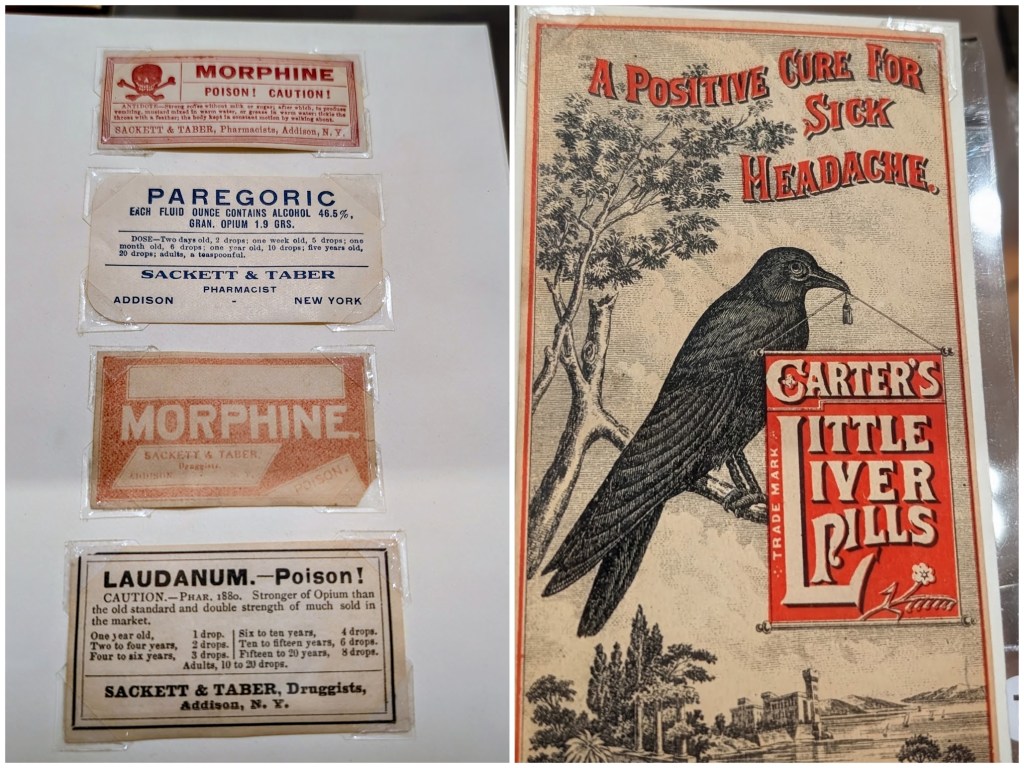
A section of the museum was dedicated to the use (and misuse) of types of treatments, like radiation. After Herman Röntgen made his accidental discovery of X-rays in 1895, the science of medical imaging was born. At the same time, some people marketed X-rays as a method by which women could remove facial hair (!), with tragic results.
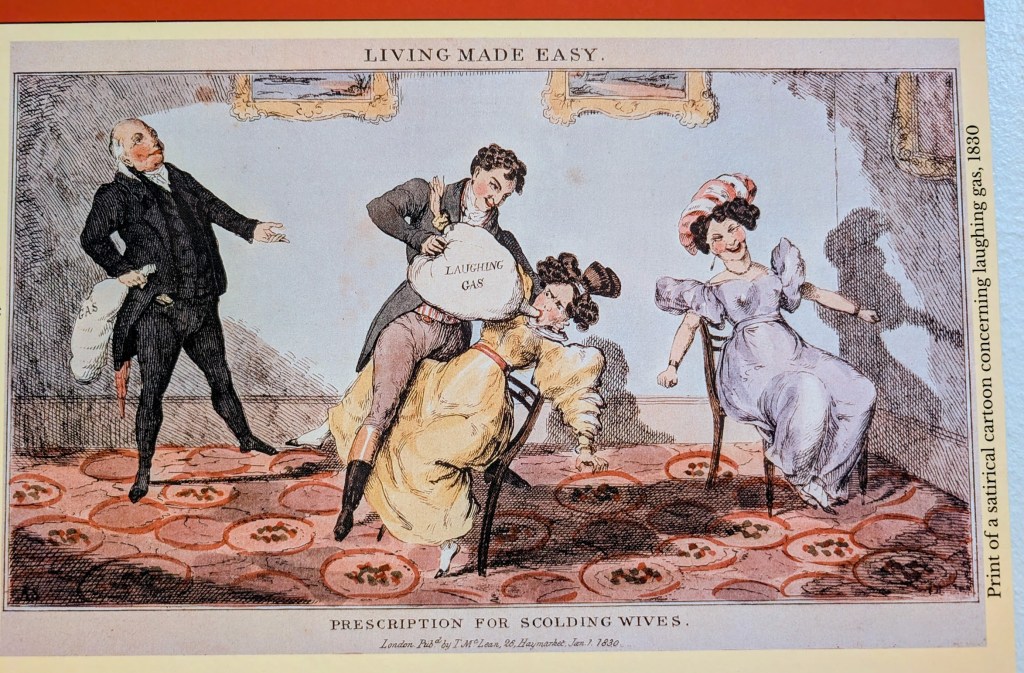
And anesthetics! A display showed how the discoveries of ether and nitrous oxide provided the opportunity to relieve surgical and dental pain; at the same time, these medications were marketed for recreational purposes (“ether parties”) and ways for men to control assertive wives.
In addition to medical quackery and sexism, the IMSS had displays describing racism, e.g., how medical care and medical and nursing training was denied to minority populations.
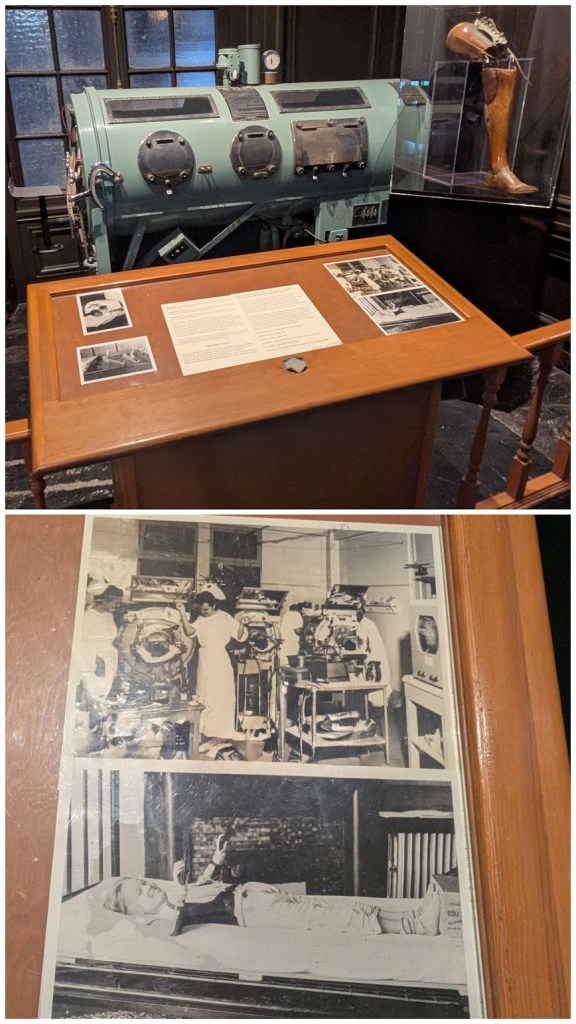
What medical history museum would be complete without a display on the polio epidemics of the 1940s and 1950s, and the use of iron lungs, before the discoveries of vaccines by Drs. Salk and Sabin? Pay attention, RFK, Jr.!
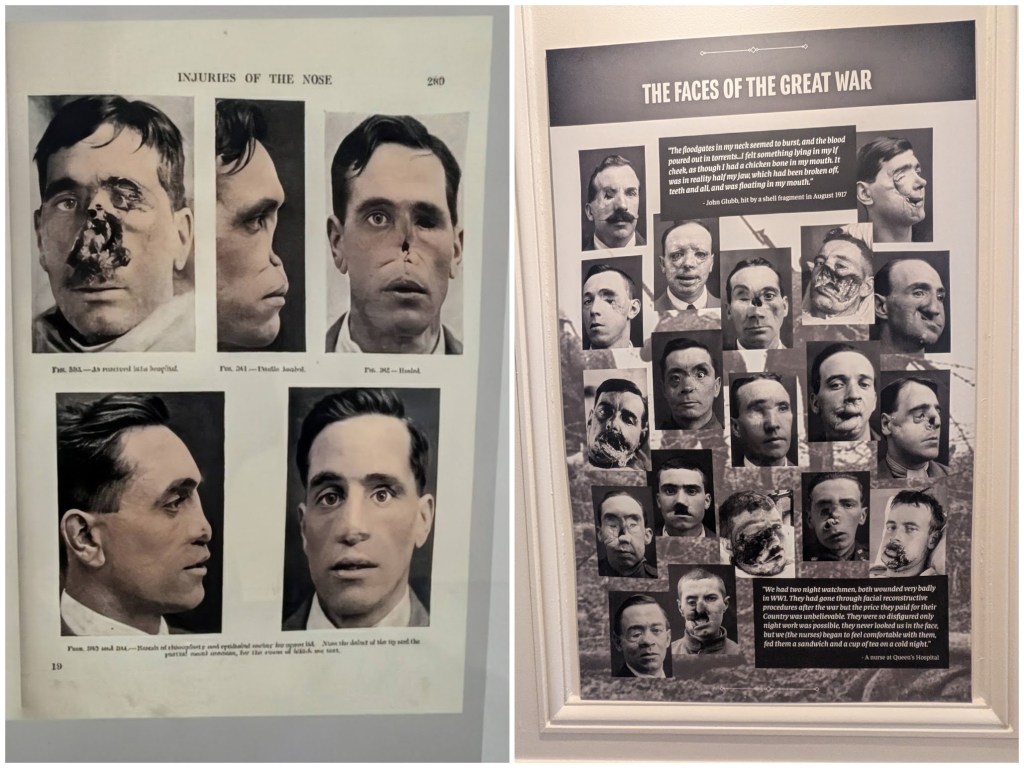
We learned that the art of plastic surgery grew out of the need to treat wounded, disfigured soldiers in the First World War. The museum contained several graphic displays on this subject, e.g.:
There was also an extensive installation of the drawings of Konstantinos Kantzatzis, a Greek-born and German-trained dermatologist, who goes under the name of KANT. The drawings tended to lean toward the surreal, viz.,
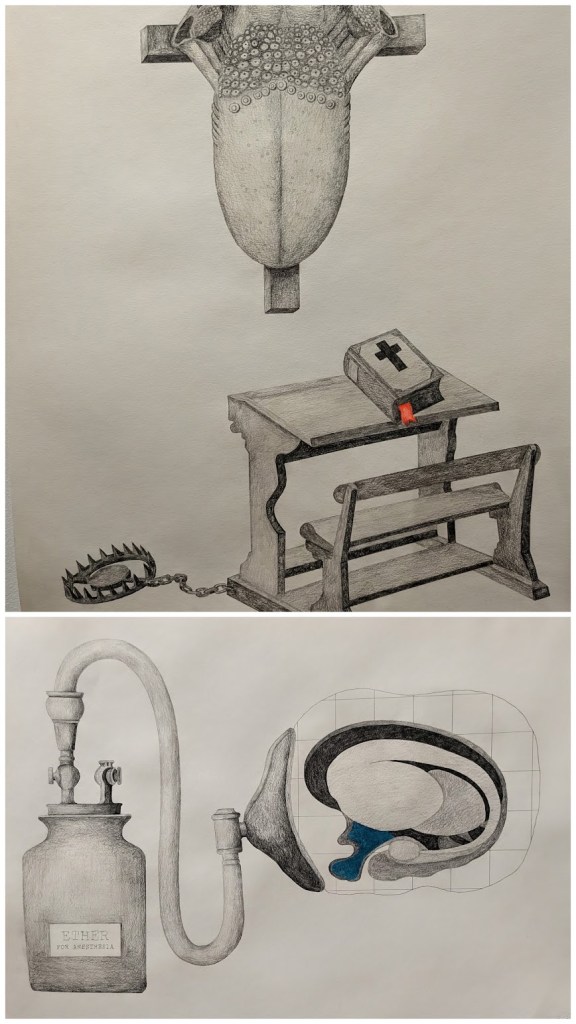
The upper one (leg trap attached to a child’s desk, with a bible, and a crucified tongue). The narrative suggests that it represents “the intersection of faith, innocence, speech.” The drawing below depicts an anesthetic medical device connected to a cross-section of the human brain. The meaning? “The connection between medical technology and human vulnerability.”
Ummmm…..well….okay. (As we know, the meaning of modern art is in the eye of the beholder, n’est-ce pas?
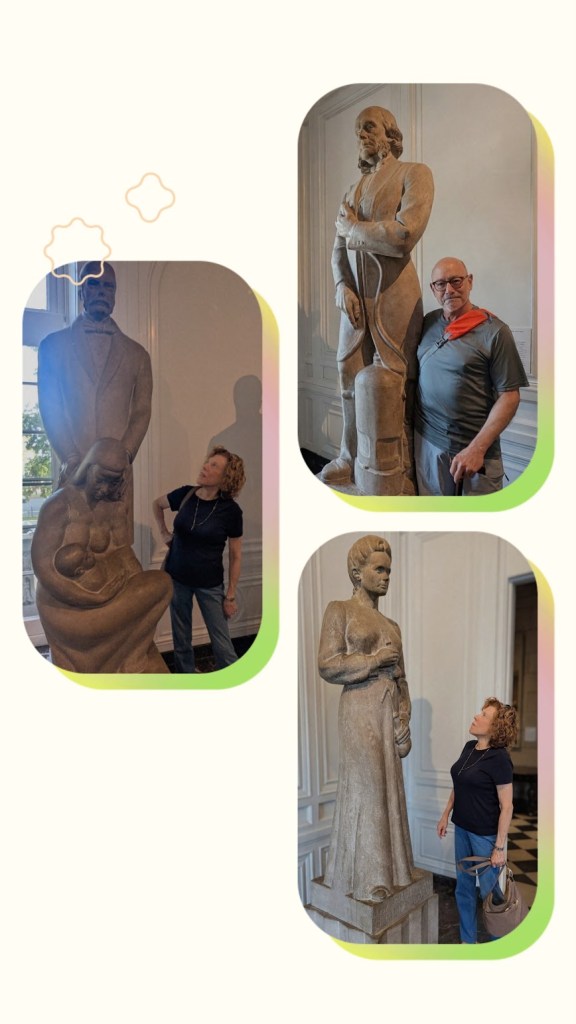
Finally, the Hall of the Immortals, larger-than-life sculptures of the foundational figures of medicine and allied science, including Joseph Lister, the pioneer of antiseptic surgery (not the inventor of Listerine!); Ignaz Semmelweis, who advocated hand-washing before the emergence of Louis Pasteur’s germ theory; and Marie Curie, who discovered radium and polonium, pioneered radiation therapy for cancer (and not, we imagine, for facial hair removal!).
There was lots more, but we are limited by the constraints of space and time. That was all for Friday. One more day in Chicago………


Leave a Reply