
Stan and Matt Visit Ireland (Day 5)
Monday, October 19, 2026
Last day in Ireland. So much left to do; so little time. On our list of things-yet-to-do were Dublin Castle, the Guinness Storehouse, and the Kilmainham Gaol.
Well, the Castle was officially closed for the remainder of 2026, so that was the end of that. As a substitute we thought we’d try the Irish Museum of Modern Art (IMMA). This, too, turned out to be closed (crap!). But the museum itself is housed in an historic 17th Century building that was the former home of the Royal Hospital, Kilmainham. So Matt and I strolled the grounds in the rain.
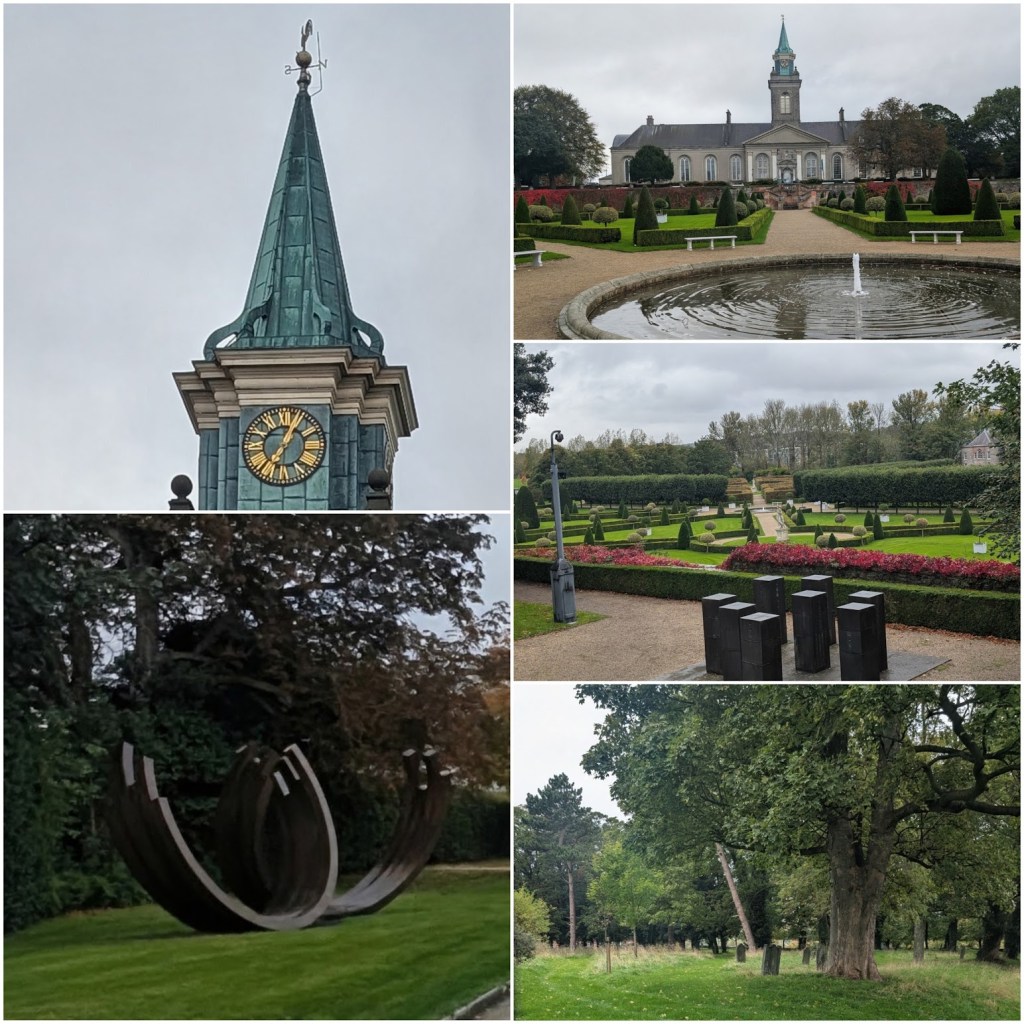
As you can see, the building has beautiful formal gardens. It’s also appurtenant to Bully’s Acre (above, lower left), an historic burial ground going back to the 10th Century, holding the remains of the son and grandson of the 11th Century Irish King Brian Boru, killed at the Battle of Clontarf (1041), in which the Irish defeated Viking invaders.
From IMMA to the Kilmainham Gaol (pronounced “jail”). Built in 1796, this prison has held thousands of men, women and children for crimes that ranged from minor offenses (3-year-olds arrested for begging!) to political “crimes” in the fight for Irish independence.
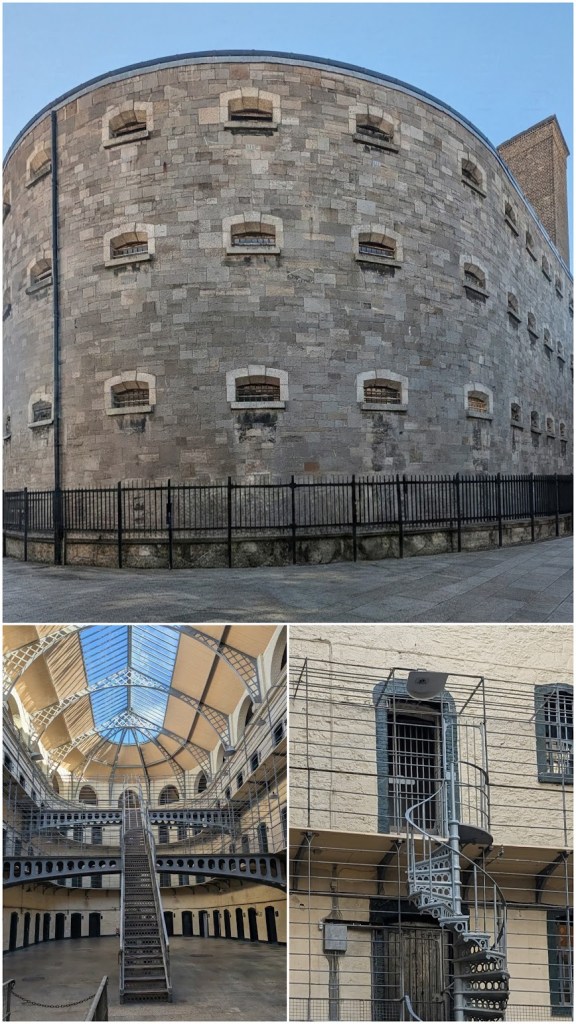
The latter goes back to a 1798 rebellion, but our tour leader (a Canadian woman of Irish extraction) spent most of the time discussing the prison’s relationship to the early 20th Century, i.e., the Easter Rising of 1916, the Anglo-Irish War (1919-1921) and the ensuing Irish Civil War (1922-1923).
I’ll try to be as brief as possible. In 1916, a small group of radical Irish republicans seized buildings in Dublin (remember the Easter Proclamation made at the General Post Office?). British forces crushed the rebellion in six days and executed many of its leaders. In 1918 the nationalist party (Sinn-Fein) won a majority of Irish seats in the British Parliament, but they refused to be seated in London. Instead they remained in Dublin and set up their own Irish parliament, the Dáil Éirann, and formally declared independence in 1919.
Then followed the bloody war between Britain and the Irish nationalists, culminating in a truce and a peace treaty in 1921, establishing the Irish Free State. The treaty was not accepted by the more radical nationalists, since it allowed the counties in the province of Ulster to remain British. The Irish Republican Army rebelled in turn against the new Free State in a civil war lasting until May 1923.
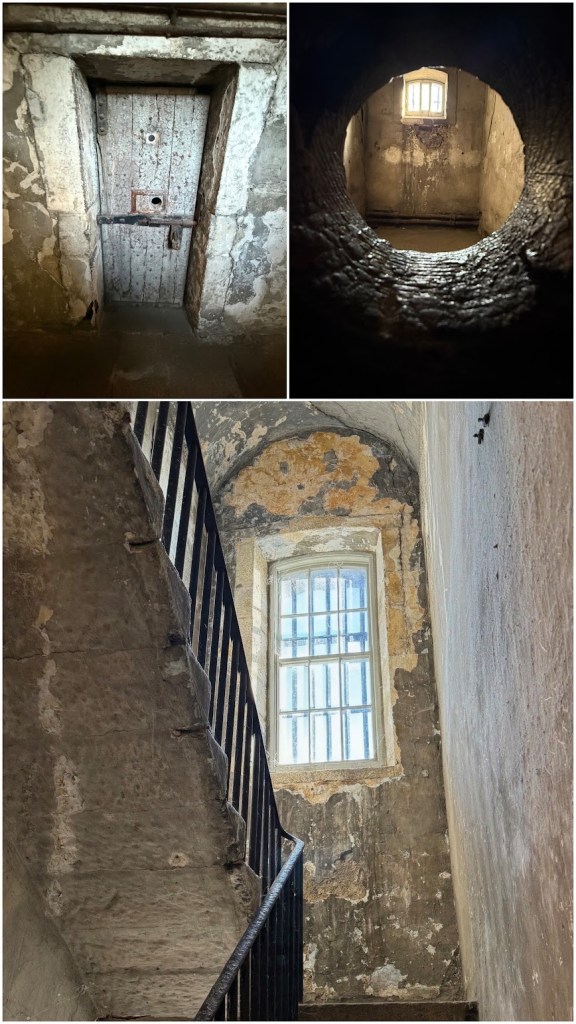
During this time, the Kilmainham Gaol was used by the British to incarcerate captured Irish national rebels, including Éamonn de Valera (1882-1975) who later served as President of the Republic of Ireland between 1959 and 1973l. As you can see below, it was a grim place.
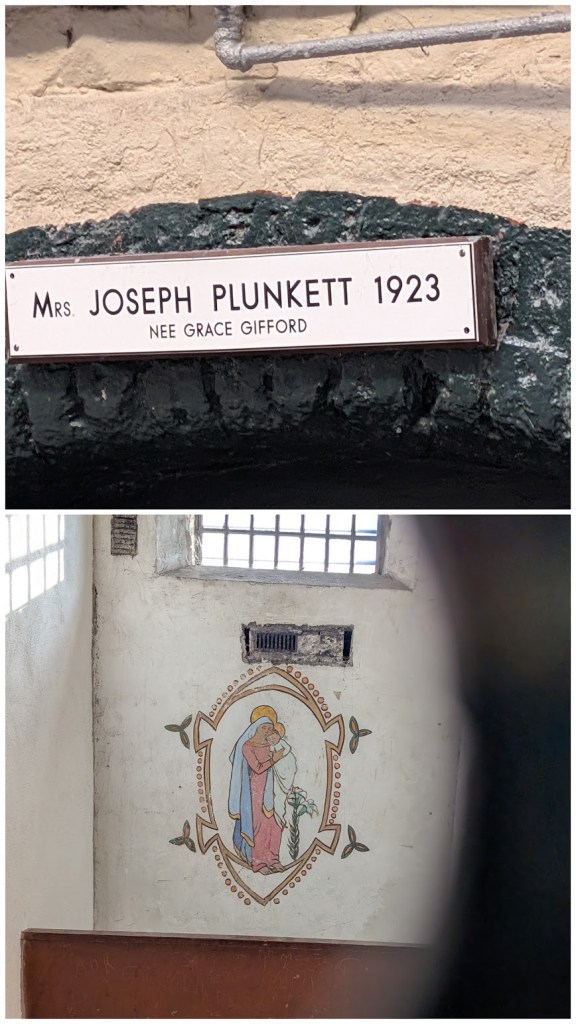
It was also used as a place of execution for those condemned by the British Crown. We were told the story of Joseph Plunkett, a condemned Irish nationalist, who was permitted to marry his fiancée, Grace Gifford (also an inmate of the prison) only hours before he was executed by firing squad. We saw Grace’s cell, on the wall of which she had painted a Madonna and Child.
We also learned about how, in the Civil War of 1922-1923, the Irish Free State itself used the prison to hold and execute ant-Treaty radicals.
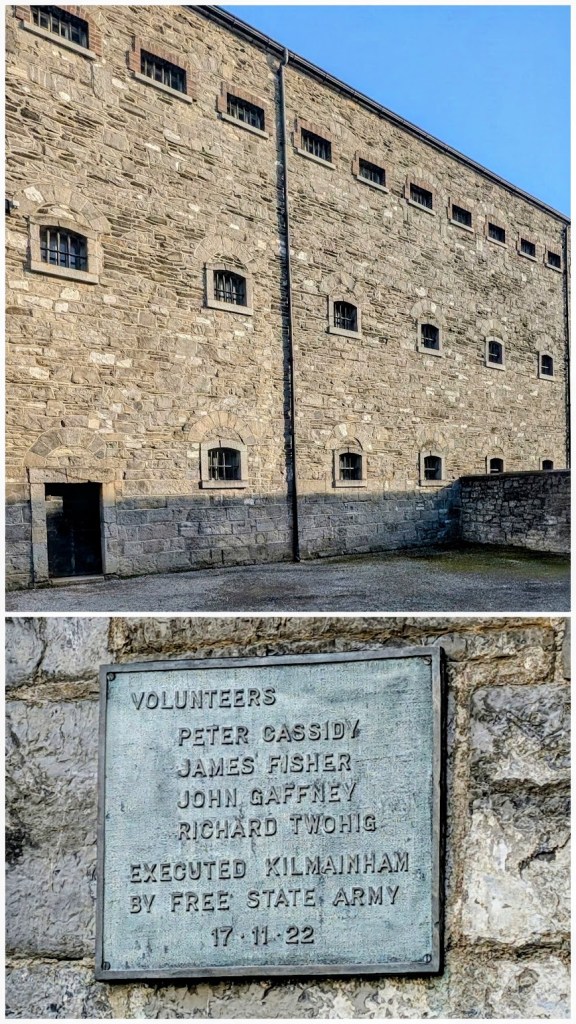
Heavy stuff, right? Before this trip, the Irish fight for independence was something I understood only intellectually. Like the impact of the visit to Auschwitz in 2023 (see series of posts, “Poland: Back in the Shtetl Again“), the visit to Kilmainham made an emotional impression.The prison was converted to a museum in 1966, to coincide with the anniversary of the Easter Rising of 1916.
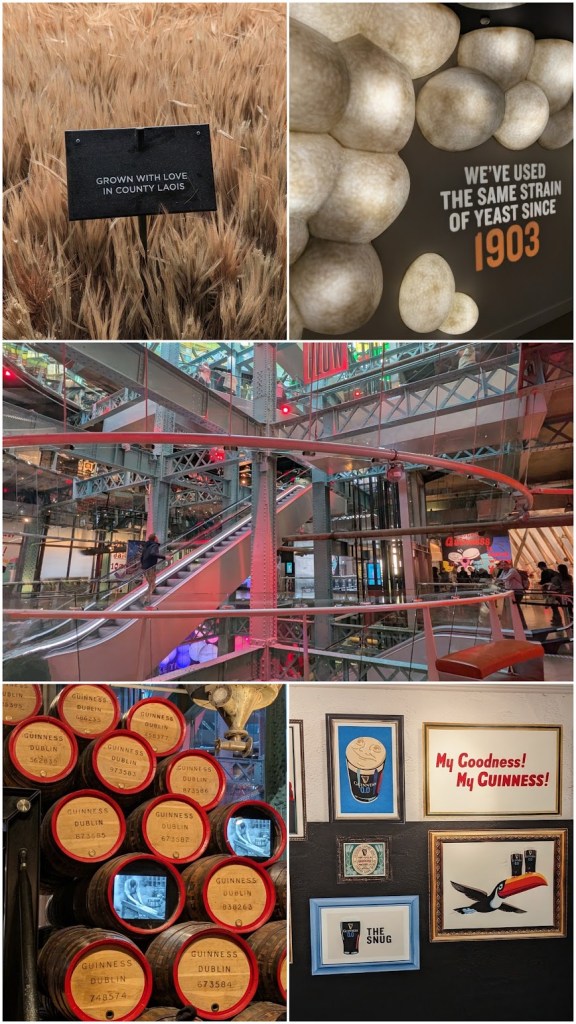
The day concluded with a visit to the Guinness Storehouse, which is where the makers of the famous beverage showcase their product. The place is large and obviously designed to be impressive. A sort of brewery cum Willy Wonka’s Chocolate Factory cum Disneyland. The plant highlighted below, upper left, is barley, FYI.
We were pleased to find that the tour included a visit to a tasting room (the white cylindrical things (below, top) provided sniffs of the essences of the brew)…
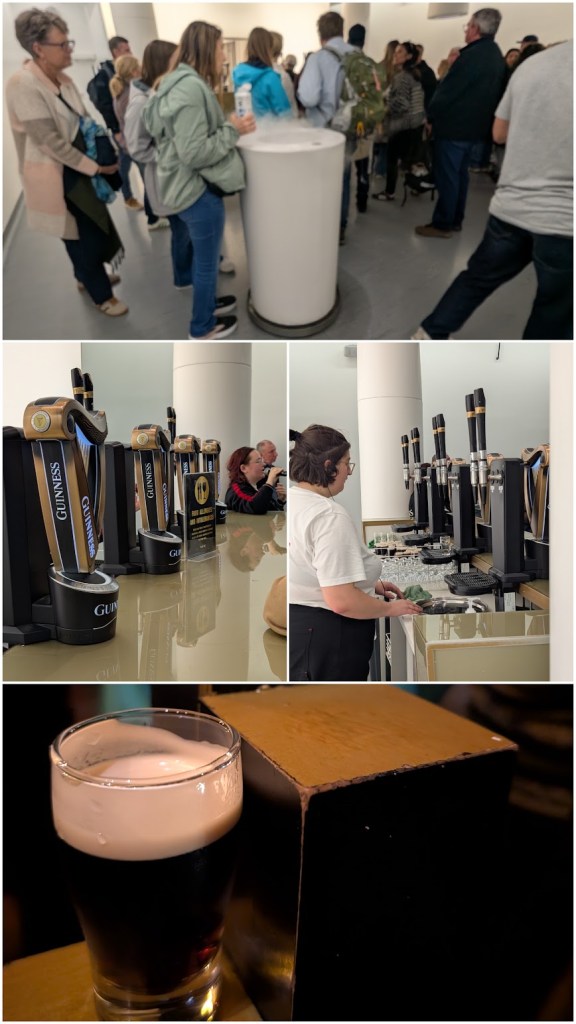
…and a complementary pint of Guinness in the top-floor brasserie.
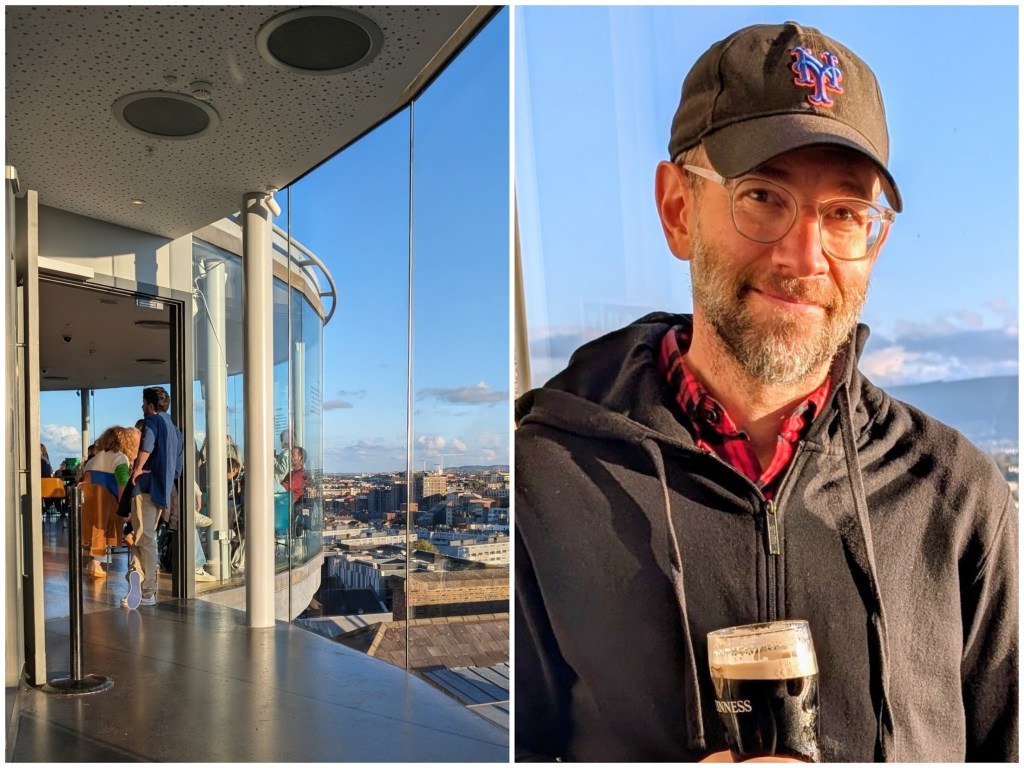
P.S., October 24: Matt and I returned home on Tuesday, October 20. We’ve had conversations about the trip since then, and he reports going into an eating and drinking establishment here, and missing the ambience and intimacy of an Irish pub.
Stef and I are going to be in the U.S. until May 2027, at which time we’ll visit Rome, Bologna and the environs of Emilia-Romagna. Stay tuned!


Leave a Reply